

Book Short: Sloppy Sequel
Book Short: Sloppy Sequel
SuperFreakonomics, by Steven Levitt and Stephen Dubner, wasn’t a bad book, but it wasn’t nearly as good as the original Freakonomics, either. I always find the results of “naturally controlled experiments” and taking a data-driven view of the world to be very refreshing. And as much as I like the social scientist versions of these kinds of books like Malcolm Gladwell’s The Tipping Point

That’s where SuperFreakonomics fell down a bit for me. Paul Krugman has described the book in a couple different places as “snarky and contrarian.” I typically enjoy books that carry those descriptors, but this one seemed a bit over the top for economists — like a series of theories looking for data more than raw data adding up to theories.Nowhere is this more true than the chapter on climate change. It’s a shame that that chapter seems to be swallowing up all the public discussion about the book, because there are some good points in that chapter, and the rest of the book is better than that particular chapter, but such is life.
As with all things related to the environment, I turned to my friend Andrew Winston’s blog, where he has a good post about how the authors kind of miss the point about climate change…and he also has a series of links to other blog posts debunking this one chapter. If you’re into the topic, or if you read the book, follow the chain here for good reading. My conclusion about this chapter, being at least somewhat informed about the climate change debate, is that the book seems to have sloppy writing and editing at best, possibly deliberately misleading at worst. (Incidentally, the reaction in the blogosphere seems highly emotional, other than Andrew’s, which probably doesn’t serve the reactors well.)
But I’ll assume the best of intentions. Some of the points made aren’t bad – there is no debate about the problem or the need to solve it, the authors express legitimate concern that current solutions, especially those requiring behavioral change, will be too little too late, and most interestingly, they show an interest in alternative approaches like geo-engineering. I hadn’t been familiar with that topic at all, but I’m now much more interested in it, not because it’s a “silver bullet” approach to dealing with climate change, but because it’s a different approach, and complex problems like climate change deserve to have a wide range of people working on multiple types of solutions. I met Nathan Myhrvold once (I almost threw up on him during a job interview, which is another story for another day), and it makes me very happy that his brilliance is being applied to this problem as a general principle.
As I said, though, beyond this one chapter, the book is good-not-great. But it certainly is chock full of cocktail party nuggets!
![Reblog this post [with Zemanta]](https://i0.wp.com/img.zemanta.com/reblog_e.png?w=640)
Book short: Myers-Briggs Redux
Book short: Myers-Briggs Redux
Instinct: Tapping Your Entrepreneurial DNA to Achieve Your Business Goals, by Tom Harrison of Omnicom, is an ok book, although I wouldn’t rush out to buy it tomorrow. The author talks about five broad aspects of our personalities that influence how we operate in a business setting: Openness to Experience, Conscientiousness, Extroversion, Agreeableness, and Neuroticism. These traits are remarkably similar to those in the popular Myers-Briggs Type Indicator that so many executives have taken over the years.
It’s not just that you want to be high, high, high, high, and low in the Big 5. Harrison asserts that successful entrepreneurs need a balance of openness and conscientiousness in order to be receptive to new ideas, but be able finish what you start; a balance of extroversion and agreeableness so that you have enough energy but also have the ability to work with others; and not too much neuroticism, as you have to be able to take risks.
The book not only talks about how to spot these factors, but how to work around them if you don’t have them (that part is particularly useful, but he doesn’t do it for all five factors). He also talks about the entrepreneurial addiction to success, and creating the all-important Servant CEO culture, which I certainly agree with and wrote about early on in this blog in my “Who’s The Boss?” posting.
Harrison does have a great section on how “Nice Guys” can and should be winners; how being nice and having guts aren’t mutually exclusive, and he gives a well-written Twelve Rules for expressing the Nice Guy gene:
– Don’t walk on other people, but don’t let them walk on you
– Respect the big idea in everyone
– Own everything
– Never let ’em see you sweat Keep it simple
– Never think in terms of “So what have you done for me today?”
– More is less
– Live your word consistently
– Don’t lie: fix what’s causing you to think you need to lie
– Never forget to thank, congratulate, or acknowledge people for their efforts
– Keep your door and your heart open
– Never stand in the way of balance
The most annoying part of the book is that Harrison keeps making references to a handful of genetic studies about twins to prove on and off that traits are inherited and that inherited traits can be expressed in different ways. These references are mildly interesting, but they detract from the substance of the book.
Overall, the book has some interesting points in it, but it’s too much like Jim Collins’ Good to Great and Built to Last, only without the depth of business research and case studies. Plus, Harrison does the one thing I find most irritating in business books — he is clearly an expert in one thing (business), but he unnecessarily pretends to be an expert in another thing (genetics) in order to make his point.
Book Short: A Good Dose of Introspection
Book Short: A Good Dose of Introspection
I rarely blog about non-business books since this is a business blog — and I read a lot of them! But occasionally, one manages to slip in, and this time, it’s The Five People You Meet in Heaven, by Mitch Albom. From the author of Tuesdays With Morrie, which I also liked quite a bit, this one is excellent. And a very, very quick read.
The book, in short (i.e., a book short <g>), is about a guy who dies, and who, in heaven, meets five people who have shaped his life and died before him. Some he knows well, some he knows barely, some he’s never met. Each one tells him a story that explains some part of his life to him and in doing so, helps him understand more about himself and why/how he lived on earth.
The book, as I said, is a short read. But more than that, it’s a wonderful story and provides an opportunity for a structured moment of introspection, one that I found very valuable. Quite frankly, this book should be a “once every year or two” read.
Book Short: Chock Full O Management & Leadership
Book Short: Chock Full O Management & Leadership
I just finished The Better People Leader, by Charles Coonradt, which was a very short, good, rich read. It was a pretty expansive book on management & leadership topics — 100 short pages of material that are probably covered by 1,000 pages in other books.
What separates this book from the pack is the rich examples from non-business life that Coonradt sprinkles throughout the book. They include the tale of a special ed kid who became a mainstream student within a year because his teacher had the courage to ask his fellow students to treat him normally, and the story of how Korean War POWs died in massive numbers not from physical torture but from negative feedback loops.
The closing quote of the book says it all, from Ronald Reagan: “A great leader is not necessarily one who does the greatest things. He is the one who gets the people to do the greatest things.” This book gives you quick tips on how to do just that.
Book Short: You’d Never Run Your Business This Way…
Book Short: You’d Never Run Your Business This Way…
I am an unabashed conservative, so you might wonder what I was doing reading A Country That Works, by union chief Andy Stern, the President of SEIU (Service Workers International Union) this weekend. Well, part of it is that my mother-in-law Carmen works for him. Part was that he was quite inspiring during his recent appearance on the Colbert Report a week or two ago. And part was that I always like reading about different points of view, especially with the current, somewhat dismal state of the Republican leadership in Washington.
The book was very short and a worthwhile read. I may not agree with Stern on some of his illustrations of the problems — his statistical presentations were a bit apples-to-oranges at times — and some of his solutions, which were a bit high on the big-government-tax-and-spend side for me, but the book was very plain-speak, apolitical, and solution-oriented, all of which I found refreshing.
He certainly had at least one underlying premise about “labor as electricity ” (compete on something else other than forcing wages to go lower) that is making me think hard about my long-standing philosophical opposition to federally-mandated minimum wages. His notion of the importance of a global labor movement to act as a check/balance on corporate globalization both make sense. Actually, now that I think about it, those two things put together start working well as one plank in a solution to global poverty.
But the best part of the book was the fact that Stern is clear that, like his ideas or hate them, he is at least proposing that we DEAL with them. America is missing serious debate about some critical issues facing our society. Anyone who doesn’t think we have serious problems facing our future around retirement savings, education, and health care is not facing reality. The debate happening in Washington today is weak at best, and over-politicized.
The bottom line is that I think we’re in danger as a country of boiling the frog when it comes to some major structural issues in our society, and, most important to me, You’d Never Run Your Business This Way. Any good entrepreneur knows that when danger lurks around the corner, you have to reinvent yourself, and we as a country aren’t doing that at this moment when we’d benefit from it greatly for the long term. Stern displays that mix of optimism for the future and serious reality check today known as the Stockdale Paradox and revered by Jim Collins in his two books on corporate leadership, Good to Great and Built to Last.
My biggest criticism of the book was that it was too short. It was basically 1/3 Andy’s story, 1/3 SEIU’s story, and 1/3 labor’s story — and it could have been at least twice as long and gone into more detail on Stern’s points, especially in the last chapter where he starts spelling out his plan to get America back on track. But presumably when Stern runs for national office or gets a cabinet appointment someday (no inside knowledge here, but the book certainly reads that way), he’ll flesh things out a bit!
Book Short (and great concept): Moments of Truth
Book Short (and great concept): Moments of Truth
TouchPoints: Creating Powerdul Leadership Connections in the Smallest of Moments, by Douglas Conant, former CEO of Campbell’s Soup Corporation, and Mette Norgaard (book, kindle), is a very good nugget of an idea wrapped in lots of other good, though only loosely connected management advice around self awareness and communication — something I’m increasingly finding in business books these days.
It’s a very short book. I read it on the Kindle, so I don’t know how many pages it is or the size of the font, but it was only 2900 kindles (or whatever you call a unit on the device) and only took a few Metro North train rides to finish. It’s probably worth a read just to get your head around the core concept a bit more, though it’s far from a great business book.
I won’t spend a lot of time on the book itself, but the concept echoes something I’ve been referring to a while here at Return Path as “Moments of Truth.” Moments of Truth are very short interactions between you and an employee that are high impact and, once you get the hang of them, low effort. At least, they’re low effort relative to long form meetings.
Here are a few thoughts about Moments of Truth:
- They are critical opportunities to get things both very right and very wrong with an employee
- They are more powerful than meets the eye – both for what they are and because they get amplified as employees mention them to other employees
- They can come to you (people popping into your office and the like), you can seek them out (management by walking around), and you can institutionalize them (for example, one of the things I do is call every employee on their Return Path anniversary to congratulate them on the milestone)
- They are no different than any other kind of interaction you have, just a lot shorter and therefore can be more intense (and numerous)
- Their use cases are as broad as any management interaction — coaching, positive or negative feedback, input, support, etc.
What can you as a manager or leader do to perfect your handling of Moments of Truth?
First, learn how to spot them when they come to you, and think about a typical employee’s day/week/month/year to think about when you can find opportunities to seek them out. Their first day on the job. When they get a promotion. When they get a great performance review, or new stock options. Maybe when they get a poor performance review or denied a promotion they were seeking.
Second, learn to appreciate them and leave space for them. If you have zero free minutes in every single day, you not only won’t have time to create or seek out Moments of Truth, you’ll be rushed or blow them off when they come to you.
Finally, like everything else, you have to develop a formula for handling them and then practice that formula. The book does talk about a formula of “head, heart, hand” (e.g., being logical, authentic, and competent) that’s not bad. Although I’d never thought about it systematically before writing this post, I have a few different kinds of Moments of Truth, and each one has its own rhythm to it, and its own regular ending.
But regardless of how you handle them, once you think about your day through this lens, you’ll start seeing them all over the place. Recognize their power, and dive in!
Book Short: Be Less Clever
Book Short: Be Less Clever
In Search of the Obvious: The Antidote for Today’s Marketing Mess, by Jack Trout, is probably deserving of a read by most CEOs. Trout at this point is a bit old school and curmudgeonly, the book has some sections which are a bit repetitive of other books he and his former partner Al Reis have written over the years, he does go off on some irrelevant rants, and his examples are a bit too focused on TV advertising, BUT his premise is great, and it’s universally applicable. So much so that my colleagues Leah, Anita, and I had “book club” about it one night last week and had a very productive debate about our own positioning and marketing statements and how obvious they were (they need work!).
The premise in short is that, in advertising:
Logical, direct, obvious = relevant, and
Entertaining, emotional = irrelevant
And he’s got data to back it up, including a great case study from TiVo on which ads are skipped and not skipped – the ones that aren’t skipped are from companies like Bowflex, Hooters, and the Dominican Republic, where the presentation of the ad is very direct, explanatory of the product, and clear. His reasons why advertising have drifted away from the obvious are probably right, ranging from the egos of marketing people, to CEOs being to disconnected from marketing, to the rise in importance of advertising awards, and his solution, of course is to refocus on your core positioning/competitive positioning.
It is true that when the only tool in your box is a hammer, everything starts to look a bit like a nail, but Trout is probably right in this case. He does remind us in this book that “Marketing is not a battle of products. It is a battle of perceptions”– words to live by.
And some of his examples of great obvious advertising statements, either real or ones he thinks should have been used, are very revealing:
- Kerry should have turned charges that he was a flip-flopper in 2004 around on Bush with the simple line that Bush was “strong but wrong”
- New Zealand: “the world’s most beautiful two islands”
- The brilliance of the VW Beetle in a big-car era and “thinking small”
- Johnny Cochrane’s winning (over)simplification of the OJ case — “If the glove doesn’t fit, you must acquit”
- BMW is still, 30 years later, The Ultimate Driving Machine
- “Every day, the Kremlin gets 12 copies of the Wall Street Journal. Maybe they know something you don’t know.”
If you are looking for a good marketing book to read as a refresher this year, this one could be it. And if you’re not a very market-focused CEO, this kind of thinking is a must.
And for the record, the library of books by Trout and/or Reis (sometimes including Reis’ daughter Laura as well) that I’ve read, all of which are quite good, is:
- Positioning: The Battle for Your Mind – the original – a brilliant, short, classic
- The New Positioning (link, post) – good refresher on the original, gets into repositioning
- Marketing Warfare –
- The Fall of Advertising and the Rise of PR – excellent but pre-social media
- The 22 Immutable Laws of Branding –
- The 22 Immutable Laws of Marketing: Violate Them at Your Own Risk! –
- Bottom-up Marketing –
- Differentiate or Die: Survival in Our Era of Killer Competition –
- In Search of the Obvious: The Antidote for Today’s Marketing Mess – the current book
Book Short: Which Runs Faster, You or Your Company?
Book Short: Which Runs Faster, You or Your Company?
Leading at the Speed of Growth, by Katherine Catlin at the Kauffman Center for Entrepreneurial Leadership is a must read for any entrepreneur or CEO of a growth company. It’s one of the best books I’ve ever read targeted to that audience – its content is great, its format is a page-turner, and it’s concise and to the point.
The authors take you through three stages of a growth company’s lifestyle (Initial Growth, Rapid Growth, and Continuous Growth) and describe the “how to’s” of the transition into each stage: how you know it’s coming, how to behave in the new stage, how to leave the old stage behind.
I didn’t realize it when I started reading the book, but Brad had one of the quotes on the back cover that says it all: “There are business books about starting a company, but they tend to deal with the mechanics of business plans and financing. Then there are books about ‘how to be the CEO of a Fortune 500 company.’ This is the first book I’ve seen that details the role of the CEO of a small but growing company.” Thanks to my colleague George Bilbrey for pointing this one out to me.
UPDATE: Brad corrects me and says that I should mention Jana Matthews, who co-wrote the book with Katherine Catlin and is actually the Kauffman Center person of the duo.
Book Short: The Challenger Sale
Book Short: The Challenger Sale
I’ve written a couple times in the past about how we sell at Return Path. I’ve written about our principle sales methodology for the past decade, SPIN Selling, by Neil Rackham (and Major Account Strategy, also by Rackham, which is basically SPIN Selling for Account Managers), which focuses on a specific technique for solution selling by using questioning to get the prospective client to identify his or her own needs, as well as Jeffrey Gitomer’s two short books, the Little Red Book of Selling and Little Red Book of Sales Answers, which are long on sales questioning techniques. And I also wrote this post about another book called Why People Don’t Buy Things, by Kim Wallace and Harry Washburn. The great thing about this book is that it dives into the need for variation in sales communication strategies based on BUYER personae, such as The Commander, The Thinker, and The Visualizer.
While both these principles are good – asking questions and tailoring communication styles based on the buyer – anyone who has ever tried to run a whole sales call by asking questions knows that it’s REALLY HARD and can sometimes just outright flop. There’s a new movement that I’ve been reading articles about for a few months now called The Challenger Sale, and I finally finished the book about it this past week.
If you run a company or a sales team that has any kind of complex sale or a hybrid software/service model, then you should read The Challenger Sale: Taking Control of the Customer Conversation, by Matthew Dixon and Brent Adamson. Whether you adopt the methodology or not, there are a few really great insights in the book that will help you recruit and manage a sales team. Some of the insights include:
- Understanding the five types of sales reps and why/when they’re successful/not successful. The labels are telling in and of themselves: the Lone Wolf, the Hard Worker, the Relationship Building, the Reactive Problem Solver, and the Challenger
- Why sales reps can be trained as Challengers, and how important it is to rally an entire organization around this sales model, not just train sales reps on it (that’s probably a good reminder for any sales methodology)
- The ingredients of the Challenger sale – Commercial Teaching for Differentiation, Tailoring for Resonance, Taking Control of the Conversation. I found the section on Commercial Teaching the most enlightening, particularly in our business, where we’re not selling an established category with established budget line items
The Challenger Sale feels like the beginning of a wave that will take over a lot of selling organizations in the next decade, either directly as written or as it inspires ancillary works and related techniques. For that reason alone, it’s worth a read.
Startup CEO (OnlyOnce- the book!), Part III – Pre-Order Now
Startup CEO (OnlyOnce – the book!), Part III – Pre-Order Now
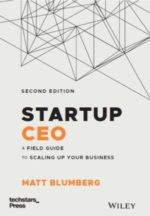
My book, Startup CEO: A Field Guide to Scaling Up Your Business, is now available for pre-order on Amazon in multiple formats (Print, Kindle), which is an exciting milestone in this project! The book is due out right after Labor Day, but Brad Feld tells me that the more pre-orders I have, the better. Please pardon the self-promotion, but click away if you’re interested!
Here are a few quick thoughts about the book, though I’ll post more about it and the process at some point:
- I’ll be using the hashtag #startupceo more now to encourage discussion of topics related to startup CEOs – please join me!
- The book has been described by a few CEOs who read it and commented early for me along the lines of “The Lean Startup movement is great, but this book starts where most of those books end and takes you through the ‘so you have a product that works in-market – now what?’ questions”
- The book is part of the Startup Revolution series that Brad has been working on for a couple years now, including Do More (Even) Faster, Venture Deals, Startup Communities, and Startup Life (with two more to come, Startup Boards and Startup Metrics)
- Writing a book is a LOT harder than I expected!
At this point, the best thing I can do to encourage you to read/buy is to share the full and final table of contents with you, sections/chapters/headings. When I get closer in, I may publish some excerpts of new content here on Only Once. Here’s the outline:
Part I: Storytelling
- Chapter 1: Dream the Possible Dream…Entrepreneurship and Creativity, “A Faster Horse,” Vetting Ideas
- Chapter 2: Defining and Testing the Story…Start Out By Admitting You’re Wrong, A Lean Business Plan Template, Problem, Solution, Key Metrics, Unique Value Proposition and Unfair Advantages, Channels, Customer Segments, Cost Structure and Revenue Streams
- Chapter 3: Telling the Story to Your Investors…The Business Plan is Dead. Long Live the Business Plan, The Investor Presentation, The Elevator Pitch, The Size of the Opportunity, Your Competitive Advantage, Current Status and Roadmap from Today, The Strength of Your Team, Summary Financials, Investor Presentations for Larger Startups
- Chapter 4: Telling the Story to Your Team…Defining Your Mission, Vision and Values, The Top-down Approach, The Bottom-Up Approach, The Hybrid Approach, Design a Lofty Mission Statement
- Chapter 5: Revising the Story…Workshopping, Knowing When It’s Time to Make a Change, Corporate Pivots: Telling the Story Differently, Consolidating, Diversifying, Focusing, Business Pivots: Telling a Different Story
- Chapter 6: Bringing the Story to Life…Building Your Company Purposefully, The Critical Elements of Company-Building, Articulating Purpose: The Moral of the Story, You Can Be a Force for Helping Others—Even If Indirectly
Part II: Building the Company’s Human Capital
- Chapter 7: Fielding a Great Team…From Protozoa to Pancreas, The Best and the Brightest, What About HR?, What About Sales & Marketing?, Scaling Your Team Over Time
- Chapter 8: The CEO as Functional Supervisor…Rules for General Managers
- Chapter 9: Crafting Your Company’s Culture…, Introducing Fig Wasp #879, Six Legs and a Pair of Wings, Let People Be People, Build an Environment of Trust
- Chapter 10: The Hiring Challenge…Unique Challenges for Startups, Recruiting Outstanding Talent, Staying “In-Market”, Recruitment Tools, The Interview: Filtering Potential Candidates, Two Ears One Mouth, Who Should You Interview?, Onboarding: The First 90 Days
- Chapter 11: Every Day in Every Way, We Get a Little Better…The Feedback Matrix, 1:1 Check-ins, “Hallway” Feedback, Performance Reviews, The 360, Soliciting Feedback on Your Own Performance, Crafting and Meeting Development Plans
- Chapter 12: Compensation…General Guidelines for Determining Compensation, The Three Elements of Startup Compensation, Base Pay, Incentive Pay, Equity
- Chapter 13: Promoting …Recruiting from Within, Applying the “Peter Principle” to Management, Scaling Horizontally, Promoting Responsibilities Rather than Swapping Titles
- Chapter 14: Rewarding: “It’s the Little Things” That Matter…It Never Goes Without Saying, Building a Culture of Appreciation
- Chapter 15: Managing Remote Offices and Employees…Brick and Mortar Values in a Virtual World, Best Practices for Managing Remote Employees
- Chapter 16: Firing: When It’s Not Working…No One Should Ever Be Surprised to Be Fired, Termination and the Limits of Transparency, Layoffs
Part III: Execution
- Chapter 17: Creating a Company Operating System…Creating Company Rhythms, A Marathon? Or a Sprint?
- Chapter 18: Creating Your Operating Plan and Setting Goals…Turning Strategic Plans into Operating Plans, Financial Planning, Bringing Your Team into Alignment with Your Plans, Guidelines for Setting Goals
- Chapter 19: Making Sure There’s Enough Money in the Bank…Scaling Your Financial Instincts, Boiling the Frog, To Grow or to Profit? That Is the Question, First Perfect the Model, Choosing Growth, Choosing Profits, The Third Way
- Chapter 20: The Good, the Bad, and the Ugly of Financing…Equity Investors, Venture Capitalists, Angel Investors, Strategic Investors, Debt, Convertible Debt, Venture Debt, Bank Loans, Personal Debt, Bootstrapping, Customer Financing, Your Own Cash Flow
- Chapter 21: When and How to Raise Money…When to Start Looking for VC Money, The Top 11 Takeaways for Financing Negotiations
- Chapter 22: Forecasting and Budgeting…Rigorous Financial Modeling, Of Course You’re Wrong—But Wrong How?, Budgeting in a Context of Uncertainty, Forecast, Early and Often
- Chapter 23: Collecting Data…External Data, Learning from Customers, Learning from (Un)Employees, Internal Data, Skip-Level Meetings, Subbing, Productive Eavesdropping
- Chapter 24: Managing in Tough Times…Managing in an Economic Downturn, Hope Is Not a Strategy—But It’s Not a Bad Tactic, Look for Nickels and Dimes under the Sofa, Never Waste a Good Crisis, Managing in a Difficult Business Situation
- Chapter 25: Meeting Routines…Lencioni’s Meeting Framework, Skip-Level Meetings, Running a Productive Offsite
- Chapter 26: Driving Alignment…Five Keys to Startup Alignment, Aligning Individual Incentives with Global Goals
- Chapter 27: Have You Learned Your Lesson?…The Value (and Limitations) of Benchmarking, The Art of the Post-Mortem
- Chapter 28: Going Global…Should Your Business Go Global?, How to Establish a Global Presence, Overcoming the Challenges of Going Global, Best Practices for Managing International Offices and Employees
- Chapter 29: The Role of M&A…Using Acquisitions as a Tool in Your Strategic Arsenal, The Mechanics of Financing and Closing Acquisitions, Stock, Cash, Earn Out, The Flipside of M&A: Divestiture, Odds and Ends, Integration (and Separation)
- Chapter 30: Competition…Playing Hardball, Playing Offense vs. Playing Defense, Good and Bad Competitors
- Chapter 31: Failure…Failure and the Startup Model, Failure Is Not an Orphan
Part IV: Building and Leading a Board of Directors
- Chapter 32: The Value of a Good Board…Why Have a Board?, Everybody Needs a Boss, The Board as Forcing Function, Pattern Matching, Forests, Trees, Honest Discussion and Debate
- Chapter 33: Building Your Board…What Makes a Great Board Member?, Recruiting a Board Member, Compensating Your Board, Boards as Teams, Structuring Your Board, Board Size, Board Committees, Chairing the Board, Running a Board Feedback Process, Building an Advisory Board
- Chapter 34: Board Meeting Materials…“The Board Book”, Sample Return Path Board Book, The Value of Preparing for Board Meetings
- Chapter 35: Running Effective Board Meetings…Scheduling Board Meetings, Building a Forward-Looking Agenda, In-Meeting Materials, Protocol, Attendance and Seating, Device-Free Meetings, Executive and Closed Sessions
- Chapter 36: Non-Board Meeting Time…Ad Hoc Meetings, Pre-Meetings, Social Outings
- Chapter 37: Decision-Making and the Board…The Buck Stops—Where?, Making Difficult Decisions in Concert, Managing Conflict with Your Board
- Chapter 38: Working with the Board on Your Compensation and Review…The CEO’s Performance Review, Your Compensation, Incentive Pay, Equity, Expenses
- Chapter 39: Serving on Other Boards…The Basics of Serving on Other Boards, Substance, or Style?
Part V: Managing Yourself So You Can Manage Others
- Chapter 40: Creating a Personal Operating System…Managing Your Agenda, Managing Your Calendar, Managing Your Time, Feedback Loops
- Chapter 41: Working with an Executive Assistant…Finding an Executive Assistant, What an Executive Assistant Does
- Chapter 42: Working with a Coach…The Value of Executive Coaches, Areas Where an Executive Coach Can Help
- Chapter 43: The Importance of Peer Groups…The Gang of Six, Problem-Solving in Tandem
- Chapter 44: Staying Fresh…Managing the Highs and Lows, Staying Mentally Fresh, At Your Company, Out and About, Staying Healthy, Me Time
- Chapter 45: Your Family…Making Room for Home Life, Involving Family in Work, Bringing Work Principles Home
- Chapter 46: Traveling…Sealing the Deal with a Handshake, Making the Most of Travel Time, Staying Disciplined on the Road
- Chapter 47: Taking Stock of the Year…Celebrating “Yes”; Addressing “No”, Are You Having Fun?, Are You Learning and Growing as a Professional?, Is It Financially Rewarding?, Are You Making an Impact?
- Chapter 48: A Note on Exits…Five Rules of Thumb for Successfully Selling Your Company
If you’re still with me and interested, again here are the links to pre-order (Print, Kindle).
Book short: Proto Gladwell
Book short: Proto Gladwell
I’m sure author Robert Cialdini would blanch if he read this comparison, but then again, I can’t be the first person to make it, either. His book, Influence: The Psychology of Persuasion, is an outstanding read for any marketing or sales professional, but boy does it remind me of Malcolm Gladwell’s The Tipping Point and Blink (book; blog post). Of course, Cialdini’s book came out a decade before Gladwell’s! Anyway, Influence is a great social science look at the psychology that makes sales and marketing work.
Cialdini talks about sales and marketing professionals as “compliance practitioners,” which is a great way to think about them, quite frankly. He boils down the things that make sales and marketing work to six core factors: consistency, reciprocation, social proof, authority, liking, and scarcity.
Reciprocation – we hate being in a state of being beholden so much that we might even be willing to do a larger favor than the one done for us in order to remove the state. Think about “free gifts” in merchandising as an example of this, or being in a negotiation where someone trying to make a cold sale on you offers a fallback, smaller sale. For example, you don’t want to buy anything from the boy scout, but after you say no to the $5 raffle ticket and he asks about the $1 candy bar, you feel more obligated to buy the $1 candy bar because the boy scout has “given” on his initial request.
Consistency – once we have made a choice, personal and interpersonal pressures force us to back it up and justify our earlier decision – even more so when in writing or when declared to others. This is why marketers love getting testimonials from customers; the testimonial locks the customer in emotionally, as well as encouraging others to buy the product.
Social proof – if others think it’s correct, it must be correct, especially if those other people are like us. There are some scary examples in the book here, such as Reverand Jim Jones and The People’s Temple mass suicides. Gripping, but creepy.
Liking – we listen to people we like, and we like people to whom we’re similar or who are physically attractive. This section was especially reminiscent of Blink, but with different and more marketer-focused examples.
Authority – we have an extreme willingness to listen to authority, even when the authority isn’t quite relevant. This is why celebrity endorsements work so well.
Scarcity – we have a extreme motivation of fear of loss, either or something, or of the opportunity to have something. Who doesn’t like to keep doors open as long as possible?
The one place the book falls down a little bit is in the sections at the end of each chapter talking about how to resist that particular technique through jujitsu – the art of “turning the enemy’s strength to your advantage.” While nice in theory, Cialdini’s examples aren’t super helpful beyond saying “when you think you’re getting suckered, stop — and then say no.”
Overally, though, the book is well written and choc full of examples. Thanks to marketer Mallory Kates for sending me this great book!