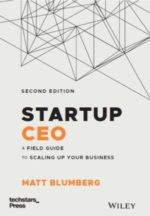
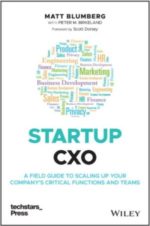
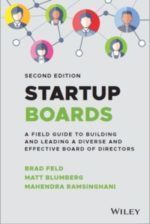
I sit on three outside boards in addition to running Markup AI — Techstars, Alumni Ventures, and Citizens & Scholars. Each is a serious commitment: real fiduciary responsibility, hundreds of pages of pre-read per meeting, distinct organizational dynamics, and the expectation that I show up prepared to add value rather than just attend. I used to prep for these meetings the old-fashioned way. Read the board book before the meeting, on the plane, etc. Take notes. Hope I remembered what happened last quarter. It was fine. It wasn’t great. Recently, I set up an AI agent for each board. Here’s what I did, why, and how. Hopefully this becomes a standard practice that Brad, Mahendra, and I can write about…
Category
Markup AI
The Dangers of Outsourcing Your Brain to AI
AI is brilliant for automating things you already know how to do, or to create things based on content you’ve already mastered. But there’s an inherent risk in it. Human brains learn things by reading, processing, and doing, and outsourcing critical components of that process to AI is a disaster in the making, not by being great at writing prompts and distributing their downstream output. Let’s take an obvious somewhat extreme example. A clever sixth grader with a vague interest in American history could create a somewhat sophisticated analysis of a thorny constitutional law question – let’s say, an analysis of the Presidential immunity decision by the Supreme Court a couple years ago against the background of our own Constitution…
Vibe Coding for People Who Can’t Code: A five-part series. Part V — Doing this at work
In Part I of the series, we talked about vibe coding basics, in Part II, about how to get setup, in Part III, the build, and in Part IV, testing. Today in Part V, the final installment here, we talk about vibe coding at work. As in, “Kids, don’t try this at work” (sort of). What I tried I had an idea for reengineering some major swaths of my company’s workflow and business process with a whole new system underneath it to match the changes AI has brought to getting work done in a software company (more on that in subsequent posts). So I started designing a system in a Claude Project, and the design part worked — which is…
Vibe Coding for People Who Can’t Code: A five-part series. Part IV — Knowing whether it actually works
In Part I of the series, we talked about vibe coding basics, in Part II, about how to get setup, and in Part III, the build. Today in Part IV, we talk about making sure it works once it’s built. The one thing to understand This kind of software rarely crashes. It fails plausibly. Broken is cheap, because you see it. Plausible is what costs you a month. Four real examples, all mine: The habits that fall out Why the written record is the whole game This is where the spec and the decision log from Part II earn their keep — and I have an accidental experiment to prove it. Same builder, same month, same tools. Bedrock had both…
Vibe Coding for People Who Can’t Code: A five-part series. Part III — How you actually build
In Part I of the series, we talked about vibe coding basics, and in Part II, about how to get setup. Today in Part III we start the fun part – the actual build. One turn of the crank Here’s a single complete cycle, because once you’ve seen one you’ve seen all of them. An idea arrives. You argue it out in the Project. The Project writes you a handoff prompt in one copyable block. You paste that into the build tool. It writes the code, saves it, and pushes it. The live site updates itself. You look at it. That’s the whole job, repeated a few hundred times. A few conventions earned their place the hard way: What you…
Vibe Coding for People Who Can’t Code: A five-part series. Part II — Setting up
In Part I of the series, we talked about what vibe coding is and how to figure out what you’d build (and if you should build something. Today in Part II, we’re talking about how tools, prices, and signup flows change fast and to treat the specific how-tos as current-as-of-writing and the reasoning as durable. I run a Linux server and have forgotten I ever didn’t know how. My friend Andrew Winston built and shipped Context Coach as a genuine non-engineer, recently enough to remember every place he got stuck. So we wrote this part together — my structure, his fresh scars, and his real setup list at the end as the worked example. It’s more useful than either of…
Vibe Coding for People Who Can’t Code: A five-part series. Part I — What it is, why you’d bother, and what you’d build
I last wrote code in 1980 on a TRS-80 or a Commodore 64, I forget which, but alas it doesn’t matter! Over the last two months I built three pieces of software. One of them has over 40,000 lines of code that I’ve never seen. The point of this series isn’t for you to build these. They’re mine; they fit my life; yours will be different. They’re here as worked examples — what each cost, what it taught, and what I got wrong, which turns out to be the useful part. This is the longest series of posts I’ve ever written. It’s designed for the “Vibe Code Curious” — especially people in business and leadership roles — and each part…
Curated Reading on AI, Part II
In Part I, I curated a lot of big picture articles about AI and society. Today’s post will be more practical and tactical about the business of AI. First from Thomas Tunguz at Theory Ventures – The AI Problem Matrix, which does a great job of laying out a framework for where and how humans (and also AI/Software) will be able to create value in the new world and where it will be capped. Next, two interesting articles about where pricing is headed or not headed in the world of AI where everyone is waxing philosophic about “outcome based pricing,” but no one has quite figured out what that means yet for the vast majority of use cases. We certainly…
Where The Pundits Are Getting It Wrong – We Still Need Talented Software Engineers
There’s a narrative gaining steam in the AI discourse that goes something like this: coding assistants are getting so good that we won’t need software engineers anymore. Some version of “AI writes code now, so why would you hire humans to do it?” This take is wrong. Not slightly wrong — fundamentally wrong. And it’s wrong because it confuses three very different things. Writing Code, Building Products, and Building Companies Coding assistants write code. That’s a real and valuable capability. They can generate functions, debug errors, scaffold entire applications, and produce boilerplate at superhuman speed. No argument. But writing code is not the same as building a software product. And building a software product is not the same as building…
Markup AI launch – TODAY!
After months of the fastest and most thorough software development cycle I’ve seen in my career, I am proud to announce the launch of our Content Guardian Agents platform Markup AI today. Here’s the defining quote from one of our early clients, the head of content at a B2C marketer: “90% of AI content is mind-blowingly great, and 10% completely wrong — and you spend hours trying to fix the little part that annoys you.” If that resonates with you, try us out. We’re offering a free trial for at least 30 days to anyone and everyone – here is the link to sign up. Our agents provide a unified framework to give you confidence before you publish that the…
Chatting with my DNA – a fascinating personal use case and a deep rabbit hole
This one has nothing to do with running a company. But it’s one of the most fascinating things I’ve done with AI, and I fell down such a deep rabbit hole that I have to share it. My friend Chad Dickerson — former CEO of Etsy, now an executive coach — mentioned that he’d uploaded his raw DNA file to an AI and started asking it questions. My reaction was something like: wait, you can do that? You can. Here’s how. If you’ve done 23andMe (or Ancestry.com — the process is similar), you can download your raw DNA data file. It’s just a text file full of SNPs — single nucleotide polymorphisms, the genetic markers that make you you. Upload…