
Should CEOs wade into Politics?
This question has been on my mind for years. In the wake of Georgia passing its new voting regulations, a many of America’s large company CEOs are taking some kind of vocal stance (Coca Cola) or even action (Major League Baseball) on the matter. Senate Majority Leader Mitch McConnell told CEOs to “stay the hell out of politics” and proceeded to walk that comment back a little bit the following day. The debate isn’t new, but it’s getting uglier, like so much of public discourse in America.
Former American Express CEO Harvey Golub wrote an op-ed earlier this week in The Wall Street Journal entitled Politics is Risky Business for CEOs (behind a paywall), the subhead of which sums up what my point of view has always been on this topic historically — “It’s imprudent to weigh in on issues that don’t directly affect the company.” His argument has a few main points:
- CEOs may have opinions, but when they speak, they speak for and represent their companies, and unless they’re speaking about an issue that effects their organization, they should have Board approval before opening their mouths
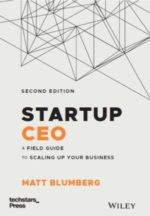
- Whatever CEOs say about something political will by definition upset many of their employees and customers in this polarized environment (I agree with this point a lot of the time and wrote about it in the second edition of Startup CEO)
- There’s a slippery slope – comment on one thing, you have to comment on all things, and everything descends from there
So if you’re with Harvey Golub on this point, you draw the boundaries around what “directly affects” the company — things like employment law, the regulatory regime in your industry, corporate tax rates, and the like.
The Economist weighed in on this today with an article entitled CEO activism in America is risky business (also behind a paywall, sorry) that has a similar perspective with some of the same concerns – it’s unclear who is speaking when a CEO delivers a political message, messages can backfire or alienate stakeholders, and it’s unclear that investors care.
The other side of the debate is probably best represented by Paul Polman, longtime Unilever CEO, who put climate change, inequality, and other ESG-oriented topics at the center of his corporate agenda and did so both because he believed they were morally right AND that they would make for good business. Unilever’s business results under Polman’s leadership were transformational, growing his stock price almost 300% in 10 years and outpaced their peers, all as a “slow growth” CPG company. Paul’s thinking on the subject is going to be well documented in his forthcoming book, Net Positive: How Courageous Companies Thrive by Giving More Than They Take, which he is co-authoring with my good friend Andrew Winston and which will come out later this year.
While I still believe that on a number of issues in current events, CEOs face a lose-lose proposition by wading into politics, I’m increasingly moving towards the Paul Polman side of the debate…but not in an absolute way. As I’ve been wrestling with this topic, at first, I thought the definition of what to weigh in on had to come down to a definition of what is morally right. And that felt like I was back in a lose-lose loop since many social wedge issues have people on both sides of them claiming to be morally right — so a CEO weighing in on that kind of issue would be doomed to alienate a big percentage of stakeholders no matter what point of view he or she espouses.
But I’m not sure Paul and Andrew are absolutists, and that’s the aha for me. I believe their point is that CEOs need to weigh in on the things that directly affect their companies AND ALSO weigh in on the things that indirectly affect their companies.
So if you eliminate morality from the framework, where do you draw the line between things that have indirect effects on companies and which ones do not? If I back up my scope just a little bit, I quickly get to a place where I have a different and broader definition of what matters to the functioning of my industry, or to the functioning of commerce in general without necessarily getting into social wedge issues. For want of another framework on this, I landed on the one written up by Tom Friedman and Michael Mandelbaum in That Used to be Us: How America Fell Behind in the World It Invented and How We Can Come Back, which I summarized in this post a bunch of years ago — that America has lost its way a bit in the last 20-40 years because we have strayed from the five-point formula that has made us competitive for the bulk of our history:
- Providing excellent public education for more and more Americans
- Building and continually modernizing our infrastructure
- Keeping America’s doors to immigration open
- Government support for basic research and development
- Implementation of necessary regulations on private economic activity
So those are some good things to keep in mind as indirectly impacting commercial interests and American competitiveness in an increasingly global world, and therefore are appropriate for CEOs to weigh in on. And yes, I realize immigration is a little more controversial than the other topics on the list, but even most of the anti-immigration people I know in business are still pro legal immigration, and even in favor of expanding it in some ways.
And that brings us back to Georgia and the different points of view about whether or not CEOs should weigh in on specific pieces of legislation like that. Do voting rights directly impact a company’s business? Not most companies. But what about indirect impact? I believe that having a high functioning democracy that values truth, trust, and as widespread legal voter participation as possible is central to the success of businesses in America, and that at the moment, we are dangerously close to not having a high functioning democracy with those values.
I have not, as Mitch McConnell said, “read the whole damn bill,” but it doesn’t take a con law scholar to note that some pieces of it which I have read — no giving food or water to people in voting lines, reduced voting hours, and giving the state legislature the unilateral ability to fire or supersede the secretary of state and local election officials if they don’t like an election’s results — aren’t measures designed to improve the health and functioning of our democracy. They are measures designed to change the rules of the game and make it harder to vote and harder for incumbents to lose. That is especially true when proponents of this bill and similar ones in other states keep nakedly exposing the truth when they say that Republicans will lose more elections if it’s easier for more people to vote, instead of thinking about what policies they should adopt in order to win a majority of all votes.
And for that reason, because of that bill, I am moving my position on the general topic of whether or not CEOs should wade into politics from the “direct impact” argument to the “indirect impact” one — and including in that list of indirect impacts improving the strength of our democracy by, among other things, making it as easy as possible for as many Americans to vote as possible and making the administration of elections as free as possible from politicians, without compromising on the principle of minimizing or eliminating actual fraud in elections, which by all accounts is incredibly rare anyway.
Inquiry vs. Advocacy
My Grandpa Bill used to not want to talk about himself at dinner parties. When one of us asked him why one day, he said, “I already know what I have to say. What I don’t know, is what the other person has to say.”
There are a few principles I learned years ago in a workshop that my coach Marc led for us called Action/Design. I’m going to try writing a few posts about them, and you can find some articles on them here.
Inquiry vs. Advocacy is simple. Understand the balance of when you ask and listen vs. when you speak in a given conversation. Both are important tools in the CEO tool belt.
My rule of thumb is to ask and listen more than you speak. It’s the only way you will learn, collect data on your organization and on your customers and products. Early in your career, you should primarily be Inquiring. Even mid- and later career people who sometimes must be in a position to speak or advocate their point of view benefit most when they ask and listen and learn.
More important, though, Inquiry vs. Advocacy is the best way to guide your communications in a difficult conversation, complex negotiation, or tricky situation. And it’s in those kinds of situations that you actually need to be cognizant that both approaches are important, and you need to know which one to pull out when and pay attention to how others in the conversation are using the two as well. From an article in the resource center I linked to above:
In conversations on complex and controversial issues, when there is a high degree of advocacy and little inquiry, people are unable to learn about the nature of their differences. People may feel the speaker is imposing a view on them without taking into account their perspective, which can lead to either escalating conflict or withdrawal. When there is a high degree of inquiry, but no one is willing to advocate a position, it is difficult for participants to know where the other stands, and the lack of progress can lead people to feel frustrated and impatient. As a participant in a conversation, being aware of the balance of advocacy and inquiry can help you determine how best to contribute at a given time. If you hear that people are advocating but not asking questions, inquire into their views before adding your own. If you hear people asking questions for information but not stating an opinion, advocating your view may help the group move forward.
Inquiry vs. Advocacy has become a cornerstone of how I think about communicating and learning. I like to think I learned it from Grandpa Bill first, but the Action/Design work with my coach, and then years of practice, drove it home.
Learning Through Extremes, or Shifting Gears part II
OnlyOnce is 8 years old this week, which is hard to believe. So it is fitting that I got halfway through a new post this morning, then a little alarm bell went off in my head that I had written something similar before. The topic is around moderation versus extremes. I first wrote about this topic in 2005 in a post called Shifting Gears but I have thought about it more recently in a different way.
Instead of phrasing this as a struggle between “Meden Agan,” which is Greek for “everything in moderation,” and “Gor oder gornischt,” which is Yiddish for “all or nothing,” I’d like to focus here on the value of occasionally going to an extreme. And that value is around learning. Let me give three examples:
-We were having a buy vs. build conversation at work a few months back as we were considering an acquisition. Some people in the room had an emotional bias towards buy; others toward build. So we framed the debate this way: “Would you acquire the company for $1 instead of building the technology?” (Yes!) “Would you buy it for $10mm?” (No!) Taking the conversation to the extremes allowed us to focus on a rational answer as opposed to an emotional one — where is the price where buy and build are in equilibrium?
– With my colleague Andrea, I completed a 5-day juice fast a few weeks back. It was good and interesting on a bunch of levels. But I came away with two really interesting learnings that I only got from being extreme for a few days: I like fruits and veggies (and veggie juices) a lot and don’t consume enough of them; and I sleep MUCH better at night on a relatively empty stomach
– Last year, I overhauled my “operating system” at work to stop interviewing all candidates for all jobs and stop doing 90-day 1:1 meetings with all new employees as well. I wrote about this in Retail, No Longer. What finally convinced me to do it was something one of my colleagues said to me, which was “Will you be able to keep these activities up when we have 500 employees?” (No) “So what is the difference if you stop now and save time vs. stopping in 6 months?” Thinking about the extreme got me to realize the full spectrum
It may not be great to live at the extremes, but I find extremes to be great places to learn and develop a good sense of what normal or moderate or real is.
links for 2006-07-25
-
Fred has a good posting on some of the downsides of having managed through the bubble bursting. I wrote about this (a little bit) last year in Ratcheting Up is Hard to Do (/2005/01/ratcheting_up_i.html), but Fred’s posti
links for 2006-03-28
-
Brad has a good posting today about entrepreneur accountability — along the lines of my “Forecast Early and Often” theme. — /2005/11/notsocounter_cl.html
In From the Perimeter
In From the Perimeter
I’m at the Direct Marketing Association’s annual massive trade show (DMA*05) in Atlanta. While there are lots of things to potentially blog about, I think the most interesting one is the simplest. When I started attending the DMA’s shows six years ago, the only interactive marketeing companies who exhibited were email vendors and the occasional sweepstakes company — and any interactive marketing company who did bother to show up was relegated to a small booth space in a corner of the trade show floor, away from the real action. A friend of mine once told me it was easy for him to hit all the email guys at DMA — just walk around the perimeter of the room.
It’s 2005, and oh how things have changed. The DMA put the “Interactive Marketing Pavilion” center stage this year, literally in the middle of the floor. Besides Return Path, loads of other interactive marketing companies (and not just the email and sweeps guys!) have prime real estate at the show. Within eyeshot of our booth are fellow email companies SilverPop, StrongMail, WhatCounts, Accucast, and ExactTarget, as well as analytics companies like Omniture, online ad companies like Blue Lithium, Kanoodle, and Advertising.com, lead gen companies like Cool Savings, and even a search firm or two.
The move is more than symbolic and more than just the fact that online marketing vendors have been around long enough to bid on better booth locations (although no doubt both of those things are true). It’s representative of the way mainstream marketers now conduct business — increasingly online and increasingly multi-channel. Online is another important part of the mix, not the stepchild.
Online marketing firms are now in from the perimeter, and we are happy to be here!
Beyond CAN-SPAM: The Nightmare Continues
Beyond CAN-SPAM: The Nightmare Continues
Turn back the clock to the end of 2003. A bunch of states had recently passed their own anti-spam bills, and California had just passed the then-notorious SB186. Commercial emailers were freaking out because compliance with a patchwork of state laws for email is nearly impossible given the nature of email and given the differences between the laws. The reult of the freakout was an expedited, and decent, though far from perfect, federal law called CAN-SPAM which, among other things, preempted most of the individual state laws under the interstate commerce clause. Most of us noted that the federal government had never worked so swiftly in recent memory.
Now it’s mid-2005, and a new cycle of state email legislation craziness is underway, this time with Michigan and Utah in the lead. Once again, the legislation is well-intentioned but incredibly impractical. I haven’t heard an appropriate amount of kicking and screaming about this yet, so let me give it a shot.
The laws themselves are billed as “Child Protection Acts.” They ban email advertising (and also other electronic forms of advertising, like IM, phone, fax) to minors for things like guns, liquor, gambling, porn, tobacco, and — one of the kickers — “anything else deemed to be harmful to minors or unlawful for minors to purchase.” The bans are in place even if the child has requested the advertising. The proposed solution is an email address registry of chidren’s email addresses which would act as a suppression list for mailers, is run by a third party, and costs a $7 CPM per suppression run, per state, based on the size of the input file, not the size of the matches.
Let me start running down the problems here:
1. The laws won’t work comprehensively, as people have to proactively register their addresses with state registries.
2. The laws won’t do squat to prevent international or fraudulent advertisers from hitting children with their ads.
3. People with multi-purpose “family” email addresses will have to make a black-and-white decision about being on the registry.
4. Compliance will be a nightmare. Since emailers usually don’t have a state tied to an email address, they will have to suppress their entire file against each state’s registry.
5. Charging based on the size of the input file as opposed to the number of matches is ridiculous. It punishes mailers with large files and is completely divorced from the “value” of the service.
6. The costs are outrageous when you add them up. A $7 CPM seems low, but multiply it by 12 months (and some people think compliance means more than monthly suppression runs) and now multiply it by at least 2 states — with another 10 or so considering similar legislation, and all of a sudden, a mailer could be paying as much as $1 per name ON THEIR FILE per year.
7. The laws are too vague and potentially too broad. A law that prevents advertising of anything else deemed to be harmful to minors or unlawful for minors to purchase has some weird and possibly unintended definition consequences. One example: apparently, in Michigan, it is illegal to sell cars to minors (odd for a state that includes Detroit and licenses drivers at age 16) — so automobile advertising is a “banned category.” Another example: Amazon sells DVDs that are Rated R — does that mean linking to Amazon is now problematic?
8. Anyone can sue — not just state AGs, so look out for a zillion nuisance lawsuits like the old Utah “no popup” law of 2003.
9. The laws may be unconstitutional for any number of reasons, and they may also be in conflict with CAN-SPAM’s supersede clause.
The kicker? The laws are billed as “Child Protection Laws” — so who the heck is going to stick out their neck and sue the states to force the legality issue? I’m all for protecting our children…and for eliminating spam for that matter, but I’m sick of governments passing laws with this level of unintended consequences. Someone ought to make a law about that!
Email Marketing 101
Email Marketing 101
We just published a book! Sign me Up! A marketer’s guide to creating email newsletters that build relationships and boost sales is now available on Amazon.com. The book is authored by me and my Return Path colleagues Mike Mayor, Tami Forman, and Stephanie Miller. What’s it about?
– At its core, the book is a very practical how-to guide. Any company — large or small — can have a great email newsletter program. They’re easy, they’re cheap, and when done well, they’re incredibly effective.
– This book helps you navigate the basics of how to get there, covering everything from building a great list, to content and design, to making sure the emails reach your customers’ inboxes and don’t get blocked or filtered.
– Our central philosophy about email marketing, which permeates the advice in the book, is covered in my earlier New Media Deal posting (which is reproduced in part in the book’s Preface) — that customers will sign up for your email marketing in droves if you provide them a proper value exchange for the ability to mail them.
– I’d encourage you to buy the book anyway, but in case you need an extra incentive, we are also donating 10% of book sales to Accelerated Cure, a research organization dedicated to finding a cure for Multiple Sclerosis, in honor of our friend and colleague Sophie Miller.
More postings to come about the process of writing, publishing, and marketing a book in 2005 — boy was the experience we had different than it would have been 10 years ago.
Startup CEO (OnlyOnce- the book!)
Startup CEO (OnlyOnce – the book!)
One of the things I’ve often thought over the years since starting Return Path in 1999 is that there’s no instruction manual anywhere for how to be a CEO. While big company CEOs are usually groomed for the job for years, startup CEOs aren’t…and they’re often young and relatively inexperienced in business in general. That became one of the driving forces behind the creation of my blog, OnlyOnce (because “you’re only a first time CEO once”) back in 2004.
Now, over 700 blog posts later, I’m excited to announce that I’m writing a book based on this blog called Startup CEO: A Field Guide to Building and Running Your Company. The book is going to be published by Wiley & Sons and is due out next summer. The book won’t just be a compendium of blog posts, but it will build on a number of the themes and topics I’ve written about over the years and also fill in lots of other topics where I haven’t.
The catalyst for writing this book was Brad Feld. Brad has been a friend, mentor, investor, and Board member for over a decade. We’ve had many great times, meals, and conversations together over the years, not the least of which was staggering across the finish line together at the New York City Marathon in 2005. Brad started writing books a few years ago, and I’ve been peripherally involved with them, first with Do More Faster: TechStars Lessons to Accelerate Your Startup (I contributed one of the chapters) and then with Venture Deals: Be Smarter Than Your Lawyer and Venture Capitalist (I wrote all the “Entrepreneur Perspective” sidebars).
Those are great books, and they’ve been incredibly well received by the global entrepreneurial community. But then Brad got the bug, and now he’s in the middle of writing FOUR new books with Wiley that will all come out over the next year. They are:
- Startup Communities: Building an Entrepreneurial Ecosystem in Your City
- Startup Life: Surviving and Thriving in a Relationship with an Entrepreneur
- Startup Metrics: Making Sense of the Numbers in Your Startup
- Startup Boards: Reinventing the Board of Directors to Better Support the Entrepreneur
These four books, plus the two earlier ones, plus Startup CEO, are all part of the Startup Revolution series. While I’ll continue to do most of my blogging and posting here on OnlyOnce, I’d also encourage you to check out the Startup Revolution site and sign up to be a member of that community. I’ll be doing some things on that site as well in connection with Startup CEO, and it’s a more concentrated place to post and comment on all things Startup. In addition, we’ll be putting a bunch of add-ons to the book on that site closer to publication time.
I hope Startup CEO becomes a standard for all new CEOs. I don’t think I have all the answers, but at least others can benefit by learning from my 13 years of successes and mistakes! Now all I have to do is go write the darned thing.
Firsts, Still
Firsts, Still
After more than 13 years in the job, I run into “firsts” less and less often these days. But in the past week, I’ve had three of them. They’re incredibly different, and it’s awkward to write about them in the same post, but the “firsts” theme holds them together.
One was incredibly tragic — one of our colleagues at Return Path died suddenly and unexpectedly. Even though we’ve lost two other employees in the last 18 months to cancer, there was something different about this one. While there’s no good way to die, the suddenness of Joel’s passing was a real shock to me and to the organization, and of course more importantly, to his wife.
The second was that I came face to face with a judge in the state of Delaware for the first time around some litigation we’re in the middle of now. While I can’t comment on this for obvious reasons, you never think when you decide to incorporate in Delaware that a trip to a courthouse in Wilmington is in your future.
The third, which can only be described as bittersweet, is that we had our first long-time employee retire! Now THAT’S something you never think about when you run a startup. But Sophie Miller Audette, one of our first 20 employees going back to 2000 and the sixth longest tenured person at the company today, has decided to retire and move on to other adventures in her already rich life. A quick search on my blog reveals that I’ve blogged about Sophie three times since I started OnlyOnce 9 years ago (as of next week). The first time was in 2004 when I quoted her memorable line, “In my next life, I want to come back as a client.” The second and third times were in 2005 and were about the company’s commitment to helping to find a cure for Multiple Sclerosis, which Sophie was diagnosed with almost 10 years ago now. Sophie has been an inspiration to many of us for a long time, and while we’ll miss her day-to-day, she’ll always be part of the Return Path family. Picture of her, me, and Anita at her “retirement dinner” earlier this week below.

I always say that one of the best parts about being in this job for this long is that there are always new challenges and new opportunities to learn and grow. The last couple weeks, full of firsts, proved the point!
Book Short: New Advice from an Old Friend
In 2005, I wrote a post called Unfolding the Map in which I looked at these two seemingly opposing philosophies from successful entrepreneurs:
- If you don’t have a map, you can’t get lost
- If you don’t have a map, you can’t get where you’re going
and tried to combine them when thinking about product roadmapping. The same contradiction and combination could be applied to anything, including coaching and development.
That’s why I was excited to read my friend Matt Spielman’s new book, Inflection Points: How to Work and Live with Purpose. Matt worked at Return Path twice over the years — first as employee #3 (more on that in a minute) and then over a decade later as CMO. We live near each other and know each other’s families. I’ve been lucky enough to see his career unfold and develop into what it is today, a flourishing coaching business called Inflection Point Partners that helps clients tremendously…and that also feeds Matt’s soul.
When I first met Matt and he joined me and Jack to launch Return Path in 1999, he was fresh out of business school and focused on sales and marketing from his prior career in investment banking. Our idea was that he would do the same for us as we got our product in market. But as I started focusing more on what kind of company we wanted to build and how to get there, Matt became my leading thought partner on those topics. When we got to about 25 people, he and I created a new role for him — head of Human Capital and Organization Development. While a bit clunky, that title meant that Matt was the principal person helping me create at small scale what we later branded our People First philosophy. That philosophy and the practices we developed out of it led to 20 years of a strong track record of investing in people and helping over 1,300 colleagues grow their careers by being simple, actionable, and broad-based in the way we handled feedback and development planning. This started back in 2000.
Matt’s book puts the ethos that I saw percolating over 20 years ago into a tight framework around his coaching methodology of the GPS (Game Plan System). The book is short and sweet and walks through both the philosophy and the framework in accessible terms. And while it’s true that you have to be open to new ideas, open to serendipity, and go with flow sometimes…it’s also true that if you have specific goals in mind, you are unlikely to achieve them without a focused effort.
I’ve written a lot about coaching lately between The Impact of a Good Coach and another recent post about a strong coaching framework about intentionality in Russell Benaroya’s book. In that second post, I noted that “While I have become less and less of a life planner as I’ve gotten older under the headline of ‘man plans, God laughs,’ I am a huge believer in being intentional about everything. And that pretty much sums up Matt’s book: If you don’t have a map, you can’t get where you’re going.