Book Short: What’s Your Meeting Routine?
Patrick Lencioni’s Death by Meeting is, as Brad advertised, a great read, and much in line with his other books (running list at the end of the post). His books are just like candy. If only all business books were this short and easy to read.
This fable isn’t quite what I thought it was going to be at the outset – it’s not about too many meetings, which is what I’ve always called “death by meeting.” It’s about staff meetings that bore you to death. With a great story around them featuring characters named Casey and Will (my two oldest kids’ names, which had me chuckling the whole time), Lencioni describes a great framework for splitting up your staff meetings into four different types of meetings: the daily stand-up, the weekly tactical, the monthly strategic, and the quarterly offsite.
There’s definitely something to the framework. We have over the years done all four types of meetings, though we never had all four in our rotation at once as that felt like overkill. But I think at a minimum, any 2 get the job done much better than a single format recurring meeting. As long as you figure out how to separate status updates from more strategic conversations, you’re directionally in good shape. We have almost entirely eliminated or automated status update meetings at this point at my staff level.
The book has some other good stuff in it, though, about the role of conflict in staff meetings, which I’ll save for your own read of the book!
So far the series includes:
- The Three Signs of a Miserable Job (post, link)
- The Five Temptations of a CEO (post, link
 )
)
- The Four Obsessions of an Extraordinary Executive (post, link)
I have two more to go, which I’ll tackle in due course and am looking forward to.
Startup CEO “Bibliography”
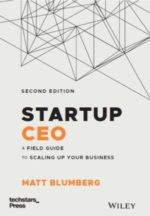
A couple people who read Startup CEO: A Field Guide to Scaling Up Your Business asked me if I would publish a list of all the other business books I refer to over the course of the book. Here it is — I guess in some respects an all-time favorite list for me of business books.
And here’s the list of books in Brad Feld’s Startup Revolution series other than Startup CEO:
Was anyone else as appalled as I am by the contents of Connie Loizos’s recent article, Coming out of COVID, investors lose their taste for board meetings? The stories and quotes in the article about VCs reducing their interest and participation in Board meetings, not showing up, sending the junior associate to cover, etc. are eye opening and alarming if widespread.
The reasons cited in the article are logical—overextended VCs, Zoom fatigue, and newbie directors. Connie’s note that “privately, VCs admit they don’t add a lot of value to boards” is pretty funny to read as a CEO who has heard a ton of VCs talk about how much value they add to boards (although the good ones DO add a lot of value!).
For the most part, everything about the substance of this article just made me angry.
Disengaged or dysfunctional boards aren’t just bad for CEOs and LPs; they’re bad for everyone. If the world has truly become a place where the board meeting is nothing more than a distraction for CEOs, and investors think it’s a tax they can’t afford, then it’s time to hit the reset button on boards and board meetings.
Here are four things that need to happen in this reset:
VCs need to do their job well or stop doing it. The argument that investors did too many deals in the pandemic so now they don’t have any time is a particularly silly one, since the pandemic reduced the amount of time VCs needed to spend on individual board meetings as well. I used to have four board meetings each year with directors who were traveling for the meetings, having dinners, spending time with the team and sitting in on committee meetings.
Today, boards are lucky to have one in-person meeting a year (more on that later). And as everything else takes less time, and there’s little transit, any given VC should have doubled the time they spend on board meetings.
Serving on a board post-investment is a central part of the VC role. They have obligations to the founders they back and to the LPs they represent. The entire role is “find deals, execute deals, manage the portfolio.”
If they no longer have time for the third job, they need to admit that to both founders and LPs before stepping down. If a VC can’t be bothered to focus on minding their investments and adding value, they should work with the company to find their replacement.
CEOs need to take their job as leader of the board seriously. Would a good CEO just throw their hands up if they found management team meetings boring or a waste of time? No. They’d fix the structure of the team or meetings. If not, they shouldn’t be the CEO.
It’s no different with boards. Whether or not the CEO is the board chair, they’re the leader of the organization. So, one of the few “must do” items in their job description is leading the board. The board is part of the CEO’s team, just like the management team.
CEOs get to call the meetings, run the meetings, and insist on attendance. The CEO’s obligation is to make it easy and meaningful for everyone so the board isn’t a tax but rather a secret weapon for the company’s success. As my long-time independent director Scott Weiss used to tell me, boards consume whatever you put in front of them. Garbage in, garbage out. That means paying careful attention to the board materials, to meeting etiquette, and everything in between.
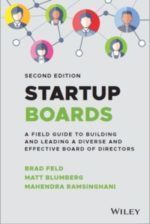
If the CEO doesn’t know how to do that, they should find a CEO mentor who can teach them, observe some well run boards in action through their network, or read Startup Boards: A Field Guide to Building and Leading an Effective Board of Directors, a book I just published along with co-authors and VCs Brad Feld and Mahendra Ramsinghani.
Here’s one tip on making Board prep more efficient: work your Operating System and your Board Book formats so you do one set of reporting for the company and management team that is 95% reusable without any changes for your board.
The format for Board meetings needs to evolve. Board meetings need to evolve in our world of hybrid work just as office work needs to evolve. The format that works for in-person can’t just “lift and shift” to Zoom as is, indefinitely.
Here’s how I’m steering my board:
- I insist on one or two “old school” meetings per year, meaning in-person attendance required, half a day long, and including a meal and even an activity. If I’m only going to see my directors together infrequently, I make it mandatory, but I also make it worthwhile and fun.
- Remote meetings that happen between the in-person meetings are becoming shorter and tighter. I still send out a lot reading material beforehand, but I make sure to keep the focus on a fixed number of major topics to keep the discussion engaging.
- We need a new set of expectations around Zoom meeting etiquette for long meetings. It’s okay to ask people to close their email, browser, and Slack before the meeting starts. If a meeting is more than two hours long, a 15 minute break in the middle is important. Use breakout rooms to mix up topic discussions and working sessions.
- I am trying a new meeting format to maximize director conversation and team development. I start every meeting with a director-only session for half an hour that’s not exactly an Executive Session but is more fun and social—usually including a nonwork discussion topic, as if we were sitting around the dinner table having a cocktail. That gets the conversational juices flowing. Then when my team and observers join the meeting, I ask those people to turn their video off, and I ask directors to adjust their Zoom setting to “hide participants not on video” to keep the number of Zoom squares down to the bare minimum. Any time a team member or observer wants to engage in a particular topic, they turn their video on. Then we follow the meeting with Executive Session and Closed Session and a single-director debrief with me. That is a lot of moving pieces to manage, I find that but doing so keeps the meeting fresh and well paced.
- Finally, I’m following Fred Wilson’s advice and running a very short survey post-meeting to ask directors basic questions so they can summarize their thinking for me and the team: What are we doing well? What do we need more work on? And did the meeting meet your expectations?
Companies need to Follow the Rule of 1s
The secret to engaged and diverse boards is to mix up their membership more than most companies do. Our Board Benchmark study at Bolster indicates that the vast majority of private company boards have no independent directors at all—only founders and investors—and every year, the vast majority of the “open independent seats” specified in those companies’ charters go unfilled.
It’s hard work hiring a new independent board member, and it rarely rises to the top of the CEO’s priority list. But the more independent the board is, and the more diverse the board is in every way (in terms of demographics as well as experience and background), the more robust the conversations around the table become, and the more valuable the board is to the CEO.
My Rule of 1s for building highly effective boards is simple:
- Add independent directors to your board on Day 1
- Try to limit your Board to 1 founder/team member
- Then, for every 1 investor on your board,
- Add 1 independent director
A great board is one of a company’s greatest assets. A weak board can kill a company. A mediocre board is just a waste of time. There’s no question that running an effective board, or serving as an effective director, takes serious time and energy and diligence. But that’s not a reason not to try.
(This post first ran on TechCrunch+ and is also running on the Bolster blog)
Secrets to Yawn-Free Board Meetings
[This post first appeared as an article in Entrepreneur Magazine as part of a new series I’m publishing there in conjunction with my book, Startup CEO: A Field Guide to Scaling Up Your Business]
The objective of board meetings should always be to have great conversations that help you and your executive team think clearly about the issues in front of you, as well as making sure your directors have a clear and transparent view of the state of the business. These conversations come from a team dynamic that encourages productive conflict. There’s no sure-fire formula for achieving this level of engagement, but here are three few guidelines you can follow to increase your chances.
Schedule board meetings in advance, and forge a schedule that works. Nothing is more disruptive – or more likely to drive low turnout – than last minute scheduling. Make sure you, or your executive assistant, knows board members’ general schedules and travel requirements, and whether they manage their own calendar or have their own executive assistant. Set your board meeting schedule for the year in the early fall, which is typically when people are mapping out most of their year’s major activities. If you know that one of your board members has to travel for your meetings, work with the CEOs of the other companies to coordinate meeting dates. Vary the location of meetings if you have directors in multiple geographies so travel is a shared sacrifice.
In the startup stage of our business at Return Path, we ran monthly meetings for an hour, mostly call-in. In the revenue stage, we moved to six to eight meetings per year, two hours in length, perhaps supplemented with two longer-form and in-person meetings. As a growth stage company, we run quarterly meetings. They’re all in-person, meaning every director is expected to travel to every meeting. We probably lose one director each time to a call-in or a no-show for some unavoidable conflict, but, for the most part, everyone is present. We leave four hours for every meeting (it’s almost impossible to get everything done in less time than that) and sometimes we need longer.
Many years, we also hold a board offsite, which is a meeting that runs across 24 hours, usually an afternoon, a dinner, and a morning, and is geared to recapping the prior year and planning out the next year together. It’s especially exhausting to do these meetings, and I’m sure it’s especially exhausting to attend them, but they’re well worth it. The intensity of the sessions, discussion, and even social time in between meetings is great for everyone to get on the same page and remember what’s working, what’s not, and what the world around us looks like as we dive into the deep end for another year.
Build a forward-looking agenda. The second step in having great board meetings is to set an agenda that will prompt the discussion that you want to have. With our current four-hour meetings, our time allocation is the following:
I. Welcomes and framing (5 minutes)
II. Official Business (no more than 15 minutes unless something big is going on)
III. Retrospective (45 minutes)
a. Target a short discussion on highlighted issues
b. Leave some time for Q&A
IV. On My Mind (2 hours)
a. You can spend this entire time on one topic, more than one, or all, as needed.
b. Format for discussions can vary—this is a good opportunity for breakout sessions, for example.
V. Executive Session (30 minutes)
This is your time with directors only, no observers or members of the management team (even if they are board members).
VI. Closed Session (30 minutes)
This is director-only time, without you or anyone else from the management team.
This agenda format focuses your meeting on the future, not the past. In the early years of the business, our board meetings were probably 75 percent “looking backwards” and 25 percent “looking forwards.” They were reporting meetings—reports which were largely in the hands of board members before the meetings anyway. They were dull as anything, and they were redundant: all of our board members were capable of processing historical information on their own. Today, our meetings are probably ten percent “looking backwards” and 90 percent “looking forwards”—and much more interesting as a result.
Separate background reading and presentation materials. Finally, focus on creating a more engaging dialogue during the meeting by separating background reading from presentation materials. In our early days, we created a huge Powerpoint deck as both a handout the week before the meeting and as the in-meeting deck. That didn’t create an engaging meeting.
There’s nothing more mind-numbing than a board meeting where the advance reading materials are lengthy Powerpoint presentations, than when the meeting itself is a series of team members standing up and going through the same slides, bullet by excruciating bullet—that attendees could read on their own.
When we separated the background and presentation materials, people were engaged by the Powerpoint—because it delivered fresh content. We started making the decks fun and engaging and colorful, as opposed to simple text and bullet slides. That was a step in the right direction, but the preparation consumed twice as much time for the management team, and we certainly didn’t get twice the value from it.
Now we send out a great set of comprehensive reading materials and reports ahead of the meeting, and then we have a completely Powerpoint-free meeting. No slides on the wall. This changes the paradigm away from a presentation—the whole concept of “management presenting to the board”—to an actual discussion. No checking email. No yawns. Nobody nodding off. Everyone—management and board—is highly engaged
Startup CEO (OnlyOnce – the book!), Part III – Pre-Order Now
My book, Startup CEO: A Field Guide to Scaling Up Your Business, is now available for pre-order on Amazon in multiple formats (Print, Kindle), which is an exciting milestone in this project! The book is due out right after Labor Day, but Brad Feld tells me that the more pre-orders I have, the better. Please pardon the self-promotion, but click away if you’re interested!
Here are a few quick thoughts about the book, though I’ll post more about it and the process at some point:
- I’ll be using the hashtag #startupceo more now to encourage discussion of topics related to startup CEOs – please join me!
- The book has been described by a few CEOs who read it and commented early for me along the lines of “The Lean Startup movement is great, but this book starts where most of those books end and takes you through the ‘so you have a product that works in-market – now what?’ questions”
- The book is part of the Startup Revolution series that Brad has been working on for a couple years now, including Do More (Even) Faster, Venture Deals, Startup Communities, and Startup Life (with two more to come, Startup Boards and Startup Metrics)
- Writing a book is a LOT harder than I expected!
At this point, the best thing I can do to encourage you to read/buy is to share the full and final table of contents with you, sections/chapters/headings. When I get closer in, I may publish some excerpts of new content here on Only Once. Here’s the outline:
Part I: Storytelling
- Chapter 1: Dream the Possible Dream…Entrepreneurship and Creativity, “A Faster Horse,” Vetting Ideas
- Chapter 2: Defining and Testing the Story…Start Out By Admitting You’re Wrong, A Lean Business Plan Template, Problem, Solution, Key Metrics, Unique Value Proposition and Unfair Advantages, Channels, Customer Segments, Cost Structure and Revenue Streams
- Chapter 3: Telling the Story to Your Investors…The Business Plan is Dead. Long Live the Business Plan, The Investor Presentation, The Elevator Pitch, The Size of the Opportunity, Your Competitive Advantage, Current Status and Roadmap from Today, The Strength of Your Team, Summary Financials, Investor Presentations for Larger Startups
- Chapter 4: Telling the Story to Your Team…Defining Your Mission, Vision and Values, The Top-down Approach, The Bottom-Up Approach, The Hybrid Approach, Design a Lofty Mission Statement
- Chapter 5: Revising the Story…Workshopping, Knowing When It’s Time to Make a Change, Corporate Pivots: Telling the Story Differently, Consolidating, Diversifying, Focusing, Business Pivots: Telling a Different Story
- Chapter 6: Bringing the Story to Life…Building Your Company Purposefully, The Critical Elements of Company-Building, Articulating Purpose: The Moral of the Story, You Can Be a Force for Helping Others—Even If Indirectly
Part II: Building the Company’s Human Capital
- Chapter 7: Fielding a Great Team…From Protozoa to Pancreas, The Best and the Brightest, What About HR?, What About Sales & Marketing?, Scaling Your Team Over Time
- Chapter 8: The CEO as Functional Supervisor…Rules for General Managers
- Chapter 9: Crafting Your Company’s Culture…, Introducing Fig Wasp #879, Six Legs and a Pair of Wings, Let People Be People, Build an Environment of Trust
- Chapter 10: The Hiring Challenge…Unique Challenges for Startups, Recruiting Outstanding Talent, Staying “In-Market”, Recruitment Tools, The Interview: Filtering Potential Candidates, Two Ears One Mouth, Who Should You Interview?, Onboarding: The First 90 Days
- Chapter 11: Every Day in Every Way, We Get a Little Better…The Feedback Matrix, 1:1 Check-ins, “Hallway” Feedback, Performance Reviews, The 360, Soliciting Feedback on Your Own Performance, Crafting and Meeting Development Plans
- Chapter 12: Compensation…General Guidelines for Determining Compensation, The Three Elements of Startup Compensation, Base Pay, Incentive Pay, Equity
- Chapter 13: Promoting …Recruiting from Within, Applying the “Peter Principle” to Management, Scaling Horizontally, Promoting Responsibilities Rather than Swapping Titles
- Chapter 14: Rewarding: “It’s the Little Things” That Matter…It Never Goes Without Saying, Building a Culture of Appreciation
- Chapter 15: Managing Remote Offices and Employees…Brick and Mortar Values in a Virtual World, Best Practices for Managing Remote Employees
- Chapter 16: Firing: When It’s Not Working…No One Should Ever Be Surprised to Be Fired, Termination and the Limits of Transparency, Layoffs
Part III: Execution
- Chapter 17: Creating a Company Operating System…Creating Company Rhythms, A Marathon? Or a Sprint?
- Chapter 18: Creating Your Operating Plan and Setting Goals…Turning Strategic Plans into Operating Plans, Financial Planning, Bringing Your Team into Alignment with Your Plans, Guidelines for Setting Goals
- Chapter 19: Making Sure There’s Enough Money in the Bank…Scaling Your Financial Instincts, Boiling the Frog, To Grow or to Profit? That Is the Question, First Perfect the Model, Choosing Growth, Choosing Profits, The Third Way
- Chapter 20: The Good, the Bad, and the Ugly of Financing…Equity Investors, Venture Capitalists, Angel Investors, Strategic Investors, Debt, Convertible Debt, Venture Debt, Bank Loans, Personal Debt, Bootstrapping, Customer Financing, Your Own Cash Flow
- Chapter 21: When and How to Raise Money…When to Start Looking for VC Money, The Top 11 Takeaways for Financing Negotiations
- Chapter 22: Forecasting and Budgeting…Rigorous Financial Modeling, Of Course You’re Wrong—But Wrong How?, Budgeting in a Context of Uncertainty, Forecast, Early and Often
- Chapter 23: Collecting Data…External Data, Learning from Customers, Learning from (Un)Employees, Internal Data, Skip-Level Meetings, Subbing, Productive Eavesdropping
- Chapter 24: Managing in Tough Times…Managing in an Economic Downturn, Hope Is Not a Strategy—But It’s Not a Bad Tactic, Look for Nickels and Dimes under the Sofa, Never Waste a Good Crisis, Managing in a Difficult Business Situation
- Chapter 25: Meeting Routines…Lencioni’s Meeting Framework, Skip-Level Meetings, Running a Productive Offsite
- Chapter 26: Driving Alignment…Five Keys to Startup Alignment, Aligning Individual Incentives with Global Goals
- Chapter 27: Have You Learned Your Lesson?…The Value (and Limitations) of Benchmarking, The Art of the Post-Mortem
- Chapter 28: Going Global…Should Your Business Go Global?, How to Establish a Global Presence, Overcoming the Challenges of Going Global, Best Practices for Managing International Offices and Employees
- Chapter 29: The Role of M&A…Using Acquisitions as a Tool in Your Strategic Arsenal, The Mechanics of Financing and Closing Acquisitions, Stock, Cash, Earn Out, The Flipside of M&A: Divestiture, Odds and Ends, Integration (and Separation)
- Chapter 30: Competition…Playing Hardball, Playing Offense vs. Playing Defense, Good and Bad Competitors
- Chapter 31: Failure…Failure and the Startup Model, Failure Is Not an Orphan
Part IV: Building and Leading a Board of Directors
- Chapter 32: The Value of a Good Board…Why Have a Board?, Everybody Needs a Boss, The Board as Forcing Function, Pattern Matching, Forests, Trees, Honest Discussion and Debate
- Chapter 33: Building Your Board…What Makes a Great Board Member?, Recruiting a Board Member, Compensating Your Board, Boards as Teams, Structuring Your Board, Board Size, Board Committees, Chairing the Board, Running a Board Feedback Process, Building an Advisory Board
- Chapter 34: Board Meeting Materials…“The Board Book”, Sample Return Path Board Book, The Value of Preparing for Board Meetings
- Chapter 35: Running Effective Board Meetings…Scheduling Board Meetings, Building a Forward-Looking Agenda, In-Meeting Materials, Protocol, Attendance and Seating, Device-Free Meetings, Executive and Closed Sessions
- Chapter 36: Non-Board Meeting Time…Ad Hoc Meetings, Pre-Meetings, Social Outings
- Chapter 37: Decision-Making and the Board…The Buck Stops—Where?, Making Difficult Decisions in Concert, Managing Conflict with Your Board
- Chapter 38: Working with the Board on Your Compensation and Review…The CEO’s Performance Review, Your Compensation, Incentive Pay, Equity, Expenses
- Chapter 39: Serving on Other Boards…The Basics of Serving on Other Boards, Substance, or Style?
Part V: Managing Yourself So You Can Manage Others
- Chapter 40: Creating a Personal Operating System…Managing Your Agenda, Managing Your Calendar, Managing Your Time, Feedback Loops
- Chapter 41: Working with an Executive Assistant…Finding an Executive Assistant, What an Executive Assistant Does
- Chapter 42: Working with a Coach…The Value of Executive Coaches, Areas Where an Executive Coach Can Help
- Chapter 43: The Importance of Peer Groups…The Gang of Six, Problem-Solving in Tandem
- Chapter 44: Staying Fresh…Managing the Highs and Lows, Staying Mentally Fresh, At Your Company, Out and About, Staying Healthy, Me Time
- Chapter 45: Your Family…Making Room for Home Life, Involving Family in Work, Bringing Work Principles Home
- Chapter 46: Traveling…Sealing the Deal with a Handshake, Making the Most of Travel Time, Staying Disciplined on the Road
- Chapter 47: Taking Stock of the Year…Celebrating “Yes”; Addressing “No”, Are You Having Fun?, Are You Learning and Growing as a Professional?, Is It Financially Rewarding?, Are You Making an Impact?
- Chapter 48: A Note on Exits…Five Rules of Thumb for Successfully Selling Your Company
If you’re still with me and interested, again here are the links to pre-order (Print, Kindle).
What Makes an Awesome Board Member
(This post was requested by my long-time Board member Brad Feld and is also running concurrently on his blog today)
I’ve written a bunch of posts over the years about how I manage my Board at Return Path. And I think part of having awesome Board members is managing them well – giving transparent information, well organized, with enough lead time before a meeting; running great and engaging meetings; mixing social time with business time; and being a Board member yourself at some other organization so you see the other side of the equation. All those topics are covered in more detail in the following posts: Why I Love My Board, Part II, The Good, The Board, and The Ugly, and Powerpointless.
But by far the best way to make sure you have an awesome board is to start by having awesome Board members. I’ve had about 15 Board members over the years, some far better than others. Here are my top 5 things that make an awesome Board member, and my interview/vetting process for Board members.
Top 5 things that make an awesome Board member:
- They are prepared and keep commitments. They show up to all meetings. They show up on time and don’t leave early. They do their homework. The are fully present and don’t do email during meetings
- They speak their minds. They have no fear of bringing up an uncomfortable topic during a meeting, even if it impacts someone in the room. They do not come up to you after a meeting and tell you what they really think. I had a Board member once tell my entire management team that he thought I needed to be better at firing executives more quickly!
- They build independent relationships. They get to know each other and see each other outside of your meetings. They get to know inviduals on your management team and talk to them on occasion as well. None of this communication goes through you
- They are resource rich. I’ve had some directors who are one-trick or two-trick ponies with their advice. After their third or fourth meeting, they have nothing new to add. Board members should be able to pull from years of experience and adapt that experience to your situations on a flexible and dynamic basis
- They are strategically engaged but operationally distant. This may vary by stage of company and the needs of your own team, but I find that even Board members who are talented operators have a hard time parachuting into any given situation and being super useful. Getting their operational help requires a lot of regular engagement on a specific issue or area. But they must be strategically engaged and understand the fundamental dynamics and drivers of your business – economics, competition, ecosystem, and the like
My interview/vetting process for Board members:
- Take the process as seriously as you take building your executive team – both in terms of your time and in terms of how you think about the overall composition of the Board, not just a given Board member
- Source broadly, get a lot of referrals from disparate sources, reach high
- Interview many people, always face to face and usually multiple times for finalists. Also for finalists, have a few other Board members conduct interviews as well
- Check references thoroughly and across a few different vectors
- Have a finalist or two attend a Board meeting so you and they can examine the fit firsthand. Give the prospective Board member extra time to read materials and offer your time to answer questions before the meeting. You’ll get a good first-hand sense of a lot of the above Top 5 items this way
- Have no fear of rejecting them. Even if you like them. Even if they are a stretch and someone you consider to be a business hero or mentor. Even after you’ve already put them on the Board (and yes, even if they’re a VC). This is your inner circle, and getting this group right is one of the most important things you can do for your company
I asked my exec team for their own take on what makes an awesome Board member. Here are some quick snippets from them where they didn’t overlap with mine (with only two inside jokes that I couldn’t resist putting up for the Board):
- Ethical and high integrity in their own jobs and lives
- Comes with an opinion
- Thinking about what will happen next in the business and getting management to think ahead
- Call out your blind spots
- Remembering to thank you and calling out what’s right
- Role modeling for your expectations of your own management team – Do your prep, show up, be fully engaged, be brilliant/transparent/critical/constructive and creative. Then get out of our way
- Offer tough love…Unfettered, constructive guidance – not just what we want to hear
- Pattern matching: they have an ability to map a situation we have to a problem/solution at other companies that they’ve been involved in – we learn from their experience…but ability and willingness to do more than just pattern matching. To really get into the essence of the issues and help give strategic guidance and suggestions
- Ability to down 2 Shake Shack milkshakes in one sitting
- Colorful and unique metaphors
Disclaimer – I run a private company. While I’m sure a lot of these things are true for other types of organizations (public companies, non-profits, associations, etc.), the answers may vary. And even within the realm of private companies, you need to have a Board that fits your style as a CEO and your company’s culture. That said, the formula above has worked well for me, and if nothing else, is somewhat time tested at this point!
As we wrote in Bolster’s Founding Manifesto, one of the reasons we started Bolster was to create a new way; a faster, easier, and more cost-effective way, for startup and scaleup CEOs to grow their boards of directors and make them more diverse.
There’s a lot of research out there that the more independent a board is, the better it performs for companies — and that there’s a high degree of correlation between more independent boards and higher performing companies as well. There’s also a lot of research out there that shows that teams which have diversity of gender and race/ethnicity perform better. And everyone who has ever been on a high-functioning board of directors knows that a board is a team.
These facts are well known, yet it is still the case that most private company boards are overwhelmingly made up of founders and investors who are still largely white and male. I believe that the lack of independence and diversity on boards is a big miss for the whole startup ecosystem, and it’s a part of the startup game that we at Bolster want to help change.
Startup boards are tricky things. One of the very unique aspects of a CEO’s job that sets it apart from other executive positions is building and leading a board of directors. But most startup CEOs have either little or no experience building and leading a board, so that part of the job tends to default to a “because that’s the way I assume it’s always been done” kind of task. Of course, if you’re not intentional about building and managing a board, you’re likely to get lousy results.
Building, shaping, and leading a world class board is one of the single most important things startup CEOs can do to help their businesses thrive and become industry leaders. It’s on par with building and leading an executive team. I’ve seen amazing companies held back by weak and ineffective boards and investor syndicates, and I’ve seen so-so companies succeed because the strategic advice, experience, and accountability coming out of the board room drives the management team in extraordinary ways.
So how is Bolster helping startup CEOs change the game with respect to Boards? We are doing three things.
First, as you know, what gets measured gets managed. Our first-of-its-kind Board Benchmark application will soon produce an industry standard set of data around private company boards. You can’t find data on private company boards but we’ll soon have important data like size, composition (independents/management/investors), independent director compensation and diversity (gender/race-ethnicity/age). This will help answer questions that I know I have had many times over the years as a CEO such as
- How big should my board be at this stage?
- How many independent directors should I have?
- What is the right profile of an independent director?
- How many options should I give a board member?
Starting next week, we’re opening up our Board Benchmark application to any company who creates a free Bolster account. It will tell us a lot about the baseline across the ecosystem, and it will answer a lot of questions startup and scaleup CEOs have but can’t get answers to. Although this is an ongoing real-time benchmark tool, I’ll post some results here when we have enough critical mass to start reporting out.
Second, Bolster is in the talent business, and helping match VC-backed companies with a strong diverse slate of board candidates who are well-matched with their company is at the core of our business. We are already working on many searches for independent board members, and we’ll only be doing more of them as our client base and member base grow.
Finally, this blog post is the beginning of a whole series of posts about startup boards that we hope will demystify them a bit and help change the world’s thinking about how to grow them. Some of the material I will borrow from other blog posts I’ve written, or from the Board of Directors section of Startup CEO. Some will come from other influential VC and CEO bloggers and from Brad Feld and Mahendra Ramsinghani’s book Startup Boards. But much of the content will be new. And because Bolster is a two-sided marketplace, roughly half of the content will be aimed at startup CEOs and the other half at executives who are interested in serving on boards and aren’t sure how to get from where they are today into a board room. We’ll be sending out all the CEO posts as an eBook to CEOs who complete the Board Benchmark study, and all the Member posts as an eBook to Bolster members who fill out their Board profiles. I’ll post both of those eBooks here eventually as well.
For CEOs, the topics we will cover include
- The purpose of a board
- Size and composition on boards
- Board evolution & turnover
- Diversity in the boardroom and the importance of appointing first-time directors
- What to look for in a director
- How to recruit and interview directors
- How to onboard directors, especially first time directors
- How to compensate directors
- How to build a director bench or Advisory Board
- How to evaluate your board
For executives searching for a board role, the topics we will cover include
- What startup corporate boards look like
- How to prepare yourself to get on your first board
- Should you serve on an advisory board?
- How to interview for a Board role
- What you need to know about board compensation
- How to approach your first board meeting
- How to think about corporate governance as a board member
- How to be a great board member
- How to give advice or difficult feedback as a board member
- Making sure your voice is heard during a board meeting
- How to know if you’re doing a good job as a board member
We believe that boards can make or break a company and we intend to chart a new course for startup boards. I look forward to sharing thoughts and data with you on that topic in the weeks to come.
Book Short: On The Same Page
Being on the same page with your team, or your whole company for that matter, is a key to success in business. The Four Obsessions of an Extraordinary Executive, by Patrick Lencioni, espouses this notion and boils down the role of the CEO to four points:
- Build and maintain a cohesive leadership team
- Create organizational clarity
- Overcommunicate organizational clarity
- Reinforce organizational clarity through human systems
Those four points sound as boring as bread, but the book is anything but. The book’s style is easy and breezy — business fiction. One of the most poignant moments for me was when the book’s “other CEO” (the one that doesn’t “get it”) reflects that he “didn’t go into business to referee executive team meetings and delivery employee orientation…he loved strategy and competition.” Being a CEO is a dynamic job that changes tremendously as the organization grows. This book is a great handbook for anyone transitioning out of the startup phase, or for anyone managing a larger organization.
I haven’t read the author’s other books (this is one in a series), but I will soon!
Why I Love My Board, Part II
I’ve written a few things about my Board of Directors over the years, some of which I note below. Part I of this series isn’t particularly useful, though there’s an entertaining link in it to a video of Fred that’s worth looking at if you know or follow him.
Today, we are happy to announce that we are adding a new independent director, Scott Petry, the founder of Postini and now a senior email product leader at Google (read the official press release [here]). Scott’s a fantastic addition to our already strong Board, and the process of recruiting and adding him has made me reflect a bit on my Board and its strengths and weaknesses, so I thought I’d share a couple of those thoughts here.
I think Return Path has cultivated a very high functioning Board over the years, and I feel very fortunate to have the group that we have. Here are the top five things I think make our Board special, in no particular order.
- We have great individuals on the Board. Each of our individual Board members — Fred Wilson, Greg Sands, Scott Weiss, Scott Petry, and Brad Feld (now officially an observer), (in addition to me) — could anchor a super strong Board in his own right and have all served on multiple Boards of related companies. And not only do these guys know their stuff…they do their homework. They all come to every meeting very well prepared.
- The individual Board members are different but have different experiences and personalities that complement each other nicely. Among the three VCs on the Board, two have operating experience, one as a founder and one in product management. Among the two industry CEOs, one has more of a business development focus, and the other has deep technical expertise. Some directors are excitable and a bit knee-jerk, others are more reflective; some are aggressive and others are more conservative; some have extremely colorful metaphors, others are a bit more steeped in traditional pattern recognition.
- We have built a great team dynamic that encourages productive conflict. I assume a lot of rooms full of great directors of different types are so ego-laden that people just talk over each other. Our group, for whatever reason, doesn’t function that way. We are engaged and in each others’ faces during meetings, no one is afraid to voice an opinion, and we listen to each other. Some of this may be the way we spend time together outside of Board rooms, which I wrote about in The Social Aspects of Running a Board. Some is about just making sure to have fun, which I wrote about in The Good, The Board, and The Ugly (Part I, Part II, Part III), I talk about other aspects of running a good Board, including making sure to have fun – that post includes an entertaining picture of now-Twitter CEO Dick Costolo and a few of his friends from his FeedBurner days.
- We are deliberate about connecting the Board and the Executive team, and the rest of the company. We encourage every director to have a direct relationship with every one of my direct reports. They connect both during and outside of meetings, and they have gotten to know each other well over the years. This is much more helpful to us than a more traditional “hourglass” structure where all connections go through the CEO.
- We run great meetings. We send out a single, well-organized document several days before the meeting. Board members do their homework. We focus on current and future issues more than reporting on historical numbers, and we no longer do any presentations — it’s all discussion (I also wrote about a lot of this here in PowerPointLess).
Welcome to the Return Path family, Scott P – we are delighted to have you on board our Board!
I love innovation, and process is no different than product or business model in that regard. I’ve run and attended several hundred board meetings over the years, both those of companies where I’ve been CEO or Chairman, and those where I’m a director. I’ve written a lot about how I like running board meetings in Startup CEO, and as I mentioned the other day, I’m a co-author of a Second Edition of Startup Boards: A Field Guide to Building and Leading an Effective Board of Directors, which is coming out in June and is available to pre-order now, along with Brad Feld and Mahendra Ramsinghani.
There are two adaptations I’ve made to my standard board routines in the last year or so, one driven by the pandemic and one not.
In olden times (that makes me sound like I’m 400 years old, but “pre-covid” sounds so clinical), I used to have a board dinner the night before or after every board meeting, and of course, everything was in person. That was a really important ritual in my mind towards the end of building the board as an effective team, where people on the team know each other as people, share things going on in their lives, share vulnerabilities, and develop bonds of trust. Without regular in-person meetings and dinners or social events, that gets a lot harder. Even when we get back to “normal,” I imagine the most we’ll do in-person board meetings is 1-2x/year.
What’s the zoom version of this?
We now do two 30-minute Executive Sessions (directors only) one before the board meeting officially starts and observers and team join, as well as the traditional one after the meeting ends. The purposes of the two sessions are different. The standard post-meeting Executive Session follows up on the meeting and has me talk about business or team issues that I don’t want to talk about with the full group present or get feedback from the board. But the one before the meeting is almost entirely social. I try to come up with a different question or topic to get all of us talking that is not about Bolster. Last week’s meeting was a simple “what’s the best thing that’s happened to you so far in 2022, and what’s the worse?” One time I asked everyone to show a picture from their phone photo roll and talk about it. You get the idea. It’s not the same as a dinner, but it seems like an effective substitute given the medium.
The second adaptation, and full credit to Fred for suggesting this one a while back, is the post-meeting survey. Now immediately after every Board meeting, I send a simple Google form to each director with the following questions:
- What are 1-3 areas/specifics where we are doing well?
- What are 1-3 areas/specifics you’re concerned about or where we could do better?
- Did the board book have the right level of detail and commentary? Is there anything you’d like to see change about the format or the content?
- Did the meeting meet your objectives for learning and discussion?
- If not, why not?
- Do you have any other feedback for Matt at this time?
I get great feedback, almost immediately and always from all board members, while things are still fresh in everyone’s mind. I’m planning to do this whether or not the meeting is remote…although it’s definitely good when the meeting is remote, and things like Executive Session, Closed Session, and debrief with me after Closed Session are quick or sometimes rushed.
There’s always room for innovation, even in standard and time-tested processes like board meetings.
The Advantage: Why Organizational Health Trumps Everything Else In Business is Patrick Lencioni’s newest book. Unlike most or all of his other books (see the end of this post for the listing), this one is not a fable, although his writing style remains very quick and accessible.
I liked this book a lot. First, the beginning section is a bit of a recap of his Five Dysfunctions of a Team which I think was his best book. And the ending section is a recap of his Death by Meeting, another really good one. The middle sections of the book are just a great reminder of the basic building blocks of creating and communicating strategy and values – about driving alignment.
But the premise, as the subtitle indicates, is that maintaining organizational health is the most important thing you can do as a leader. I tell our team at Return Path all the time that our culture is a competitive advantage in many ways, some quantifiable, and others a little less tangible.
A telling point in the book is when Lencioni is relaying a conversation he had with the CEO of a client company who does run a healthy organization – he asked, “Why in the world don’t your competitors do any of this?” And the client responded, “You know, I honestly believe they think it’s beneath them.” Lencioni goes on to say, “In spite of its undeniable power, so many leaders struggle to embrace organizational health because they quietly believe they are too sophisticated, too busy, or too analytical to bother with it.” And there you have it. More examples of why “the soft stuff” is mission critical.
Lencioni’s “Recipe for Organizational Health” (the outline of the book):
– Build a Cohesive Leadership Team
– Create Clarity
– Overcommunicate Clarity
– Reinforce Clarity
And his recipe for creating a tight set of “mission/vision/values” (the middle of the book):
1. Why do we exist?
2. How do we behave?
3. What do we do?
4. How will we succeed?
5. What is most important, right now?
6. Who must do what?
While there are lots of other good frameworks for doing all of this, Lencioni’s models and books are great, simple reminders of one of the CEO’s most important leadership functions. We’re recrafting our own mission and values statements at the moment at Return Path, and we’re doing it using this 6-Question framework instead of the classic “Mission/Vision/Values” framework popularized a few years back by Harvard Business Review.
The full book series roundup as far as OnlyOnce has gotten so far is: