
How Much Marketing Is Too Much Marketing?
How Much Marketing Is Too Much Marketing?
It seems like a busy holiday season is already underway for marketers, and hopefully for the economy, shoppers as well. Just for kicks, I thought I’d take a rough count of how many marketing messages I was exposed to in a given day. Here’s what the day looked like:
5:30 a.m. – alarm clock goes off with 1010 WINS news radio in the middle of an ad cycle – 2 ads total. Nice start to the day.
5:45-6:30 – in the gym, watching Today In New York News on NBC for 30 minutes, approximately 6 ad pods, 6 ads per pod – 36 ads total. So we’re at 38, and it’s still dark out.
7:00 – walk to subway and take train to work, then walk to office from subway. Probably see 6 outdoor ads of various kinds on either walk, then about 8 more on the subway within clear eyeshot – 20 ads total.
7:30 – quick scan of My Yahoo – 2 ads total.
7:32 – read Wall St. Journal online, 15 page views, 3 ads per page – 45 ads total.
7:40 – Catch up on RSS feeds and blogs, probably about 100 pages total, only 50% have ads – 50 ads total (plus another 25 during the rest of the day).
7:50 – Sift through email – even forgetting the spam and other crap I delete – 10 ads total (plus another 10 during the rest of the day).
8:00-noon – basically an ad free work zone, but some incidental online page views are generated in the course of work – 25 ads total, plus a ton of Google paid search ads along the way.
Noon-1 p.m. – walk out to get lunch and come back to office, so some outdoor ads along the path – 12 ads total.
1-7 p.m. – same work zone as before – 25 ads total, plus lots of Google.
7 p.m. – walk to Madison Square Garden to see the Knicks get clobbered by Milwaukee, see lots of outdoor ads along the way – 20 ads total.
7:30-9:30 – at the Garden for the Knicks game, bombarded by ads on the scoreboards, courtside, sponsorship announcements, etc. Approximately 100 ads total (and that’s probably being exceptionally generous).
9:30 – subway ride and walk home – 14 ads total.
10:00 – blitz through episodes of The Daily Show and West Wing in TiVo. 8 minutes of :30 advertising per half hour, or 48 ads total, fortunately can skip most of them with TiVo.
11:00 – flip through issue of The New Yorker before bed – 50 ads total.
Total: 492 ads.
I’m sure I missed some along the way, and to be fair, I am counting the ads I skipped with TiVo — but hey, I’m also not counting all the ads I saw on Google, so those two should wash each other out. On the other hand, if I drove to and from work in California, I’d have seen an extra 100 billboards, and if I read the New York Times print edition, I’d have seen an extra 100 print ads.
Approximate cost paid to reach me as a consumer today (assuming an average CPM of $10): just under $5. Sanity check on that — $5/day*200 million Americans who are “ad seers”*365 days is a $365 billion advertising industry, which is probably in the right ballpark.
What are the two ads I consciously acted on? An offer from LL Bean through email (I’m on their list) for a new fleece I’ve been meaning to get, and a click on one of the Google paid search results. No doubt, I subconsciously logged some good feelings or future purchase intentions for any number of the other ads. Or at least so hope all of the advertisers who tried to reach me.
What’s the message here? A very Seth Godin-like one. Nearly all of the marketing thrown at me during the day (Seth would call it interrupt marketing) — on the subway, at the Garden, on the sidebar of web pages — is just noise to me. The ones I paid attention to were the ones I WANTED to see: the email newsletter I signed up for from a merchant I know and love; and a relevant ad that came up when I did a search on Google.
Brand advertising certainly has a role in life, but permission and relevance rule the day for marketers. Always.
Book Short: The Subtle Art of Not Giving a F*ck
This was a catchy title I caught in our shared Kindle library at a moment when I wasn’t connected to wifi and had nothing to read. Thanks to Mariquita for buying it…it was a good read.
The book is funny, irreverent, and deep. It speaks a lot about pain and failure and how those can help create resilience. It is also chock full of great anecdotes including a particularly memorable one about Pete Best, the original drummer for the Beatles who got fired by the rest of the band on the eve of their becoming famous.
Here’s one particularly representative quote:
Pain is an inextricable thread in the fabric of life, and to tear it out is not only impossible, but destructive: attempting to tear it out unravels everything else with it. To try to avoid pain is to give too many fucks about pain. In contrast, if you’re able to not give a fuck about the pain, you become unstoppable.
Every founder would benefit from reading this book. It won’t stop you from giving a f*ck about everything (it can’t), but it might give you a couple tools for not giving a f*ck about some things, which would clear up some mental capacity for other more important things!
The Gift of Feedback, Part III
The Gift of Feedback, Part III
I’ve written about our 360 Review process at Return Path a few times in the past:
- overall process
- process for my review in particular
- update on a process change and unintended consequences of that process change)
- learnings from this year’s process about my staff
And the last two times around, I’ve also posted the output of my own review publicly here in the form of my development plan:
So here we are again. I have my new development plan all spruced up and ready to go. Many thanks to my team and Board for this valuable input, and to Angela Baldonero (my fantastic SVP People and in-house coach), and Marc Maltz of Triad Consulting for helping me interpret the data and draft this plan. Here at a high level is what I’m going to be working on for the next 1-2 years:
- Institutionalize impatience and lessen the dependency dynamic on me. What does this mean? Basically it means that I want to make others in the organization and on my team in particular as impatient as I am for progress, success, reinvention, streamlining and overcoming/minimizing operational realities. I’ll talk more about something I’ve taken to calling “productive disruption” in a future blog post
- Focus on making every staff interaction at all levels a coaching session. Despite some efforts over the years, I still feel like I talk too much when I interact with people in the organization on a 1:1 or small group basis. I should be asking many more questions and teaching people to fish, not fishing for them
- Continue to foster deep and sustained engagement at all levels. We’ve done a lot of this, really well, over the years. But at nearly 250 people now and growing rapidly, it’s getting harder and harder. I want to focus some real time and energy in the months to come on making sure we keep this critical element of our culture vibrant at our new size and stage
- I have some other more tactical goals as well like improving at public speaking and getting more involved with leadership recruiting and management training, but the above items are more or less the nub of it
One thing I know I’ll have to do with some of these items and some of the tactical ones in particular is engage in some form of deliberate practice, as defined by Geoffrey Colvin in his book Talent is Overrated (blog post on the book here). That will be interesting to figure out.
But that’s the story. Everyone at Return Path and on my Board – please help me meet these important goals for my development over the next couple of years!
Startup CXO: the Sequel to Startup CEO
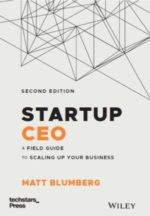
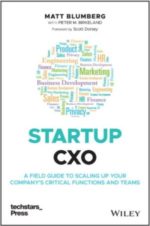
As I finished up my work on the Second Edition of Startup CEO: A Field Guide to Scaling Up Your Business and started working on a new startup, my colleagues and I started envisioning a new book as a sequel or companion to Startup CEO that is going to be published on June 9 with our same publisher, Wiley & Sons. The book is called Startup CXO: A Field Guide to Scaling Up Your Company’s Critical Functions and Teams.
Simply put, the first book left me with the nagging feeling that it wasn’t enough to only help CEOs excel, because starting and scaling a business is a collective effort. What about the other critical leadership functions that are needed to grow a company? If you’re leading HR, or Finance, or Marketing, or any key function inside a startup, what resources are available to you? What should you be thinking about? What does ‘great’ look like? What challenges lurk around the corner as you scale your function that you might not be focused on today? If you’re a CEO who has never managed all these functions before, what should you be looking for when you hire and manage all these people? If you’re an aspiring executive, from entry-level to manager to director, what do you need to think about as you grow your career and develop your skills?
Startup CXO is a “book of books,” with one section for each major function inside a company. Each section is be composed of 15-20 discrete short chapters outlining the key “playbooks” for each functional role in the company – Chief People Officer, Chief Financial Officer, Chief Marketing Officer, Chief Revenue Officer, etc., hence the title Startup CXO – which is a generally accepted label in the startup ecosystem for “Chief ____ Officer.”
Here are the front and back covers of the book, with some great endorsements we’re so proud of on the back.


This is an important topic to write about at this particular time because America’s “startup revolution” continues to gather steam. There are only increasing numbers of venture capital investors, seed funds, and accelerators supporting increasing numbers of entrepreneurial ventures. While there are a number of books in the marketplace about CEOs and leadership, and some about individual functional disciplines (lots of books about the topic of Sales, the topic of Product Development), there are very few books that are practical how-to guides for any individual function, and NONE that wrap all these functions into a compendium that can be used by a whole startup executive team. Very simply, each section of this book serves as a how-to guide for a given executive, and taken together, the book will be a good how-to guide for startup executive teams in general.
Startup CXO has my name on it as principal author, and I’m writing parts of it, but I can’t even pretend to write it on my own, so the book has a large number of contributors who have the experience, credibility, and expertise to share something of value with others in their specific functional disciplines — most of my Bolster co-founders are writing sections, and the others are being written by former Return Path executive colleagues — Jack Sinclair, Cathy Hawley, Ken Takahashi, Anita Absey, George Bilbrey, Dennis Dayman, Nick Badgett, Shawn Nussbaum, and Holly Enneking.
Startup CXO is also pretty closely related to Bolster’s business, since we are in the business of helping assess and place on-demand CXO talent, and as such, the final section of the book has a series of chapters written by Bolster members who are career Fractional Executives about their experience as a Fractional CXO.
The book is available for pre-order now at Amazon and Barnes & Noble.
Oh, and stay tuned for a third book in the series (kind of) due out late this year. More on that over the summer as the project takes shape!
BookShort: Vive La Difference
Book Short: Vive La Difference
Brain Sex, by Anne Moir and David Jessell, was a fascinating read that I finished recently. I will caveat this post up front that the book was published in 1989, so one thing I’m not sure of is whether there’s been more recent research that contradicts any of the book’s conclusions. I will also caveat that this is a complex topic with many different schools of thought based on varying research, and this book short should serve as a starting point for a dialog, not an end point.
That said, the book was a very interesting read about how our brains develop (a lot happens in utero), and about how men’s and women’s brains are hard wired differently as a result. Here are a few excerpts from the book that pretty much sum it up (more on the applied side than the theoretical):
- Men tend to be preoccupied with things, theories, and power…women tend to be more concerned with people, morality, and relationships
- Women continue to perceive the world in interpersonal terms and personalize the objective world in a way men do not. Notwithstanding occupational achievements, they tend to esteem themselves only insofar as they are esteemed by those they love and respect. By contrast, the bias of the adult male brain expresses itself in high motivation, competition, single-mindedness, risk-taking, aggression, preoccupation with dominance, hierarchy, and the politics of power, the constant measurement and competition of success itself, the paramountcy of winning
- Women will be more sensitive than men to sound, smell, taste, and touch. Women pick up nuances of voice and music more readily, and girls acquire the skills of language, fluency, and memory earlier than boys. Females are more sensitive to the social and personal context, are more adept at tuning to peripheral information contained in expression and gesture, and process sensory and verbal information faster. They are less rule-bound than men
- Men are better at the kills that require spatial ability. They are more aggressive, competitive, and self-assertive. They need the hierarchy and the rules, for without them they would be unable to tell if they were top or not – and that is of vital importance to most men
As I said up front, this book, and by extension this post, runs the risk of overgeneralizing a complex question. There are clearly many women who are more competitive than men and outpace them at jobs requiring spatial skills, and men who are language rock stars and quite perceptive.
But what I found most interesting as a conclusion from the book is the notion that there are elements of our brains are hard wired differently, usually along gender lines as a result of hormones developed and present when we are in utero. The authors’ conclusion — and one that I share as it’s applied to life in general and the workplace in particular — is that people should “celebrate the difference” and learn how to harness its power rather than ignore or fight it.
Thanks to David Sieh, our VP Engineering, for giving me this book.
Startup CEO (OnlyOnce- the book!)
Startup CEO (OnlyOnce – the book!)
One of the things I’ve often thought over the years since starting Return Path in 1999 is that there’s no instruction manual anywhere for how to be a CEO. While big company CEOs are usually groomed for the job for years, startup CEOs aren’t…and they’re often young and relatively inexperienced in business in general. That became one of the driving forces behind the creation of my blog, OnlyOnce (because “you’re only a first time CEO once”) back in 2004.
Now, over 700 blog posts later, I’m excited to announce that I’m writing a book based on this blog called Startup CEO: A Field Guide to Building and Running Your Company. The book is going to be published by Wiley & Sons and is due out next summer. The book won’t just be a compendium of blog posts, but it will build on a number of the themes and topics I’ve written about over the years and also fill in lots of other topics where I haven’t.
The catalyst for writing this book was Brad Feld. Brad has been a friend, mentor, investor, and Board member for over a decade. We’ve had many great times, meals, and conversations together over the years, not the least of which was staggering across the finish line together at the New York City Marathon in 2005. Brad started writing books a few years ago, and I’ve been peripherally involved with them, first with Do More Faster: TechStars Lessons to Accelerate Your Startup (I contributed one of the chapters) and then with Venture Deals: Be Smarter Than Your Lawyer and Venture Capitalist (I wrote all the “Entrepreneur Perspective” sidebars).
Those are great books, and they’ve been incredibly well received by the global entrepreneurial community. But then Brad got the bug, and now he’s in the middle of writing FOUR new books with Wiley that will all come out over the next year. They are:
- Startup Communities: Building an Entrepreneurial Ecosystem in Your City
- Startup Life: Surviving and Thriving in a Relationship with an Entrepreneur
- Startup Metrics: Making Sense of the Numbers in Your Startup
- Startup Boards: Reinventing the Board of Directors to Better Support the Entrepreneur
These four books, plus the two earlier ones, plus Startup CEO, are all part of the Startup Revolution series. While I’ll continue to do most of my blogging and posting here on OnlyOnce, I’d also encourage you to check out the Startup Revolution site and sign up to be a member of that community. I’ll be doing some things on that site as well in connection with Startup CEO, and it’s a more concentrated place to post and comment on all things Startup. In addition, we’ll be putting a bunch of add-ons to the book on that site closer to publication time.
I hope Startup CEO becomes a standard for all new CEOs. I don’t think I have all the answers, but at least others can benefit by learning from my 13 years of successes and mistakes! Now all I have to do is go write the darned thing.
Deals are not done until they are done
We were excited to close the sale of our Consumer Insights business last week to Edison, as I blogged about last week on the Return Path blog. But it brought back to mind the great Yogi Berra quote that “it ain’t over ’til it’s over.”
We’ve done lots of deals over our 18 year existence. Something like 12 or 13 acquisitions and 5 spin-offs or divestitures. And a very large number of equity and debt financings.
We’ve also had four deals that didn’t get done. One was an acquisition we were going to make that we pulled away from during due diligence because we found some things in due diligence that proved our acquisition thesis incorrect. We pulled the plug on that one relatively early. I’m sure it was painful for the target company, but the timing was mid-process, and that is what due diligence is for. One was a financing that we had pretty much ready to go right around the time the markets melted down in late 2008.
But the other two were deals that fell apart when they were literally at the goal line – all legal work done, Boards either approved or lined up to approve, press releases written. One was an acquisition we were planning to make, and the other was a divestiture. Both were horrible experiences. No one likes being left at the altar. The feeling in the moment is terrible, but the clean-up afterwards is tough, too. As one of my board members said at the time of one of these two incidents – “what do you do with all the guests and the food?”
What I learned from these two experiences, and they were very different from each other and also a while back now, is a few things:
- If you’re pulling out of a deal, give the bad news as early as possible, but absolutely give the news. We actually had one of the “fall apart at the goal line” deals where the other party literally didn’t show up for the closing and never returned a phone call after that. Amateur hour at its worst
- When you’re giving the bad news, do it as directly as possible – and offer as much constructive feedback as possible. Life is long, and there’s no reason to completely burn a relationship if you don’t have to
- Use the due diligence and documentation period to regularly pull up and ask if things are still on track. It’s easy in the heat and rapid pace of a deal to lose sight of the original thesis, economic justification, or some internal commitments. The time to remember those is not at the finish line
- Sellers should consider asking for a breakup fee in some situations. This is tough and of course cuts both ways – I wouldn’t want to agree to one as a buyer. But if you get into a process that’s likely to cause damage to your company if it doesn’t go through by virtue of the process itself, it’s a reasonable ask
But mostly, my general rule now is to be skeptical right up until the very last minute.
Because deals are not done until they are done.
Email Intelligence and the new Return Path
Welcome to the new Return Path.
For a tech company to grow and thrive in the 21st century it must be in a state of constant adaptation. We have been the global market leaders in email deliverability since my co-founder George Bilbrey coined that term back in 2002. In fact, back in 2008 we announced a major corporate reorganization, divesting ourselves of some legacy businesses in order to focus on deliverability as our core business.
Since then Return Path has grown tremendously thanks to that focus, but we have grown to the point where it’s time for us to redefine ourselves once again. Now we’re launching a new chapter in the company’s history to meet evolving needs in our marketplace. We’re establishing ourselves as the global market leaders in email intelligence. Read on and I’ll explain what that means and why it’s important.
What Return Path Released Today
We launched three new products today to improve inbox placement rate (the new Inbox Monitor, now including subscriber-level data), identify phishing attacks (Email Brand Monitor), and make it easier to understand subscriber engagement and benchmark your program against your competition (Inbox Insight, a groundbreaking new solution). We’ve also released an important research study conducted by David Daniels at The Relevancy Group.
The report’s findings parallel what we’ve been hearing more and more recently. Email marketers are struggling with two core problems that complicate their decision making: They have access to so much data, they can’t possibly analyze it fast enough or thoroughly enough to benefit from it; and too often they don’t have access to the data they really need.
Meanwhile they face new challenges in addition to the ones email marketers have been battling for years. It’s still hard to get to the inbox, and even to monitor how much mail isn’t getting there. It’s still hard to protect brands and their customers from phishing and spoofing, and even to see when mail streams are under attack. And it’s still hard to see engagement measurements, even as they become more important to marketing performance.
Email Intelligence is the Answer
Our solution to these problems is Email Intelligence. Email intelligence is the combination of data from across the email ecosystem, analytics that make it accessible and manageable, and insight that makes it actionable. Marketers need all of these to understand their email performance beyond deliverability. They need it to benchmark themselves against competitors, to gain a complete understanding of their subscribers’ experience, and to accurately track and report the full impact of their email programs. In fact, we have redefined our company’s mission statement to align with our shift from being the global leader in Email Deliverability to being the global leader in Email Intelligence:
We analyze email data and build solutions that generate insights for senders, mailbox providers, and users to ensure that inboxes contain only messages that users want
The products we are launching today, in combination with the rest of our Email Intelligence Solution for Marketers that’s been serving clients for a decade, will help meet these market needs, but we continue to look ahead to find solutions to bigger problems. I see our evolution into an Email Intelligence company as an opportunity to change the entire ecosystem, to make email better, more welcome, more effective, and more secure.
David’s researchoffers a unique view of marketers’ place in the ecosystem, where they want to get to, how much progress they’ve made, and how big a lead the top competitors have opened up against the rest. (It can also give you a sense of where your efforts stack up vs. the rest of the industry.) There are definitely some surprises, but for me the biggest takeaway was no surprise at all: The factors that separate the leaders are essentially the core components of what we define as Email Intelligence.
It's Copyright Time
It’s Copyright Time
Brad must be off his game this year, so…time to update all those copyrights to say 2008. Or as Brad gently suggested last year, make that field variable so you never have to worry about it again! (Thanks to our CTO Andy Sautins for the reminder here.)
Please, Keep Not Calling (Thank You!)
Please, Keep Not Calling (Thank You!)
It’s been three years since the federal government passed one of its better pieces of legislation in recent memory, creating the Do Not Call Registry which is a free way of dramatically reducing junk phone solicitations. At the time, registrations were set to expire every three years. When I signed up my phone number, I stuck a note in my calendar for today (three years later) to renew my registration. I was planning on blogging about it to remind the rest of the world, too.
To my great surprise, when I went to the site today, I saw this note:
Your registration will not expire. Telephone numbers placed on the National Do Not Call Registry will remain on it permanently due to the Do-Not-Call Improvement Act of 2007, which became law in February 2008.
That’s two great pieces of legislation. What will they think of next?
The Gift of Feedback, Part II
The Gift of Feedback, Part II
I’ve written a few times over the years about our 360 feedback process at Return Path. In Part I of this series in early 2008, I spelled out my development plan coming out of that year’s 360 live review process. I have my new plan now after this year’s process, and I thought I’d share it once again. This year I have four items to work on:
- Continue to develop the executive team. Manage the team more aggressively and intentionally. Upgrade existing people, push hard on next-level team development, and critically evaluate the organization every 3-6 months to see if the execs are scaling well enough or if they need to replaced or augmented
- Formalize junior staff interaction. Create more intentional feedback loops before/after meetings, including with the staff member if needed, and cultivate acceptance of transparency; get managers to do the same. Be extra skeptical about the feedback I’m getting, realizing that I may not get an accurate or complete picture
- Foster deeper engagement across the entire organization. Simplify/streamline company mission and balanced scorecard through a combination of deeper level maps/scorecards, maybe a higher level scorecard, and constant reinforcing communication. Drive multi-year planning process to be fun, touching the entire company, and culminating in a renewed enthusiasm
- Disrupt early and often, the right way. Introduce an element of productive disruption/creative destruction into the way I lead, noting item 2 around feedback loops
Thanks to everyone internally who contributed to this review. I appreciate your time and input. Onward!