Humbled at TED
Humbled at TED
I’m at my first TED Conference this week, and while I’ve watched countless other bloggers around me pounding out post after post summarizing different presentations (which I won’t do — feel free to see the site for official stuff), I’ve been struggling to find something to write about. Then it hit me today. I kind of feel at this conference the way I did when I started college. Totally humbled.
I was #2 in my class in high school. Straight As, a few A+s thrown in for good measure. Then I got to Princeton and felt like an idiot. I was convinced I was bottom quartile at best. Everyone around me was either like me or better, smarter, more intellectual, more well rounded, taller, thinner, better looking, better teeth, the works.
This conference so far has been the same, and I mean that in a good way. The sessions have varied from fascinating to boring to Bill Clinton cool to Paul Simon and Jill Sobule entertaining to completely over my head. My fellow TED attendees include royalty, billionaires, captains of industry, Oscar winners, and dignitaries. Add it all up, and there is a giant aura of accomplishment and intellectualism in the room that makes me feel like bottom quartile at best, maybe more like bottom decile. That’s a great thing, though. It’s always good to have a reminder of the larger global issues, picture, and opportunities, and a window into the people thinking about solving them.
Bundle of Elyse
Bundle of Elyse
Mariquita and I are pleased to introduce our newest family member, Elyse Joy Blumberg, who arrived this evening! Quite an experience today – just doesn't get boring, no matter how many you go through.
The official announcement is here.
New People Electrify the Organization
New People Electrify the Organization
We had a good year in 2009, but it was tough. Whose wasn’t? Sales were harder to come by, more existing customers left or asked for price relief than usual, and bills were hard to collect. Worse than that, internally a lot of people were in a funk all year. Someone on our team started calling it “corporate ennui.” Even though our business was strong overall and we didn’t do any layoffs or salary cuts, I think people had a hard time looking around them, seeing friends and relatives losing their jobs en masse, and feeling happy and secure. And as a company, we were doing well and growing the top line, but we froze a lot of new projects and were in a bit of a defensive posture all year.
What a difference a year makes. This year, still not perfect, is going much better for us. Business conditions are loosening up, and many of our clients have turned the corner. Financially, we’re stronger than ever. And most important, the mood in the company is great. I think there are a bunch of reasons for that – we’re investing more, we’re doing a ton of new innovation, people have travel budgets again, and people see our clients and their own friends in better financial positions.
But by far, I think the most impactful change to the organizational mood we’re seeing is a direct result of one thing: hiring. We are adding a lot of new people this year – probably 60 over the course of the year on top of the 150 we had at the beginning of the year. And my observation, no matter which office of ours I visit, is that the new people are electrifying the organization. Part of that is that new people come in fresh and excited (perhaps particularly excited to have a new job in this environment). Part of it is that new people are often pleasantly surprised by our culture and working environment. Part of it is that new people come in and add capacity to the team, which enables everyone to work on more new things. And part of it is that every new person that comes in needs mentoring by the old timers, which gives the existing staff reminders and extra reason to be psyched about what they’re doing, and what the company’s all about.
Whether it’s one of these things or all of them, I’m not sure I care. I’m just happy the last 18 months are over. The world is a brighter place, and so is Return Path. And to all of our new people (recent and future), welcome…thanks for reinvigorating the organization!
Two Great Lines (and One Worrisome One) About the Current Macroeconomic Situation
I was trading emails a few weeks ago Elliot Noss from Tucows about the current state of the economy after being on a panel together about it, and he wrote:
The market is fascinating right now. Heated competition AND layoffs and hiring freezes. It feel like an old European hotel where there are two faucets, one is too hot and the other too cold.
While a quick rant about European hotel bathrooms could be fun…we’ll just stick to the sink analogy. As anyone who has ever tried to use one of these sinks that Elliot describes knows, they’re hard to use and illogical. Sure, sometimes you want freezing water and sometimes you want scalding water (I guess), but often, you want something in between. And the only way to achieve that is to turn on both freezing and scalding at the same time? That’s weird.
Then I was on another email thread recently with a group of CEOs, when John Henry from Ride With Loop said this:
Whatever the climate, we all surely agree there is no bad time to build a good business.
How true that is!
But here’s the worrisome part. It’s impossible to predict what’s going to happen next. We are in uncharted territory here with a land war in Europe, a partial global oil embargo of a top tier oil producer, a pandemic, supply chain problems, etc. etc. There are days and circumstances where everything feels normal. Plenty of businesses, especially in the tech sector, are kicking ass. And yet there are days and circumstances that feel like 2001 or 2009. It’s tough to navigate as a startup CEO. Yes, it’s obvious you should try to have a couple years of cash on hand, and that you should be smart about investments and not get too far ahead of revenue if you’re in certain sectors (presumably if you’re in an R&D intensive field and weren’t planning to have revenue for years on end, life isn’t all that different?). But beyond that, there’s no clear playbook.
And that’s where the worrisome line comes in. I saw Larry Summers on Meet the Press last weekend, who predicted that
a recession would come in late 2023.
Wait, what? Aren’t things messed up now? Yes, inflation is high, the stock market is down, and interest rates are creeping up. But the economy is still GROWING. Unemployment is still LOW. Summers’ point is a reminder that contraction is likely, but it may still be a ways off, it depends how the Fed handles interest rate hikes (and about a zillion other things), and it’s impossible to predict. That was more worrisome to me. If we’re navigating choppy waters now, it may not just be for a couple of quarters. It may be that 4-6 quarters from now, we are in for 2-3 quarters of contraction. That is a more than most companies are able to plan for from a cash perspective.
Frothy macro environments lead to bad businesses getting created, too many lookalike businesses popping up, or weak teams getting funded. When the tide goes out, as they say, you can see who is swimming naked. But if you’re building a good business, one that has staying power and a clear value proposition, with real people or clients paying real money for a real product or service, and if you’re serious about building a good company, keep on keeping on. Be smart about key decisions, especially investment decisions, but don’t despair or give up.
We’ll all get through this.
Book Shorts: Fred the Cow?
Book Shorts: Fred the Cow?
I enjoyed two interesting, super-quick reads from last week that have a common theme running through them: being remarkable.
The Fred Factor, by Mark Sanborn, is one of those learn-by-storytelling business novellas. It’s all about the author’s mailman, Fred, and how Fred has figured out how to make a difference in people’s lives even with a fairly routine job. The focal points of the book are things like “practice random acts of kindness” and “turn the ordinary into the extraordinary by putting passion into your work.” It’s a good reminder that it is unbelievably easy, not to mention free, to be kind and thoughtful, and that those things are always always always worth doing. Kinda makes me wonder what the Brad factor is. <g>
The Big Moo, a collection of essays written by 33 different business thinkers/writers and edited by Seth Godin, isn’t out yet, but you can pre-order it via that link on Amazon. It follows the main theme of another of Seth’s books, Purple Cow, about how to make your business remarkable and backs it up with various vignettes from the different writers. It has some great reminders about how easy and inexpensive it can be to be remarkable in business. Wisdom like “Criticism? Internalize it,” and “Get great ideas about your business from new employees,” and “How would you run your business if you relied on donations from your customers in order to survive?” are all insightful and thought provoking.
Each is great and an easy read, and while one is more personal and the other business-oriented, in they are both somewhat remarkable.
Email Marketing 101
Email Marketing 101
We just published a book! Sign me Up! A marketer’s guide to creating email newsletters that build relationships and boost sales is now available on Amazon.com. The book is authored by me and my Return Path colleagues Mike Mayor, Tami Forman, and Stephanie Miller. What’s it about?
– At its core, the book is a very practical how-to guide. Any company — large or small — can have a great email newsletter program. They’re easy, they’re cheap, and when done well, they’re incredibly effective.
– This book helps you navigate the basics of how to get there, covering everything from building a great list, to content and design, to making sure the emails reach your customers’ inboxes and don’t get blocked or filtered.
– Our central philosophy about email marketing, which permeates the advice in the book, is covered in my earlier New Media Deal posting (which is reproduced in part in the book’s Preface) — that customers will sign up for your email marketing in droves if you provide them a proper value exchange for the ability to mail them.
– I’d encourage you to buy the book anyway, but in case you need an extra incentive, we are also donating 10% of book sales to Accelerated Cure, a research organization dedicated to finding a cure for Multiple Sclerosis, in honor of our friend and colleague Sophie Miller.
More postings to come about the process of writing, publishing, and marketing a book in 2005 — boy was the experience we had different than it would have been 10 years ago.
The Concept of the Operating Philosophy
I’ve always been a big believer in the Operating Framework and the Operating System as two of the management underpinnings behind every well run company.
The Operating Framework is the company’s Mission, Vision, Values, Strategic Objectives, and Key Metrics. Companies have all sorts of different labels for this, from Balanced Scorecard to Salesforce’s V2MOM to Patrick Lencioni’s 6 Questions. It’s what you have to define up front, refresh annually, and tweak quarterly so that people in the company are aligned and know where you’re going.
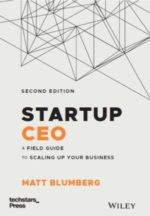
The Operating System, as I wrote extensively about in Startup CEO, is the collection of practices, meetings, mailing lists, routines/rhythms, and behaviors that your company and team use and depend on to run the business on a day to day basis. It’s what you have to put in place and tweak as needed so work gets done efficiently – the thing that turns the sprint of a raw startup into the marathon of a scaling business.
But there’s a third leg to the stool of company management underpinnings that’s often overlooked and underappreciated – the company’s Operating Philosophy. The Operating Philosophy is the intellectual underpinning of how you want to run and lead the business. It’s related to, but different from, your company’s values. Think of it as the essence of how you want to work and shape the work of others…what defines your form of company.
You can run a company perfectly well without a clear Operating Philosophy, especially with a tight Operating Framework and Operating System in place. But my guess is that you have one, you just haven’t articulated it yet, and you might benefit from doing so. At least that was our experience where we had an undefined but real one at Return Path and have now tried to define one front and center at Bolster.
A useful way to think about these three legs of the stool is the analogy of government (bear with me on this and pretend like our government in the US isn’t quite as dysfunctional as it is at the moment). Our Operating Framework is the Constitution – it lays out the broad contours of what our government does. Our mission, vision, and values. Our Operating System is the collection of policies, practices, and programs that run the country, from the timing and cadence of elections, to the ways the three branches of government enact and execute policy, to the ways state and local governments fit in. Our Operating Philosophy is the Declaration of Independence. It’s our essence. It is what separates our form of government from other forms of government. We are a Representative Democracy, a Constitutional Federal Republic. We hold these truths to be self-evident, that all men are created equal, that they are endowed by their Creator with certain unalienable Rights, that among these are Life, Liberty and the pursuit of Happiness. That to secure these rights, Governments are instituted among Men, deriving their just powers from the consent of the governed.
Some examples? Zappos is a Holocracy – defined as a system of corporate governance whereby members of a team or business form distinct, autonomous, yet symbiotic, teams to accomplish tasks and company goals. The concept of a corporate hierarchy is discarded in favor of a flat organizational structure where all workers have an equal voice while simultaneously answering to the direction of shared authority. Patagonia (and lots of other companies) is a Delaware Public Benefit Corporation (PBC or often called a B Corporation), which must by law follow Stakeholder Capitalism and not Shareholder Capitalism. Plenty of crypto organizations are set up as DAOs (Decentralized Autonomous Organizations), which is a group of people who come together without a central leader or company dictating any of the decisions, built on a blockchain using smart contracts and a currency of tokens that give them the ability to vote on decisions that are made around how the pool of money is spent and managed.
Hopefully that makes sense. Next week, I’ll talk about our Operating Philosophy at Bolster.
Blogiversary, Part IV
Blogiversary, Part IV
Four years on, as the British would say, OnlyOnce is going strong. Cumulative stats show a steady 457 posts, about one every three days on average (same as it’s been all along), and a scant 409 non-spam comments. Maybe some day I’ll start being more edgy and provocative. Or prolific. Or Twitterific. Or something.
Looking back over my initial “how’s it going” post and the last three anniversary posts, I’d say my reasons for blogging, out of my four original ones, have consolidated now around “Thinking” (writing short posts helps me crystallize my thinking) and “Employees” (one of our senior people once called reading OnlyOnce “getting a peek inside Matt’s head). But I’d also add two new raisons d’etre to the list:
Book Reviews: it’s not that I enjoy reading my own book reviews so much as I am glad I’m compiling a list of the business books I’m reading and what I think of them. While it’s not comprehensive (I limit the blogging to business books, probably about 50% of what I read), it’s come in handy a few times to have a little online library for my own reference.
I like it: I really, really enjoy writing. I used to write all the time when I was younger. High school newspaper editor, creative writing magazine founder, and all that. I miss it. Blogging is probably the only form of prose I regularly write now. And it’s great. The reawakening and sharpening of my writing skills has even inspired me to dive into a couple creative writing exercises, short stories mostly, in the past year. So I just like doing it.
And isn’t that reason enough to do something?
Reboot – Back to Basics
As I mentioned in last week’s post, I’m rebooting my work self this year, and this quarter in particular. One of the things I am doing is getting back to basics on a few fronts.
Over the holiday break, as I was contemplating a reboot, I emailed a handful of people with whom I’ve worked closely over the years, but for the most part people with whom I no longer work day in day out, to ask them a few questions. The questions were fairly backward looking:
1. When I was at my best, what were my personal habits or routines that stand out in your mind?
2. When I was at my best, what were my work behaviors or routines that stand out in your mind?
3. When our EC was at its best, what were the team dynamics that caused it to function so well?
I got some wonderful responses, including one which productively challenged the premise of asking backward-looking questions as I was trying to reboot for the future. (The answer is that this was one of several things I was doing as part of Rebooting, not the only thing, and historical perspective is one of many useful tools.)
Although the question clearly led itself to this, the common theme across all the answers was “back to basics.” Part of evolving myself as a CEO as the company has grown over the years has been stopping doing particular things and starting others intentionally. I try to do that at least once a year. But what this particular exercise taught me is that, like the proverbial boiled frog, there were a slew of small and medium-sized things that I’ve stopped doing over the years unintentionally that are positive and productive habits that I miss. I have a long list of these items, and I probably won’t want or need to get to all of them. But there are a few that I think are critical to my success for various reasons. Some of the more noteworthy ones are:
- Blogging, which I mentioned in last week’s post as an important way for me to reflect and crystallize my thinking on specific topics
- Ensuring that I have enough open time on my calendar to breathe, think, keep current with things. When every minute of every day is scheduled, I am working harder, but not smarter
- Be more engaged with people at the office. This relates to having open time on the calendar. Yesterday I sat in our kitchen area and had a quick lunch with a handful of colleagues who I don’t normally interact with. It was such a nice break from my routine of “sit at desk, order food in” or “important business lunch,” I got to clear my head a little bit, and I got to know a couple things about a couple people in the office that I didn’t previously know
- Get closer to the front lines internally. Although I’ve maintained good external contacts as the company has grown with key clients and partners, our multi-business-unit structure has had me too disconnected from Sales and Engineering/Product in particular. This one may take a couple months to enact, but I need to get closer to the action internally to truly understand what’s going on in the business
- Get back to a rigorous use of a single Operating System. I’ve written a lot about this over the years, but having a David-Allen style, single place where I track all critical to do’s for me and for my team has always been bedrock for me. I’ve been experimenting with some different ways of doing this over the last couple years, which has led to a breakdown in Allen’s main principle of “put it all in one place” – so I am going to work on fixing that
- Reading – while I have been consistently and systematically working my way through American history and Presidential biographies books over the years, I’ve almost entirely stopped reading other books for lack of time. A well-balanced reading diet is critical for me. So I’m working in some other books now from the other genres I love – humor (Martini Wonderland is awesome), architecture (see last week’s post on The Fountainhead), current events (I’m in the middle of Michael Lewis’ The Undoing Project and next up is Tom Friedman’s Thank You For Being Late), and business books (about to start Kotter’s A Sense of Urgency)
- Like reading, doing something creative and unrelated to work has always been an important part of keeping my brain fresh. Coaching little league has helped a lot. But I need to add something that’s more purely creative. I am still deciding between taking guitar lessons (I halfway know how to play) and sculpting lessons (I don’t know a thing about it)
That’s it for now. There are other basics that I never let lapse (for example, exercise). But the common theme of the above, I realize now that I am writing it all out, isn’t only “back to basics.” It’s about creating time and space for me to be fresh and exercise different muscles instead of grinding it out all day, every day. And that’s well worth the few minutes it took me and my friends to work up this list!
Hopefully I’ll have more to say on the general topic of rebooting in another week or two as January craziness sets in with our annual kickoff meetings around the world.
Fig Wasp #879
Fig Wasp #879
I have 7 categories of books in my somewhat regular reading rotation: Business (the only one I usually blog about), American History with a focus on the founding period, Humor, Fiction with a focus on trash, Classics I’ve Missed, Architecture and Urban Planning (my major), and Evolutionary Biology. I’m sure that statement says a lot about me, though I am happy to not figure it out until later in life. Anyway, I just finished another fascinating Richard Dawkins book about evolution, and while I usually don’t blog about non-business books, this one had an incredibly rich metaphor with several business lessons stemming from it, plus, evolution is running rampant in our household this week, so I figured, what the heck?
The Dawkins books I’ve read are The Selfish Gene (the shortest, most succinct, and best one to start with), The Blind Watchmaker (more detail than the first), Climbing Mount Improbable (more detail than the second, including a fascinating explanation of how the eye evolved “in an evolutionary instant”), The Ancestor’s Tale (very different style – and a great journey back in time to see each fork in the evolutionary road on the journey from bacteria to humanity), and The God Delusion (a very different book expounding on Dawkins’ theory of atheism). All are great and fairly easy to read, given the topic. I’d start with either The Selfish Gene or maybe The Ancestor’s Tale if you’re interested in taking him for a spin.
So on to the tale of Fig Wasp #879, from this week’s read, Climbing Mount Improbable. Here’s the thing. There are over 900 kinds of fig trees in the world. Who knew? I was dimly aware there was such a thing as a fig tree, although quite frankly I’m most familiar with the fig in its Newton format. Some species reproduce wildly inefficiently — like wild grasses, whose pollen get spread through the air, and with a lot of luck, 1 in 1 billion (with a “b”) land in the right place at the right time to propagate. At the opposite end of the spectrum stands the fig tree. Not only do fig trees reproduce by relying on the collaboration of fig wasps to transport their pollen from one to the next, but it turns out that not only are there over 900 different kinds of fig trees on earth, there are over 900 different kinds of fig wasps — one per tree species. The two have evolved together over thousands of millenia, and while we humans might take the callous and uninformed view that a fig tree is a fig tree, clearly the fig wasps have figured out how to swiftly and instinctively differentiate one speices from another.
So what the heck does this have to do with business? Three quick lessons come mind. I’m sure there are scores more.
1. Collboration only works when each party benefits selfishly from it. Fig wasps don’t cross-pollenate fig trees bcause the fig trees ask nicely or will fire them if they don’t. They do their job because their job is independently fulfilling. If they don’t — they probably die of starvation. They’re just programmed with a very specific type of fig pollen as their primary input and output. We should all think about collaboration this way at work. I wrote a series of posts a couple years back on the topic of Collboration Being Hard, and while all the points I make in those posts are valid, I think this one trumps all. Quite frankly, it calls on the core principle from the Harvard Project on Negotiation, which is that collaboration requires a rethinking of the pie, so that you can expand the pie. That’s what the fig trees and fig wasps have done, unwittingly. Each one gets what it needs far more so than if it had ever consulted directly with the other. The lesson: Be selfish, but do it in a way that benefits your company.
2. Incredibly similar companies can have incredibly distinct cultures. 900+ types of fig tree, each one attracting one and only one type of fig wasp. Could there be anything less obvious to the untrained human eye? I assume that not only would most of us not be able to discern one tree or wasp type from another, but that we wouldn’t be able to disdcern discern any of the 900+ types of trees or wasps from thousands or hundreds of thousands or millions (in the case or urbanites) types of trees or bugs in general! But here’s the thing. I know hundreds of internet companies. Heck, I know dozens of email companies. And I can tell you within 5 minutes of walking around the place or meeting an executive which ones I’d be able to work for, and which ones I wouldn’t. And the older/bigger the company, the more distinct and deeply rooted its culture becomes. The lessons: don’t go to work for a company where you’d even remotely uncomfortable in the interview environment; cultivate your company’s culture with same level of care and attention to detail that you would your family — regardless of your role or level in the company!
3. Leadership is irrelevant when the operating system is tight. You think fig wasps have a CEO? Or a division president who reports into the CEO that oversees both fig wasps and fig trees, making sure they all cross-pollenate before the end of the quarter? Bah. While as a CEO, you may be the most important person in the organization sometimes, or in some ways, I can easily construct the argument that you’re the least important person in the shop as well. If you do your job and create an organization where everyone knows the mission, the agenda, the goal, the values, the BHAG, whatever you want to call it — withoutit needing to be spelled out every day — you’ve done your job, because you’ve made a company where people rock ‘n’ roll all night and every day without you needing to be in the middle of what they’re doing.
I’m sure there are other business lessons from evolutionary biology…send them along if you have good thoughts to share!
Startup CEO (OnlyOnce- the book!), Part II – Crowdsourcing the Outline
Startup CEO (OnlyOnce- the book!), Part II – Crowdsourcing the Outline
As I mentioned a few weeks ago here, I’m excited to be writing a book called Startup CEO: A Field Guide to Building and Running Your Company, to be published by Wiley & Sons next summer. Since many readers of OnlyOnce are my target audience for the book, I thought I’d post my current outline and ask for input and feedback on it. So here it is, still a bit of a work in progress. Please comment away and let me know what you think, what’s missing, what’s not interesting!
1 Part One: Vision and Strategy (Defining the Company)
1.1 Setting the Company’s Agenda
1.2 NIHITO! (or, “Nothing Interesting Happens in the Office”)
1.3 Setting the Business Direction
1.4 Strategic Planning, Part I: Turning Concepts Into Strategy
1.5 Strategic Planning, Part II: Creating the Plan
1.6 Defining Mission, Vision and Values
1.7 Communicating Vision and Strategy
1.8 The Role of M&A
1.9 The Art of the Pivot
1.10 How Vision and Strategy Change over Time
2 Part Two: Talent (Building the Company’s Human Capital)
2.1 Building a Team
2.2 Scaling the Team
2.3 Culture
2.4 Interviewing
2.5 Recruiting
2.6 Onboarding
2.7 Setting Goals
2.8 Feedback
2.9 Development
2.10 Compensation
2.11 Promoting
2.12 Rewarding
2.13 Managing Remote Offices and Employees
2.14 Firing: When It’s Not Working
2.15 How Talent Changes over Time3 Part Three: Execution (Aligning Resources with Strategy)
3.1 Making Sure There’s Enough Money in the Bank
3.2 Types of Financing
3.3 Fundraising Basics
3.4 Negotiating Deals
3.5 Pros and Cons of Outside Financing
3.6 Forecasting and Budgeting
3.7 Creating a Company Operating System
3.8 Meeting Routines
3.9 Driving Alignment
3.10 A Metrics-Driven Approach to Running a Business
3.11 Learning
3.12 Post-Mortems
3.13 Thinking About Exits
3.14 How Execution Changes over Time
3.14.1 Finance
3.14.2 Execution4 Part Four: Management And Leadership (The How of Being a CEO)
4.1 Leading an Executive Team
4.2 Critical Personal Traits
4.3 Being Collaborative
4.4 Being Decisive: Balancing Authority and Consensus
4.5 The Value of Symbolism
4.6 Getting the Most out of People
4.7 Diving Deep without Being Disruptive
4.8 Articulating Purpose
4.9 Collecting Data from the Organization
4.10 Managing in an Economic Downturn
4.11 Managing in Good Times vs. Bad Times
4.12 Communication
4.12.1 Macro (to Your Company and Customers)
4.12.2 Micro (One-on-One)
4.13 How Management and Leadership Change over Time5 Part Five: Boards (A Unique Aspect of the CEO’s Job)
5.1 Building Your Board
5.2 Meeting Materials
5.3 Meetings
5.4 Between Meetings
5.5 Making Decisions and Maximizing Effectiveness
5.6 The Social Aspects of Running a Board
5.7 Working with the Board on Compensation
5.8 Evaluating the Board
5.9 Serving on Other Boards
5.10 How Boards Change over Time6 Part Six: Managing Yourself So You Can Manage Others
6.1 Creating a Personal Operating System
6.2 Working with an Executive Assistant
6.3 Working with a Coach
6.4 Finding Your Voice
6.5 The Importance of Peer Groups
6.6 Your Family
6.7 Taking Stock
6.8 Staying Fresh
6.9 Staying Healthy
6.10 Traveling