Book Short: On Employee Engagement
Book Short: On Employee Engagement
The first time I ever heard the term “Employee Engagement” was from my colleague David Sieh, one of the better managers I’ve ever worked with. He said it was his objective for his engineering team. He explained how he tried to achieve it. I Quit, But forgot to Tell You, by Terri Kabachnick, is a whole book on this topic, a very short but very potent one (the best kind of business books, if you ask me).
It’s got all the short-form stuff you’d expect…a checklist of reasons for disengagement, an engagement quiz, the lifecycle of an employee that leads to disengagement, rules for dealing as a manager.
But beyond the practical, the book serves as a good reminder that employee engagement is the key to a successful organization, no matter what industry you’re in. All managers at Return Path — this is on the way to your desk soon!
Book Short: Plain Talk
Book Short: Plain Talk
An HR rock star I met with recently told me that “You can say anything you want to your people, as long as it’s true,” which of course is great advice. Plain Talk: Lessons from a Business Maverick (book, kindle), by Ken Iverson, the long-time CEO of Nucor, pretty much embodies that. If you’re not familiar with Nucor, it’s a steel company – right, steel – and the most successful one of the last 50-75 years, at that. You may think an industrial company like this offers no lessons for you. If so, you are wrong.
The reason Nucor has been so successful, if you believe their long time leader, is that they run the people side of their business differently than most companies like them. Reading this book from the perspective of a knowledge worker business CEO was particularly interesting, since I had to transform my frame of reference a bit (and do a little mental time travel as well) in order to understand just how revolutionary Nucor’s practices were at the time.
But then I realized – they’re still revolutionary today. How many companies – even the most progressive ones – don’t have performance reviews because they don’t need them in order to create a high performing environment? Companies that spend a good percentage of their time and energies thinking about how to get their employees to do their best work, as opposed to focusing only on the goals of the business, do better than those who don’t. It doesn’t matter what industry you’re in. As Patrick Lencioni would say, you can outbehave the competition.
Plain Talk is a really short book, and a good, authentic read if you’re a leader who cares about your people and wants to learn a few nuggets here and there from one of the 20th century masters of that discipline. Anyone that can link a high degree of delegation to authority has a story worth telling.
Book Short: Gladwell Lite
Book Short: Gladwell Lite
What the Dog Saw, And Other Adventures (book, Kindle) is Malcolm Gladwell’s latest book. Unlike his three other books, which I quite enjoyed:
- The Tipping Point (about how trends and social movements start and spread)
- Blink (about how the mind makes judgments)
- Outliers: The Story of Success (about how talents are genetic, situational, and cultivated)
this was not a complete book, but rather a compendium of his New Yorker articles loosely grouped into three themes.
If you love Gladwell and don’t read The New Yorker, it’s not a bad read. He’s a fantastic writer, and his vignettes are interesting. There are many “hmmm” moments as we learn why ketchup always tastes the same but mustard doesn’t; why Ron Popeil is a great salesman of kitchen gadgets; or why the inventor of the birth control pill thought the Pope would endorse it. But it falls far short of his three books, which go deep into topics and leave a much more lasting impression/impact.
Book Short: the Garage Workbench of the Future
Book Short: the Garage Workbench of the Future
Makers: The New Industrial Revolution, by Wired Magazine’s Chris Anderson, author of The Long Tail (review, buy) and Free (review, buy) is just as mind expanding as his prior two books were at the time they were published. I had the pleasure of talking with Chris for a few minutes after he finished his keynote address at DMA2012 in Las Vegas this week, and I was inspired to read the book, which I did on the flight home.
The short of it is that Anderson paints a very vivid picture of the future world where the Long Tail not only applies to digital goods but to physical goods as well. The seeds of this future world are well planted already in 3D printing, which I have been increasingly hearing about and will most likely be experimenting with come the holiday season (family – please take note!).
As someone who, like Anderson, tinkered with various forms of building as a kid in Shop at school and in the garage with my dad, it’s fascinating to think about a world where you can dream a physical product up, or download a design of it, or 3D scan it and modify it, and press a “make” button like you press a “print” button today on your computer, and have the product show up in your living room within minutes for almost nothing. This will change the world when the technology matures and gets cheaper and more ubiquitous. And this book is the blueprint for that change.
While we may look back on this book in 5 or 10 years, and say “DUH,” which is what many people would say now about The Long Tail or Free, for right now, this gets a WOW.
Back in Business
If you’ve been reading this blog for a long time (amazingly, it is over 16 years old now!), you know that my company and main professional life’s work up to this point, Return Path, was a 1999 vintage email technology company that we sold last year. I then had a couple other interim leadership roles, first as interim CEO of another tech company in New York, then in March as the founder and interim leader of Colorado’s COVID-19 Innovation Response Team, which I wrote a series of blog posts about (this is the final post in the series, which links to the whole series).
I’ve generally been quiet on OnlyOnce since last year, but I will be picking up the pace of writing in the weeks ahead for a couple of reasons.
First, I’ve teamed up with a few former Return Path colleagues and some amazing investors and partners to start a new company. We’re still in quasi-stealth mode, so I’m sorry I can’t talk about it much yet, but I will as soon as we publicly launch sometime after Labor Day. It’s a cool business in a totally different space from Return Path and plays to our team’s interests and skills around people, values, culture, leadership development, and team scalability. I won’t rename this blog OnlyTwice, but there’s definitely a lot to be said for being a second-time founder.
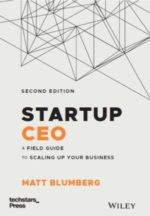
Related to that, I have also been working on a Second Edition to my book from 2013, Startup CEO: A Field Guide to Scaling Up Your Business, which is coming out in a week or two from Wiley & Sons, and which is available for pre-order now. I will write a series of posts in the coming weeks that talk about the new material in the second edition. Our team at the new company is also working on a sequel to that book – more to come on that as well.
For now, I am doing great, enjoying life as a brand new Startup CEO once again, and feeling quite privileged and a little guilty for it by being in this weird bubble of my nice home and yard and feeling safely isolated from the pandemic, from economic dislocation, from social protests, and from having to lead a scaled organization through all of that turmoil.
A Lighter, Yet Darker, Note
A Lighter, Yet Darker, Note
I’ve been meaning to post about this for some time now since my colleague Tami Forman introduced me to this company. It’s a riot.
You know all those well-intentioned, but slightly cheesy motivational posters you see in places like dentists’ offices? The kind that talk about “Perseverence” and “Commitment” and “Dare to Dream” and have some beautiful or unique, usually nature-centric image to go with them and their tag line?
For the sarcastic among us, you must visit Despair, Inc.’s web site, in particular any of the “Individual Designs” sections featured on the left side navigation. The posters are brilliant spoofs on the above, with such gems as “Agony” and “Strife” and “Despair” (whose tag line is “It’s always darkest just before it goes pitch black”). E.L. Kersten is one funny, albeit strange dude.
Worth a look, and everything is for sale there, too, in case you need to have these posted in a back room somewhere.
Return Path Core Values
Return Path Core Values
At Return Path, we have a list of 13 core values that was carefully cultivated and written by a committee of the whole (literally, every employee was involved) about 3 years ago.
I love our values, and I think they serve us incredibly well — both for what they are, and for documenting them and discussing them publicly. So I’ve decided to publish a blog post about each one (not in order, and not to the exclusion of other blog posts) over the next few months. I’ll probably do one every other week through the end of the year. The first one will come in a few minutes.
To whet your appetite, here’s the full list of values:
- We believe that people come first
- We believe in doing the right thing
- We solve problems together and always present problems with potential solutions or paths to solutions
- We believe in keeping the commitments we make, and communicate obsessively when we can’t
- We don’t want you to be embarrassed if you make a mistake; communicate about them and learn from them
- We believe in being transparent and direct
- We challenge complacency, mediocrity, and decisions that don’t make sense
- We value execution and results, not effort on its own
- We are serious and passionate about our job and positive and light-hearted about our day
- We are obsessively kind to and respectful of each other
- We realize that people work to live, not live to work
- We are all owners in the business and think of our employment at the company as a two-way street
- We believe inboxes should only contain messages that are relevant, trusted, and safe
Do these sound like Motherhood and Apple Pie? Yes. Do I worry when I publish them like this that people will remind me that Enron’s number one value was Integrity? Totally. But am I proud of my company, and do I feel like we live these every day…and that that’s one of the things that gives us massive competitive advantage in life? Absolutely! In truth, some of these are more aspirational than others, but they’re written as strong action verbs, not with “we will try to” mushiness.
I will start a tag for my tag cloud today called Return Path core values. There won’t be much in it today, but there will be soon!
Book Short: Faster Than The Blink of an Eye
Book Short: Faster Than The Blink of an Eye
Michael Lewis is one of those authors for whom my general point of view is “read whatever he writes.” Flash Boys: A Wall Street Revolt was no exception. It’s a book about the high-frequency trading business, how a difference in microseconds can make a difference, and how the complexity of trading has led to enough confusion that virtually no one on Wall Street actually understands how it works any more.
I am a capitalist through and through, and I never begrudge Wall Street for making money, even though I do have moments where I doubt the amount of value that finance creates relative to the amount of income they swallow up. However, that all goes out the window when there is evidence that some pocket of Wall Street isn’t playing by the rules. I define “the rules” as either the law, or as something more like “a basic sense of morality and fairness.”
Some of what has been going on in the high-frequency trading business, as Lewis describes in this book, may or may not be legal (let’s assume it is), but is almost certainly not following a basic sense of morality and fairness. It’s worth noting that I am purely going off what Lewis wrote in the book, so to the extent that his research is incomplete or his writing is misleading, I am happy to retract that statement. But based on what I read, I’d challenge some of the people in the HFT business to defend what they’re doing publicly, to their mothers or to their own clients. That’s the ultimate test of morality or fairness.
It’s amazing to me that this topic hasn’t gotten more play in the media or with regulators. Maybe it’s just too complicated for anyone to understand or to articulate. In any event, even though not strictly a business book, it’s fascinating and worth a read, as I think all Michael Lewis books are.
Book short: Blink
Book short: Blink
Blink, by Malcolm Gladwell, is a must read for marketers, entrepreneurs, and VCs alike, just as is the case with Gladwell’s first book, The Tipping Point.
Where The Tipping Point theorizes about how humans relate to each other and how fads start and flourish in our society, Blink theorizes about how humans make decisions and about the interplay between the subconscious, learned expertise, and real-time inputs. But Gladwell does more than theorize — he has plenty of real world examples which seem quite plausible, and he peppers the book with evidence from some (though hardly a complete coverage of relevant) scientific and quasi-scientific studies.
Blink for Entrepreneurs/CEOs: What’s the most critical lesson in Malcolm Gladwell’s Blink, as it relates to entrepreneurs/CEOs? It’s about bias in hiring. Most of us make judgments about potential new hires quite quickly in the initial interview. The symphony example in the book is the most painfully poignant — most major symphony orchestras hired extremely few women until they started conducting auditions behind a screen. It’s not clear to me yet how to stop or even shrink hiring bias, but I suspect the answer lies in pre-interview work around defining specific criteria for the job and scoring all candidates on the same set of criteria.
Blink for VCs: What’s the most critical lesson in Malcolm Gladwell’s Blink, as it relates to VCs? It’s about picking companies to back. Even VCs who are virtuosos, as Gladwell would call them, can make poor judgments on companies to back based on their own personal reaction to a company’s product or service, as opposed to the broader marketplace’s reaction. Someone poured a whole lot of money into Webvan, Pets.com, eToys, and the like.
Blink for Marketers: What’s the most critical lesson in Malcolm Gladwell’s Blink, as it relates to Marketers? It’s the importance of multivariate regression testing. No, really, I’m not kidding, although there’s no doubt a less math-y way of saying it — “test everything.” The Coca-Cola Company thought they were doing the right thing in creating New Coke because they were losing the Pepsi Challenge. But what they didn’t realize was that Pepsi (unintentionally or not) had suckered them into believing that the single-sip test was cause for reengineering a century of product, when in reality Coke was probably just being out-advertised. Christian Brothers Brandy was going out of its mind losing market share to competitor E&J until someone realized that they just needed to change the shape of their bottle.
If you haven’t yet done so, go buy the book! It’s a very quick read and incredibly thought provoking. And if you haven’t yet read The Tipping Point, it’s a must as well.
Book Short: Underdog Victorious
Book Short: Underdog Victorious
The Underdog Advantage, by David Morey and Scott Miller, was a worthwhile read, though not a great book. It was a little shallow, and although I enjoyed its case studies (who doesn’t love hearing about Ben & Jerry’s, Southwest, JetBlue, Starbucks?), I didn’t feel like the authors did enough to tie the details of the success of the case study companies back to the points they made in the book.
That said, the book had some great reminders in it for companies of all sizes and stages. The main point was that successful companies always think of themselves as the underdog, the insurgent, and never get complacent. They run themselves like a political campaign, needing to win an election every single day. A lot of the tactics suggested are timeless and good to remember…things like never declare victory, always play offense, always respond to attacks, remember to communicate from the inside out, and remember to sell employees on a mision and purpose in order to make them your main ambassadors. The laundry list of tactics is the book’s greatest strength.
Book Short – Blink part III – Undo?
Book Short – Blink part III – Undo?
I just finished reading Michael Lewis’s The Undoing Project: A Friendship That Changed Our Minds, and honestly, I wish I could hit Life’s Undo button and reclaim those hours. I love Michael Lewis, and he’s one of those authors where if he writes it, I will read it. But this one wasn’t really worth it for me.
Having said that, I think if you haven’t already read both Malcolm Gladwell’s Blink (review, buy) and Daniel Kahneman’s Thinking, Fast and Slow (review, buy), then it might be worth it. But having read those two books, The Undoing Project had too much overlap and not enough “underlap” (to quote my friend Tom Bartel) – that is, not enough new stuff of substance for me. The book mostly went into the personal relationship between two academic thinkers, Daniel Kahneman and Amos Tversky. It also touched on some of the highlights of their work, which, while coming out of the field of psychology, won them a Nobel prize in Economics for illuminating some of the underlying mechanics of how we make decisions.
The two most interesting pieces of their work to me, which are related in the book, are:
First, that human decision-making is incredibly nuanced and complex, and that at least 25% of the time, the transitive property doesn’t apply. For example, I may prefer coffee to tea, and I may prefer tea to hot chocolate, but that doesn’t necessarily mean I prefer coffee to hot chocolate.
From the book, “When faced with complex multidimensional alternatives, such as job offers, gambles or [political] candidates, it is extremely difficult to utilize properly all the available information.” It wasn’t that people actually preferred A to B and B to C and then turned around and preferred C to A. It was that it was sometimes very hard to understand the differences. Amos didn’t think that the real world was as likely to fool people into contradicting themselves as were the experiments he had designed. And the choice created its own context: Different features might assume greater prominence in the mind when the coffee was being compared to tea (caffeine) than when it was being compared to hot chocolate (sugar). And what was true of drinks might also be true of people, and ideas, and emotions. The idea was interesting: When people make decisions, they are also making judgments about similarity, between some object in the real world and what they ideally want. They make these judgments by, in effect, counting up the features they notice. And as the noticeability of features can be manipulated by the way they are highlighted, the sense of how similar two things are might also be manipulated.”
Second, what Kahneman and Tversky called Prospect Theory, which is basically that humans are more motivated by the fear of loss as opposed to the greed of gain. I’ve written about the “Fear/Greed Continuum” of my former boss from many years ago before. I’m not sure he knew about Kahneman and Tversky’s work when he came up with that construct, and I certainly didn’t know about it when I first blogged about it years ago. Do this experiment – ask someone both of these questions: Would you rather be handed $500 or have a 50% chance of winning $1,000 and a 50% of getting nothing? Then, Would you rather hand me $500 or have a 50% chance of owing me $1,000 and a 50% chance of owing me nothing? Most of the time, the answers are not the same.
For fun, I tried this out on my kids and re-proved Prospect Theory, just in case anyone was worried about it.
Anyway, bottom line on this book – read it if you haven’t ready those other two books, skip it if you have, maybe skim it if you’ve read one of them!