Book Short: Not As Deep As You’d Like
Book Short: Not As Deep As You’d Like
Deep Change, by Robert Quinn, is a reasonably interesting collection of thoughts on management and leadership, but it doesn’t hang together very well as a single work with a unified theme. The promise is interesting — that we must personally abandon our knowledge, competence, techniques and abilities and “walk naked into the land of uncertainty” to undergo great personal change that can then lead us to organizational change — but the book doesn’t quite deliver on it.
That said, I enjoyed the book as a quick read for a few of its more interesting concepts. For example, Quinn has a great crystallization of many things I’ve observed over the years called “the tyrrany of competence” where organizations can get paralyzed by people who are technically strong at their jobs but who are either disruptive culturally or who have such a chokehold on their role that they hold back the organization as a whole from growing. Another good concept is a chart and some related commentary about how a person transforms from an individual contributor, to a manager, to a leader — great for any growing company. The last interesting one was a grid mapping out four different types of CEOs — Motivator, Vision Setter, Anazlyer, and Taskmaster. Quinn goes into some detail about the characteristics of each and then circles back to the inevitable conclusion (like most Harvard Business Review articles) that the best CEOs exhibit all four characteristics at different times, in different circumstances.
So not my favorite book overall, but some good tidbits. Probably worth a quick read if you’re a student of management and leadership. Thanks to my former colleague Kendall Rawls for this book.
The Phoenix Project
The Phoenix Project: a novel about IT, DevOps, and Helping Your Business Win, by Gene Kim, Kevin Behr, and George Spafford is a logical intellectual successor and regularly quotes Eli Goldratt’s seminal work The Goal and its good but less known sequel It’s Not Luck.
The more business books I read, the more I appreciate the novel or fable format. Most business books are a bit boring and way too long to make a single point. The Phoenix Project is a novel, though unlike Goldratt’s books (and even Lencioni’s), it takes it easy on the cheesy and personal side stories. It just uses storytelling techniques to make its points and give color and examples for more memorable learning.
If your organization still does software development through a waterfall process or has separate and distinct development, QA, and IT/Operations teams, I’d say you should run, not walk, to get this book. But even if you are agile, lean, and practice continuous deployment, it’s still a good read as it provides reminders of what the world used to be like and what the manufacturing-rooted theories are behind these “new” techniques in software development.
I am so glad our technology team at Return Path, led by my colleagues Andy Sautins and David Sieh, had the wisdom to be early adopters of agile and lean processes, continuous deployment many years ago, and now dockers. Our DevOps process is pretty well grooved, and while I’m sure there are always things to be done to improve it…it’s almost never a source of panic or friction internally the way more traditional shops function (like the one in the book). I can’t imagine operating a business any other way.
Thanks to my long time friend and Board member Greg Sands of Costanoa Venture Capital for suggesting this excellent read.
Book Short: A Twofer
Book Short: A Twofer
My friend Andrew Winston, who is one of the nation’s gurus in corporate sustainability, just published his second book, this one from Harvard Business Press — Green Recovery: Get Lean, Get Smart, and Emerge from the Downturn on Top. It builds on the cases and successes he had with his first book, Green to Gold (post, link to book), which came out a couple years ago and has become the standard for how businesses embrace sustainability and use it to their financial and strategic competitive advantage rather than thinking of it as a burden or a cost center.
Green Recovery is a shorter read (my kind of business book), and it hits a few key themes:
-
Going green not only shouldn’t wait for better economic times, it’s a key way out of this mess
- Businesses have relied on layoffs to cut costs for far too long — it’s time to get lean on stuff, not people
- This is about survival for many businesses: Detroit died because it missed the green wave of environmental interest and rising energy prices
- And the overarching theme…Green doesn’t raise costs, it lowers them – it’s a source of profit and innovation
The book reminds me a lot of my post Living With Less, For Good, which I wrote at the beginning of the financial market freefall last fall, talking about how we as a company were figuring out how to cut back without cutting people (something we’ve managed to do). Although I wasn’t talking about green initiatives specifically, the point of getting leaner on “stuff” really resonates with me.
At the end of the day, Andrew proves that steering your company to go green — no matter what industry you’re in — is a twofer: you can increase the strength of the business and simultaneously do your part to clean up the environment. That’s definitely the “change we can believe in” mentality applied quite pragmatically!
Book Short: Internet Fiction
Book Short: Internet Fiction
It’s been a long time since I read Tom Evslin’s Hackoff.com, which Tom called a “blook” since he released it serially as a blog, then when it was all done, as a bound book. Mariquita and I read it together and loved every minute of it. One post I wrote about it at the time was entitled Like Fingernails on a Chalkboard.
The essence of that post was “I liked it, but the truth of the parts of the Internet bubble that I lived through were painful to read,” applies to two “new” works of Internet fiction that I just plowed through this week, as well.
Uncommon Stock
Eliot Pepper’s brand new startup thriller, Uncommon Stock, was a breezy and quick read that I enjoyed tremendously. It’s got just the right mix of reality and fantasy in it. For anyone in the tech startup world, it’s a must read. But it would be equally fun and enjoyable for anyone who likes a good juicy thriller.
Like my memory of Hackoff, the book has all kinds of startup details in it, like co-founder struggles and a great presentation of the angel investor vs. VC dilemma. But it also has a great crime/murder intrigue that is interrupted with the book’s untimely ending. I eagerly await the second installment, promised for early 2015.
The Circle
While not quite as new, The Circle has been on my list since it came out a few months back and since Brad’s enticing review of it noted that:
The Circle was brilliant. I went back and read a little of the tech criticism and all I could think was things like “wow – hubris” or “that person could benefit from a little reflection on the word irony”… We’ve taken Peter Drucker’s famous quote “‘If you can’t measure it, you can’t manage it” to an absurd extreme in the tech business. We believe we’ve mastered operant conditioning through the use of visible metrics associated with actions individual users take. We’ve somehow elevated social media metrics to the same level as money in the context of self-worth.
So here’s the scoop on this book. Picture Google, Twitter, Facebook, and a few other companies all rolled up into a single company. Then picture everything that could go wrong with that company in terms of how it measures things, dominates information flow, and promotes social transparency in the name of a new world order. This is Internet dystopia at its best – and it’s not more than a couple steps removed from where we are. So fiction…but hardly science fiction.
The Circle is a lot longer than Uncommon Stock and quite different, but both are enticing reads if you’re up for some internet fiction.
Book Short: Another 8 Habits
Book Short: Another 8 Habits
Besides having a fantastic title, Richard St. John’s Stupid, Ugly, Unlucky, and Rich is a fun and quick read. It’s a completely different style than Stephen Covey’s “habits” books (The 7, The 8th). It’s a little cartoony and list-oriented, and it’s a much quicker read — and also easier to put down and pick up without feeling like you’re losing your place.
The book’s foundation is interviews, mostly by the author, of successful people who span many different careers, from artists to actors and models to athletes to politicians to business leaders. The organization is very solid, and the content is highly motivating. It’s a good guide to success in any field, and in particular many of the examples are spot-on for entrepreneurship.
At a minimum, I’m buying it for my senior staff…and for every new entry-level employee as good career foundation reading material.
Book Short: The Most Rapacious Guys in the Room
Book Short: The Most Rapacious Guys in the Room
I just finished The Smartest Guys in the Room, by journalists Bethany McLean and Peter Elkind. This is the story of Enron, and what a tale it is! The book is a good quick business novel read. It reminded me a lot of Barbarians at the Gate, except that it made me far angrier. I’m not sure if that’s because I’m at a different place in my career now than I was 10 years ago and therefore have a different appreciation for what goes on in companies, or if the Enron guys were just far worse than anyone surrounding RJR Nabisco. But in any case, as my Grandpa Bill would have said, this one certainly raised my hackles.
Anyway, I can’t even get into the details without working myself into a frenzy about these crooks, but suffice to say there are lots of “what not to do” lessons in this book, starting with CEO Ken Lay’s wuss-like, disconnected approach to leading the company and ending with CFO Andy Fastow’s insane rationalizations for using the company as his own piggy bank. Anyway, I thought it would just be easier to just list out a few simple things to look for in your own company if you’re concerned you might be having some financial scandals within. You know you have a problem if…
– Your company has 3,000 off-balance sheet special purpose entities, including 800 in the Caymans
– Your CEO has waived your company code of ethics twice so that the CFO could negotiate deals for his own profit against the company
– Your President combatively calls an analyst an asshole on an earnings call when asked why the company couldn’t produce a balance sheet and cash flow statement with its income statement and earnings release
– Your staffers meet someone from your auditor and say “oh, you’re the guy that won’t let us do something”
– Your accounting department becomes viewed as a major profit center because of its treatment of revenue
It’s truly astonishing what these bozos thought they could get away with. Thank God they’re going to jail. Thanks to my colleague Patty Mah (a friend of the author) for this book.
Startup Boards: VCs and CEOs need to do their jobs!
Was anyone else as appalled as I am by the contents of Connie Loizos’s recent article, Coming out of COVID, investors lose their taste for board meetings? The stories and quotes in the article about VCs reducing their interest and participation in Board meetings, not showing up, sending the junior associate to cover, etc. are eye opening and alarming if widespread.
The reasons cited in the article are logical—overextended VCs, Zoom fatigue, and newbie directors. Connie’s note that “privately, VCs admit they don’t add a lot of value to boards” is pretty funny to read as a CEO who has heard a ton of VCs talk about how much value they add to boards (although the good ones DO add a lot of value!).
For the most part, everything about the substance of this article just made me angry.
Disengaged or dysfunctional boards aren’t just bad for CEOs and LPs; they’re bad for everyone. If the world has truly become a place where the board meeting is nothing more than a distraction for CEOs, and investors think it’s a tax they can’t afford, then it’s time to hit the reset button on boards and board meetings.
Here are four things that need to happen in this reset:
VCs need to do their job well or stop doing it. The argument that investors did too many deals in the pandemic so now they don’t have any time is a particularly silly one, since the pandemic reduced the amount of time VCs needed to spend on individual board meetings as well. I used to have four board meetings each year with directors who were traveling for the meetings, having dinners, spending time with the team and sitting in on committee meetings.
Today, boards are lucky to have one in-person meeting a year (more on that later). And as everything else takes less time, and there’s little transit, any given VC should have doubled the time they spend on board meetings.
Serving on a board post-investment is a central part of the VC role. They have obligations to the founders they back and to the LPs they represent. The entire role is “find deals, execute deals, manage the portfolio.”
If they no longer have time for the third job, they need to admit that to both founders and LPs before stepping down. If a VC can’t be bothered to focus on minding their investments and adding value, they should work with the company to find their replacement.
CEOs need to take their job as leader of the board seriously. Would a good CEO just throw their hands up if they found management team meetings boring or a waste of time? No. They’d fix the structure of the team or meetings. If not, they shouldn’t be the CEO.
It’s no different with boards. Whether or not the CEO is the board chair, they’re the leader of the organization. So, one of the few “must do” items in their job description is leading the board. The board is part of the CEO’s team, just like the management team.
CEOs get to call the meetings, run the meetings, and insist on attendance. The CEO’s obligation is to make it easy and meaningful for everyone so the board isn’t a tax but rather a secret weapon for the company’s success. As my long-time independent director Scott Weiss used to tell me, boards consume whatever you put in front of them. Garbage in, garbage out. That means paying careful attention to the board materials, to meeting etiquette, and everything in between.
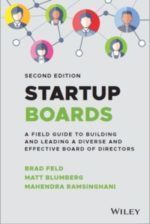
If the CEO doesn’t know how to do that, they should find a CEO mentor who can teach them, observe some well run boards in action through their network, or read Startup Boards: A Field Guide to Building and Leading an Effective Board of Directors, a book I just published along with co-authors and VCs Brad Feld and Mahendra Ramsinghani.
Here’s one tip on making Board prep more efficient: work your Operating System and your Board Book formats so you do one set of reporting for the company and management team that is 95% reusable without any changes for your board.
The format for Board meetings needs to evolve. Board meetings need to evolve in our world of hybrid work just as office work needs to evolve. The format that works for in-person can’t just “lift and shift” to Zoom as is, indefinitely.
Here’s how I’m steering my board:
- I insist on one or two “old school” meetings per year, meaning in-person attendance required, half a day long, and including a meal and even an activity. If I’m only going to see my directors together infrequently, I make it mandatory, but I also make it worthwhile and fun.
- Remote meetings that happen between the in-person meetings are becoming shorter and tighter. I still send out a lot reading material beforehand, but I make sure to keep the focus on a fixed number of major topics to keep the discussion engaging.
- We need a new set of expectations around Zoom meeting etiquette for long meetings. It’s okay to ask people to close their email, browser, and Slack before the meeting starts. If a meeting is more than two hours long, a 15 minute break in the middle is important. Use breakout rooms to mix up topic discussions and working sessions.
- I am trying a new meeting format to maximize director conversation and team development. I start every meeting with a director-only session for half an hour that’s not exactly an Executive Session but is more fun and social—usually including a nonwork discussion topic, as if we were sitting around the dinner table having a cocktail. That gets the conversational juices flowing. Then when my team and observers join the meeting, I ask those people to turn their video off, and I ask directors to adjust their Zoom setting to “hide participants not on video” to keep the number of Zoom squares down to the bare minimum. Any time a team member or observer wants to engage in a particular topic, they turn their video on. Then we follow the meeting with Executive Session and Closed Session and a single-director debrief with me. That is a lot of moving pieces to manage, I find that but doing so keeps the meeting fresh and well paced.
- Finally, I’m following Fred Wilson’s advice and running a very short survey post-meeting to ask directors basic questions so they can summarize their thinking for me and the team: What are we doing well? What do we need more work on? And did the meeting meet your expectations?
Companies need to Follow the Rule of 1s
The secret to engaged and diverse boards is to mix up their membership more than most companies do. Our Board Benchmark study at Bolster indicates that the vast majority of private company boards have no independent directors at all—only founders and investors—and every year, the vast majority of the “open independent seats” specified in those companies’ charters go unfilled.
It’s hard work hiring a new independent board member, and it rarely rises to the top of the CEO’s priority list. But the more independent the board is, and the more diverse the board is in every way (in terms of demographics as well as experience and background), the more robust the conversations around the table become, and the more valuable the board is to the CEO.
My Rule of 1s for building highly effective boards is simple:
- Add independent directors to your board on Day 1
- Try to limit your Board to 1 founder/team member
- Then, for every 1 investor on your board,
- Add 1 independent director
A great board is one of a company’s greatest assets. A weak board can kill a company. A mediocre board is just a waste of time. There’s no question that running an effective board, or serving as an effective director, takes serious time and energy and diligence. But that’s not a reason not to try.
(This post first ran on TechCrunch+ and is also running on the Bolster blog)
Book Short: A Brand Extension That Works
Book Short: A Brand Extension That Works
Usually, brand or line extensions don’t work out well in the end. They dilute and confuse the brand. Companies with them tend to see their total market share shrink, while focused competitors flourish. As the authors of the seminal work from years ago, Positioning: The Battle for Your Mind, Jack Trout and Al Reis would be the first people to tell you this.
That said, The New Positioning, which I guess you could call a line extension by Jack Trout (without Reis), was a fantastic read. Not quite as good as the original, but well worth it. It’s actually not a new new book – I think it’s 12 years old as opposed to the original, which is now something like 25 years old, but I just read it and think it’s incredibly relevant to today’s world.
Building on the original work, Trout focuses more this time on Repositioning and Brand Extensions — two things critical to most businesses today. How to do the impossible, to change people’s minds about your brand or product mid-stream, whether in response to new competitive activity or general changes in the world around you. And how to think about brand extensions (hint: don’t do them, create a new brand like Levi’s did with Dockers).
The book also has a very valuable section on the importance of sound and words to branding and positioning, relative to imagery. Trout has a short but very colorful metaphor about women named Gertrude here that’s reminiscent of the research Malcolm Gladwell cited in Blink.
If you haven’t read the original Positioning, that should be on your wish list for the holidays. If you have, then maybe Santa can deliver The New Positioning!
Inbox = Zero = Satisfying (Quasi Book Short)
Inbox = Zero = Satisfying (Quasi Book Short)
I’m a big David Allen fan. Amazingly enough, I haven’t blogged about him and his books yet, probably for the most part because I read the books before I started blogging. But here they are. The first one, Getting Things Done: The Art of Stress-Free Productivity, is probably a little better than the sequel, Ready for Anything: 52 Productivity Principles for Work and Life, but both are worth reading. When I first read them, they didn’t revolutionize my thinking about productivity and workflow management (I was already at least decent at those things), but they did really sharpen my thinking around the edges and give me a great framework to plug all my to-do lists into.
One of Allen’s great principles is Inbox = Zero…that in an email-centric office, you should try to completely empty out your Inbox at the end of every day. Every item should have its home, even if that home is a “Will handle tomorrow” or “Waiting for Susie” folder.
Anyway, I usually get pretty close to Inbox = Zero, but the times I actually achieve it are few and far between. This morning was one of those times. It’s just incredibly satisfying.
Of course, it only lasted 8 minutes.
Book Short: Allegory of Allegories
Book Short: Allegory of Allegories
Squirrel, Inc., by Stephen Denning, is a good quick read for leaders who want a refreshing look at effective ways to motivate and communicate to their teams. The book focuses on storytelling as a method of communication, and Denning employs the storytelling method fairly successfully as a framework for the book.
The specific kinds of messages he focuses on, where he says storytelling can have the biggest impact, are: communicating a complex idea and sparking action; communicating identity – who YOU as leader are; transmitting values; getting a group or team to work together more effectively; neutralizing gossip or taming the grapevine; knowledge-sharing; and painting a vision of the future that a team can hang onto. The book even has a nice summary “how to” table at the end of it.
Thanks to email guru David Baker at Agency.com for giving me the book.
Book short: Blink
Book short: Blink
Blink, by Malcolm Gladwell, is a must read for marketers, entrepreneurs, and VCs alike, just as is the case with Gladwell’s first book, The Tipping Point.
Where The Tipping Point theorizes about how humans relate to each other and how fads start and flourish in our society, Blink theorizes about how humans make decisions and about the interplay between the subconscious, learned expertise, and real-time inputs. But Gladwell does more than theorize — he has plenty of real world examples which seem quite plausible, and he peppers the book with evidence from some (though hardly a complete coverage of relevant) scientific and quasi-scientific studies.
Blink for Entrepreneurs/CEOs: What’s the most critical lesson in Malcolm Gladwell’s Blink, as it relates to entrepreneurs/CEOs? It’s about bias in hiring. Most of us make judgments about potential new hires quite quickly in the initial interview. The symphony example in the book is the most painfully poignant — most major symphony orchestras hired extremely few women until they started conducting auditions behind a screen. It’s not clear to me yet how to stop or even shrink hiring bias, but I suspect the answer lies in pre-interview work around defining specific criteria for the job and scoring all candidates on the same set of criteria.
Blink for VCs: What’s the most critical lesson in Malcolm Gladwell’s Blink, as it relates to VCs? It’s about picking companies to back. Even VCs who are virtuosos, as Gladwell would call them, can make poor judgments on companies to back based on their own personal reaction to a company’s product or service, as opposed to the broader marketplace’s reaction. Someone poured a whole lot of money into Webvan, Pets.com, eToys, and the like.
Blink for Marketers: What’s the most critical lesson in Malcolm Gladwell’s Blink, as it relates to Marketers? It’s the importance of multivariate regression testing. No, really, I’m not kidding, although there’s no doubt a less math-y way of saying it — “test everything.” The Coca-Cola Company thought they were doing the right thing in creating New Coke because they were losing the Pepsi Challenge. But what they didn’t realize was that Pepsi (unintentionally or not) had suckered them into believing that the single-sip test was cause for reengineering a century of product, when in reality Coke was probably just being out-advertised. Christian Brothers Brandy was going out of its mind losing market share to competitor E&J until someone realized that they just needed to change the shape of their bottle.
If you haven’t yet done so, go buy the book! It’s a very quick read and incredibly thought provoking. And if you haven’t yet read The Tipping Point, it’s a must as well.