
New book from Brad Feld: The Startup Community Way
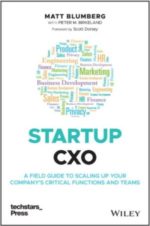
My long-time friend and former Board member Brad Feld has become a prolific writer on the startup world over the years and is the person (other than me) most responsible for me getting into that scene as well. Startup CEO is part of his Startup Revolution series, which followed me writing an essay for Do More Faster, and then writing a series of sidebars call “The Entrepreneur’s Perspective” in Venture Deals.
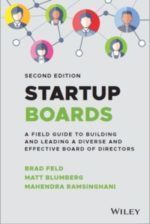
All Brad’s books are listed here. If you’re in the startup universe, I’d encourage you to read all of them. I’m excited to dive into his newest book, The Startup Community Way, which comes out this week from our same publisher, John Wiley & Sons. I’ve gotten part of the way through an early copy, and I love it already.
The approach Brad and his co-author Ian Hathaway take is to evolve their Boulder Thesis from the original Startup Communities book. They dive into the topic and examine it from the perspective of a complex system, which of course anything as fragmented as an ecosystem of public, private, and academic organizations is.
The book — and the whole topic, quite frankly — remind me of a great management book I read several years ago by General Stanley McChrystal called Team of Teams. Organizations have gotten more complex and have had to adapt their structures, and the most successful ones are the ones that have shifted from hierarchical structures to node-based structures, or teams of teams, where individual, agile teams operate with loose points of connection to other teams that focus on dependencies and outcomes.
In the same way, startup communities and the broader ecosystems that touch them have changed and adapted, and the successful ones have learned how to stay loosely connected to other startup communities, prioritize collaboration, and remain focused on inclusion and entrepreneurial leadership.
Why Publishing Will Never Be the Same, Part II
Why Publishing Will Never Be the Same, Part II
In Part I of this series, I talked about our experience at Return Path publishing a book back in January through a new type of print-on-demand, or self-publishing house called iUniverse and why I thought the publishing industry was in for a long, slow decline unless it changes its ways.
We had another interesting experience with iUniverse more recently that reinforces this point. It turns out, although iUniverse is mainly a “self publisher,” they also have a traditional publishing model called their Star Program, which includes an editorial review process. The good news for us is that they contacted us and said they liked our book so much, and sales are strong enough, that they’ve given it an Editors’ Choice and Readers’ Choice notation and they want to put it in the Star Program. That was very exciting! I mean, who doesn’t want to be a star? The bad news is that the traditional model isn’t particularly compelling. This is the deal they’ve offered:
– A 3-year exclusive for them (our current contract is non-exclusive)
– Diminished control over the IP
– Diminished royalties
– iUniverse would re-publish the book, which means (a) it would become unavailable for 6 months before the re-launch, (b) they would give it a new cover and re-edit the book, (c) we could revise the content if we want, and (d) they’d have control over all final decisions around the editorial and cover
– iUniverse would do more active marketing of the book
Ok, so this could be a compelling deal, if the “more active marketing” was really going to move the needle for us. So we asked more about what that gets us. The answer:
– Sending the book out for reviews (we did this within our industry but certainly not by broader business press, although we probably could do so on our own)
– Setting up book signing events (hard to imagine this is interesting for a business how-to book like this)
– Setting up interview or radio appearances (again, we did this in-industry but not broader)
– Introducing us to the buyer from Barnes & Noble retail stores (success rate unknown – too early to tell in the program’s life)
The folks at iUniverse had no idea what we could even project in terms of increased sales from these activities. When we pushed on this a little bit more on the tangible benefits of marketing, their end comment was “the most successful books are the ones where the authors are out actively promoting them.”
We haven’t made a decision on this one yet. Their support is probably valuable on balance, the change in royalty structure isn’t material, and assuming we could carve out the IP issues to our satisfaction, it could be a good way to issue a second edition with less cost. The in-store presence is really the wild card that could really tip the scales.
But the lure of legitimacy (e.g., someone else published it with an editorial review process, we didn’t just pay to play) is the biggest thing in iUniverse’s favor on this one, and that’s what I have to imagine will decrease over time for the publishing industry as it becomes easier and easier for individuals to publish content, market it, and establish credibility by having other individuals rate and review it.
Thanks to my colleague Tami Forman for her assistance on these postings (and for managing the book project!). Tami is too modest to tell anyone, but she is a wonderful writer and has a blog that she updates not nearly often enough on food — she used to be the food editor for iVillage.
Why Publishing Will Never Be the Same, Part I
Why Publishing Will Never Be the Same, Part I
As you may know, we published a book earlier this year at Return Path called Sign Me Up! Sales are going quite well, in case you’re wondering, and we also launched the book’s official web site, where you can subscribe to our “email best practices” newsletter.
The process of publishing the book was fascinating and convinced me that publishing will never be the same. Even in two parts, this will be a long post, so apologies in advance. Front to back, the process went something like this:
– We wrote the content and selected and prepared the graphics
– We hired iUniverse to publish the book for a rough total cost of $1,500
– iUniverse provided copy editing, layout, and cover design services
– Within 8 weeks, iUniverse put the book on Amazon.com and BN.com for us (in addition to their site) and properly indexed it for search, and poof — we were in business
– Any time someone places an order on any of those three sites, iUniverse prints a copy on demand, binds it, and ships it off. No fuss, no muss, no inventory, but a slightly higher unit cost than you’d get from a traditional publisher who mass prints. We receive approximately 20% of the revenue from the book sale, and iUniverse receives 80%. I’m not sure what cut they give Amazon, but it’s hard to imagine it’s more than 10-20% of the gross
Other than the writing part (not to be minimized), how easy is that? So of course, that made me think about the poor, poor publishing industry. It seems to me that, like many other industries, technology is revolutionizing publishing. Here’s how:
– Publishers handle printing and inventory. iUniverse and its competitors can do it for you in a significantly more economic way. Print on Demand will soon be de rigeur.
– Publishers handle marketing and distribution. iUniverse gets you on Amazon.com and BN.com for free. Amazon.com and BN.com now represent something like 12% of all book sales (cobbled together stats from iMedia Connection saying the annual online book sale run rate is now about $3 billion and the Association of American Publishers saying that the total size of the industry is $24 billion). Google and Overture take credit cards and about 5 minutes to drive people to buy your book online. Buzz and viral and email marketing techniques are easy and cheap.
– Publishers pay you. Ok, this is compelling, but they only pay you (especially advances) if you’re really, really good, or a recognized author or expert. iUniverse pays as well, just in a pay-for-performance model. Bonus points for setting yourself up as an affiliate on Amazon and BN to make even more money on the sale. iUniverse actually pays a higher royalty (20% vs. 7.5-15% in the traditional model), so you’re probably always a fixed amount “behind” in the self-publish model, but you don’t have an agent to pay.
Unless you are dying to be accepted into literary or academic circles that require Someone & Sons to annoint you…why bother with a traditional publisher? As long as you have the up-front money and the belief that you’ll sell enough books to cover your expenses and then some, do it yourself.
In Part II, I will talk about how iUniverse pitches a “traditional publishing model” and why it only reinforces the point that the traditional model doesn’t make a lot of sense any more in many cases.
The Best Laid Plans, Part III
The Best Laid Plans, Part III
Once you’ve finished the Input Phase and the Analysis Phase of producing your strategic plan, you’re ready for the final Output Phase, which goes something like this:
Vision articulation. Get it right for yourself first. You should be able to answer “where do we want to be in three years?” in 25 words or less.
Roadmap from today. Make sure to lay out clearly what things need to happen to get from where you are today to where you want to be. The sooner-in stuff needs to be much clearer than the further out stuff.
Resource Requirements. Identify the things you will need to get there, and the timing of those needs – More people? More marketing money? A new partner?
Financials. Lay them out at a high level on an annual basis, on a more detailed level for the upcoming year.
Packaging. Create a compelling presentation (Powerpoint, Word, or in your case, maybe something more creative) that is crisp and inspiring.
Pre-selling. Run through it – or a couple of the central elements of it – with one or two key people first to get their buy-in.
Selling. Do your roadshow – hit all key constituents with the message in one way or another (could be different forms, depending on who).
The best thing to keep in mind is that there is no perfect process, and there’s never a “right answer” to strategy — at least not without the benefit of hindsight!
People have asked me what the time allocation and elapsed time should or can be for this process. While again, there’s no right answer, I typically find that the process needs at least a full quarter to get right, sometimes longer depending on how many inputs you are tracking down and how hard they are to track down; how fanatical you are about the details of the end product; and whether this is a refresh of an existing strategy or something where you’re starting from a cleaner sheet of paper. In terms of time allocation, if you are leading the process and doing a lot of the work yourself, I would expect to dedicate at least 25% of your time to it, maybe more in peak weeks. It’s well worth the investment.
Patience vs. Impatience
Patience and Impatience are both critical tools in the founder toolbelt. That sounds kind of funny since they’re at odds with each other. Let me explain.
Patience is hard, but there are some things that require it. As they say metaphorically about Product, nine women can’t make a baby in a month. Products needs to be built, tested in the wild, marinate with clients. GTM motions take time to figure out. Brands take time to build unless you have billions to throw at the problem. Bread takes time to rise. Patience is a really useful tool when people on your team or board get itchy for success and you need to calm them down and keep them focused.
Impatience, on the other hand, is easy, and you have to moderate it. Once we have a vision…don’t we want it to become reality yesterday? Why is that roadmap item taking so damn long? Where’s the blog post? We already agreed to terms on the financing, why do the lawyers need to take 60 days and $50,000 to paper it?
How do you know when to use which tool?
Be patient with the seemingly impossible – changing the world, changing people’s habits, changing thoughts and perceptions all take time. But be impatient with those eminently possible and important items – the things someone on the team or you need to knock off a to do list to advance the business.
Most of all, be impatient for success and tangible signs of progress. Turning your vision into a viable business requires that kind of fire within you.
Call Me
Call Me
A fine song by Blondie from 1980 and from the soundtrack of the movie American Gigolo. And also something that reminded me about the importance of not relying too much on email this past month.
I had surgery on my left wrist in early March to hopefully fix a nagging tendonitis problem. And while I could still write and type post-op, I got sore pretty quickly every day, so I tried to keep those activities to a minimum. As you might imaging, I do an awful lot of email and IM in my line of work. So what was my short response to a huge number of emails and IMs for a few weeks? “Call me.”
My communications, especially with remote employees, not only didn’t suffer while I couldn’t type a lot – they were stronger than ever. Even short, two-minute phone conversations – the remote equivalent of someone sticking their head in my office – are preferable to IM or email in many cases. There’s nothing like the sound of someone’s voice to add real texture to a dialog and to avoid misunderstandings.
Why I joined the DMA Board, and what you can expect of me in that role
Why I joined the DMA Board, and what you can expect of me in that role
I don’t normally think of myself as a rebel. But one outcome of the DMA’s recent proxy fight with Board member Gerry Pike is that I’ve been appointed to the DMA’s Board and its Executive Committee and have been labeled “part of the reform movement” in the trade press. While I wasn’t actively leading the charge on DMA reform with Gerry, I am very enthusiastic about taking up my new role.
I gave Gerry my proxy and support for a number of reasons, and those reasons will form the basis of my agenda as a DMA Board member. As a DMA member, and one who used to be fairly active, I have grown increasingly frustrated with the DMA over the past few years.
1. The DMA could be stronger in fighting for consumers’ interests. Why? Because what’s good for consumers is great for direct marketers. Marketing is not what it used to be, the lines between good and bad actors have been blurred, and the consumer is now in charge. The DMA needs to more emphatically embrace that and lead change among its membership to do the same. The DMA’s ethics operation seems to work well, but the DMA can’t and shouldn’t become a police state and catch every violation of every member company. Its best practices and guidelines take too long to produce and usually end up too watered down to be meaningful in a world where the organization is promoting industry self-regulation. By aggressively fighting for consumers, the DMA can show the world that a real direct marketer is an honest marketer that consumers want to hear from and buy from.
2. Despite a number of very good ideas, the DMA’s execution around interactive marketing has been lacking. The DMA needs to accept that interactive marketing IS direct marketing – not a subset, not a weird little niche. It’s the heart and soul of the direct marketing industry. It’s our future. The acquisition of the EEC has been one bright spot, but the DMA could do much more to make the EEC more impactful, grow its membership, and replicate it to extend the DMA’s reach into other areas of interactive marketing, from search to display advertising to lead generation. The DMA’s staff still has extremely limited experience in interactive marketing, they haven’t had a thought leader around interactive on staff for several years, and their own interactive marketing efforts are far from best practice. Finally, the DMA’s government affairs group, perhaps its greatest strength, still seems disproportionately focused on direct mail issues. The DMA should maintain its staunch support of traditional direct marketers while investing in the future, making interactive marketing an equal or larger priority than traditional direct marketing. We have to invest in the future.
3. Finally, I think the DMA suffers from a lack of transparency that doesn’t serve it well in the hyper-connected world we live in here in 2009 – that’s a nice way of saying the organization has a big PR problem. The organization does a lot of great work that never gets adequately publicized. This whole proxy fight episode is another example, both in the weak response from the DMA and also in a lot of the complaints Gerry lodged against the organization, many of which the organization says are untrue or misleading. Senior DMA execs or Board members should be blogging. They should be active thought leaders in the community. They should be much more engaged with their members to both understand member needs and requirements and more aggressively promote their agenda.
In short, I will be an independent voice who advocates for progress and change in the areas that I consider to be most important, and I will be transparent and open about expressing my views. I’ve already been clear with the existing DMA Board and management that I do have this agenda, and that I hope the organization will embrace it. If they do, even if only in part, I think it will be to the DMA’s benefit as well as the benefit of its members. If they reject it wholesale, my interest in long-term involvement will be fairly low.
That’s the story. As I said up front, I am taking up this new role with enthusiasm and with the belief that the DMA is open to change and progress. We’ll see how it goes, and I will blog about it as often as I can.
Do you have thoughts on the future of the DMA? I’d love to hear from you. You can leave a comment below or email me directly at matt at returnpath dot net.
How to Get Laid Off
How to Get Laid Off – an Employee’s Perspective
One of my colleagues at Return Path saw my post about How to Quit Your Job about 5 years ago and was inspired to share this story with me. Don’t read anything into this post, team! There is no other meaning behind my posting it at this time, or any time, other than thinking it’s a very good way of approaching a very difficult situation, especially coming from an employee.
In 2009 I was working at a software security start up in the Silicon Valley. Times were exceedingly tough, there were several rounds of layoffs that year, and in May I was finally on the list. I was informed on a Tuesday that my last day was that Friday. It was a horrible time to be without a job (and benefits), there was almost no hiring at all that year, one of the worst economic down turns on record. While it was a hard message, I knew that it was not personal, I was just caught up on a bad math problem.
After calling home to share the bad news, I went back to my desk and kept working. I had never been laid off and was not sure what to do, but I was pretty sure I would have plenty of free time in the short term, so I set about figuring out how to wrap things up there. Later that day the founder of the company came by, asked why I had not gone home, and I replied that I would be fine with working till the end of the week if he was okay with it. He thanked me.
Later that week, in a meeting where we reviewed and prioritized the projects I was working on, we discussed who would take on the top three that were quite important to the future of the company. A few names were mentioned of who could keep them alive, but they were people who I knew would not focus on them at all. So I suggested they have me continue to work on them, that got an funny look but when he thought about it , it made sense, they could 1099 me one day a week. The next day we set it up. I made more money than I could of on unemployment, but even better I kept my laptop and work email, so I looked employed which paid off later.
That one day later became two days and then three, however, I eventually found other full time work in 2010. Layoffs are hard, but it is not a time to burn bridges. In fact one of the execs of that company is a reference and has offered me other opportunities for employment.
Running a Productive Offsite
Running a Productive Offsite
A couple OnlyOnce readers asked me to do a post on how I run senior team offsites. It’s a great part of our management meeting routine at Return Path, and one that Patrick Lencioni talks about extensively in Death by Meeting (review, book) – a book worth reading if you care about this topic.
My senior team has four offsites per year. I love them. They are, along with my Board meetings, my favorite times of the year at work. Here’s my formula for these meetings:
– WHY: There are a few purposes to our offsites. One for us is that our senior team is geographically distributed across 4 geographies at the executive level and 6 or 7 at the broader management team level. So for us, these are the only times of the year that we are actually in the same place. But even if we were all in one place, we’d still do them. The main purpose of the offsite is to pull up from the day-to-day and tackle strategic issues or things that just require more uninterrupted time. The secondary purpose is to continue to build and develop the team, both personal relationships and team dynamics. It’s critically important to build and sustain deep relationships across the Executive Team. We need this time in order to be a coordinated, cohesive, high trust, aligned leadership team for the company. As the company has expanded (particularly to diverse geographies), our senior team development has become increasingly critical
– WHO: Every offsite includes what we call our Executive Committee, which is for the most part, my direct reports, though that group also includes a couple C/SVP titled people who don’t report directly to me but who run significant parts of the company (7-8 people total). Two of the four offsites we also invite the broader leadership team, which is for the most part all of the people reporting into the Executive Committee (another 20 people). That part is new as we’ve gotten bigger. In the earlier days, it was just my staff, and maybe one or two other people as needed for specific topics
– WHERE: Offsites aren’t always offsite for us. We vary location to make geography work for people. And we try to contain costs across all of them. So every year, probably 2 of them are actually in one of our offices or at an inexpensive nearby hotel. Then the other 2 are at somewhat nicer places, usually one at a conference-oriented hotel and then one at a more fun resort kind of place. Even when we are in one of our offices, we really treat it like an offsite – no other meetings, etc., and we make sure we are out together at dinner every night
– WHEN: 4x/year at roughly equal intervals. We used to do them right before Board meetings as partial prep for those meetings, but that got too crowded. Now we basically do them between Board meetings. The only timing that’s critical is the end of year session which is all about budgeting and planning for the following year. Our general formula when it’s the smaller group is two days and at least one, maybe two dinners. When it’s the larger group, it’s three days and at least two dinners. For longer meetings, we try to do at least a few hours of fun activity built into the schedule so it’s not all work.
– WHAT: Our offsites are super rigorous. We put our heads together to wrestle with (sometimes solve) tough business problems – from how we’re running the company, to what’s happening with our culture, to strategic problems with our products, services and operations. The agenda for these offsites varies widely, but the format is usually pretty consistent. I usually open every offsite with some remarks and overall themes – a mini-state-of-the-union. Then we do some kind of “check-in” exercise either about what people want to get out of the offsite, or something more fun like an envisioning exercise, something on a whiteboard or with post-its, etc. We always try to spend half a day on team and individual development. Each of us reads out our key development plan items from our most recent individual 360, does a self-assessment, then the rest of the team piles on with other data and opinions, so we keep each other honest and keep the feedback flowing. Then we have a team development plan check-in that’s the same, but about how the team is interacting. We always have one or two major topics to discuss coming in, and each of those has an owner and materials or a discussion paper sent out a few days ahead of time. Then we usually have a laundry list of smaller items ranging from dumb/tactical to brain-teasing that we work in between topics or over meals (every meal has an agenda!). There’s also time at breaks for sub-group meetings and ad hoc conversations. We do try to come up for air, but the together time is so valuable that we squeeze every drop out of it. Some of our best “meetings” over the years have happened side-by-side on elliptical trainers in the hotel gym at 6 a.m. We usually have a closing check-out, next steps recap type of exercise as well.
– HOW: Lots of our time together is just the team, but we usually have our long-time executive coach Marc Maltz from Triad Consulting facilitate the development plan section of the meeting.
I’m sure I missed some key things here. Team, feel free to comment and add. Others with other experiences, please do the same!
A New Path Forward
A New Path Forward
Welcome to the world, Path Forward, Inc.!
I’m thrilled to announce the launch today of Path Forward, a new non-profit with a goal of empowering millions of women to rejoin the workforce after taking time out for childcare. We are launching today with a Crowdrise campaign. See more about that below. And we launched with a bang, too – the organization is featured in this really amazing story on Fortune.
The concept started at Return Path two years ago, as I wrote about here and again here, when our CTO Andy Sautins came to me with a simple but powerful idea of creating a structured program of paid fellowships with training for women who want to reenter the workforce but find it difficult to do so because of rusty skills, lapsed networks, or societal bias. We expanded the program later that year with partner companies ReadyTalk, SendGrid, MWH Global, SpotX, and Moz, as I wrote about here. The response from both participants and companies has been nothing short of amazing.
The day after I put up that last post about v2 of the program, a human resources leader at PayPal gave me a call and asked if we could help them structure a program for their engineering organization, too. That’s when it struck me that the idea of midcareer internships as one means of providing an on-ramp to the paid workforce for people who’d been focused on caregiving could work for many companies, and also that for this program to work and scale up, it couldn’t be an “off the side of the desk” project for the People Team at Return Path. So we decided to create a new company separate from Return Path to carry out this important work. And we decided that with a practical, but social mission, it should be a non-profit, dedicated to creating and managing networks of companies offering opportunities to many more people.
To date, the program has served nearly 50 participants (mostly women, but a couple of stay-at-home dads, too!) and 7 companies in 6 cities around the world, producing an impressive 80% hire rate. The participants who have been hired by us and our partner organizations have made impressive contributions to their companies’ businesses and cultures. The companies have benefitted from their experience and passion. That’s what I call product-market fit. Now it’s time to officially launch the new organization, and scale it up! Our BHAG (Big Hairy Audacious Goal, in the language of Jim Collins) is that within 10 years, we want to serve 10,000 companies and 1 million women and men. We want to reduce the penalty that caregivers face when they take time away from paid work. We want to transform lives by getting people who want to work, back to work in jobs that leverage all their many skills and talents. We want to help companies tap into an incredibly important but overlooked part of the talent pool to grow their workforces. We want to change the world.
We’ve been able to assemble a strong Board of Directors to lead this effort. Joanne Wilson, often better known as Gotham Gal and the founder of the Women’s Entrepreneur Festival, is joining me as Board Co-chair. Joanne is a force to be reckoned with in championing women founders in tech. Brad Feld joins our Board with great credentials as an early-stage investor, but more importantly he’s served for more than 10 years as Board Chair of the National Center for Women and Technology. Media luminary and investor Cathie Black was most recently the President of Hearst Magazines having previously served as President and Publisher of USA Today. Cathie has been the “first” woman many times and has broken her share of glass ceilings. Rajiv Vinnakota is the Executive Vice President of the Youth & Engagement division at the Aspen Institute and prior to that was the co-founder and CEO of The SEED Foundation, a non-profit managing the nation’s first network of public, college-preparatory boarding schools for underserved children which he started and successfully scaled up for more than 17 years. Cathy Hawley, our long-time VP of People at Return Path, gets (though often deflects) the lion’s share of the credit for conceiving and championing the original return to work program at Return Path. It is, truly, an embarrassment of riches. We are so thrilled to have them all on board Path Forward’s Board.
On the staff side I’m also pleased to announce that one of my long-time executive lieutenants at Return Path, Tami Forman, has accepted the role of Executive Director of Path Forward. I can’t think of anyone better for this role. Tami is the consummate storyteller, which every good founder and Startup CEO needs to be! More importantly she has been living and breathing work/life integration for eight years since the birth of her daughter (followed by a son). She is absolutely passionate about the idea that women can have jobs and families and live big lives. And, more importantly, she’s dedicated to the idea that taking a “break” (she and I agree it’s not a break!) to care for a loved one shouldn’t sideline anyone’s career dreams.
I can’t wait to see how far this idea can go. I truly believe this program can have a measurable, positive impact on thousands of companies across the country and the world.
Please join me and Tami and our talented Board on this journey. Help us change the world. There are three ways to participate:
- Click here if your company would like to learn more about having the Path Forward program in the future
- Click here if you would like to return to the workforce after a break and think a Path Forward fellowship might be a good, well, path forward for you
- And as a non-profit, we need financial help! Click here to contribute to our Crowdrise campaign, the goal of which is essentially a $500k “Series A” round (although it’s a non-profit, so this is a purchase of emotional equity, not actual equity) to move from product-market fit to a proven business model!
(Please note – we haven’t yet received word of our non-profit status yet from the IRS, though we expect it in the next couple of months. As such, any donation now is not tax deductible until after the certification comes through. While there’s some risk that we don’t gain non-profit status…we don’t think the risk is large.)
Please, Keep Not Calling (Thank You!)
Please, Keep Not Calling (Thank You!)
It’s been three years since the federal government passed one of its better pieces of legislation in recent memory, creating the Do Not Call Registry which is a free way of dramatically reducing junk phone solicitations. At the time, registrations were set to expire every three years. When I signed up my phone number, I stuck a note in my calendar for today (three years later) to renew my registration. I was planning on blogging about it to remind the rest of the world, too.
To my great surprise, when I went to the site today, I saw this note:
Your registration will not expire. Telephone numbers placed on the National Do Not Call Registry will remain on it permanently due to the Do-Not-Call Improvement Act of 2007, which became law in February 2008.
That’s two great pieces of legislation. What will they think of next?