The Beginnings of a Roadmap to Fix America’s Badly Broken Political System, part II
I wrote part I of this post in 2011, and I feel even more strongly about it today. I generally keep this blog away from politics (don’t we have enough of that running around?), but periodically, I find some common sense, centrist piece of information worth sharing. In this case, I just read a great and very short book, Six Amendments: How and Why We Should Change the Constitution, by former Supreme Court Justice John Paul Stevens, that, if you care about the polarization and fractiousness going on in our country now, you’d appreciate.
If nothing else, the shattered norms and customs of the last several years should point people to the fact that our Constitution needs some revision. Not a massive structural overhaul, but some changes on the margin to keep it fresh, as we approach its 250th anniversary in the next couple decades.
Why We Occasionally Celebrate International Talk Like a Pirate Day
Why We Occasionally Celebrate International Talk Like a Pirate Day
No kidding – next Monday is September 19, and that is, among other things, International Talk Like a Pirate Day. We’ve done a variety of things to celebrate it over the years, not the least of which was a series of appropriately-themed singing telegrams we sent to interrupt all-hands meetings. I can’t remember why we ever started this particular thing, but it’s one of many for us. Why do we care? Because
We are serious and passionate about our job and positive and light-hearted about our day
This is another one of Return Path’s philosophies I’m documenting in my series on our 13 core values.
I’m not sure I’d describe our work environment as a classic work hard/play hard environment. We’re not an investment bank. We don’t have all 20something employees in New York City. We’re not a homogeneous workforce with all of the same outside interests. So while we do work hard and care a lot about our company’s success, our community of fellow employees, solving our clients’ problems, and making a big impact on our industry and on end users’ lives, we also recognize that “playing hard” for us means having fun on the job.
It’s not as if we run an improv comedy troop in the lunch room or play incessant practical jokes on each other (though I have pulled off a couple sweet April Fool’s pranks over the years). But as the value is worded, we try to set a lighthearted and positive atmosphere. This one is a little harder to produce concrete examples of than some of our other core values that I’ve written up, but that doesn’t mean it’s any less important.
Whether it’s talking like a pirate, paying quiet homage to our unofficial mascot – the monkey, stopping for a few minutes to play a game of ping pong, or just making a silly face or poking fun of a close colleague in a meeting, I’m so happy that our company and Board have this value hard-wired in. Life’s just too short not to have fun at every available opportunity!
B+ for Effort?
B+ for Effort?
Effort is important in life. If Woody Allen is right, and 80% of success in life is just showing up, then perhaps 89% is in showing up AND putting in good effort. But there is no A for Effort in a fast-paced work environment. The best you can get without demonstrating results is a B+.
The converse is also true, that the best you can get with good results AND without good effort is a B+.
Now, a B+ isn’t a bad grade either way. But it’s not the best grade. In continuing with this series of our 13 core values at Return Path, the next one I’ll cover is:
We believe that results and effort are both critical components of execution
We’ve always espoused the general philosophy that HOW you get something done is quite important. For example, if the effort is poor and you get to the right place, maybe you got lucky. Or even worse, maybe you wasted a lot of time to get there. Or if you burned your colleagues or clients in the process of getting to the right place, a positive short-term result can have negative long-term consequences.
But when all is said and done, even with the most supportive culture that values effort and learning a lot (more on that in the next post in this series), results speak very loudly. Customers don’t give you a lot of credit for trying hard if you’re not effectively delivering product or solving their problems. And investors ultimately demand results.
Our “talent development” framework at Return Path – the thing that we use to measure employee performance, reflects this dual view of execution:

The X axis is clearly labeled “Performance,” meaning results, and the Y axis is labeled “Potential – RP Expectations,” which basically means effort and fit with the culture at Return Path. We plot out employees on the basis of their quantitative scores coming out of their performance reviews on this grid every year. Which box any given employee falls in has a lot to do with how that employee is managed and coached in the coming months. We’re always trying to move people up and to the right!
The definitions of the different boxes in this framework are telling and speak to the subject of this post. To be an A player here, you have to excel in both effort and results – that’s our definition of successful execution.
Happy Thanksgiving, everyone! We’re getting to the end of this series…only two more to go.
OnlyOnce, Part XX
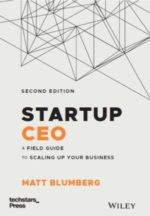
I realize I haven’t posted much lately. As you may know, the title of this blog, OnlyOnce, comes from a blog post written by my friend and board member Fred Wilson from Union Square Ventures entitled You Are Only a First-Time CEO Once, which he wrote back in 2003 or 2004. That inspired me to create a blog for entrepreneurs and leaders. I’ve written close to 1,000 posts over the years, and the book became the impetus for a book that another friend and board member Brad Feld from Foundry Group encouraged me to write and helped me get published called Startup CEO: A Field Guide to Scaling Up Your Business back in 2013.
Today is a special day in my entrepreneurial journey and in the life of the company that I started back in 1999 (last century!), Return Path, as we announce that Return Path has entered into a definitive agreement to be acquired by an exciting new company called Validity. Press release is here.
Over almost 20 years, we’ve built Return Path into one of the largest and (I think) most respected companies in the email industry. We’ve had a culture of innovation that has led to some groundbreaking products for our customers and partners to help make email marketing work better for consumers as well as marketers, and to help keep inboxes safe and clean for mailbox providers and security companies.
But the company is unusual in many respects. One of those is longevity. I’m not sure how many Internet companies started in 1999 are still private, backed and led by the same team the whole time, and generally in the same business they started in. Another is our values-driven “People First” culture. From Day 1, we have believed that if we attract and retain and develop and invest in the best people, we will make our customers successful with great products and service, and that if we do right by our customers, we will do right long term by our shareholders. While I know that not every employee who ever walked through our doors had a great experience, I know most did and hope that all of them realize we tried our best. Finally, I’m proud that our company gave birth to a non-profit affiliate Path Forward a few years back at the hands of executives Andy Sautins, Cathy Hawley, and Tami Forman. Path Forward helps parents get back to work after a career break and helps companies improve their gender diversity and hiring biases and has already been a game changer for dozens of companies and hundreds of women.
Today, Return Path serves almost 4,000 customers in almost every country on the globe, with $100 million in revenue, profitable, and excited about the next leg of our brands’ and our products’ lives in the care of Validity. If you haven’t heard of Validity before today, watch out – you will hear a LOT about them in the weeks and months ahead. They are an incredibly exciting new company with a vision to help tens of thousands of companies across the globe improve their data quality but also help them use data to improve business results. That vision, inspired by a new friend, CEO Mark Briggs, is a wonderful fit for Return Path’s products and services and people.
To finish this post where I started, Fred’s exact words in that post which got this blog going were:
What does this mean for entrepreneurs and managers? It means that the first time you run a business, you should admit what you are up against. Don’t let ego get in the way. Ask for help from your board and get coaching and mentoring. And recognize that you may fail at some level. And don’t let the fear of failure get in the way. Because failure isn’t fatal. It may well be a required rite of passage.
All of that is true and has been great advice for me over the years. But Fred left out one important piece, which is that entrepreneurs need to constantly thank the people around them who either work their butts off as colleagues in the business or who give them helpful advice and coaching. Return Path’s journey has been a long one, longer than most, and the full list of people to thank is too long for a blog post.
I’ve noted Fred and Brad in this post already and I want to thank them and also thank Greg Sands from Costanoa Ventures, the third member of our “dream team” investor syndicate, for their friendship and unwavering support and good counsel for me and Return Path for almost two decades, as well as many other board members we’ve had over the years including long-time independent directors Jeff Epstein, Scott Petry, and Scott Weiss.
I want to thank my co-founders Jack Sinclair and George Bilbrey, and anyone who has ever been on my executive team, including long-time execs Ken Takahashi, Shawn Nussbaum, Cathy Hawley, Dave Wilby, Anita Absey, Angela Baldonero, Andy Sautins, Louis Bucciarelli, Mark Frein, and David Sieh. There’s nothing quite like being in the proverbial foxhole with someone during a battle or two or ten to forge a tight bond. I want to thank Andrea Ponchione, my extraordinary assistant for 14 years, who keeps me running, sane, and smiling every day. I want to thank my executive coach Marc Maltz and the members of my CEO Forum for allowing me to be unplugged and for their friendship and advice. I want to thank all of Return Path’s 430 employees today and over 1,300 ever for their hard work in building our company and culture together and for our 4,000 customers and partners for putting their faith in us to help them solve some of their biggest challenges with email.
Finally, no thank you list for this journey would be complete without saying a special thank you to my wonderful wife Mariquita and kids Casey, Wilson, and Elyse. They deserve some kind of special honor for being inspirational cabin-mates on the entrepreneurial roller coaster without ever being asked if they were up for it.
This event may inspire me to begin writing more regularly again on OnlyOnce. Stay tuned!
The Gift of Feedback, Part II
The Gift of Feedback, Part II
I’ve written a few times over the years about our 360 feedback process at Return Path. In Part I of this series in early 2008, I spelled out my development plan coming out of that year’s 360 live review process. I have my new plan now after this year’s process, and I thought I’d share it once again. This year I have four items to work on:
- Continue to develop the executive team. Manage the team more aggressively and intentionally. Upgrade existing people, push hard on next-level team development, and critically evaluate the organization every 3-6 months to see if the execs are scaling well enough or if they need to replaced or augmented
- Formalize junior staff interaction. Create more intentional feedback loops before/after meetings, including with the staff member if needed, and cultivate acceptance of transparency; get managers to do the same. Be extra skeptical about the feedback I’m getting, realizing that I may not get an accurate or complete picture
- Foster deeper engagement across the entire organization. Simplify/streamline company mission and balanced scorecard through a combination of deeper level maps/scorecards, maybe a higher level scorecard, and constant reinforcing communication. Drive multi-year planning process to be fun, touching the entire company, and culminating in a renewed enthusiasm
- Disrupt early and often, the right way. Introduce an element of productive disruption/creative destruction into the way I lead, noting item 2 around feedback loops
Thanks to everyone internally who contributed to this review. I appreciate your time and input. Onward!
Deals are not done until they are done
We were excited to close the sale of our Consumer Insights business last week to Edison, as I blogged about last week on the Return Path blog. But it brought back to mind the great Yogi Berra quote that “it ain’t over ’til it’s over.”
We’ve done lots of deals over our 18 year existence. Something like 12 or 13 acquisitions and 5 spin-offs or divestitures. And a very large number of equity and debt financings.
We’ve also had four deals that didn’t get done. One was an acquisition we were going to make that we pulled away from during due diligence because we found some things in due diligence that proved our acquisition thesis incorrect. We pulled the plug on that one relatively early. I’m sure it was painful for the target company, but the timing was mid-process, and that is what due diligence is for. One was a financing that we had pretty much ready to go right around the time the markets melted down in late 2008.
But the other two were deals that fell apart when they were literally at the goal line – all legal work done, Boards either approved or lined up to approve, press releases written. One was an acquisition we were planning to make, and the other was a divestiture. Both were horrible experiences. No one likes being left at the altar. The feeling in the moment is terrible, but the clean-up afterwards is tough, too. As one of my board members said at the time of one of these two incidents – “what do you do with all the guests and the food?”
What I learned from these two experiences, and they were very different from each other and also a while back now, is a few things:
- If you’re pulling out of a deal, give the bad news as early as possible, but absolutely give the news. We actually had one of the “fall apart at the goal line” deals where the other party literally didn’t show up for the closing and never returned a phone call after that. Amateur hour at its worst
- When you’re giving the bad news, do it as directly as possible – and offer as much constructive feedback as possible. Life is long, and there’s no reason to completely burn a relationship if you don’t have to
- Use the due diligence and documentation period to regularly pull up and ask if things are still on track. It’s easy in the heat and rapid pace of a deal to lose sight of the original thesis, economic justification, or some internal commitments. The time to remember those is not at the finish line
- Sellers should consider asking for a breakup fee in some situations. This is tough and of course cuts both ways – I wouldn’t want to agree to one as a buyer. But if you get into a process that’s likely to cause damage to your company if it doesn’t go through by virtue of the process itself, it’s a reasonable ask
But mostly, my general rule now is to be skeptical right up until the very last minute.
Because deals are not done until they are done.
Email Marketing 101
Email Marketing 101
We just published a book! Sign me Up! A marketer’s guide to creating email newsletters that build relationships and boost sales is now available on Amazon.com. The book is authored by me and my Return Path colleagues Mike Mayor, Tami Forman, and Stephanie Miller. What’s it about?
– At its core, the book is a very practical how-to guide. Any company — large or small — can have a great email newsletter program. They’re easy, they’re cheap, and when done well, they’re incredibly effective.
– This book helps you navigate the basics of how to get there, covering everything from building a great list, to content and design, to making sure the emails reach your customers’ inboxes and don’t get blocked or filtered.
– Our central philosophy about email marketing, which permeates the advice in the book, is covered in my earlier New Media Deal posting (which is reproduced in part in the book’s Preface) — that customers will sign up for your email marketing in droves if you provide them a proper value exchange for the ability to mail them.
– I’d encourage you to buy the book anyway, but in case you need an extra incentive, we are also donating 10% of book sales to Accelerated Cure, a research organization dedicated to finding a cure for Multiple Sclerosis, in honor of our friend and colleague Sophie Miller.
More postings to come about the process of writing, publishing, and marketing a book in 2005 — boy was the experience we had different than it would have been 10 years ago.
Think Global, Act Local
Think Global, Act Local
At Return Path, we have always had a commitment to community service and helping make the world around us a better place. We ratcheted that up a lot in the last year, which is why we added the following statement in as one of our 14 Core Values:
Think Global, Act Local. We commit our time and energy to support our local communities.
We feel strongly that companies can and should make the world a better place in several different ways. Certainly, many companies’ core businesses do that — just look at all the breakthroughs in medicine and social services over the years brought to market by private enterprises, including my friend Raj Vinnakota, who I blogged about here years ago.
But many companies, including Return Path, aren’t inherently “save the world” in nature, and those companies can still make a difference in the world in a few ways:
- Allow employees to take a limited amount of paid time off for community service work
- Organize projects in the local community for their employees to help out/work at
- Provide matching gift programs so employees’ donations are enhanced by the company
- Donate money or services to charitable organizations they believe in
As a relatively small company, we have had to pick our battles here. When we were smaller, we had a policy for #1 above that allowed employees 5 days per year of paid time off for community service work in addition to vacation. We organized projects here and there for employees, including various walks and races and drives, and multiple Habitat for Humanity projects, including one that our employees blogged extensively about after Hurricane Katrina in New Orleans (see Tom Bartel’s final blog post of 7 here. We never had a specific policy around matching donations, but we were always quick to support one-off employee requests. And we did have comprehensive program for #4 above to donate cash and in-kind services to one particular charitable organization that fought Multiple Sclerosis, which was inspired by a long-time employee who was diagnosed with MS.
Over the years, our approach has evolved around service. When we moved to an Open Vacation policy a few years back, we effectively eliminated the Community Service time off benefit since people can just go do that now under the umbrella time-off policy. We do still organize some projects for employees from time-to-time, but those are done on an office-by-office basis. The biggest change in our approach was to stop doing company-run projects, stop responding to one-off requests from employees, and stop supporting a single organization. We felt that those things, while good, were diffusing the impact that we could potentially have.
So this year we launched something called the Dream Fund. Once each quarter, we invite self-forming teams of employees to submit applications for a $10,000 grant to help make some corner of their community a better place. There are some loose guidelines around the use of funds (e.g., they can’t be a straight donation, they have to include some hands-on work), and we have a panel select each quarter’s winner. So far, we have had two projects run very successfully:
- Sistas Against Cancer which supports the Avan Walk for Breast Cancer.
- Tennyson Center for Children. This charity supports kids suffering from abuse, neglect, emotional crises and other traumatic experiences will get the help they need while finding healing and HOPE in a safe and caring environment
There’s no right way to do community service as a company. Bu t we feel strongly that part of our “mission” (an overused word if there ever was one) was to have an impact on the world around us – not just on our customers and fellow employees, but by using our time and money to help those who need it most in the many communities where we operate around the world.
Book Short: Culture is King
Book Short: Culture is King
Tony Hsieh’s story, Delivering Happiness (book, Kindle), is more than just the story of his life or the story of Zappos. It’s a great window into the soul of a very successful company and one that in many ways has become a model for great culture and a great customer service model. It’s a relatively quick and breezy read, and it contains a handful of legendary anecdotes from Zappos’ history to demonstrate those two things — culture and customer service — in action.
As Hsieh himself says in the book, you can’t copy this stuff and believe it will work in your company’s environment as it does in Zappos’. You have to come up with these things on your own, or better yet, you have to create an environment where the company develops its own culture and operating system along the broad lines you lay out. I think Return Path has many similarities with Zappos in how we seek out WOW experiences and in our Core Values, as well as the evolutionary path we took to get to those places. But as much as I enjoyed reading about a like-minded company, I also recognized the specific things that were different and had a good visceral understanding as to WHY the differences exist.
It is the rare company that gets to $1 billion in revenue ever – let alone within a decade. For that reason alone, this is a worthwhile read. But if you are a student of organizational culture and believe in the power of values-driven organizations, this is good affirmation and full of good examples. And if you’re a doubter of the power of those things, this might just convince you to think twice about that!
Book short: Life Isn’t Just a Wiki
Book short: Life Isn’t Just a Wiki
One of the best things I can say about Remote: Office Not Required, by Jason Fried and David Heinemeier Hansson, is that it was short. That sounds a little harsh – part of what I mean is that business books are usually WAY TOO LONG to make their point, and this one was blessedly short. But the book was also a little bit of an angry rant against bad management wrapped inside some otherwise good points about remote management.
The book was a particularly interesting read juxtaposed against Simon Sinek’s Leaders Eat Last which I just finished recently and blogged about here, which stressed the importance of face-to-face and in-person contact in order for leaders to most effectively do their jobs and stay in touch with the needs of their organizations.
The authors of Remote, who run a relatively small (and really good) engineering-oriented company, have a bit of an extreme point of view that has worked really well for their company but which, at best, needs to be adapted for companies of other sizes, other employee types, and other cultures. That said, the flip side of their views, which is the “everyone must be at their cubicle from 9 to 5 each day,” is even dumber for most businesses these days. As usual with these things, the right answer is probably somewhere in between the extremes, and I was reminded of the African proverb, “If you want to go fast, go alone. If you want to go farm go together” when I read it. Different target outcomes, different paths.
I totally agree with the authors around their comments about trusting employees and “the work is what matters.” And we have a ton of flexibility in our work at Return Path. With 400 people in the company, I personally spend six weeks over the summer working largely remote, and I value that time quite a bit. But I couldn’t do it all the time. We humans learn from each other better and treat each other better when we look at each other face to face. That’s why, with the amount of remote work we do, we strongly encourage the use of any form of video conferencing at all times. The importance of what the authors dismiss as “the last 1 or 2% of high fidelity” quality to the conversation is critical. Being in person is not just about firing and hiring and occasional sync up, it’s about managing performance and building relationships.
Remote might have been better if the authors had stressed the value that they get out of their approach more than ranting against the approaches of others. While there are serious benefits of remote work in terms of cost and individual productivity (particularly in maker roles), there are serious penalties to too much of it as well in terms of travel, communication burden, misunderstandings, and isolation. It’s not for everyone.
Thanks to my colleague Hoon Park for recommending this to me. When I asked Hoon what his main takeaway from the book was, he replied:
The importance of open communication that is archived (thus searchable), accessible (transparent and open to others) and asynchronous (doesn’t require people to be in the same place or even the same “timespace”). I love the asynchronous communication that the teams in Austin have tried: chatrooms, email lists (that anyone can subscribe to or read the archives of), SaaS project management tools. Others I would love to try or take more advantage of include internal blogs (specifically the P2 and upcoming O2 WordPress themes; http://ma.tt/2009/05/how-p2-changed-automattic/), GitHub pull requests (even for non-code) and a simple wiki.
These are great points, and good examples of the kinds of systems and processes you need to have in place to facilitate high quality, high volume remote work.
How to Get Laid Off
How to Get Laid Off – an Employee’s Perspective
One of my colleagues at Return Path saw my post about How to Quit Your Job about 5 years ago and was inspired to share this story with me. Don’t read anything into this post, team! There is no other meaning behind my posting it at this time, or any time, other than thinking it’s a very good way of approaching a very difficult situation, especially coming from an employee.
In 2009 I was working at a software security start up in the Silicon Valley. Times were exceedingly tough, there were several rounds of layoffs that year, and in May I was finally on the list. I was informed on a Tuesday that my last day was that Friday. It was a horrible time to be without a job (and benefits), there was almost no hiring at all that year, one of the worst economic down turns on record. While it was a hard message, I knew that it was not personal, I was just caught up on a bad math problem.
After calling home to share the bad news, I went back to my desk and kept working. I had never been laid off and was not sure what to do, but I was pretty sure I would have plenty of free time in the short term, so I set about figuring out how to wrap things up there. Later that day the founder of the company came by, asked why I had not gone home, and I replied that I would be fine with working till the end of the week if he was okay with it. He thanked me.
Later that week, in a meeting where we reviewed and prioritized the projects I was working on, we discussed who would take on the top three that were quite important to the future of the company. A few names were mentioned of who could keep them alive, but they were people who I knew would not focus on them at all. So I suggested they have me continue to work on them, that got an funny look but when he thought about it , it made sense, they could 1099 me one day a week. The next day we set it up. I made more money than I could of on unemployment, but even better I kept my laptop and work email, so I looked employed which paid off later.
That one day later became two days and then three, however, I eventually found other full time work in 2010. Layoffs are hard, but it is not a time to burn bridges. In fact one of the execs of that company is a reference and has offered me other opportunities for employment.