Book Short: Just One Minute
Book Short: Just One Minute
What The One Minute Manager does for basic principles of management and goal setting, The One Minute Manager Meets the Monkey does for delegation. Both are blessedly quick reads (the classic “airport” book), and Ken Blanchard really nails some of management’s most critical components with simplicity and grace.
I’m a fan of the One Minute Manager school, and it does work well for some of the basics, but it has its limitations in terms of how broadly it can be applied. My colleague Whitney McNamara‘s words in an email to me a few months back say it all:
OMM has actually been useful. I have to agree that it’s got a bit of a “Jonathan Livingston Seagull” mystical simplicity thing going, but as you say, simple is sometimes what works best.
It’s really strong in that the basic lessons are at root so simple that they’re easy to forget about day to day…having them articulated in a similarly simple way, so that they stick at the top of mind easily, is nice.
The other side of that is that it presents such a simplified, best-of-all-possible-worlds sort of scenario that I did sometimes find myself wanting to set fire to the OMM’s office building and scream “let’s see you deal with *this* in 60 seconds, buddy”…but on balance a pretty good experience. 🙂
In the end, it’s not that good management is easy — but it can be quick and relatively painless if done well and regularly.
Introducing Bolster
As I mentioned earlier this summer, I’ve been working on a new startup the past few months with a group of long-time colleagues from Return Path. Today, we are officially launching the new company, which is called Bolster. The official press release is here.
Here’s the business concept. Bolster is a talent marketplace, but not just any talent marketplace. We are building a talent marketplace exclusively for what we call on-demand (or freelance) executives and board members. We are being really picky about curating awesome senior talent. And we are targeting the marketplace at the CEOs and HR leaders at venture- and PE-backed startups and scaleups. We’re not a search firm. We’re not trying to be Catalant or Upwork. We’re not a job board.
To keep both sides of the marketplace engaged with us, we are also building out suites of services for both sides – Members and Clients. For Members, our services will help them manage their careers as independent consultants. For Clients, our services will help them assess, benchmark and diversify their leadership teams and boards.
We have a somewhat interesting founding story, which you can read on our website here. But the key points are this. I have 7 co-founders, with whom I have worked for a collective 88 years — Andrea Ponchione, Jack Sinclair, Shawn Nussbaum, Cathy Hawley, Ken Takahashi, Jen Goldman, and Nick Badgett. We have three engineers with whom we’ve worked for several years who have been on board as contractors so far – Kayce Danna, Chris Paynes, and Chris Shealy. We have four primary investors, who I’ve also known and worked closely with for a collective 77 years — High Alpha and Scott Dorsey (another veteran of the email marketing business), Silicon Valley Bank and Melody Dippold, Union Square Ventures and Fred Wilson, and Costanoa Ventures and Greg Sands. Pretty much a Dream Team if there ever was one.
So how did our team and I get from Email Deliverability to Executive Talent Marketplace?
It’s more straightforward than you’d think. If you know me or Return Path, you know that our company was obsessed with culture, values, people, and leadership development. You know that we created a cool workforce development nonprofit, Path Forward, to help moms who have taken a career break to care raise kids get back to work. You know that I wrote a book for startup CEOs and have spent tons of time over the years mentoring and coaching CEOs. Our team has a passion for helping develop the startup ecosystem, we have a passion for helping people improve and grow their careers and have a positive impact on others, and we have a passion for helping companies have a broad and diverse talent pipeline, especially at the leadership level. Put all those things together and voila – you get Bolster!
There will be much more to come about Bolster and related topics in the weeks and months to come. I’ll cross-post anything I write for the Bolster blog here on OnlyOnce, and maybe occasionally a post from someone else. We have a few opening posts for Bolster that are probably running there today that I’ll post here over the next couple weeks.
If you’re interested in joining Bolster as an executive member or as a client, please go to www.bolster.com and sign up – the site is officially live as of today (although many aspects of the business are still in development, in beta, or manual).
Our Operating Philosophy – the Mostly Self Managed Organization (MSMO)
Last week, I wrote about the concept of the Operating Philosophy, and how it fits with a company’s Operating Framework and Operating System and defines the essence of who you are as a company…what form of company you are.
While we had a loose Operating Philosophy at Return Path, we never really crisply articulated it, and that caused some hand-wringing at various points over the years, as different people interpreted our “People First” mantra in different ways. So this time around at Bolster, we’re trying to be more intentional about this up front. We have labeled our company a “Mostly Self Managed Organization” or MSMO (pronounced Miz-Moh). We made those up.
Our Operating Philosophy – we are a Mostly Self-Managed Organization, or MSMO (pronounced Miz-Mo, a term we just made up). The MSMO is the product of years of work, research, practical learning, and thinking on our part. Self-Management has been important to me my whole career as a manager and leader. Over the last 15 years, the team and I have studied various forms of self-management with interviews and onsite meetings at Netflix, Gore, Nucor, Morningstar, and Zappos. While we implemented some aspects of it at Return Path, we are trying to take the implementation a step further here at Bolster from the beginning.
Of all those companies, what we’re doing is probably closest to the Operating Philosophy of W.L. Gore & Associates, which you can find written out online without a name but with the description that “individuals don’t need close supervision; what they need is mentoring and support.” The embodiments of the Operating Philosophy at Gore may be different from those we create at Bolster, but the essence of the philosophies is pretty similar.
Why a MSMO? We employ smart people, and smart people crave autonomy, purpose, and mastery (according to Daniel Pink) and do their best work when they have those things in alignment.
So, how do we define self-management at Bolster? We aren’t going to be a DAO. I don’t think that model works for a for-profit multifaceted corporation – complete Self-Management is too chaotic. Leadership and mentorship matter and make a difference in guiding strategy, critical decisions, and careers. Holocracies or other unnamed structures like that of Morningstar are ok, but they are so rigidly ideological that they require an immense amount of work-around, or scaffolding, to be practical.
But we aren’t a traditional fixed top-down hierarchy, either. We are going to run the business in a way that lets people co-create their work and be responsible for driving their own feedback and development with a support structure. That’s the ideology we have. Letting talented people loose to do their best work is critical; but leadership, judgment, and experience matter, too. If not, why bother having a CEO, or a VP of anything? Why not just pay everyone the same thing and hope they can all figure out the complexities of the business together?
We believe the MSMO is the best operating philosophy to allow high performers to do their best work.
At Bolster, we are leaning into things like social contracts, peer feedback, career mentorship, individuals translating our Operating Framework into priorities and work, flexible work streams and team leadership, instead of fixed permanent hierarchies, rotating chairs of key company meetings, and market-level-based compensation.
What we are steering away from are things like traditional titles, micromanaging or overmanaging, traditional performance reviews linked to compensation and complex incentive compensation structures, and fixed organization boundaries and structure.
We’ll see if our MSMO Operating Philosophy works. If not, we’ll iterate on it. That’s the good thing about adherence to an ideology of philosophy as opposed to an ideology of practices. Who knows – maybe the MSMO concept and even its quirky name will catch on!
7 Years On
7 Years On
My last September 11 as a New York City resident. I walked down to the World Trade Center site this morning as I have each of the last six 9/11s and rang The Bell of the Unforgotten, which is the New York City Fire Department’s port-a-memorial that they bring out for the day. As a long-time member of the lower Manhattan community, the day always bring out a lot of reflection for me. Seeing the memorial flood lights on tonight will do the same and bookend the day.
The main thing I was thinking about this morning was why there’s been nothing really built yet on the site. World Trade Center 7 (which is actually adjacent to the main site) went up in a hurry a few years ago (pictured here under construction four years ago), but nothing else.
My general understanding of the situation is that the holdup has not been around clean-up or pre-construction the last several years, but all about legal, political, and insurance issues. And that smacks to me of a leadership problem. I realize there are a lot of parties involved, and a lot at stake, but it’s just embarrassing to America that we haven’t rebuilt the site — and fast. Set an example to the rest of the world that we react swiftly and don’t let the bad guys knock us down…and keep us down.
It feels to me like a President who actually understood leadership would have gotten all the parties in a room together and not let them out until there was agreement on a plan. Don’t just let “the system” play things out laissez faire, but actually play them out in a hurry so the country and city can move forward. It feels like the kind of thing Reagan or Clinton would have done.
As I reflect on this today, the one thing I’m happy about is that no matter who wins the White House, America will be getting a leadership upgrade.
Startup CEO, Second Edition
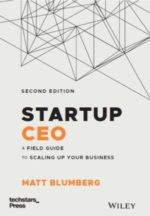
I haven’t taken a poll to figure out the overlap between people who read this blog and people that bought the first edition of Startup CEO, but I’m guessing there’s a high degree of it. If you are familiar with the book, I don’t want to bore you with a recap of what I wrote, but I thought I would devote the next several blogs to new ideas in the second edition. First, the new cover art from the publisher is kind of cool:

The first question you might have is, “Why a second edition? Didn’t you say everything you needed to say the first time?” The answer to that is, yes, I did say everything I had to say at the time, and the first edition is pretty comprehensive as a field guide. But that was about a dozen years into what turned out to be a 20-year journey, and after we sold Return Path in 2019, I had time to reflect on all that happened. I learned a lot of new lessons between the first and second editions, we had a lot of first-time experiences, we scaled the company significantly, and we sold it. None of those things are, in and of themselves, worthy of a second edition, but collectively they help tell the story of startup to exit and tell it from a perspective of creating a sustainable business over nearly two decades.
But there are other reasons, too, besides new lessons learned. Eight years is a lifetime in terms of changes to micro-trends, language, business in general, and the world around us. I wanted to update the book to make it contemporary so that it can speak to a new generation of CEOs. The second edition is more than a new cover and obvious updates on the number of employees or revenues. I added topics that reflect heightened responsibilities of CEOs around moral and ethical leadership in an increasingly transparent and socially conscious world. How do you navigate a politically charged and divisive society? For example, the State of Indiana passed a law intended to not force people to do things that contravened their religious beliefs but it had the side effect of legal descrimination against LGBT citizens. It was contentious, with rallying cries in business and society for one side or the other, and those same sentiments were found within our employee population.
How should CEOs handle a situation that conflicts with their core values? There are no easy answers, but avoiding them doesn’t make the problem go away.
Whether it’s the #metoo movement, high-profile failures of leadership like airline employees dragging customers off of planes, or something as simple as unconscious bias in the workplace, the best CEOs now need to approach their jobs differently. I didn’t write about that in the first edition, but the second edition has an entire chapter devoted to “Authentic Leadership” and provides guidelines and advice to help CEOs. The book went to press early in the COVID-19 pandemic and prior to all the protests around racial injustice surrounding the George Floyd killing, so nothing in it specifically addresses any of those issues. In some ways, though, that may be better at the moment since the book is more about frameworks and principles than about specific responses to current events.
I also added a new section with several chapters on the ins and outs of selling a business. Startup exits are the important culmination of the startup experience and something that the first edition only briefly touched on. Obviously, I was still CEO of a growing company and although we had an opportunity or two to sell within those first years, we never pulled the trigger. The first edition talks about that process at a surface level, but the second edition has far more content and detail since we had completed a sale transaction.
The first edition of the book has sold close to 40,000 copies as of the writing of the second edition, which blew me away when I tallied it all up. I’ve received many notes of thanks from readers all over the world for the book, and I’m glad that the content has proved useful to so many people, noting from some of the more critical reviews on Amazon that it certainly doesn’t scratch everyone’s itch. I hope the changes in the new edition add even more value to the lives of entrepreneurs and startup management teams. That’s really who the book is written for.
Here are some places to go to pre-order the book:
- Directly from the publisher, Wiley
- From Amazon
- From Books-a-Million
- From Indie Bound
- From BN.com
I have a limited number of free copies of the book that I can send out, and oddly, they are only print copies since the book publishing ecosystem hasn’t figured out an efficient way for authors to distribute free Kindle copies of books yet. As a bonus incentive for reading all the way to the end of this post, I will be happy to send a free copy to the first 5 people who comment on this post on the blog and ask for one.
Book Short: a Corporate Team of Rivals
Book Short: a Corporate Team of Rivals
One of the many things I have come to love about the Christmas holiday every year is that I get to go running in Washington DC. Running the Monuments is one of the best runs in America. Today, at my mother-in-law’s suggestion, I stopped i8n at the Lincoln Memorial mid-run and read his second inaugural address again (along with the Gettysburg Address). I had just last week finished Doris Kearns Goodwin’s Team of Rivals: The Political Genius of Abraham Lincoln, and while I wasn’t going to blog about it as it’s not a business book, it’s certainly a book about leadership from which any senior executive or CEO can derive lessons.
Derided by his political opponents as a “second-rate Illinois lawyer,” Lincoln, who arrived somewhat rapidly and unexpectedly on the national scene at a time of supreme crisis, obviously more than rose to the occasion and not only saved the nation and freed the slaves but also became one of the greatest political leaders of all time. He clearly had his faults — probably at the top of the list not firing people soon enough like many of his incompetent Union Army generals — but the theme of the book is that he had as one of his greatest strengths the ability to co-opt most of his political rivals and get them to join his cabinet, effectively neutering them politically as well as showing a unity government to the people.
This stands in subtle but important contrast to George Washington, who filled his cabinet with men who were rivals to each other (Hamilton, Jefferson) but who never overtly challenged Washington himself.
Does that Team of Rivals concept — in either the Lincoln form or the Washington form — have a place in your business? I’d say rarely in the Lincoln sense and more often in the Washington sense.
Lincoln, in order to be effective, didn’t have much of a choice. Needing regional and philosophical representation on his cabinet at a time of national crisis, bringing Seward, Chase, and Bates on board was a smart move, however much a pain in the ass Chase ended up being. There certainly could be times when corporate leadership calls for a representative executive team or even Board, for example in a massive merger with uncertain integration or in a scary turnaround. But other than extreme circumstances like that, the Lincoln model is probably a recipe for weak, undermined leadership and heartache for the boss.
The Washington model is different and can be quite effective if managed closely. One could argue that Washington didn’t manage the seething Hamilton and frothy Jefferson closely enough, but the reality is that the debates between the two of them in the founding days of our government, when well moderated by Washington, forged better national unity and just plain better results than had Washington had a cabinet made up of like-minded individuals. As a CEO, I love hearing divergent opinion on my executive team. That kind of discussion is challenging to manage — at least in our case we don’t have people at each other’s throats — but as long as you view your job as NOT to create compromises to appease all factions but instead to have the luxury of hearing multiple well articulated points of view as inputs to a decision you have to make, then you and your company end up with a far, far better result.
The Gift of Feedback
The Gift of Feedback
My colleague Anita Absey always says that “feedback is a gift.” I’ve written in the past about our extensive 360 review process at Return Path, and also about how I handle my review and bring the Board in on it. But this past week, I finished delivering all of our senior staff 360 reviews, and I received the write-up and analysis of my own review. And once again, I have to say, the process is incredibly valuable.
For the first time in a long time this year, I got a resounding “much improved” on all of my prior year’s development items from my team and from the Board. This was great to hear. As usual, this year’s development items are similarly thoughtful and build on the prior ones, in the context of where the business is going. Since one of my prior year’s items was “be as transparent as possible,” I thought I’d share my development plan for the coming 12-18 months here on my blog. If you’re reading this and you report to me, you’ll get a longer form debrief at our next offsite.
1. Continue making the organization more of a Hedgehog, lending more focus to our mission and removing distractions wherever possible.
2. Move the organization’s leadership team from “pacesetting” to “authoritative” management styles by focusing more on :
a. standards of excellence around employee behavior and performance: develop a more clear performance management system, raise the bar on accountability around leadership and management issues, shift management training from tools to values-based coaching
b. clear communication loops: balance open door policy with manager empowerment by getting the executive in charge to fix issues (instead of fixing them myself) and/or facilitating stronger manager-employee communication
c. constant translation of vision into execution: foster clearer context and deeper employee engagement by not just communicating vision, but communicating HOW the vision becomes reality at every opportunity
3. Sharpen elbows further around leadership team: identify key attributes of success, weed out underperformers, re-scope other roles, and clarify “partner for success” opportunities as part of core responsibilities. Make each individual’s development needs public in the senior team (I guess this is the first step towards that!)
4. Make the organization more nimble, inspiring a bias for action through shifts in priorities and cross-functional swat teams where required
So there you go. If you work at Return Path, please feel free to hold my feet to the fire in the coming months on these points!
The Gig Economy Executive
(This post, written by my co-founder Cathy Hawley, also appeared on Bolster.com)
The gig economy is a labor market where short-term or freelance roles are more prevalent than permanent positions. It’s generally characterized by having independent contractors rather than full-time positions, but in some locations and for some types of roles, gig workers may be part-time or fixed-term employees.
The gig economy that started with roles like artists, drivers and web designers is quickly expanding to include executive-level roles. There are a few trends in today’s workplace that are driving this expansion. Startups and scaleups have more flexible, remote-friendly work environments and are looking for creative, less expensive ways of accelerating growth. Executives have shorter average job tenure and are more often displaced or between roles, and they are also interested in the flexibility that gig work can give them.
In a study conducted by MavenLink/Research Now, “The White Collar Gig Economy,” 47% of companies state they are looking to hire contractors to fill management and senior executive roles, including c-suite contractors. At the same time, 63% of full-time executives would switch to become a contractor, given the opportunity. These trends will be accelerated by the current economic downturn and recovery, as some companies have fewer resources, and more executives are displaced.
At the executive level, there are a few different types of roles that could be considered ‘gigs’. The most common two are coaching and project-based consulting. Coaching or advising, and particularly CEO coaching and advising, has become very prevalent over the last 10 years. The CEO hires a coach who can help them navigate new situations and challenges. Often, CEO coaches stay with a CEO for a number of years, helping guide and support them through the stages of company growth. There are also coaches and advisors for other functional areas to provide similar support for other executives, although more commonly these coaches are hired for specific initiatives.
Then there is project-based consulting, where executive-level talent is hired to run a specific project such as reviewing a company’s packaging and pricing, performing due diligence on an acquisition, creating a Diversity, Equity and Inclusion strategy, or creating an investor deck for a fundraising event. This type of consulting isn’t new, and it’s similar to what large consulting firms offer. It seems to be more prevalent now for very senior roles than it ever has been in the past.
But the gig economy for executives now reaches well beyond coaches and consultants. There are also executives who are hired into interim leadership roles while a company searches for a permanent placement. Some roles take a long time to find the right person, but there’s an urgent need for someone to take on the leadership mantle in the interim. If the interim executive is a good fit, and is open to it, it’s not uncommon for this individual to be considered for the permanent position. “Try before you buy” works both ways — it can be good for the company and good for the executive, too.
An up-and-coming type of executive gig role is the fractional role. We are seeing this more and more in the last couple of years. Fractional executives can either be consultants or employees, since the expectation is a long-term relationship, on a part-time basis. For example, 3 days or a certain number of hours per week. The fractional executive is responsible for all functional areas as a full-time executive in that same role. The company may be too small to need (or afford) their level of expertise on a full time basis, but needs more than just an advisor or project consultant. The fractional executive generally remains with a company until the company needs a full-time leader for that function, in which case either the fractional executive goes full-time, or the company hires someone new. Fractional executives may support more than one client at a time, and may also come with a team of more junior functional experts who can support them to take on more work.
Finally, for our purposes at Bolster, joining a company’s board of directors could be considered taking a ‘gig’ role since it’s not a full-time executive role. Startups and scaleups need independent directors, and their needs change based on their size, stage and strategy. We see a growing trend of companies contracting with directors for 1 -2 years rather than lifetime service.
There’s a real opportunity right now for companies to capitalize on the expertise of this talent pool without having to hire them for long-term full time roles, and for executives who want to contribute their skills and expertise without the commitment of a 80-hour work week. Bolster is helping bring these two audiences together in a marketplace that matches on-demand executives with companies who need their services the most. Bolster also provides services for members so they can focus on their consulting rather than their business, and for companies to evaluate their executive teams and boards.
The Difference Between a CEO Coach and a CEO Mentor and Why Every CEO Needs Both
(This is the first in a series of three posts on this topic.)
Harry Potter was lucky. He had, in Albus Dumbledore, the ultimate wise elder, in his corner. Someone who could teach him how to be a better human being (er, wizard), how to be more proficient with his wand and spells, how to think strategically and defeat the bad guys.
All of us would benefit from having an Albus Dumbledore in our lives. But most of us don’t — and most of the people we’d call on to be that wise elder in our corner aren’t capable of the full range of advice and counsel that Dumbledore is.
Why work with a Coach or a Mentor? I’ll start this post with a quick argument in favor of CEO Coaches and Mentors (sometimes called Advisors). Even as a 20-something first-time CEO years ago, I was deeply skeptical of the value of a Coach, but that was in 1999 or 2000 when coaches weren’t so commonplace. Now that their value seems much more obvious, and there are so many amazing Mentors and Coaches available, I’m surprised by how many CEOs I speak to still seem skeptical about their value. Just think — the world’s greatest athletes, the ones who get paid zillions of dollars because they are the best in the world at something, use MULTIPLE coaches DAILY to perfect their craft and keep them focused. Why should Rafael Nadal or Serena Williams have a trainer and a coach, but not you?
I’ve benefited over the years from the advice of more people than I can ever count or thank. But when it comes to being a CEO, I have leveraged the counsel of a CEO Coach or Mentor principally in three different areas:
- Functional topics on the craft of being a CEO from the lofty “how to run a board meeting” to the nitty gritty details of “how to do a layoff”
- Developmental/behavioral topics like “how I show up as a leader in the organization,” or “how to be a better listener”
- Team Effectiveness topics like “how do I get the most out of my leadership team,” or “why doesn’t Person X trust Person Y and how does that impact team performance?”
In some unusual circumstances, you can find a person who does all three of these things for you and can scale as you and your company grow. But for the most part, getting all three of these things requires engaging two different people, and maybe even more mentors.
What’s the difference between a CEO Mentor and a CEO Coach? Counsel on Item 1 above — what I would call CEO Mentorship — almost certainly requires someone to have been a CEO — preferably multiple times, or for a long period of time, or through multiple stages of company growth, or two or three of those qualifiers. This is the kind of person who can literally teach you how to do CEO things. These people are super busy, they won’t have open ended amounts of time for you, but you should expect sage wisdom and answers when you need them. And you can have more than one of them at a time, or change them out as your company evolves and your needs change.
Counsel on items 2 and 3 — what I would call CEO Coaching — frequently come together in a professional who is and has been for a while, a coach. The person might have had a significant career in business before becoming a coach but wasn’t necessarily a CEO. The person probably has some kind of academic grounding, like a Master’s degree in Organizational Development or Industrial Psychology, or a Certificate in Coaching. This is the kind of person who can do things for you and your team like facilitate meetings, run assessments like Myers-Briggs or DISC, and coach other leaders on your team. This person is dedicated to helping you be the best leader, professional, and CEO that you can be and must be both empathetic and comfortable pushing you hard.
Sometimes you get mentorship and coaching in the same person, but almost only with CEO Coaches who are also CEO Mentors by my definition above.
Five signs you need a CEO Mentor and/or Coach:
- You are playing ‘whack-a-mole’ — running from crisis to crisis in your organization and are not able to make time to think, be current with email, or make time for important things like hiring senior executives
- Your board is getting frustrated with you, your team and/or the lack of progress in the business
- The company isn’t scaling as fast as it should
- Your leadership team is not a cohesive team and you are in the middle of all decisions
- The company has high employee turnover and/or poor reviews on Glassdoor
Do yourself and your company a favor and invest in a CEO Coach and Mentor(s). It’s an investment in accelerating your own and your company’s success. In later posts, I’ll talk about how to hire and best leverage both Coaches and Mentors.
Next post in the series coming: How to Select a CEO Mentor or CEO Coach
Chewy and Delicious
It’s good that my friend Brad Feld‘s new book (co-authored by Dave Jilk, who I’ve also known on and off over the years), is divided into 52 chapters and is designed as a bit of a devotional, to be read one chapter per week.
Each chapter of The Entrepreneur’s Weekly Nietzsche: A Book for Disruptors is, as the authors write in the Introduction, worth “chewing on a while.” The structure of the book is laid out as:
The book contains fifty-two individual chapters (one for each week) and is divided into five major sections (Strategy, Culture, Free Spirits, Leadership, and Tactics). Each chapter begins with a quote from one of Nietzsche’s works, using a public domain translation, followed by our own adaptation of the quote to 21st-century English. Next is a brief essay applying the quote to entrepreneurship. About two-thirds of the chapters include a narrative by or about an entrepreneur we know (or know of), telling a concrete story from their personal experience as it applies to the quote, the essay, or both.
That structure is perfect for me. I did ok in Philosophy classes, but I wouldn’t say it was my preferred subject. So the fact that Brad and Dave turned every Nietzsche quote into plain English before applying it to entrepreneurship and disruption was a welcome tactic to make the book as accessible as possible.
I wrote one of the essays in the book on creating a Company Operating System, which is in the chapter called “Doing is not Leading.” It’s an honor to be included as a contributor alongside a number of awesome CEOs, including Reid Hoffman, Ingrid Alongi, Daniel Benhammou, Sal Carcia, Ben Casnocha, Ralph Clark, David Cohen, Mat Ellis, Tim Enwall, Nicole Glaros, Will Herman, Mike Kail, Luke Kanies, Walter Knapp, Gary LaFever, Tracy Lawrence, Jenny Lawton, Seth Levine, Bart Lorang, David Mandell, Jason Mendelson, Tim Miller, Matt Munson, Ted Myerson, Bre Pettis, Laura Rich, Jacqueline Ros, and Jud Valeski.
In his Foreword, Reid Hoffman connects the dots perfectly:
Returning to Nietzsche, let’s examine why he in particular is such an apt patron philosopher for entrepreneurs. Nietzsche was rebelling against a stultifying philosophical practice that exalted the past—specifically the ideals and images of former thinkers and former leaders. He wanted to refocus on the now, on what humanity was and what it could become. As part of his rebellion, Nietzsche philosophized with a hammer: he wanted to destroy the old mindsets that locked people into the past, and thus better equip them to embrace the possibility of the new. Nietzsche’s desire to shift mindsets is also why he emphasized new styles of argument. Whereas most philosophers would typically open an argument in a classical form or by reviewing a historical great, Nietzsche would lead with an arresting aphorism or a completely new mythological narrative. He was, above all else, a disruptor of pieties and convention, always in search of new and original ways to be contrarian and right, never satisfied with the status quo. This is exactly the kind of mindset entrepreneurs should adopt. This is why a daily practice of philosophy can be the way that an entrepreneur moves from good to great. And, why a daily practice of Nietzsche is a great practice of philosophy for entrepreneurs.
What I love about the book is that you can read any given chapter at any time without having to read it front to back, and the combination of Nietzsche and entrepreneur essays makes the topics come to list. Pick one — they are organized into five sections, Strategy, Culture, Free Spirits, Leadership, and Tactics — and you’re sure to get both something chewy (e.g, thoughtful) and delicious (e.g., practical).
Introducing Bolster Prime and Bolster Ventures (and their back story)
This is another big week for us at Bolster. On the heels of the announcement we made last month about our Series B financing, we are now announcing the launch of a new program called Bolster Prime and a new venture capital fund called Bolster Ventures. These are important steps in Bolster’s evolution and in the fulfillment of our mission, what we call internally our “Big Idea,” which is to empower the innovation economy.
The roots of Bolster Prime and Bolster Ventures pre-date the founding of Bolster. In our prior lives, the Bolster founders worked together to scale up a business called Return Path and also
worked as advisors and mentors to numerous early stage founders and startups. One of the things we noted in our very first post, now part of the About Us section of Bolster.com, was:
After exiting Return Path [the company where our founding team worked for many years], we wanted to do for others what we did for each other as a seasoned executive team. We wanted to know: “How could we help other CEOs, executives and boards bolster themselves to go the distance and scale with their organizations?”
While the founding team was exploring potential business opportunities that allowed us to make a bigger impact on the world, Silicon Valley Bank and High Alpha Innovation were together envisioning a platform to help VC-backed portfolio companies more effectively navigate the complex world of executive talent needs. When our three groups came together, we realized we shared a vision to build a company that puts people first in all aspects to drive high-growth businesses.
I’ve never written before about those other “potential business opportunities” that our team was exploring along with our prior investment syndicate, Fred Wilson from Union Square Ventures, Greg Sands from Costanoa Ventures, and Brad Feld from Foundry. The one our team was particularly excited about was a concept we were calling at the time “Venture Acceleration Partners.” The key points in the pitch deck we created were:
- There is a gap in the market of investors adding “management” value to portfolio companies between Accelerators/Incubators/Studios at the low end and Private Equity firms and very large VCs at the high end. What about the middle?
- “The middle” consists of venture-backed companies that are neither early stage nor mature. They are typically founder-led, often by a first-time CEO with new or incomplete management teams who need a lot of mentorship/development, and with a diversified cap table of firms that don’t own operating or consulting practices to help guide the scaling process.
- These companies tend to have consistent and stage-unique challenges around scaling execution across every aspect of the business.
- By creating an advisory firm made up of seasoned operators, we can quickly identify the risk areas and provide mentoring, guidance and execution to management teams for defined periods of time to keep them on the right track and increase their companies’ performance.
- We want to create a firm that has enough skin in the game to have long-term relationships with management teams…and that doesn’t charge (much) for services because incentives are aligned as a co-investor.
Our original deck envisioned a firm that was sort of a hybrid of a “McKinsey for startups” and a venture investor. When I shared that pitch deck (and two other ones I’ll save for another day), with my long-time friend Scott Dorsey from High Alpha, he responded by sharing with me a related pitch deck he was working on with corporate partner Silicon Valley Bank out of the High Alpha Studio for a talent marketplace. We immediately looked at each other and said “we should put all of these ideas together with this founding team, High Alpha and SVB, and the Return Path investors, and change the way startups connect with talent.” That’s what we did, and we almost immediately started building the first part of the Bolster business, which was the talent marketplace.
About six months into our journey building Bolster, I was talking to Brad and reminded him that I was interested in bringing the Venture Acceleration idea to life now that we had a vibrant talent marketplace up and running at Bolster.
Standing up a new program of this magnitude with limited resources at the same time as building a new venture capital firm from the ground up, on top of a still pretty brand new startup – that felt like a tall order, even for a large and senior founding team like ours. We needed another senior leader to join our team.
Brad’s visceral response in this conversation was a very clear, “you should hire Jenny.” Enter Jenny Lawton. Jenny is someone I’d known peripherally for many years as a mutual friend and colleague of Brad, but we weren’t particularly close. We agreed to meet for breakfast at a diner halfway between our houses at a time in the pandemic when there wasn’t a whole lot of in-person meetings going on.
As Jenny’s written about this week, it was the right call at the right time – we had a full meeting of the minds about the role mentorship plays in supporting entrepreneurs, the unmet needs of entrepreneurs even with all the support out there from accelerators and investors, and the desire that both of us had here in the back half of our careers to, as Steve Jobs would say, “make a dent in the universe.” Jenny’s experience as a multiple-time senior executive and startup advisor (including four years as the COO of Techstars) was a perfect match for us. She joined our team pretty quickly, first fractionally (the Bolster way, right?), then full-time in the middle of 2021.
And the rest, as they say, is history. Working as part of the Bolster leadership team this past year, Jenny has spearheaded the creation of Bolster Prime, from selling and mentoring the first few clients personally, to designing the curriculum and programmatic learning, to figuring out the right positioning and pricing to developing the recruiting strategy for the program. We’ve worked together and along with the rest of the team at Bolster to bring in an amazingly talented group of experienced former and current CEOs and other senior operators as our first group of mentors. Any entrepreneur would be lucky to have one of these mentors in their corner. We’ve now raised a venture capital fund as first-time fund managers from our own investors and our program’s mentors, all of whom believe in the power of Bolster as the next generation platform to help empower the innovation economy.
Most good ideas swim in a sea of comparables. There are now a handful of other firms out there that combine advice for entrepreneurs with capital. But we believe our model, with thousands of Bolster Member CXOs already on board, is unique. Bolster Prime and Bolster Ventures, powered by Bolster’s on-demand talent marketplace, is here to help early stage founders reimagine the way they scale up their leadership teams, their boards, and themselves. We are changing the way the startup game is played. Come take a look and see what’s in it for you.