Bolster’s Founding Manifesto
(This post also appeared on Bolster.com and builds on last week’s post where I introduced my new startup, Bolster)
Welcome to Bolster, the on-demand executive talent marketplace. We are creating a platform that is the new way to scale an executive team and board.
support, boost, strengthen, fortify, solidify, reinforce, augment, reinvigorate, enhance, improve, invigorate, energize, spur, expand, galvanize, underpin, deepen, complement
We believe that startups and scaleups are not average companies. Their rapid growth means their appetite for talent constantly outstrips their budget — and that they can’t spend months searching for it. Their dynamic industries dictate that they keep pace with bigger and better funded competitors. Their leadership teams — the people and the roles — are always changing. Their CEOs spend a ton of time hiring and coaching their leaders and shaping the complexion and direction of the team. They stress out about big expensive new executive hires when sometimes they just need to level-up an existing manager or “try before they buy.” Their Boards frequently jump in to help, but those efforts can be a little ad hoc and inefficient.
We believe that experienced executives working as consultants is the wave of the future. The number of career executives who work flexibly and on-demand for a living is skyrocketing in recent years. People are more often “between things” and are interested in plugging into shorter-term engagements while continuing to look for their next full-time role. People are retiring younger, yet wanting to keep contributing. And even fully-employed execs like to advise companies and serve on Boards. Whether these people are career consultants or are looking for a “side hustle” or just to pay something forward to a future generation of leaders, they all have two common problems: finding work is time consuming and they’re often not good at or don’t like doing it; and managing their back office, everything from insurance to legal to tax to marketing, is a drain on time that could otherwise be spent with clients or family.
We believe that a new kind of talent marketplace is needed to meet the unique and complex requirements of both audiences — the freelance, or flexible, seasoned executive, and the startup or scaleup CEO who thinks holistically about his or her leadership team and carefully tends them like a garden. We are building a platform to make instant, tailored, vetted matches between talent and companies without the randomness of a job board and without the theater, long lead times, and cost, of a full service agency
Service marketplaces like ours work best when they help their stakeholders solve other meaningful, related problems.In this case, we believe that the need for back office services will help executive consultants focus on more important things. And we believe that CEOs need lightweight and dynamic support in thinking through the composition and skills required of their executive teams both today and 6-18 months in the future.
That is the essence of the business we are building. A business to quickly match awesome companies with awesome freelance executives and to help both sides be better at what they do. We are here to make it easier for you to:
- Bolster your executive team. For our Clients, our pledge to you is that we will quickly and cost-effectively fill the gaps in your leadership ranks (whether interim, fractional, advisory, board, or project-based) with trusted, curated talent, and that we will give you a platform to evaluate your overall leadership team and help you think through your future needs as your company evolves. Think of us as a shortcut to scaling your leadership team.
- Bolster your board. The best boards are the ones with multiple independent directors who come from diverse backgrounds with diverse points of view. We also pledge to our Clients that we will find great matches to help fill out their boardrooms as their strategic advisory needs change over time.
- Bolster your work. For our Members, our pledge to you is that we will find you the right kind of interesting clients and help you manage your back office so you can focus on your work (and all the other important things in your life!).
- Bolster your portfolio. For our Portfolio Partners, VC and PE board members, our pledge to you is that we will make it easier for you and your firm to both drive successful on-demand executive placements for your portfolio company CEOs, and to manage and expand your firm’s network of flexible executive talent.
We are an experienced team of entrepreneurs and operators who have scaled multiple businesses throughout our careers. All of us worked together as part of the leadership team at Return Path, a leading email technology company that we scaled from 0 to $100mm in revenue and 500 employees in 12 locations around the world while winning numerous Employer of Choice awards. All of us have independent experience scaling other businesses, small and large, public and private. All of us have experience being on-demand executives as well — whether interim, fractional, advisory, project-based, or board roles, we know the landscape of both our members and our clients.
We’ve all dealt with the stress of having product-market fit and market opportunities but not being able to capitalize on those opportunities because we were missing key talent. And we’ve tried everything from executive search firms (expensive, time-consuming, and slow), to leveling up people (will they be able to grow into the role?), to leaning in to our board (hit or miss, inefficient). Heck, we’ve been desperate enough to follow up on the “my cousin’s boyfriend has an uncle, and he might know someone” lead.
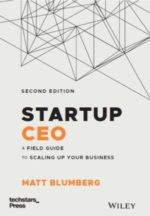
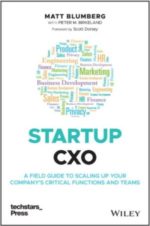
We believe there is a better way for startups and scaleups to find executive talent. Along the way, I published a book about scaling startups called Startup CEO: A Field Guide to Scaling Up Your Business that has sold over 40,000 copies to CEOs around the world. And our whole team is working on a new book called Startup CXO: A Field Guide to Scaling Up Your Teams, which is coming out in early 2021. Our team has a maniacal focus on helping startup teams scale and flourish and on helping leaders develop into the best version of themselves. That’s what we’re all about.
Plus, we have an amazing group of investors behind us who know how to grow businesses like ours and have incredible reach into the startup and scaleup world. More about that later. For now, we are excited to soft launch Bolster and begin unleashing the power of on-demand executive talent to our Clients. Thank you for being on this journey with us. If you’re interested in the somewhat unusual story of how the company was founded, it’s here.
Back in Business
If you’ve been reading this blog for a long time (amazingly, it is over 16 years old now!), you know that my company and main professional life’s work up to this point, Return Path, was a 1999 vintage email technology company that we sold last year. I then had a couple other interim leadership roles, first as interim CEO of another tech company in New York, then in March as the founder and interim leader of Colorado’s COVID-19 Innovation Response Team, which I wrote a series of blog posts about (this is the final post in the series, which links to the whole series).
I’ve generally been quiet on OnlyOnce since last year, but I will be picking up the pace of writing in the weeks ahead for a couple of reasons.
First, I’ve teamed up with a few former Return Path colleagues and some amazing investors and partners to start a new company. We’re still in quasi-stealth mode, so I’m sorry I can’t talk about it much yet, but I will as soon as we publicly launch sometime after Labor Day. It’s a cool business in a totally different space from Return Path and plays to our team’s interests and skills around people, values, culture, leadership development, and team scalability. I won’t rename this blog OnlyTwice, but there’s definitely a lot to be said for being a second-time founder.
Related to that, I have also been working on a Second Edition to my book from 2013, Startup CEO: A Field Guide to Scaling Up Your Business, which is coming out in a week or two from Wiley & Sons, and which is available for pre-order now. I will write a series of posts in the coming weeks that talk about the new material in the second edition. Our team at the new company is also working on a sequel to that book – more to come on that as well.
For now, I am doing great, enjoying life as a brand new Startup CEO once again, and feeling quite privileged and a little guilty for it by being in this weird bubble of my nice home and yard and feeling safely isolated from the pandemic, from economic dislocation, from social protests, and from having to lead a scaled organization through all of that turmoil.
OnlyOnce, Part XX
I realize I haven’t posted much lately. As you may know, the title of this blog, OnlyOnce, comes from a blog post written by my friend and board member Fred Wilson from Union Square Ventures entitled You Are Only a First-Time CEO Once, which he wrote back in 2003 or 2004. That inspired me to create a blog for entrepreneurs and leaders. I’ve written close to 1,000 posts over the years, and the book became the impetus for a book that another friend and board member Brad Feld from Foundry Group encouraged me to write and helped me get published called Startup CEO: A Field Guide to Scaling Up Your Business back in 2013.
Today is a special day in my entrepreneurial journey and in the life of the company that I started back in 1999 (last century!), Return Path, as we announce that Return Path has entered into a definitive agreement to be acquired by an exciting new company called Validity. Press release is here.
Over almost 20 years, we’ve built Return Path into one of the largest and (I think) most respected companies in the email industry. We’ve had a culture of innovation that has led to some groundbreaking products for our customers and partners to help make email marketing work better for consumers as well as marketers, and to help keep inboxes safe and clean for mailbox providers and security companies.
But the company is unusual in many respects. One of those is longevity. I’m not sure how many Internet companies started in 1999 are still private, backed and led by the same team the whole time, and generally in the same business they started in. Another is our values-driven “People First” culture. From Day 1, we have believed that if we attract and retain and develop and invest in the best people, we will make our customers successful with great products and service, and that if we do right by our customers, we will do right long term by our shareholders. While I know that not every employee who ever walked through our doors had a great experience, I know most did and hope that all of them realize we tried our best. Finally, I’m proud that our company gave birth to a non-profit affiliate Path Forward a few years back at the hands of executives Andy Sautins, Cathy Hawley, and Tami Forman. Path Forward helps parents get back to work after a career break and helps companies improve their gender diversity and hiring biases and has already been a game changer for dozens of companies and hundreds of women.
Today, Return Path serves almost 4,000 customers in almost every country on the globe, with $100 million in revenue, profitable, and excited about the next leg of our brands’ and our products’ lives in the care of Validity. If you haven’t heard of Validity before today, watch out – you will hear a LOT about them in the weeks and months ahead. They are an incredibly exciting new company with a vision to help tens of thousands of companies across the globe improve their data quality but also help them use data to improve business results. That vision, inspired by a new friend, CEO Mark Briggs, is a wonderful fit for Return Path’s products and services and people.
To finish this post where I started, Fred’s exact words in that post which got this blog going were:
What does this mean for entrepreneurs and managers? It means that the first time you run a business, you should admit what you are up against. Don’t let ego get in the way. Ask for help from your board and get coaching and mentoring. And recognize that you may fail at some level. And don’t let the fear of failure get in the way. Because failure isn’t fatal. It may well be a required rite of passage.
All of that is true and has been great advice for me over the years. But Fred left out one important piece, which is that entrepreneurs need to constantly thank the people around them who either work their butts off as colleagues in the business or who give them helpful advice and coaching. Return Path’s journey has been a long one, longer than most, and the full list of people to thank is too long for a blog post.
I’ve noted Fred and Brad in this post already and I want to thank them and also thank Greg Sands from Costanoa Ventures, the third member of our “dream team” investor syndicate, for their friendship and unwavering support and good counsel for me and Return Path for almost two decades, as well as many other board members we’ve had over the years including long-time independent directors Jeff Epstein, Scott Petry, and Scott Weiss.
I want to thank my co-founders Jack Sinclair and George Bilbrey, and anyone who has ever been on my executive team, including long-time execs Ken Takahashi, Shawn Nussbaum, Cathy Hawley, Dave Wilby, Anita Absey, Angela Baldonero, Andy Sautins, Louis Bucciarelli, Mark Frein, and David Sieh. There’s nothing quite like being in the proverbial foxhole with someone during a battle or two or ten to forge a tight bond. I want to thank Andrea Ponchione, my extraordinary assistant for 14 years, who keeps me running, sane, and smiling every day. I want to thank my executive coach Marc Maltz and the members of my CEO Forum for allowing me to be unplugged and for their friendship and advice. I want to thank all of Return Path’s 430 employees today and over 1,300 ever for their hard work in building our company and culture together and for our 4,000 customers and partners for putting their faith in us to help them solve some of their biggest challenges with email.
Finally, no thank you list for this journey would be complete without saying a special thank you to my wonderful wife Mariquita and kids Casey, Wilson, and Elyse. They deserve some kind of special honor for being inspirational cabin-mates on the entrepreneurial roller coaster without ever being asked if they were up for it.
This event may inspire me to begin writing more regularly again on OnlyOnce. Stay tuned!
Lean In, Part II
Lean In, Part II
My post about Sheryl Sandberg’s Lean In a couple months ago created some great dialog internally at Return Path. It also yielded a personal email from Sheryl the day after it went up encouraging me to continue “talking about it,” as the book says, especially as a male leader. Along those lines, since I wrote that initial post, we’ve had a few things happen here that are relevant to comment on, so here goes.
We partnered with the National Center for Women & IT to provide training to our entire organization on unconscious bias. We had almost 90% of the organization attend an interactive 90 minute training session to explore how these biases work and how to discuss these issues with others. The goals were to identify what unconscious bias is and how it affects the workplace, identify ways to address these barriers and foster innovation, and provide practice tools for reducing unconscious biases. While the topic of unconscious bias in the workplace isn’t only about gender, that’s one major vector of discussion. We had great feedback from across the organization that people value this type of dialog and training. It’s now going to be incorporated into our onboarding program for new employees.
Second, as I committed to in my original post, we ran a thorough gender-based comp study. As I suspected, we don’t have a real issue with men being paid more than women for doing the same job, or with men and women being promoted at different rates. That’s the good news. However, the study and the conversations that we had around it yielded two other interesting conclusions. One is that that we have fewer women in senior positions than men, though not too far off our overall male:female ratio of 60:40. On our Board, we have no women. On our Executive Committee, we have 1 of 10 (more on this below). On our Operating Committee, we have 8 of 25. Of all Managers at the company, we have 32 of 88. So women skew to more junior roles.
The other is that while we do a good job on compensation equity for the same position, it takes a lot of deliberate back and forth to get to that place. In other words, if all we did was rely on people’s starting salaries, their performance review data, and our standard raise percentages, we would have some level of gender-based inequality. Digging deeper into this, it’s all about the starting point. Since we have far more junior/entry level women than men, the compensation curve for women ends up needing to be steeper than that of men in order to level things out. So we get to the right place, but it takes work and unconventional thinking.
Finally, I had an enlightening process of recruiting two new senior executives to join the business in the past couple of months. I knew I wanted to try and diversify my executive team, which was 25% female, so I made a deliberate effort to focus on hiring senior women into both positions. I intended to hire the best candidate, and knew I’d only see male candidates unless I intentionally sourced female candidates. For both positions, sourcing with an emphasis on women was VERY DIFFICULT, as the candidate pools are very lopsided in favor of men for all the reasons Sheryl noted in her book. But in both cases, great female candidates made it through as finalists, and the first candidate to whom I offered each job was female – both superbly qualified. In both cases, for different reasons I can’t go into here, the candidates didn’t end up making it across the finish line. And then in both cases, when we opened up the search for a second round, the rest of the candidate pool was male, and I ended up hiring men into both roles. Now my resulting exec team is even more heavily male, which was the opposite of my intention. It’s very frustrating, and it leaves us with more work to do on the women-in-leadership topic, for sure.
So…some positives and some challenges the last few months on this topic at Return Path. I’ll post more as relevant things develop or occur. We are going to be doing some real thinking, and probably some program development, around this important topic.
Hackoff – The Blook
Hackoff – The Blook
Fred and Brad have already posted some pertinent details as well, but here’s a must-read for you – entrepreneur Tom Evslin, who has a great blog, has just launched an online book, serialized as a blog. It’s about a fictitious Internet bubble company called Hackoff.com (nice name!), and you can subscribe to the episodes of the book, either by RSS feed or by email. The first episode and various subscription options are all here.
Tom’s a great writer and had front row seats/was a lead actor in the bubble. The first episode has me hooked. This is going to be fun!
Complex Collaborations
Complex Collaborations
I just read a new book entitled Business Without Boundaries: An Action Framework for Collaborating Across Time, Distance, Organization, and Culture. I happen to know one of the authors, Don Mankin, who was on our trip to Antarctica last year. The book is a good, quick read for anyone running an organization that requires any degree of complex collaboration, whether in the form of multiple offices with a single company, close relationships with suppliers or customers or channel partners, or even a joint venture.
Mankin and his co-author Susan Cohen present three case studies: John Deere, Radica, and Solectron. They then tie their learnings together into a solid framework that’s almost a how-to checklist for organization leaders to follow. While the writers take an academic approach, the learnings and framework steps presented are anything but academic — they place a huge premium, for example, on relationship building and communication patterns. These are all things we’ve worked through over the years at Return Path, whether managing employees across multiple offices or in working with some of our reseller partners or clients.
All in, it’s a good read — and not just because I hung out with this guy in an igloo for two weeks!

Counter Cliche: How Much Paranoia is Too Much Paranoia?
Counter Cliche: How Much Paranoia is Too Much Paranoia?
Fred’s VC cliche of the week this week, Opening the Kimono, is a good one. He talks about how much entrepreneurs should and should not disclose when talking to VCs and big partners — companies like Microsoft or Google, for example.
In response to another of Fred’s weekly cliche postings back in April, I addressed the issue of opening the kimono with VCs in this posting entitled Promiscuity. But today’s topic is the opposite of promiscuity, it’s paranoia.
I was talking with a friend a few months back who’s a friend and fellow CEO of a high profile, larger company in a similar space to Return Path. He was obsessing about the secrecy surrounding the size of his business and wouldn’t tell me (a friend) how much revenue his company had, even within a $20mm band.
He pursued this secrecy pretty far. He never shared financials with his employees. He never told anyone the metrics, not even his close friends and family. He even withdrew his company from consideration for a high-profile award for growth companies which it had entered into and won in prior years since someone might be able to string together enough years of data to compute their size.
Why? Because he didn’t want any venture capitalists to figure out how big they had gotten and decide to throw money at upstart competitors. Talk about a closed kimono!
I’m much more open book than that with Return Path, but I have a tremendous amount of respect for this guy, so I gave the matter some thought. There are certainly some situations which call for discretion, but I couldn’t come up with too many that would drive my guiding principle to be secrecy.
1. Being “open book” with employees is essential. Your people need to know where the business stands and how their efforts are contributing to the whole. More important, they need to know that you trust them.
2. Using some key metrics to promote your company can be very helpful. I challenge you to show me a marketing person who doesn’t want to brag about how big you are, how many customers you have, what market share you have.
3. There’s no reason to worry about Venture Capitalists. Sure, they can fund a competitor, but they’ll do that without knowing exactly how much revenue you have, how quickly. The good ones are good at sniffing out market opporunities ahead of time. The bad ones, you care about less anyway.
4. All that said, you can never be paranoid enough about the competition. Assume they’re all out to get you at every turn, that they’re smarter, richer, quicker, and better looking than you are. Live in fear of them eating your lunch.
Paranoia is healthy (just ask Andy Grove), but it does have its limits around the basics of your business, and around how you treat employees.
Sometimes a Good Loss is Better than a Bad Win
I just said this to a fellow little league coach, and it’s certainly true for baseball. I’ve coached games with sloppy and/or blowout wins in the past. You take the W and move on, but it’s hard to say “good game” at the end of it and feel like you played a good game. And I’ve coached games where we played our hearts out and made amazing plays on offense and defense…and just came up short by a run. You are sad about the L, but at least you left it all out on the field.
Is that statement true in business?
What’s an example of a “bad” win? Let’s say you close a piece of business with a new client…but you did it by telling the client some things that aren’t true about your competition. Your win might not be sustainable, and you’ve put your reputation at risk. Or what about a case where you release a new feature, but you know you’ve taken some shortcuts to launch it on time that will cause downstream support problems? Or you negotiate the highest possible valuation from a new lead investor, only to discover that new lead investor, now on your Board, expects you to triple it in four years and is way out of alignment with the rest of your cap table.
On the other side, what’s an example of a “good” loss? We’ve lost accounts before where the loss was painful, but it taught us something absolutely critical that we needed to fix about our product or service model. Or same goes for getting a “pass” from a desirable investor in a financing round but at least understanding why and getting a key to fixing something problematic about your business model or management team.
What it comes down to is that both examples – little league and business – have humans at the center. And while most humans do value winning and success, they are also intrinsically motivated by other things like happiness, growth, and truth. So yes, even in business, sometimes a good loss is better than a bad win.
The Gig Economy Executive
(This post, written by my co-founder Cathy Hawley, also appeared on Bolster.com)
The gig economy is a labor market where short-term or freelance roles are more prevalent than permanent positions. It’s generally characterized by having independent contractors rather than full-time positions, but in some locations and for some types of roles, gig workers may be part-time or fixed-term employees.
The gig economy that started with roles like artists, drivers and web designers is quickly expanding to include executive-level roles. There are a few trends in today’s workplace that are driving this expansion. Startups and scaleups have more flexible, remote-friendly work environments and are looking for creative, less expensive ways of accelerating growth. Executives have shorter average job tenure and are more often displaced or between roles, and they are also interested in the flexibility that gig work can give them.
In a study conducted by MavenLink/Research Now, “The White Collar Gig Economy,” 47% of companies state they are looking to hire contractors to fill management and senior executive roles, including c-suite contractors. At the same time, 63% of full-time executives would switch to become a contractor, given the opportunity. These trends will be accelerated by the current economic downturn and recovery, as some companies have fewer resources, and more executives are displaced.
At the executive level, there are a few different types of roles that could be considered ‘gigs’. The most common two are coaching and project-based consulting. Coaching or advising, and particularly CEO coaching and advising, has become very prevalent over the last 10 years. The CEO hires a coach who can help them navigate new situations and challenges. Often, CEO coaches stay with a CEO for a number of years, helping guide and support them through the stages of company growth. There are also coaches and advisors for other functional areas to provide similar support for other executives, although more commonly these coaches are hired for specific initiatives.
Then there is project-based consulting, where executive-level talent is hired to run a specific project such as reviewing a company’s packaging and pricing, performing due diligence on an acquisition, creating a Diversity, Equity and Inclusion strategy, or creating an investor deck for a fundraising event. This type of consulting isn’t new, and it’s similar to what large consulting firms offer. It seems to be more prevalent now for very senior roles than it ever has been in the past.
But the gig economy for executives now reaches well beyond coaches and consultants. There are also executives who are hired into interim leadership roles while a company searches for a permanent placement. Some roles take a long time to find the right person, but there’s an urgent need for someone to take on the leadership mantle in the interim. If the interim executive is a good fit, and is open to it, it’s not uncommon for this individual to be considered for the permanent position. “Try before you buy” works both ways — it can be good for the company and good for the executive, too.
An up-and-coming type of executive gig role is the fractional role. We are seeing this more and more in the last couple of years. Fractional executives can either be consultants or employees, since the expectation is a long-term relationship, on a part-time basis. For example, 3 days or a certain number of hours per week. The fractional executive is responsible for all functional areas as a full-time executive in that same role. The company may be too small to need (or afford) their level of expertise on a full time basis, but needs more than just an advisor or project consultant. The fractional executive generally remains with a company until the company needs a full-time leader for that function, in which case either the fractional executive goes full-time, or the company hires someone new. Fractional executives may support more than one client at a time, and may also come with a team of more junior functional experts who can support them to take on more work.
Finally, for our purposes at Bolster, joining a company’s board of directors could be considered taking a ‘gig’ role since it’s not a full-time executive role. Startups and scaleups need independent directors, and their needs change based on their size, stage and strategy. We see a growing trend of companies contracting with directors for 1 -2 years rather than lifetime service.
There’s a real opportunity right now for companies to capitalize on the expertise of this talent pool without having to hire them for long-term full time roles, and for executives who want to contribute their skills and expertise without the commitment of a 80-hour work week. Bolster is helping bring these two audiences together in a marketplace that matches on-demand executives with companies who need their services the most. Bolster also provides services for members so they can focus on their consulting rather than their business, and for companies to evaluate their executive teams and boards.
Use Cases to Bolster Your Team: How to Leverage On-Demand Talent in Your Business
(This post was written by my colleague Bethany Crystal and originally published on the Bolster blog yesterday. While I am still trying to figure out what posts to put on this blog vs. Bolster’s blog since the blogs are pretty similar, I will occasionally run something in both places.)
At Bolster, we believe that 2021 will mark the rise of the on-demand economy for executives. More than ever before, executives are seeking out roles that distinctly aren’t full-time for a variety of reasons – they’re in between full-time roles and want to stay engaged and meet a wide range of potential employers; they’re retired or semi-retired/post-exit and want to keep working, just not full-time; they’re fully employed but are looking for advisory opportunities to help others; or they are committed to the more flexible lifestyle that being an on-demand affords. As business leaders, you might be wondering how to take advantage of this trend and incorporate on-demand talent onto your existing team. Don’t worry – we’ve got you covered.
Let’s start with a quick primer on the distinct types of on-demand talent. Here are the four most common themes we see among our member network at Bolster:
The Four Types of On-Demand Talent
- Interim: Someone who is partially or fully dedicated to working with your company, but only temporarily (you can think of them as “filling a gap”)
- Fractional: Someone who works part-time (or “fractionally”) with your company on an ongoing basis (they “own” the function on a long-term, part-time basis)
- Advisor or Coach: Someone who supports your existing team by offering external advising, coaching, or mentorship as needed (this might be on a temporary or long-term basis)
- Project-Based: Someone who is brought on to complete a specific project or a fixed span of work (this is the closest to typical consulting work)
Depending on your business needs, the capacity of your existing team, and your resourcing, you might find it useful to have one or more on-demand executives in the mix at any given time. We’ve also found this can be a great way to keep things fresh at the leadership level and make sure new ideas are circulated with some regularity.
Business Opportunities for On-Demand Talent
While every company’s on-demand talent needs will vary, we’ve already seen a few patterns emerge from the 2,000 executives in our member network. Here are a few times to think about bringing on-demand work to your business.
Choose interim work if you need…
- A temporarily placeholder at the exec level
Whether unexpected or planned, transitions at the executive level can come with a high cost: Any week that goes by with an unfilled seat adds more work to the team, contributes to business lag, or both. While full executive searches can take six months (or more!) to get right, many CEOs find it helpful to bring on interim help as a “stopgap” in the meantime. The most obvious benefit of interim on-demand work is to prevent your business from falling behind in areas where you may not have a deep bench below the executive level. And you might also consider that bringing in a seasoned professional as you conduct your full-time search will give your team a proxy to compare against, making that placement process a bit easier. Last – while it’s not a guarantee, there’s always the chance that your interim hire is a great fit for you and wants to stick around for the long term! You then benefit from an on-the-job “interview” or audition. - Surge capacity staffing
Imagine a situation where your business doesn’t need an executive in a particular function. You’re small, scrappy, and you’re getting along perfectly well with the team you have in place – and you can fill in the bits of executive leadership required for that function yourself from time to time. But then something pops up where you need to be the CEO and can’t afford to ALSO be the CXO. An interim CXO could be the right solution. For example, the 3-5 months run-up to a Series A or B financing could be a good time to bring on an experienced CFO if your only relevant team members are handling AP, AR, and Payroll. Or you could be working on your company’s public launch with a less experienced marketing team and an agency – and an interim CMO could make all the difference between success and sideways. - Parental leave coverage
With a growing business trend of increased parental leave coverage, CEOs are starting to use interim executives to fill holes that might temporarily exist on the leadership team. Interim work is particularly useful if there isn’t an obvious “second in command” role on that team who might take on a stretch project in their absence. Implemented correctly, bringing on an interim exec can also help to squash any fears of “getting replaced” while someone is away on leave. As an added bonus, bringing in a new face (if only temporarily) can give the remaining team a chance to “try out” a new leadership style and share feedback about what worked and didn’t work during the interim period.
Choose fractional work if you need…
- A seasoned professional’s experience and skillset (but not all the time)
Before every full-time leadership hire, there is the sticky “in between” period of need. That’s the period when some work starts piling up, but not quite enough to fill an entire work week for one person at the executive level – or the period when you know you need a more seasoned leader in a function but just can’t afford one full-time. If you don’t have an experienced executive in the role, you miss opportunities for effectively setting up scalable practices and processes. Often, a lack of senior focus in a functional area means that you miss strategic opportunities, and sometimes it also means that you expose yourself to risk that could be avoided with the right person having ownership of the function. This is the perfect time to introduce fractional work to your business. The most classic example of fractional executive talent is the CFO who oversees the bookkeeping and accounting for several companies at once. But you can find a fractional executive for just about anything. You might consider this type of on-demand executive if you don’t yet have anyone in that functional area, if you have a team of less experienced specialists or even a more junior generalist leader in that functional area, if you want a taste of what it’d be like to dedicate more resources there, or if you need just a few things done right, without having to think about them yourself.
Choose advisory or coaching work if you need…
- Mentorship for your current executives
Sometimes it’s helpful to see what “great” looks like in order to achieve greatness yourself. If you’re looking for a way to give a current leader an added boost to their development plan, consider bringing on someone who can serve as a mentor or advisor on a temporary or long-term basis. Someone who has been in your shoes before and can give advice and guidance based on their experience. This on-demand exec role has two big benefits: The first being that it demonstrates to your executive team that you’re committed to their ongoing success and growth, which boosts morale (and hopefully performance). The second is that you’ll be able to equip your current team with the tools they each need to scale instead of having to bring on a new wave of executives for each business stage. The advisor or coach usually works a few hours per month, once they’ve set up a strong coaching relationship. - Access to top talent without the full-time price tag
Just as remote work unlocked the potential to find “the best of the best” without geographic constraints, on-demand work does the same at the executive level. More and more, we’re seeing CEOs incorporate advisors to their business as a way to gain exposure to best in class talent (at a fraction of the cost). This can be a great way to introduce subject matter or functional expertise into your organization without committing to a full-time salary.
Choose project work if you need…
- A fixed-scope expert engagement at the executive level
Just as tools like Task Rabbit made it possible to find experts to accomplish tasks on a personal level (such as moving furniture or painting a bedroom), on-demand talent makes it possible to find seasoned executives to complete one-off projects at an expert level. That’s why, on Bolster, we ask each each member to indicate what roles they can take on, and also what projects they can be hired to do. As a CEO, you might consider outsourcing some of the crunchy stuff at the exec level that might take a lot of time, or in cases where you need a quick turnaround to get to an MVP. Common projects we’ve seen to date include building sales commission plan structures, designing a go-to-market launch plan for a new product, running due diligence on an acquisition, overhauling pricing and packaging, working on a strategic plan, TAM analysis, budgeting process, or creating a diversity & inclusion strategy for the company. - An experimental project that won’t distract the current team
One final area where you might consider on-demand work is for a project that feels more like an addendum to your current business, or an early experiment. At Bolster, we brought on an on-demand executive to help us think through and roll out a brand new product that we’re in the early days of testing right now. We’ve seen other CEOs use project-based work at the exec level for things like evaluating market expansion possibilities or speccing out the MVP of a potential new product.
This is just a short list of some of the possibilities where on-demand talent might support you in your business today. One of our favorite parts about this type of work is just that – the flexibility it offers to you and your team. Whether your business is just getting started or if you’re operating on all cylinders, don’t forget to consider on-demand work as part of your CEO toolkit for this year and beyond.
– Bethany Crystal, February 2, 2021
Second Verse, Same as the First…Except Way Better
Almost a year into my second journey as a startup CEO at Bolster, and I’m getting more and more questions from other CEOs about what it’s like doing a second startup after almost 20 years at the first one…and achieving pretty good scale by the end. The short answer is, it’s the same, only it’s way better. Here’s why.
I’m more confident. So is our whole founding team. When Jack and I started Return Path, we were 29. This time, we were 49 — and the average age of the founders was probably 46 or 47. The bottom line is that we don’t know everything about the business we’re building, but we know what we’re doing in terms of building a business, a startup, a software company, a service-oriented business, leading a team, planning, executing, and on and on. Confidence in all of those areas means large portions of our day and brain space are freed up to focus on the actual construction of the business without worrying if we’re doing things right or wrong.
It’s much easier to build a startup today. 1999 wasn’t the dark ages, but it feels like a different millennium in terms of what it’s like to start a technology company from scratch. The cloud and micro services/APIs mean that we are able to build our platform much more quickly at much lower cost than in the past. And in terms of tooling the business, we got up and running with about 20 different DIY cloud/SaaS solutions in about 6 weeks for a cost of less than $10k/year.
We are sharper on execution and impatient for success. Your first startup in your 20s is a lot about “enjoying the startup journey.” This time around, our team is significantly more focused on critical stage-gate success metrics. In both cases of course, the objective was to win, but this time around, we are much more focused on getting to that point sooner and with less waste.
We are a lot more productive. Ok, fine, we’re cheating because of COVID and working from home. No train commutes. No plane trips. No water cooler chatter. No fluff. It’s not sustainable, and I’ll write about that more in a future post. But it’s leading to a surge of productivity like I’ve never experienced or seen before in my career. I do like to think at least some of it comes from professional maturity — we’ll see when life returns to something more closely approximating normal.
I am having a blast being on the front lines. I went from running a 500-person company, where I’d honed my job and skill set around communication, people issues, and mobilizing the army to go do things…to spending less than 5% of my time running the company and managing people. Now depending on the moment, I’m an SDR, a customer success manager, a product manager, and a marketing copywriter. And probably some other things, too. And I love every minute of it. It’s a lot more fun to see the direct impact of my actions on the business as opposed to only really seeing the direct impact of my actions on the people in the business (and occasionally then on some aspect of the business as an individual contributor).
Maybe I’m not having a typical second startup experience. I know some friends who had successful first exits and hated going back to square one, or failed at a second business and were really disappointed about it, only to shift careers. But my experience so far is a much better second verse, even though it’s a bit like the first.