
Book Short: Smaller is the New Small
Book Short: Smaller is the New Small
Last month, it was Microtrends. This month, it’s MIT Professor Ted Sargent’s The Dance of Molecules: How Nanotechnology is Changing Our Lives. It seems like all the interesting things in life are just getting smaller and smaller. (Note to self: lose some weight.)
Sargent’s book is geeky but well-written. He dives into a couple dozen examples across many fields and disciplines of how nanotechnology holds extraordinary promise for solving some of mankind’s toughest scientific challenges — while creating a few new ethical and economic ones.
The science is for the most part beyond me, but the practical applications are fascinating:
– making solar power the sole source of global energy needs a possibility
– detecting cancer at the level of a single cancer cell rather than waiting to discover a grape-sized tumor; curing that cancer through embedded “pharmacy on a chip” drugs that release the right drugs over long periods of time locally at the spot of the disease
– figuring out how to keep proving the ever-more-challenging Moore’s law when only 4 years from now, parts of a transistor will need to be only 5 atoms across
– curing blindness with wireless retinal implants
Once every year or so, I read a book that makes me sad I didn’t go into engineering or science. The Dance of Molecules is that kind of book.
Book Short: Finishing First
Book Short: Finishing First
The Power of Nice: How to Conquer the Business World with Kindness, by Linda Kaplan Thaler and Robin Koval, is one of those “airport books” that takes about an hour to read. I had an ear-to-ear grin reading the book, in part because, well, it’s just a happy book, filled with anecdotes about how a smile here or a gesture of kindness there made a difference in someone’s life — both personally and professionally.
But part of my interest in the book was also driven by a long-standing debate we have at Return Path over whether we’re “too nice” as a company and whether we should have “sharper elbows.” I was struck by a few comments the authors made, things you would expect like “nice doesn’t mean naïve” as well as things you wouldn’t like “help your enemies.” To me, that says it all about success in business: you can be a fierce competitor externally and demand accountability internally and still be a warm and kind person, and that’s the best (and most rewarding) place to be.
Book Short: Reality Doesn’t have to Bite
Book Short: Reality Doesn’t have to Bite
I just read Confronting Reality (book; audio), the sequel to Execution, by Larry Bossidy and Ram Charan. Except I didn’t read it, I listened to it on Mariquita’s iPod Shuffle over the course of two or three long runs in the past week. The book was good enough, but I also learned two valuable lessons. Lesson 1: Listening to audio books when running is difficult – it’s hard to focus enough, easy to lose one’s place, can’t refer back to anything or take notes. Lesson 2: If you sweat enough on your spouse’s Shuffle, you can end up owning a Shuffle of your own.
Anyway, I was able to focus on the book enough to know that it’s a good one. It’s chock full of case studies from the last few years, including some “new economy” ones instead of just the industrial types covered in books like Built to Last and Good to Great. Cisco, Sun, EMC, and Thomson are all among those covered. The basic message is that you really have to dig into external market realities when crafting a strategic plan or business model and make sure they’re in alignment with your financial targets as well as people and processes. But the devil’s in the details, and the case studies here are great.
Book Short: A Must Read
Book Short: A Must Read
Every once in a while, I read a book and think, “This is an important book.” Microtrends, by Mark Penn, was just that kind of read. Penn is the CEO of one of our largest clients in the market research business as well as CEO of Burson Marstellar and, more notably, the Clintons’ pollster and strategy director for much of the last 16 years. He’s a smart guy, and more important than that, he’s awash in primary research data.
The premise of Microtrends is that America is no longer a melting pot, where lots of different people come together to try to be the same, but rather that it’s a big tent, where lots of small groups are now large enough to express their individuality powerfully. The book is also perfect for the ADD-afflicted among us, with 75 chapters each of about 4 pages in length describing one new “microtrend” or small faction of American identity. Penn not only describes the trend in a data-rich way but then goes on to postulate about the impact that trend will have on society at large and/or on the business opportunities that could come from serving those in the trend.
Just to give you a sample of the trends he covers: Sex-ratio singles (explaining why there really are more single women than men), Extreme commuters (we certainly have a couple of those at Return Path),
Pro-Semites vs. Christian Zionists (they sound the same but are completely different), Newly-released Ex-cons (hint – there are a ton of them), and the rise of Chinese artists.
Whether you’re interested in marketing, entrepreneurship (you’ll get loads of ideas here), investing (more loads of ideas), or just trends in American and global society, Microtrends is a must must must read. All 75 chapters were interesting to me, but even if you don’t love some…they’re only 4 pages each!
Book Short: The Most Rapacious Guys in the Room
Book Short: The Most Rapacious Guys in the Room
I just finished The Smartest Guys in the Room, by journalists Bethany McLean and Peter Elkind. This is the story of Enron, and what a tale it is! The book is a good quick business novel read. It reminded me a lot of Barbarians at the Gate, except that it made me far angrier. I’m not sure if that’s because I’m at a different place in my career now than I was 10 years ago and therefore have a different appreciation for what goes on in companies, or if the Enron guys were just far worse than anyone surrounding RJR Nabisco. But in any case, as my Grandpa Bill would have said, this one certainly raised my hackles.
Anyway, I can’t even get into the details without working myself into a frenzy about these crooks, but suffice to say there are lots of “what not to do” lessons in this book, starting with CEO Ken Lay’s wuss-like, disconnected approach to leading the company and ending with CFO Andy Fastow’s insane rationalizations for using the company as his own piggy bank. Anyway, I thought it would just be easier to just list out a few simple things to look for in your own company if you’re concerned you might be having some financial scandals within. You know you have a problem if…
– Your company has 3,000 off-balance sheet special purpose entities, including 800 in the Caymans
– Your CEO has waived your company code of ethics twice so that the CFO could negotiate deals for his own profit against the company
– Your President combatively calls an analyst an asshole on an earnings call when asked why the company couldn’t produce a balance sheet and cash flow statement with its income statement and earnings release
– Your staffers meet someone from your auditor and say “oh, you’re the guy that won’t let us do something”
– Your accounting department becomes viewed as a major profit center because of its treatment of revenue
It’s truly astonishing what these bozos thought they could get away with. Thank God they’re going to jail. Thanks to my colleague Patty Mah (a friend of the author) for this book.
Book Short: Why Not Both?
Book Short: Why Not Both?
Craig Hickman’s Mind of a Manager, Soul of a Leader talks about how tapping the natural tension between managers and leaders allows an organization to achieve its best. It covers dozens of topical areas and for each compares how a prototypical manager handles the area (practical, reasonable, decisive) vs. how a prototypical leader handles it (visionary, empathetic, and flexible). Of course, the book describes the ideal organization as “balanced an integrated” between the two extremes.
My take for startups, a topic not addressed in the book, is that the job of the entrepreneur CEO is to be both manager and leader, and try to do both roles effectively without driving the team nuts. The book says that “managers wield authority, leaders apply influence.” Entrepreneurs have to be comfortable with both styles. Thanks to my colleague Stephanie Miller for giving me a copy of this one.
Book Short: Internet Fiction, part II
Book Short: Internet Fiction, part II
I hate to write a lame post, but here’s what I wrote earlier in the year about Eliot Peper’s first Internet thriller, Uncommon Stock:
Eliot Pepper’s brand new startup thriller, Uncommon Stock, was a breezy and quick read that I enjoyed tremendously. It’s got just the right mix of reality and fantasy in it. For anyone in the tech startup world, it’s a must read. But it would be equally fun and enjoyable for anyone who likes a good juicy thriller.
Like my memory of Hackoff, the book has all kinds of startup details in it, like co-founder struggles and a great presentation of the angel investor vs. VC dilemma. But it also has a great crime/murder intrigue that is interrupted with the book’s untimely ending. I eagerly await the second installment, promised for early 2015.
Having just finished that second installment, called Uncommon Stock: Power Play, basically I want to say “ditto.” Power Play was just as good as the first book, and now I can’t wait for the third. Where the first installment’s startup focus was around funding and founder dynamics, this one’s startup focus was around shipping product and customers. The thriller part was just as juicy.
It’s also kind of fun reading about the Boulder startup scene, especially from a writer who doesn’t and who has never spent a ton of time there. He gets some things remarkably accurate with crisp descriptions. I was kind of hoping for a cameo by Brad, at least in the form of a throw-away comment about the “long haired homeless-looking investor in the corner of Frasca.”
Book Short: Go Where They Ain’t
Book Short: Go Where They Ain’t
Blue Ocean Strategy: How to Create Uncontested Market Space and Make Competition Irrelevant, by W. Chan Kim and Renée Mauborgne isn’t bad, but it could literally be summed up by the title of this post. I think it’s probably a better book for people who aren’t already entrepreneurs.
That said, there are two chapters that I found pretty valuable. One is called “Reconstruct Market Boundaries,” which is a great way of thinking about either starting a new business or innovating an existing one. It’s a strategy that we’ve employed a few times over the years at both Return Path and Authentic Response. It’s hard to do, but it expands the available territory you have to cover. The classic Jack Welch/GE “we don’t just sell jet engines, we sell AND SERVICE jet engines” which expanded their addressable market 9x.
The other useful chapter was “Get the Strategic Sequence Right.” The sequence of questions to answer, according to the authors, is:
- Will buyers get enough utility out of it?
- What’s the right price?
- Can you cost it low enough to make good margin?
- Are you dealing with adoption hurdles?
The reason I found this sequence so interesting is that I think many entrepreneurs mix the order up once they get past the first one. It’s easy to start with market need and then quickly jump to adoption hurdles, cost things out, and go with a cost-plus pricing strategy. The book documents nicely why this order is more productive. In particular, pricing first, then costing second, is both more market-focused (what will people pay?) and more innovative (how can I think creatively to work within the constraint of that price point?).
The common theme that’s most interesting out of the book is that new frameworks for thought produce killer innovation. That’s clearly something most entrepreneurs and innovators can hang their hat on.
Book Short: Tech Founder? Varsity Basketball Captain? Both! At the Same Time!
Book Short: Tech Founder? Varsity Basketball Captain? Both! At the Same Time!
Ben Casnocha’s My Startup Life has some of the same appeal as The Mousedriver Chronicles (which I reviewed years go here) in its tale of a startup, its successes, failures, and lessons learned. If you like that kind of book or are starting a company and are looking for kindred spirits, it’s a good book for you.
Ben’s story is more remarkable in some ways because he started his eGovernment software (SaaS of course) company Comcate at the age of 13. That’s right, 13. When I was learning how to shave, having a bar mitzvah, and dealing with acne and a voice dropping at terminal velocity. Starting a business was the furthest thing from my mind. Though to be fair, teenage entrepreneurs are a featured new demographic in Mark Penn’s Microtrends (also worth a read). Perhaps if I were Ben’s age today, I would be a startup junkie, too.
I’ve had the pleasure of meeting Ben a couple times via Brad — I think Brad MUST have been a lot like him 20ish years ago. The advice in the book is good and relevant and incredibly mature for a 20-year old, and Ben, I mean that in an impressed way, not a patronizing one. It’s not necessarily revolutionary, but it’s a very quick and light read if you like the genre/premise.
Political versus Corporate Leadership, Part II: Admitting Mistakes
Political versus Corporate Leadership, Part II: Admitting Mistakes
The press conference this past spring where President Bush embarrassingly refused to admit that he had ever made any big mistakes, other than to reiterate his gaffe at trading Sammy Sosa when he owned the Texas Rangers, brings up another issue in this series: is it good for leaders, both political and corporate, to admit mistakes?
On the corporate side, I think the ability to admit a mistake is a must. Again, I’ll refer back to Jim Collins’ books Good to Great and Built to Last, both of which talk about humility and the ability to admit mistakes as a critical component of emotional intelligence, the cornerstone of solid leadership. And in another great work on corporate leadership, The Fifth Discipline, writer Peter Senge talks about “learning systems” and the “learning organization” as far superior companies. My experience echoes this. Publicly admitting a mistake, along with a careful distillation of lessons learned, can go a long way inside a company to strengthening the bond between leader and team, regardless of the size of the company.
But in politics, the stakes are higher and weirder — and the organization is a nation, not a company. Publicly admitting a single mistake can be a leader’s downfall. It’s too easy these days for political opponents to seize on a mistake as a “flip flop” and turn a candidate’s own admission into a highly-charge negative ad.
There was a fantastic op-ed in The Wall Street Journal back on April 15 on this topic, which unfortunately doesn’t have an available link at the moment, entitled “Bush Enters a Political Quandary As He Faces Calls for an Apology.” I’ll try to both quote from and summarize the article here since it’s central to this topic:
“For a politician, is an apology a sign of weakness or strength? That is the debate now swirling around President Bush after a prime-time news conference in which he refused reporters’ invitations to acknowledge any specific mistakes in handling the issue of terrorism or offer an apology to Sept. 11 victims’ families. Mr. Bush deflected the invitation, saying, ‘Here’s what I feel about that: The person responsible for the attacks was Osama bin Laden.’ Mr. Bush’s quandary is a time-honored struggle for politicians. While some have found a public apology helps them out of a tough spot, others discovered it can fuel more criticism. So far, there isn’t a definitive answer.”
The article goes on to say that while Harry Truman’s “the buck stops here” mentality was de rigeur in the Beltway for a while (through Kennedy’s Bay of Pigs fiasco and Reagan’s poor handling of Beirut), nowadays, apologies are a dreaded last resort. The reason? The rise of partisanship and the use of ethics and congressional or special counsel investigations used to humiliate or defeat political opponents by raising the spectre of corruption. The examples? Gingrich’s struggles in 1996 over his book; Clinton’s ridiculous linguistics machinations (“it depends what the definition of ‘is’ is”) around the Lewinsky scandal; and Lott’s downfall over segregationist comments.
The piece wraps up by saying that “Mr. Bush was backed into the apology quandary by one of his administration’s toughest critics, former White House terrorism expert Richard Clarke…Since then, White House officials have been pressured to do likewise [apologize to victims’ families about the government’s failings on 9/11] — or explain why they won’t…[but] aides are convinced that admitting error would only embolden Mr. Bush’s critics in the Democratic Party and the news media.”
So the question is: would Bush be better off by saying “Sorry, folks, we thought there were WMD in Iraq, but it turns out we were wrong. And we miscalculated how difficult it would be to win the war, how many troops it would take, and how many lives would be lost. I still feel like it was right for us to go to war there for the following four reasons…”?
I’m not sure about that. He’d certainly be more intellectually honest, and a number of people in intellectual circles would feel better about him as a leader, but my guess is that he thinks it would cost him the election in today’s environment. My conclusion is that today’s system is discouraging politicians from admitting mistakes, and that it will take an exceptionally courageous leader (neither Bush nor Kerry as far as I can tell) to do so.
In the end, while humility appeals to many people in a leader, it’s not for everyone. Fortunately for us, CEOs don’t have to run for office and most CEOs don’t have to face some the same level of public, personally competitive, and media scrutiny that politicians do. Now that’s an interesting conclusion that I didn’t intend at the beginning of the post — being a good political leader and being a good politician are sometimes deeply at odds with each other.
Next up in the series: Not sure! Any ideas? Please comment on the blog site or by emailing me.
Startup CXO: the Sequel to Startup CEO
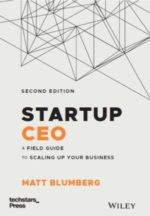
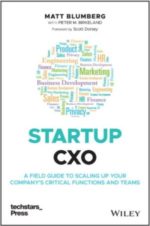
As I finished up my work on the Second Edition of Startup CEO: A Field Guide to Scaling Up Your Business and started working on a new startup, my colleagues and I started envisioning a new book as a sequel or companion to Startup CEO that is going to be published on June 9 with our same publisher, Wiley & Sons. The book is called Startup CXO: A Field Guide to Scaling Up Your Company’s Critical Functions and Teams.
Simply put, the first book left me with the nagging feeling that it wasn’t enough to only help CEOs excel, because starting and scaling a business is a collective effort. What about the other critical leadership functions that are needed to grow a company? If you’re leading HR, or Finance, or Marketing, or any key function inside a startup, what resources are available to you? What should you be thinking about? What does ‘great’ look like? What challenges lurk around the corner as you scale your function that you might not be focused on today? If you’re a CEO who has never managed all these functions before, what should you be looking for when you hire and manage all these people? If you’re an aspiring executive, from entry-level to manager to director, what do you need to think about as you grow your career and develop your skills?
Startup CXO is a “book of books,” with one section for each major function inside a company. Each section is be composed of 15-20 discrete short chapters outlining the key “playbooks” for each functional role in the company – Chief People Officer, Chief Financial Officer, Chief Marketing Officer, Chief Revenue Officer, etc., hence the title Startup CXO – which is a generally accepted label in the startup ecosystem for “Chief ____ Officer.”
Here are the front and back covers of the book, with some great endorsements we’re so proud of on the back.


This is an important topic to write about at this particular time because America’s “startup revolution” continues to gather steam. There are only increasing numbers of venture capital investors, seed funds, and accelerators supporting increasing numbers of entrepreneurial ventures. While there are a number of books in the marketplace about CEOs and leadership, and some about individual functional disciplines (lots of books about the topic of Sales, the topic of Product Development), there are very few books that are practical how-to guides for any individual function, and NONE that wrap all these functions into a compendium that can be used by a whole startup executive team. Very simply, each section of this book serves as a how-to guide for a given executive, and taken together, the book will be a good how-to guide for startup executive teams in general.
Startup CXO has my name on it as principal author, and I’m writing parts of it, but I can’t even pretend to write it on my own, so the book has a large number of contributors who have the experience, credibility, and expertise to share something of value with others in their specific functional disciplines — most of my Bolster co-founders are writing sections, and the others are being written by former Return Path executive colleagues — Jack Sinclair, Cathy Hawley, Ken Takahashi, Anita Absey, George Bilbrey, Dennis Dayman, Nick Badgett, Shawn Nussbaum, and Holly Enneking.
Startup CXO is also pretty closely related to Bolster’s business, since we are in the business of helping assess and place on-demand CXO talent, and as such, the final section of the book has a series of chapters written by Bolster members who are career Fractional Executives about their experience as a Fractional CXO.
The book is available for pre-order now at Amazon and Barnes & Noble.
Oh, and stay tuned for a third book in the series (kind of) due out late this year. More on that over the summer as the project takes shape!