

The quest for diversity in Tech leadership is stalling. Here’s why.
There’s been a growing cry for tech companies to add diversity to their leadership teams and boards, and for good reason. Those two groups are the most influential decision making bodies inside companies, and it’s been well documented that diverse teams, however you define diversity — diversity of demographics, thoughts, professional experience, lived experience — make better decisions.
Gender, racial, and ethnic representation in executive teams and in board rooms are not new topics. There’s been a steady drumbeat of them over the last decade, punctuated by some big newsworthy moments like the revelations about Harvey Weinstein and the tragic murder of George Floyd.
It’s also true that in people-focused organizations, and most tech companies claim to be just that, it’s beneficial to have different types of leaders in terms of role modeling and visibility across the company. As one younger woman on my team years ago said, “if you can see it…you can be it!”
My company Bolster is a platform for CEOs to efficiently build out their executive teams and boards. But while nearly every search starts with a diversity requirement, many don’t end that way.
Here’s why, and here’s what can be done about it.
For boards, the “why” is straightforward. Board searches are almost never a priority for CEOs. They’re viewed as optional. Bolster’s Board Benchmark study in 2021 indicated that only a third of private companies have independent directors at all;even later stage private companies only have independent directors two-thirds of the time. That same study indicated that 80% of companies had open Board seats. The comparable longitudinal study in 2022 indicated that the overwhelming majority of those open board seats were still open.
Independent directors are usually the key to diversity, as the overwhelming majority of founders and VCs are still white and male. It takes a lot of time and effort to recruit and hire and onboard new directors, and in the world of important versus urgent, it will always be merely important. Without prioritizing hiring independents, board diversity may be a lofty goal, but it’s also an empty promise. I wrote about my Rule of 1s here and in Startup Boards – I wish more CEOs and VCs took the practice of independent boards and board diversity seriously. The silver lining here is that when CEOs do end up prioritizing a search for an independent director, they are increasingly open to diverse directors, even if those people have less experience than they might want. That openness to directors who may never have been on a corporate board (but who are board-ready), who may be a CXO instead of a CEO, is key. Of the several dozen independent directors Bolster has helped match to companies in the past year, almost 70% of them are from demographic populations that are historically underrepresented in the boardroom.
Diversity is stalling for Senior Executive hiring for the opposite reason. Exec hires are usually urgent enough that CEOs prioritize them. And they frequently start their searches by talking about the importance of diversity. But Senior Executives are much more often hired for their resume than for competency or potential. Almost all executive searches start with some variation of this line, which I’m lifting directly from a prior post: “I want to hire the person who took XYZ Famous Company from where I am today to 10x where I am today.” The problem with that is simple. That person is no longer available to be hired. They have made a ton of money, and they have moved beyond that job in their career progression. So inevitably, the search moves on to look for the person who worked for that person, or even one more layer down…or the person who that person WAS before they took the job at XYZ Famous Company. Those people may or may not be easy to find or available, but they feel less risky. In the somewhat insular world of tech, those candidates are also far less likely to be diverse in background, experience, thought, or, yes, demographics.
Running a comprehensive executive search based on competencies, cultural fit, scale experience, and general industry or analogous industry experience is much harder. It takes time, patience, digging deeper to surface overlooked candidates or to check references, and probably a little more risk taking on the part of CEOs. And while CEOs may be willing to take some risk on a first-time independent director, fewer are willing to take a comparable level of risk on an unproven or less known executive hire.
For some CEOs, the answer is just to take more risk — or more to the point, recognize that any senior hire carries risk along a number of dimensions, so there’s no reason to prioritize your narrow view of resume pedigree over any critical vector. For others, the answer may be to bring the focus of diversity in senior hires to “second level” leaders like Managers, Directors, or VPs, where the perceived risk is lower, and the willingness to invest in training and mentorship is higher. Those people in turn can be promoted over time into more senior positions.
Not every executive or board hire has to be demographically diverse. Not every executive team or board has to have individual quotas for different identity groups, and diversity has many flavors to it. But without doing the work, tech CEOs will continue to bemoan the lack of diversity in their leadership ranks, and miss out on the benefits of diverse leadership, while not taking ownership for those efforts stalling.
Excellent Resource for Effective Board Leadership
I’ve written a lot about Boards this past year related to Bolster’s work in helping founders/CEOs build great boards:
- The New Way to Scale a Board of Directors
- My New Startup Board Mantra – 1:1:1
- The Startup Ecosystem Needs More Independent Board Members – That’s the Clearest Path to Having Better and More Diverse Boards
- Startup Boards eBook: How to Build Your Board
- Startup Boards eBook: How to Succeed in Your First Board Role
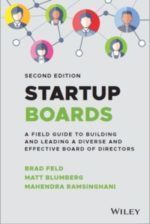
But more recently, I’ve been thinking a lot about Board effectiveness, as I’ve been working with Brad Feld and Mahendra Ramsinghani on a second edition of Startup Boards, which will be published in mid-2022. And in the middle of our feverish writing and editing, Reid Hoffman sent Brad a great document which I want to amplify here:
Some of these rituals are more important than others (or at least more widely applicable), but they’re all worth reading. I am definitely going to start incorporating some version of the “Dory and Pulse” ritual into my meetings to make sure we’re covering everything that each director wants to cover in meetings (or answer smaller things ahead of time).
Thanks to Reid for this great contribution to the world of Startup Boards.
The Good, The Board, and The Ugly, Part II
The Good, The Board, and The Ugly, Part II
Much has been written of late on various VC and entrepreneur blogs on effective management of a Board of Directors, Board materials, running good Board meetings, and the like. A couple years ago, I even wrote out a few tips for those things myself.
But here’s one critical ingredient of a good Board you won’t find in all those posts: have fun! This picture was from today’s Halloween Board meeting at Feedburner…as one of Dick’s colleagues labeled it, The Dawn of the Living Costolos.

Happy Halloween!
What Kind of Entrepreneur Do You Want to Be?
What Kind of Entrepreneur Do You Want to Be?
I had a great time at Princeton reunions this weekend, as always. As I was talking to random people, some of whom I knew but hadn’t seen in a long time, and others of whom I was just meeting for the first time, the topic of starting a business naturally came up. Two of the people asked me if I thought they should start a business, and what kind of person made for a good entrepreneur.
As I was thinking about the question, it reminded me of something Fred once told me — that he thought there were two kinds of entrepreneurs: people who start businesses and people who run business.
People who start businesses are more commonly known as serial entrepreneurs. These people come up with ideas and love incubating them but may or may not try to run them longer term. They:
– generate an idea a minute
– have a major case of ADD
– are easily distracted by shiny objects
– would rather generate 1 good and idea and 19 bad ones than just 1 good one
– are always thinking about the next thing
– are only excited by the possibility of what could be, not what is
– are more philosophical and theoretical
– probably shouldn’t run the companies they start for more than a few months, as they will frustrate everyone around them and get bored themselves
– are really fun at cocktail parties
– say things like “I thought of auctions online way before eBay!”
The second type of entrepreneur is the type who runs businesses (and may or may not come up with the original idea). These people:
– care about success, not just having the idea
– love to make things work
– would rather generate 1 idea and execute it well than 2 ideas
– are problem solvers
– are great with people
– are maybe less fun at cocktail parties, but
– you’d definitely want them on your team in a game of paintball or laser tag
Neither one is better than the other, and sometimes you get both in the same person, but not all that often. But understanding what type of entrepreneur you are (or would likely be) is probably a good first step in understanding whether or not you want to take the plunge, and if so, what role you’d like to play in the business.
Blogiversary, Part II
Blogiversary, Part II
So it’s now been two years since I launched OnlyOnce. Last year at this time, I gave a bunch of stats of how my blog was going.
The interesting thing about this year, is that a lot of these stats seem to have leveled off. I have almost the same number of subscribers (email and RSS) and unique visits as last year. The number’s not bad — it’s in the thousands — and I’m still happy to be writing the blog for all the reasons I expressed here back in June 2004, but it’s interesting that new subs seem to be harder to come by these days. I assume that’s a general trend that lots of bloggers are seeing as the world of user-generated content gets more and more crowded.
Not that I’m competitive with my board members, but I believe that Brad and Fred have both continued to see massive subscriber increases in their blogs. They attribute it to two things — (1) they have lots of money they give to entrepreneurs, and (2) they write a lot more than I do, usually multiple postings per day, as compared to a couple postings per week.
I don’t see either of those aspects of my blog changing any time soon, so if those are the root causes, then I’ll look forward to continuing this for my existing readers (and a few more here and there) into 2007!
5 Ways to Spot Trends That Will Make You (and Your Business) More Successful
5 Ways to Spot Trends That Will Make You (and Your Business) More Successful
I’ve recently started writing a column for The Magill Report, the new venture by Ken Magill, previously of Direct magazine and even more previously DMNews. Ken has been covering email for a long time and is one of the smartest journalists I know in this space. My column, which I share with my colleagues Jack Sinclair and George Bilbrey, covers how to approach the business of email marketing, thoughts on the future of email and other digital technologies, and more general articles on company-building in the online industry – all from the perspective of an entrepreneur. Below is a re-post of this week’s version, which I think my OnlyOnce readers will enjoy.
Last week I published my annual “Unpredictions” for 2011. This tradition grew out of the fact that I hate doing predictions and my marketing team loves them. So we compromise by predicting what won’t happen.
But the truth is that the annual prediction ritual – while trite – is really just trend-spotting. And trend-spotting is an important skill for entrepreneurs. Fortunately it’s a skill that can be acquired, at least it can with enough deliberate practice (another skill I talk about here).
Here are five habits you should consider cultivating if being a better trend spotter is in your career roadmap.
Read voraciously. I read about 50 books every year. About half of them are business books, and I also mix in a bit of fiction, humor, American history, architecture and urban planning, and evolutionary biology. I keep up with more than 50 blogs and I read all the trade publications that cover email. I also read the Wall Street Journal and The Economist regularly. What you read is a little less important than just reading a lot, and diversely.
Use social media (wisely). Julia Child once said that the key to success in life was having great parents. My advice to you is quite a bit simpler: make friends with smart people. Facebook, Twitter, LinkedIn and others have given us a window into the world unlike any other. Status updates, tweets, and – maybe most important of all – links shared by your network of friends and colleagues gives you a sense of what people are talking about, thinking about and working on. And you can’t just lurk. You actually have to be “in” to get something “out.”
Follow the money. Pay attention to where money gets invested and spent. This includes keeping an eye on venture capital, private equity, and the public markets, as well as where clients (mostly IT and marketing departments) are spending their dollars and what kinds of people they are hiring. Money flows toward ideas that people think will succeed. A pattern of investments in particular areas will give you clues to what might be the big ideas over the next five to 10 years.
Get out of the office: I think it’s hugely important for anyone in business, and especially entrepreneurs, to spend time in the world to get fresh perspectives. I’m not sure who coined the phrase, but our head of product management, Mike Mills, frequently refers to the NIHITO principle – Nothing Interesting Happens in the Office. Now that’s not entirely true – running a company means needing to spend a huge amount of time with people and on people issues, but last year I traveled nearly 160,000 miles around the world meeting with prospect, clients, partners and industry luminaries. You don’t have to be a road warrior to get this one right – you can attend events in your local area, develop a local network of people you can meet with regularly – but you do have to get out there.
Take a break. While you need information to understand trends, you can quickly get overloaded with too much data. Trend spotting is, in many ways, about pattern recognition. And that is often easier to do when your mind is relaxed. Ever notice that you have moments of true epiphany in the shower or while running? Give yourself time every week to unplug and let your mind recharge. As Steven Covey says, “sharpen that saw”!
The Beginnings of a Roadmap to Fix America’s Badly Broken Political System, part II
I wrote part I of this post in 2011, and I feel even more strongly about it today. I generally keep this blog away from politics (don’t we have enough of that running around?), but periodically, I find some common sense, centrist piece of information worth sharing. In this case, I just read a great and very short book, Six Amendments: How and Why We Should Change the Constitution, by former Supreme Court Justice John Paul Stevens, that, if you care about the polarization and fractiousness going on in our country now, you’d appreciate.
If nothing else, the shattered norms and customs of the last several years should point people to the fact that our Constitution needs some revision. Not a massive structural overhaul, but some changes on the margin to keep it fresh, as we approach its 250th anniversary in the next couple decades.
Book Short: Fixing America
Book Short: Fixing America
I usually only blog about business books, but since I occasionally comment on politics, I thought I would also post on That Used to be Us: How America Fell Behind in the World It Invented and How We Can Come Back, by Tom Friedman and Michael Mandelbaum (book, Kindle), which I just finished.
There is much that is good about America. And yet, there is much that is broken and in need of serious repair. I wrote about some thought on fixing our political system last year in The Beginnings of a Roadmap to Fix America’s Badly Broken Political System?, but fixing our political system can only do so much. Tom Friedman, with whom I usually agree a lot, but only in part, nailed it in his latest book. Instead of blaming one party or the other (he points the finger at both!), he blames our overall system, and our will as a people, for the country’s current problems.
The authors talk about the four challenges facing America today – globalization, the IT revolution, deficits and debt, and rising energy demand and climate change, and about how the interplay of those four challenges are more long term and less obvious than challenges we’ve faced as a country in the past, like World Wars or The Great Depression, or even The Great Recession. The reason, according to the authors, that we have lost our way a bit in the last 20-40 years, is that we have strayed from the five-point formula that has made us successful for the bulk of our history:
- Providing excellent public education for more and more Americans
- Building and continually modernizing our infrastructure
- Keeping America’s doors to immigration open
- Government support for basic research and development
- Implementation of necessary regulations on private economic activity
It’s hard not to be in violent agreement with the book as a normal person with common sense. Even the last point of the five-point formula, which can rankle those on the right, makes sense when you read the specifics. And the authors rail against excessive regulation enough in the book to give them credibility on this point.
The authors’ description of the labor market of the future and how we as a country can be competitive in it is quite well thought through. And they have some other great arguments to make – for example, about how the prior decade of wars was, for the first time in American history, not accompanied by tax increases and non-essential program cuts; or about how we can’t let ourselves be held hostage to AARP and have “funding old age” trump “funding youth” at every turn.
The one thing I disagree with a bit is the authors’ assertion that “we cannot simply cut our way to fiscal sanity.” I saw a table in the Wall Street Journal the same day I was reading this book that noted the federal budget has grown from $2.6T in 2007 to $3.6T today – 40% in four years! Sure sounds to me like mostly a spending program, though I do support closing loopholes, eliminating subsidies, and potentially some kind of energy tax for other reasons.
I’ll save their solution for those who read the book. It’s not as good as the meat of the book itself, but it’s solid, and it actually mirrors something my dad has been talking about for a while now. If you care about where we are as a country and how we can do better, read this book!
Getting Good Inc., Part II
Getting Good Inc., Part II
It was a nice honor to be noted as one of America’s fastest growing companies as an Inc. 500 company two years in a row in 2006 and 2007 (one of them here), but it is an even nicer honor to be noted as one of the Top 20 small/medium sized businesses to work for in America by Winning Workplaces and Inc. Magazine. In addition to the award, we were featured in this month’s issue of Inc. with a specific article about transparency, and important element of our corporate culture, on p72 and online here.
Why a nicer honor? Simply put, because we pride ourselves on being a great place to work — and we work hard at it. My colleague Angela Baldonero, our SVP People, talks about this in more depth here. Congratulations to all of our employees, past and present, for this award, and a special thanks to Angela and the rest of the exec team for being such awesome stewards of our culture!
Please, Keep Not Calling (Thank You!)
Please, Keep Not Calling (Thank You!)
It’s been three years since the federal government passed one of its better pieces of legislation in recent memory, creating the Do Not Call Registry which is a free way of dramatically reducing junk phone solicitations. At the time, registrations were set to expire every three years. When I signed up my phone number, I stuck a note in my calendar for today (three years later) to renew my registration. I was planning on blogging about it to remind the rest of the world, too.
To my great surprise, when I went to the site today, I saw this note:
Your registration will not expire. Telephone numbers placed on the National Do Not Call Registry will remain on it permanently due to the Do-Not-Call Improvement Act of 2007, which became law in February 2008.
That’s two great pieces of legislation. What will they think of next?
Book (Not So) Short: Raise Your Hand If You’re Sure
Book (Not So) Short: Raise Your Hand If You’re Sure
I couldn’t get the catchy jingle from the 80’s commercial for Sure deodorant (you remember, the one with the Statue of Liberty at the end of it – thanks, YouTube) out of my head while I was reading the relatively new book, Confidence: How Winning Streaks and Losing Streaks Begin and End. Written by HBS professor Rosabeth Moss Kantor, Confidence is one of the few business books I’ve read that’s both long and worth reading in full.
The book has scores of examples of both winning and losing streaks, from sports, business, politics, and other walks of life, and it does a great job of breaking down the core elements that go into creating a winning streak or turnaround (Accountability, Collaboration, Innovation). Kantor also puts a very fine point on the “doom loop” of losing streaks and just how hard it is to turn them around. The book also has a good crisp definition of why winning streaks end — arrogange, anyone? — and has consistent, but not preachy recipes for avoiding pitfalls and driving success. All in all, very inspirational, even if many of the roots of success lie in well-documented leadership qualities like those expressed in Jim Collins’ Built to Last and Good to Great. The book is good enough that Kantor can even be forgiven for lauding Verizon, probably the most consistently awful customer service company I’ve ever dealt with.
But even more of the roots of success and disappointment around streaks are psychological, and these examples really rang true for me as I reflected back on our acquisition of the troubled NetCreations in 2004. That company was in the midst of a serious slump, a losing streak dating back to 2000, at the peak of the original Internet boom. Year over year, the company had lost revenues, profits, customers, and key personnel. Its parent company saw poor results and set it into the doom loop of starving it for resources and alternating between ignoring it and micromanaging it, and when we acquired the business, we found great assets and some fantastic people (many of whom I’m proud to say are still with us today), but a dispirited, blame-oriented, passive culture that was poised to continue wallowing in decline.
I can hardly claim that we’ve turned the business around in full, or that I personally made happen whatever turnaround there has been, but I do think we did a few things right as far as Kantor and Confidence would see it. Her formula for a turnaround (Espouse the new message, Exemplify it with leadership actions, Establish programs to systematically drive it home throughout the organization) is right in line with our philosophy here at Return Path.
First, we accelerated the separation and autonomy of a fledgeling NetCreations spin-off unit, now our Authentic Response market research group, and let a culture of collaboration and innovation flourish under an exceptionally talented leader, Jeff Mattes.
But that was the easy part (for me anyway), because that part of the business was actually working well, and we just let it do its thing, with more support from HQ. The turnaround of the core list rental and lead generation business of NetCreations, the original Postmaster Direct, was much tougher and is still a work in progress. In the last six months, we’ve finally turned the corner, but it hasn’t been easy. Even though we knew lots of what had to be done early on, actually doing it is much harder than b-school platitudes or even the best-written books make it seem.
The one thing that Kantor probably gives short shrift to, although she does mention it in passing a couple times, is that frequently turnarounds require massive major amounts of purging of personnel (not just management) to take hold. As one of my former colleagues from Mercer Management Consulting used to say, “sometimes the only way to effect Change Management is to change management.” Sometimes even very talented people are just bogged down with baggage — the “ghost of quarters past” — and nothing you do or say can break that psychological barrier.
Boy, have we learned that lesson here at Return Path the hard way. I’m extremely grateful to our team at Return Path, from the old RP people who’ve seen it all happen, to the old NetCreations people who are thriving in the new environment, to the new blood we’ve brought in to help effect the turnaround, for playing such important roles in our own Confidence-building exercises here. And I’m super Confident that 2007 will be the year that we officially turn the old NetCreations/Postmaster losing streak into a big, multi-year winning streak.
Anyway, I realize this may redefine the “short” in book short, but Confidence is without question a good general management and leadership read.