
Book Short: Legal Aid
Book Short: Legal Aid
The Entrepreneur’s Guide to Business Law, by Constance Bagley (HBS) and Craig Dauchy (Cooley Godward), while not exactly a page-turner, is a great reference book for even experienced CEOs. It’s pretty broad in its coverage of all major legal issues an entrepreneur will face, from patent law to firing employees.
Remember, you may make fun of lawyers on occasion or grips about their fees, but they DID attend law school for three years, after all. If nothing else, the $20 on this book will almost certainly save you at least 10x that in reduced legal fees someday, for something.
Book Short: Next, Write a Sequel
Book Short: Next, Write a Sequel
Written by Rodd Wagner and James K. Harter and billed as “the long awaited sequel to First, Break All the Rules” (one of the best management books I’ve ever read), I thought 12: The Elements of Great Managing, was good, but not great. 12…, along with the original book First… and Now, Discover Your Strengths, the latter two both by Marcus Buckingham, are all based on an extensive database of research done on corporate America by the Gallup organization over many years. All three are valuable reads in one way or another, although I found this to be the weakest of the three. (Note that Now… is different from the other two in that it’s not about management, it’s about self-management — very different, though based on the same research.)
Anyway, the elements of great managing, so say the authors, is all about creating employee engagement. I totally buy into that. And since no book short on 12… would be complete if it didn’t list out the 12…
1. Do I know what is expected of me at work?
2. Do I have the materials and equipment I need to do my work right?
3. At work, do I have the opportunity to do what I do best every day?
4. In the last seven days, have I received recognition or praise for doing good work?
5. Does my supervisor, or someone at work, seem to care about me as a person?
6. Is there someone at work who encourages my development?
7. At work, do my opinions seem to count?
8. Does the mission/purpose of my company make me feel my job is important?
9. Are my co-workers committed to doing quality work?
10. Do I have a best friend at work?
11. In the last six months, has someone at work talked to me about my progress?
12. This last year, have I had the opportunities at work to learn and grow?
The book fleshes out each of the 12, gives examples (some of which are better/clearer than others), and then addresses compensation in a very interesting chapter at the end. Key takeaways on comp:
– Higher pay doesn’t guarantee greater engagement
– Good and bad employees are equally likely to think they deserve a raise
– Money without meaning isn’t enough
– Most employees, most of the time, feel undercompensated
– Individual pay can/should be private, but comp criteria should be very public
– People who feel well-compensated generally work harder
The book also cites a very provocative article suggesting that organizations would handle comp better if they made everyone’s comp public (in contrast to the final bullet above, yes). I’m going to write more about compensation in future postings, so I’ll leave this section on those notes.
Finally, the book’s two closing thoughts are perhaps its most prescient: one critical element of BEING a great manager is HAVING a great manager; and the managers who put the most into their people, get the most out of their people.
Book Short: Loved Loved
I enjoy reading books written by people I know. I can always picture the person narrating the book, or hear their voice saying the words, I can periodically see their personality showing through the words on the page, and books bring out so much more detail than I’d ever get from a conversation. Loved: How to Rethink Marketing for Tech Products, by Martina Lauchengco, is one of those books. Martina is an operating partner at Costanoa Venture Capital, an investor in both Return Path and Bolster, and I’d known Martina for several years before she joined Costanoa through Greg Sands. She’s the best product marketer on the planet. She’s the also one of the nicest people around.
Product Marketing is a tricky discipline. A brand marketer on my leadership team years ago referred to it somewhat derisively as a “tweener” function, one of those things that’s not quite marketing and not quite product. We didn’t get the function right for many years at Return Path because we treated it that way, thinking “well, it’s neither fish nor fowl, so we’re not quite sure what to do with it.” Then we hired Scott Roth, who has gone on to have a storied career as a multi-time CEO. Scott’s background was in product marketing. He said to me in his interview process, “Product Marketing isn’t a tweener function with no home. It’s a glue function. It holds product and marketing together.” It’s amazing how that simple change in framing, combined with great leadership, led us to completely rethink the function and make it one of the most important functions in the company.
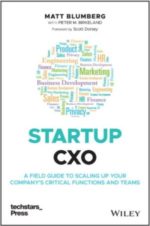
Martina brings that to live with Loved. Simply put, Loved is a handbook or a field guide to running the Product Marketing function. I can imagine it being a section of Startup CXO in that way — it’s incredibly practical, hands-on, how-to, and rich with examples from Martina’s amazing career at Microsoft, Netscape, Silicon Valley Product Group, and Costanoa. And she believes in Agile Marketing, which is always a plus in my book (and I find rare in marketers).
Martina has lots of great frameworks and stories in the book – key responsibilities of product marketing, key metrics, the release scale, the connection to Geoffrey Moore’s TALC, strategies for messaging, pricing and packaging, and more. I won’t spoil more than one here, but I will paraphrase one that I found particularly impactful, a bit of a checklist on the essence of great product marketing:
- Share data around shifting trends in buyer behavior
- Connect your product’s purpose with broader trends
- Rebrand to make your product seem bigger than it is (and save room for expansion down the road)
- Make it free, especially if you’re defining a new category
- Share the “why” and advance access with influencers
If the measure of a book’s impact is how many pages you dog ear or highlight, this says it all about Loved.

Return Path Core Values, Part II
Return Path Core Values, Part II
As I said at the beginning of this series, I was excited to share the values that have made us successful with the world and to also articulate more for the company some of the thinking behind the statements.
You can click on the tag for all the posts on the 13 Return Path’s core values, but the full list of the values is below, with links to each individual post, for reference:
- We believe that people come first
- We believe in doing the right thing
- We solve problems together and always present problems with potential solutions or paths to solutions
- We believe in keeping the commitments we make, and communicate obsessively when we can’t
- We don’t want you to be embarrassed if you make a mistake; communicate about it and learn from it
- We believe in being transparent and direct
- We challenge complacency, mediocrity, and decisions that don’t make sense
- We believe that results and effort are both critical components of execution
- We are serious and passionate about our job and positive and light-hearted about our day
- We are obsessively kind to and respectful of each other
- We realize that people work to live, not live to work
- We are all owners in the business and think of our employment at the company as a two-way street
- We believe inboxes should only contain messages that are relevant, trusted, and safe
As I noted in my initial post, every employee as of August 2008 was involved in the drafting of these statements. That’s a long post for another time, but it’s an important part of the equation here. These were not top-down statements written by me or other executives or by our People team. Some are more aspirational than others, but they are the aspirations of the company, not of management!
Book Short: Deep Dive on Customer Development
Book Short: Deep Dive on Customer Development
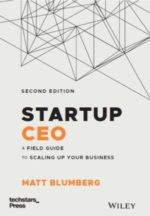
I continue to be on a tear reading books about startups as I finish and get ready for the publication of Startup CEO (now available for pre-ordering at Amazon). This week’s selection was The Startup Owners Manual: A Step-by-Step Guide for Building a Great Company, by Steve Blank and Bon Dorf. This book is a significantly more detailed version of Blank’s first book, The Four Steps to the Epiphany, which was a revolutionary book a few years ago that helped spawn the Lean Startup movement.
And when I say significantly, I mean it! The Startup Owners Manual is 600 pages of really detailed how-to around the first two steps of Blank’s four steps, Customer Discovery and Customer Validation. It doesn’t get into the last two steps at all, Customer Creation and Company Building. It has a lot of overlap with Ash Maurya’s Running Lean (post, book), although it’s significantly more detailed. And essentially, especially around the topic of “Company Building,” my book starts where this one stops.
One of Blank’s great lines in the book is that a “A startup is a temporary organization in search of a scalable, repeatable, profitable business model.” That frames the whole Lean Startup movement really, really well. The whole concept of Customer Discovery and Validation, of testing hypotheses, is critical to getting product-marketing fit right in a capital-efficient manner. If I were starting Return Path today, we’d be using these methods from the get-go.
But Lean principles are wholly compatible with larger companies, as well, and in fact we use all of these principles in our product development organization today. We adapt them for our size and scale and the fact that often we are selling either new or enhanced versions of existing product into existing customers, but our product teams have all embraced the Lean principles and the vocabulary around them, and our goal is that we should never bring a product to market that isn’t already being bought.
Book Short: Tales of Two Cities
Book Short: Tales of Two Cities
Return Path is basically dual-headquartered in New York City and Broomfield, Colorado, so two recently published books which provide history and insights into the tech industry in those two cities were both of interest to me.
Startup Communities: Building an Entrepreneurial Ecosystem in Your City, by Brad Feld (book, kindle) came out a few months ago and is part of Brad’s Startup Revolution series which will also include my upcoming book Startup CEO, to be published this fall. In the book, Brad uses the example of the Boulder/Denver area and a few different sectors to demonstrate a blueprint to creating an entrepreneurial ecosystem – the kind that are popping up all over the world of late.
Tech and the City: The Making of New York’s Startup Community, by Alessandro Piol (kindle only) hits on many of the same themes and topics as they relate to New York City, although the book is more of a history of the New York tech scene than a framework with examples. The book draws heavily on quotes from Fred Wilson, like Brad, a long time friend and Board member. One of the things the book left me thinking about was what the New York tech scene will look like in 30 years after the new Cornell-Technion campus is up and running. That plus the current momentum of the tech industry in New York, plus the sheer commercial scale of the city, could really produce an interesting environment down the road that actually starts to rival Silicon Valley, though rival probably isn’t the right word.
All in, these two books do a good job of chronicling the industry I work in, in the two cities where I work, but they also abstract nicely to broader principles about public-private collaboration as well as sector development.
Book Short: A Primer on Viral Marketing
Book Short: A Primer on Viral Marketing
“People talk about Andy,” writes Seth Godin in the foreward to Andy Sernovitz’s new book, Word of Mouth Marketing: How Smart Companies Get People Talking. “He’s a living, breathing example of the power of word of mouth.” Andy’s the CEO of WOMMA, the Word of Mouth Marketing Association, and a former colleague of mine.
Ever since reading The Tipping Point, I keep looking for the secret sauce around viral marketing. What is it that makes something cool enough to buzz about? My conclusion from reading Andy’s book is that secret sauce doesn’t exist. Like everything else, being buzzworthy comes from hard work, being inherently good, AND using the techniques and understanding in Andy’s book. Tables like “The Three Reasons People Talk About You” and “The Five T’s of Word of Mouth Marketing” are worth the price of the book in and of themselves, as they explain how to manage, handle, and drive viral marketing — once you have your own secret sauce down.
Andy’s wanted to write a book for a long time (in fact, he got us started on ours), and I’m glad he finally did it. If you’re interested in an easy-to-follow, practical, hands-on guide to viral, or word-of-mouth marketing, this is the book for you.
Book Short: Scrum ptious
Book Short: Scrum ptious
I just finished reading Scrum: The Art of Doing Twice the Work in Half the Time, by Jeff Sutherland and JJ Sutherland. This reading was in anticipation of an Agile Facilitation training my executive team and I are going through next week, as part of Return Path’s Agile Everywhere initiative. But it’s a book I should’ve read along time ago, and a book that I enjoyed.
Sutherland gets credit for creating the agile framework and bringing the concept scrum to software development over 20 years ago. The book very clearly lays out not just the color behind the creation of the framework, and the central tenets of practice again, but also clear and simple illustrations of its value and benefits. And any book that employs the Fibonacci series and includes Theodore Roosevelt’s “Man in the Arena” quote — my all-time favorite — is off to a good start by me.
I’ve always appreciated a lot of the underlying philosophy of Agile, such as regularly checking on projects, course correcting in response to feedback from customers or other stakeholders, and working hard to remove any impediments to progress in real time.
One of the author’s most poignant points is that “multitasking makes you stupid.” I hadn’t focused in the past how agile allows you to clear away context shifts to focus on one task at a time, but that’s another great take away from the book.
Our Agile Everywhere initiative, which is designed to improve productivity across the organization, as well as increase accountability through transparency, is even more critical in my view after having read this book.
The thing that I am left struggling with, which is still very much a work in progress for us, and hopefully something that we will address more head on in our training next week, is the application of the agile framework to teams that are not involved in the production of a tangible work product, such as executive or other leadership teams. That is something that our Agile Everywhere deployment team has developed a theory about, but it still hasn’t entirely sunk in for me.
I can’t wait for next week’s training session! If you have any experience applying the agile framework to different types of teams in your company I’d love to hear more about it in the Comments.
Book Short: Entrepreneurial Lessons
Book Short: Entrepreneurial Lessons
The Startup Playbook: Secrets of the Fastest-Growing Startups from 42 Founders, by David Kidder, is the ultimate coffee table book for entrepreneurs and people who are interested in how they think about running their businesses.
David is the author of the Intellectual Devotional series (here’s a link to one of the five or six books in the series), he’s a good friend of mine and a member of a CEO Forum that I’m in, and my major disclosure about this blog post is that I’m one of the 42 entrepreneurs David interviewed for and profiles in the book.
The Startup Playbook is very different from my own book (in progress) on being a Startup CEO. Where my book is going to go deep on different topics – think of it as a bit of a field guide – David’s book is extremely broad in its coverage of different entrepreneurs and their stories. Taken together, the book paints a great picture of how CEOs think about the most important parts of the job. It’s also a nice change of pace (for me, anyway) that David profiles some entrepreneurs who aren’t in the Internet/tech space.
It was an honor to be included in The Startup Playbook next to entrepreneurs like Reid Hoffman and Elon Musk.
Wither the News? (Plus a Bonus Book Short)
Wither the News? (Plus a Bonus Book Short)
It’s unusual that I blog about a book before I’ve actually finished it, but this one is too timely to pass up given today’s news about newspapers. The Cult of the Amateur: How Today’s Internet is Killing Our Culture, by Andrew Keen, at least the first 1/2 of it, is a pretty intense rant about how the Internet’s trend towards democratizing media and content production has a double dirty underbelly:
poor quality — “an endless digital forest of mediocrity,”
no checks and balances — “mainstream journalists and newspapers have the organization, financial muscle, and and credibility to gain access to sources and report the truth…professional journalists can go to jail for telling the truth” (or, I’d add, for libel)
So what’s today’s news about newspapers? Another massive circulation drop — 3.6% in the last six months. Newspaper readership across the country is at its lowest level since 1946, when the population was only 141 million, or less than half what it is today. The digital revolution is well underway. Print newspapers are declining asymptotically to zero.
Don’t get me wrong. I’m an Internet guy, and I love the democratization of media for many reasons. I also think it will ultimately force old media companies to be more efficient as individual institutions and as an industry in order to survive (not to mention more environmentally friendly). But Keen has good thoughts about quality and quantity that are interesting counterpoints to the revolution. I hope at least some newspapers survive, change their models and their cost structures, and start competing on content quality. The thought that everyone in the world will get their news ONLY from citizen journalists is scary.
I’m curious to see how the rest of the book turns out. I’ll reblog if it’s radically different from the themes expressed here.
Update (having finished the book now): Keen puts the mud in curmudgeon. He doesn’t appear to have a good word to say about the Internet, and he allows his very good points about journalistic integrity and content quality and our ability to discern the truth to get washed up in a rant against online gambling, porn, and piracy. Even some of his rant points are valid, but saying, for example, that Craigslist is problematic to society because it only employs 22 people and is hugely profitable while destroying jobs and revenue at newspapers just comes across as missing some critical thinking and basically just pissing in the wind. His final section on Solutions is less blustry and has a couple good examples and points to offer, but it’s a case of too little, too late for my liking.
Book Short: Beyond 10,000 Hours
Book Short: Beyond 10,000 Hours
In Outliers: The Story of Success, by Malcolm Gladwell (post, buy), we are taught, among other things, that it takes 10,000 hours of practice to become an expert at something, as well as a dash of luck and timing, as opposed to huge amounts of innate and unique talent. In Talent is Overrated, by Geoff Colvin, this theory comes to life, with a very clear differentiating point – it’s not just logging the 10,000 hours, it’s HOW the hours are spent.
Colvin’s main point is that the hours need to be spent in what he calls “deliberate practice.” The elements of deliberate practice are best explained with his example of Jerry Rice, although you can apply these to any discipline:
- He spent very little time playing football (e.g., most of his practice was building specific skills, not playing the game)
- He designed his practice to work on specific needs
- While supported by others, he did much of the work on his own (e.g., it can be repeated a lot, and there are built-in feedback loops)
- It wasn’t fun
- He defied the conventional limits of age
If you’re the kind of person who cares deeply about your own performance, let alone the performance of people around you, it doesn’t take long to be completely riveted by Colvin’s points. They ring true, and his examples are great and cross a lot of disciplines (though not a ton about business in particular). I wasn’t 50% done with the book before I had made my list of three key things that I need to Deliberately Practice.
There are some other great aspects to the book as well — including a section on Making Organizations Innovative, from creating a culture of innovation to allowing people the freedom to think, to a section on where passion and drive come from, but hopefully this post conveys the gist of it all. Want to be a better CEO? Or a better anything? This is a good place to start the process.
Thanks to Greg Sands for sending me this excellent book. I’m going to work it into my rotation for Return Path anniversary presents.