
Book Short: There is No Blueprint to $1B
Book Short: There is No Blueprint to $1B
Blueprint to a Billion: 7 Essentials to Achieve Exponential Growth, by David Thomson (book, Kindle) sounds more formulaic than it is. It’s not a bad book, but you have to dig a little bit for the non-obvious nuggets (yes, I get that growing your company to $1B in sales requires having a great value proposition in a high growth market!). The author looked for commonalities among the 387 American companies that have gone public since 1980 with less than $1B in revenues when they went public and had more than $1B in revenue (and were still in existence) at the time of the book’s writing in 2005.
Thompson classifies the blueprint into “7 Essentials,” which blueprint companies do well on across the board. The 7 Essentials are:
– Create and sustain a breakthrough value proposition
– Exploit a high growth market segment
– Marquee/lighthouse customers shape the revenue powerhouse
– Leverage big brother alliances for breaking into new markets
– Become the masters of exponential returns
– The management team: inside-outside leadership
– The Board: comprised of essentials experts
As I said above, there were some nuggets within this framework that made the entire read worthwhile. For example, crafting a Board that isn’t just management and investors but also includes industry experts like customers or alliance partners is critical. That matches our experience at Return Path over the years (not that we’re exactly closing in on $1B in revenues – yet) with having outside industry CEOs sit on our Board. Our Board has always been an extension of our management and strategy team, but we have specifically gotten some of our most valuable contributions and thought-provoking dialog from the non-management and non-investor directors.
Another critical item that I thought was interesting was this concept of not just marquee customers (yes, everyone wants big brand names as clients), but that they also need to be lighthouse customers. They need to help you attract other large customers to your solution – either actively by helping you evangelize your business, or at least passively by lending their name and case study to your cause.
The book is more of a retrospective analysis than a playbook, and some of its examples are a bit dated (marveling at Yahoo’s success seems a bit awkward today), and the author notes as well that many of the “blueprint” companies faltered after hitting the $1B mark. But it was a good read all-in. What I’d like to see next is a more microscopic view of the Milestones to $100 Million!
Holiday Cards c. 2007
Holiday Cards c. 2007
Every year, I get a daily flood of business holiday cards on my desk in the second half of December. Some are nice and have notes from people with whom we do business – clients, vendors, partners, and the like. Some are kind of random, and it takes me a while to even figure out who they are from. Occasionally some even come in with no mark identifying from whence they came other than an illegible signature.
And every year, I receive one or two email cards instead of print & post cards, some apologetic about the medium. Until this year.
I think I’ve received about 10-15 cards by email this month. None with an apology. All with the same quality of art/creative as printed cards. It’s great! A good use of the email channel…much less cost…easier overhead for distribution…and of course better for the environment.
I wonder what made 2007 the tipping year for this.
Book Short: Sequel Not Worth It
Book Short: Sequel Not Worth It
Mastering the 7 Essentials of High Growth Companies, by David Thomson, was a poor sequel to the solid Blueprint to a Billion [review] [buy]– and not worth reading if you’ve read the original. It was very short for its price and contained mildly interesting examples of “blueprint companies” that augmented the original book but didn’t uncover any new material or add any thinking to the mix. Basically, it was like another couple chapters that should have been part of Blueprint.
It is not a bad buy in lieu of the original if you haven’t read either one yet, as Blueprint is a bit longer than necessary, but otherwise, you can skip this one.
On a side note – the author’s interactive scorecard is a decent diagnostic tool (though also, I am sure, a lead gen tool for his consulting business).
New Del.icio.us for: Tag
New Del.icio.us for: Tag
As usual the laggard behind Fred and Brad, I just set up a for:mattblumberg tag on del.icio.us. Feel free to tag away for me! If you don’t know what this means, you can read either of their postings about it here or here.
Book (Not So) Short: Raise Your Hand If You’re Sure
Book (Not So) Short: Raise Your Hand If You’re Sure
I couldn’t get the catchy jingle from the 80’s commercial for Sure deodorant (you remember, the one with the Statue of Liberty at the end of it – thanks, YouTube) out of my head while I was reading the relatively new book, Confidence: How Winning Streaks and Losing Streaks Begin and End. Written by HBS professor Rosabeth Moss Kantor, Confidence is one of the few business books I’ve read that’s both long and worth reading in full.
The book has scores of examples of both winning and losing streaks, from sports, business, politics, and other walks of life, and it does a great job of breaking down the core elements that go into creating a winning streak or turnaround (Accountability, Collaboration, Innovation). Kantor also puts a very fine point on the “doom loop” of losing streaks and just how hard it is to turn them around. The book also has a good crisp definition of why winning streaks end — arrogange, anyone? — and has consistent, but not preachy recipes for avoiding pitfalls and driving success. All in all, very inspirational, even if many of the roots of success lie in well-documented leadership qualities like those expressed in Jim Collins’ Built to Last and Good to Great. The book is good enough that Kantor can even be forgiven for lauding Verizon, probably the most consistently awful customer service company I’ve ever dealt with.
But even more of the roots of success and disappointment around streaks are psychological, and these examples really rang true for me as I reflected back on our acquisition of the troubled NetCreations in 2004. That company was in the midst of a serious slump, a losing streak dating back to 2000, at the peak of the original Internet boom. Year over year, the company had lost revenues, profits, customers, and key personnel. Its parent company saw poor results and set it into the doom loop of starving it for resources and alternating between ignoring it and micromanaging it, and when we acquired the business, we found great assets and some fantastic people (many of whom I’m proud to say are still with us today), but a dispirited, blame-oriented, passive culture that was poised to continue wallowing in decline.
I can hardly claim that we’ve turned the business around in full, or that I personally made happen whatever turnaround there has been, but I do think we did a few things right as far as Kantor and Confidence would see it. Her formula for a turnaround (Espouse the new message, Exemplify it with leadership actions, Establish programs to systematically drive it home throughout the organization) is right in line with our philosophy here at Return Path.
First, we accelerated the separation and autonomy of a fledgeling NetCreations spin-off unit, now our Authentic Response market research group, and let a culture of collaboration and innovation flourish under an exceptionally talented leader, Jeff Mattes.
But that was the easy part (for me anyway), because that part of the business was actually working well, and we just let it do its thing, with more support from HQ. The turnaround of the core list rental and lead generation business of NetCreations, the original Postmaster Direct, was much tougher and is still a work in progress. In the last six months, we’ve finally turned the corner, but it hasn’t been easy. Even though we knew lots of what had to be done early on, actually doing it is much harder than b-school platitudes or even the best-written books make it seem.
The one thing that Kantor probably gives short shrift to, although she does mention it in passing a couple times, is that frequently turnarounds require massive major amounts of purging of personnel (not just management) to take hold. As one of my former colleagues from Mercer Management Consulting used to say, “sometimes the only way to effect Change Management is to change management.” Sometimes even very talented people are just bogged down with baggage — the “ghost of quarters past” — and nothing you do or say can break that psychological barrier.
Boy, have we learned that lesson here at Return Path the hard way. I’m extremely grateful to our team at Return Path, from the old RP people who’ve seen it all happen, to the old NetCreations people who are thriving in the new environment, to the new blood we’ve brought in to help effect the turnaround, for playing such important roles in our own Confidence-building exercises here. And I’m super Confident that 2007 will be the year that we officially turn the old NetCreations/Postmaster losing streak into a big, multi-year winning streak.
Anyway, I realize this may redefine the “short” in book short, but Confidence is without question a good general management and leadership read.
Book Short: Fixing America
Book Short: Fixing America
I usually only blog about business books, but since I occasionally comment on politics, I thought I would also post on That Used to be Us: How America Fell Behind in the World It Invented and How We Can Come Back, by Tom Friedman and Michael Mandelbaum (book, Kindle), which I just finished.
There is much that is good about America. And yet, there is much that is broken and in need of serious repair. I wrote about some thought on fixing our political system last year in The Beginnings of a Roadmap to Fix America’s Badly Broken Political System?, but fixing our political system can only do so much. Tom Friedman, with whom I usually agree a lot, but only in part, nailed it in his latest book. Instead of blaming one party or the other (he points the finger at both!), he blames our overall system, and our will as a people, for the country’s current problems.
The authors talk about the four challenges facing America today – globalization, the IT revolution, deficits and debt, and rising energy demand and climate change, and about how the interplay of those four challenges are more long term and less obvious than challenges we’ve faced as a country in the past, like World Wars or The Great Depression, or even The Great Recession. The reason, according to the authors, that we have lost our way a bit in the last 20-40 years, is that we have strayed from the five-point formula that has made us successful for the bulk of our history:
- Providing excellent public education for more and more Americans
- Building and continually modernizing our infrastructure
- Keeping America’s doors to immigration open
- Government support for basic research and development
- Implementation of necessary regulations on private economic activity
It’s hard not to be in violent agreement with the book as a normal person with common sense. Even the last point of the five-point formula, which can rankle those on the right, makes sense when you read the specifics. And the authors rail against excessive regulation enough in the book to give them credibility on this point.
The authors’ description of the labor market of the future and how we as a country can be competitive in it is quite well thought through. And they have some other great arguments to make – for example, about how the prior decade of wars was, for the first time in American history, not accompanied by tax increases and non-essential program cuts; or about how we can’t let ourselves be held hostage to AARP and have “funding old age” trump “funding youth” at every turn.
The one thing I disagree with a bit is the authors’ assertion that “we cannot simply cut our way to fiscal sanity.” I saw a table in the Wall Street Journal the same day I was reading this book that noted the federal budget has grown from $2.6T in 2007 to $3.6T today – 40% in four years! Sure sounds to me like mostly a spending program, though I do support closing loopholes, eliminating subsidies, and potentially some kind of energy tax for other reasons.
I’ll save their solution for those who read the book. It’s not as good as the meat of the book itself, but it’s solid, and it actually mirrors something my dad has been talking about for a while now. If you care about where we are as a country and how we can do better, read this book!
Book Short: Tales of Two Cities
Book Short: Tales of Two Cities
Return Path is basically dual-headquartered in New York City and Broomfield, Colorado, so two recently published books which provide history and insights into the tech industry in those two cities were both of interest to me.
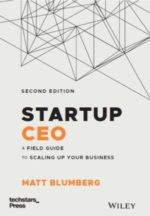
Startup Communities: Building an Entrepreneurial Ecosystem in Your City, by Brad Feld (book, kindle) came out a few months ago and is part of Brad’s Startup Revolution series which will also include my upcoming book Startup CEO, to be published this fall. In the book, Brad uses the example of the Boulder/Denver area and a few different sectors to demonstrate a blueprint to creating an entrepreneurial ecosystem – the kind that are popping up all over the world of late.
Tech and the City: The Making of New York’s Startup Community, by Alessandro Piol (kindle only) hits on many of the same themes and topics as they relate to New York City, although the book is more of a history of the New York tech scene than a framework with examples. The book draws heavily on quotes from Fred Wilson, like Brad, a long time friend and Board member. One of the things the book left me thinking about was what the New York tech scene will look like in 30 years after the new Cornell-Technion campus is up and running. That plus the current momentum of the tech industry in New York, plus the sheer commercial scale of the city, could really produce an interesting environment down the road that actually starts to rival Silicon Valley, though rival probably isn’t the right word.
All in, these two books do a good job of chronicling the industry I work in, in the two cities where I work, but they also abstract nicely to broader principles about public-private collaboration as well as sector development.
Book Short: the Garage Workbench of the Future
Book Short: the Garage Workbench of the Future
Makers: The New Industrial Revolution, by Wired Magazine’s Chris Anderson, author of The Long Tail (review, buy) and Free (review, buy) is just as mind expanding as his prior two books were at the time they were published. I had the pleasure of talking with Chris for a few minutes after he finished his keynote address at DMA2012 in Las Vegas this week, and I was inspired to read the book, which I did on the flight home.
The short of it is that Anderson paints a very vivid picture of the future world where the Long Tail not only applies to digital goods but to physical goods as well. The seeds of this future world are well planted already in 3D printing, which I have been increasingly hearing about and will most likely be experimenting with come the holiday season (family – please take note!).
As someone who, like Anderson, tinkered with various forms of building as a kid in Shop at school and in the garage with my dad, it’s fascinating to think about a world where you can dream a physical product up, or download a design of it, or 3D scan it and modify it, and press a “make” button like you press a “print” button today on your computer, and have the product show up in your living room within minutes for almost nothing. This will change the world when the technology matures and gets cheaper and more ubiquitous. And this book is the blueprint for that change.
While we may look back on this book in 5 or 10 years, and say “DUH,” which is what many people would say now about The Long Tail or Free, for right now, this gets a WOW.
Book Short: Alignment Well Defined
The Advantage: Why Organizational Health Trumps Everything Else In Business is Patrick Lencioni’s newest book. Unlike most or all of his other books (see the end of this post for the listing), this one is not a fable, although his writing style remains very quick and accessible.
I liked this book a lot. First, the beginning section is a bit of a recap of his Five Dysfunctions of a Team which I think was his best book. And the ending section is a recap of his Death by Meeting, another really good one. The middle sections of the book are just a great reminder of the basic building blocks of creating and communicating strategy and values – about driving alignment.
But the premise, as the subtitle indicates, is that maintaining organizational health is the most important thing you can do as a leader. I tell our team at Return Path all the time that our culture is a competitive advantage in many ways, some quantifiable, and others a little less tangible.
A telling point in the book is when Lencioni is relaying a conversation he had with the CEO of a client company who does run a healthy organization – he asked, “Why in the world don’t your competitors do any of this?” And the client responded, “You know, I honestly believe they think it’s beneath them.” Lencioni goes on to say, “In spite of its undeniable power, so many leaders struggle to embrace organizational health because they quietly believe they are too sophisticated, too busy, or too analytical to bother with it.” And there you have it. More examples of why “the soft stuff” is mission critical.
Lencioni’s “Recipe for Organizational Health” (the outline of the book):
– Build a Cohesive Leadership Team
– Create Clarity
– Overcommunicate Clarity
– Reinforce Clarity
And his recipe for creating a tight set of “mission/vision/values” (the middle of the book):
1. Why do we exist?
2. How do we behave?
3. What do we do?
4. How will we succeed?
5. What is most important, right now?
6. Who must do what?
While there are lots of other good frameworks for doing all of this, Lencioni’s models and books are great, simple reminders of one of the CEO’s most important leadership functions. We’re recrafting our own mission and values statements at the moment at Return Path, and we’re doing it using this 6-Question framework instead of the classic “Mission/Vision/Values” framework popularized a few years back by Harvard Business Review.
The full book series roundup as far as OnlyOnce has gotten so far is:
- The Three Signs of a Miserable Job (post, book)
- The Five Temptations of a CEO (post, book)
- The Four Obsessions of an Extraordinary Executive (post, book)
- Death by Meeting (post, book)
- The Five Dysfunctions of a Team (post, book, Field Guide)
- Silos, Politics and Turf Wars (post, book)
- Getting Naked (post, book)
- The Advantage (book)
Book Short: Choose Voice!
Book Short: Choose Voice!
I took a couple days off last week and decided to re-read two old favorites. One –Ayn Rand’s The Fountainhead — my fourth reading — will take me a little longer to process and figure out if there’s a good intersection with the blog. One would think so with entrepreneurship as the topic, but my head still hurts from all the objectivism. The second — Exit, Voice, and Loyalty, by Albert O. Hirschman — is today’s topic.
I can’t remember when I first read Exit, Voice, and Loyalty. It was either in senior year of high school Economics or Government; or in freshman year of college Political Philosophy. Either way, it was a long time ago, and for some reason, some of the core messages of this quirkly little 125 page political/economic philosophy book have stayed with me over the years. I remembered the book incorrectly as a book about political systems, and I think it was born consciously in the wake of Eugene McCarthy’s somewhat revolutionary challenge to a sitting President Johnson for the Democratic Party nomination in 1968. But the book is actually about business; it’s just about businesses and their customers, not corporations as social structures (the latter being more of an interest to me). Written by an academic economist (I think), the book has its share of gratuitous demonstrative graphs, 2×2 matrices, and SAT words. But its central premise is a gem for anyone who runs an organization of any size.
The central premise is that there are really two paths by which one can express dissatisfaction with a temporary, curable lapse in an organization: exit (bailing), or voice (trying to fix what’s wrong from within). The third key element, Loyalty, is less a path in and of itself but more an agent that “holds exit at bay and activates voice.”
You need to read the book and apply it to your own circumstances to really get into it, but for me, it’s all about breeding loyalty as a means of making voice the path of least resistance, even when exit is a freely available option (few of us run totalitarian states or monopolies, after all). That to me is the definition of a successful enterprise, both internally and externally.
With your customers: make your product so irresistible, and make your customer service so deep, that your customers feel an obligation to help you fix what they perceive to be wrong with your product first, rather than simply complain about price or flee to a competitor.
With your employees: make your company the best possible place you can think of to work so that even in as ridiculously fluid a job market as we live in, your employees will come to their manager, their department head, the head of HR, or you as leader to tell you when they’re unhappy instead of just leaving, or worse, sulking.
With your company (you as employee): make yourself indispensible to the organization and do such a great job that if things go wrong with your performance or with your role, your manager’s loyalty to you leads him or her to give you open feedback and coach you to success rather than unceremoniously show you the door.
Ok, this wasn’t such a short book short — probably the longest I’ve ever written in this blog, and certainly the highest ratio of short:actual book. But if you’re up for a serious academic framework (quasi-business but not exclusively) to apply to your management techniques, this short 1970 book is as valid today as when it was written. Thanks to David Ramert (I am pretty sure I read it in high school) for introducing it to me way back when!
Book Short: Best Book Ever
Book Short: Best Book Ever
The Hard Thing About Hard Things, by Ben Horowitz, is the best business book I’ve ever read. Or at least the best book on management and leadership that I’ve ever read. Period.
It’s certainly the best CEO book on the market. It’s about 1000 times better than my book although my book is intended to be different in several ways. I suppose they’re complementary, but if you only had time left on this planet for one book, read Ben’s first.
I’m not even going to get into specifics on it, other than that Ben does a great job of telling the LoudCloud/Opsware story in a way that shows the grit, psychology, and pain of being an entrepreneur in a way that, for me, has previously only existed in my head.
Just go buy and read the book.