
The Gift of Feedback
The Gift of Feedback
My colleague Anita Absey always says that “feedback is a gift.” I’ve written in the past about our extensive 360 review process at Return Path, and also about how I handle my review and bring the Board in on it. But this past week, I finished delivering all of our senior staff 360 reviews, and I received the write-up and analysis of my own review. And once again, I have to say, the process is incredibly valuable.
For the first time in a long time this year, I got a resounding “much improved” on all of my prior year’s development items from my team and from the Board. This was great to hear. As usual, this year’s development items are similarly thoughtful and build on the prior ones, in the context of where the business is going. Since one of my prior year’s items was “be as transparent as possible,” I thought I’d share my development plan for the coming 12-18 months here on my blog. If you’re reading this and you report to me, you’ll get a longer form debrief at our next offsite.
1. Continue making the organization more of a Hedgehog, lending more focus to our mission and removing distractions wherever possible.
2. Move the organization’s leadership team from “pacesetting” to “authoritative” management styles by focusing more on :
a. standards of excellence around employee behavior and performance: develop a more clear performance management system, raise the bar on accountability around leadership and management issues, shift management training from tools to values-based coaching
b. clear communication loops: balance open door policy with manager empowerment by getting the executive in charge to fix issues (instead of fixing them myself) and/or facilitating stronger manager-employee communication
c. constant translation of vision into execution: foster clearer context and deeper employee engagement by not just communicating vision, but communicating HOW the vision becomes reality at every opportunity
3. Sharpen elbows further around leadership team: identify key attributes of success, weed out underperformers, re-scope other roles, and clarify “partner for success” opportunities as part of core responsibilities. Make each individual’s development needs public in the senior team (I guess this is the first step towards that!)
4. Make the organization more nimble, inspiring a bias for action through shifts in priorities and cross-functional swat teams where required
So there you go. If you work at Return Path, please feel free to hold my feet to the fire in the coming months on these points!
Decisions
Happy Leap Day!
One of the better books I’ve read in the last 6 months is James Clear’s Atomic Habits: An Easy & Proven Way to Build Good Habits & Break Bad Ones, which provides a great framework around habits. It’s worth a read, whether you’re talking about business habits/routines or personal ones. This isn’t a book review, but quickly while I have you – here’s a summary of his “laws”:
HOW TO CREATE A GOOD HABIT
The 1st Law: Make It Obvious
The 2nd Law:Make It Attractive
The 3rd Law: Make It Easy
The 4th Law: Make It Satisfying
HOW TO BREAK A BAD HABIT
Inversion of the 1st Law: Make It Invisible
Inversion of the 2nd Law: Make It Unattractive
Inversion of the 3rd Law: Make It Difficult
4th Law: Make It Unsatisfying
Add to that my other key takeaway, which is that you have to tie habits not just to outcomes but to identities, and…great book! Anyway, my story today is about decisions, and I’m going to quote James Clear’s email newsletter here, at the end of which he credits Tim Ferriss for sparking his thinking. So this is, what, third hand thinking. But it’s a great way to think about decisions, something I’ve written about a lot, including here.
I think about decisions in three ways: hats, haircuts, and tattoos.
Most decisions are like hats. Try one and if you don’t like it, put it back and try another. The cost of a mistake is low, so move quickly and try a bunch of hats.
Some decisions are like haircuts. You can fix a bad one, but it won’t be quick and you might feel foolish for awhile. That said, don’t be scared of a bad haircut. Trying something new is usually a risk worth taking. If it doesn’t work out, by this time next year you will have moved on and so will everyone else.
A few decisions are like tattoos. Once you make them, you have to live with them. Some mistakes are irreversible. Maybe you’ll move on for a moment, but then you’ll glance in the mirror and be reminded of that choice all over again. Even years later, the decision leaves a mark. When you’re dealing with an irreversible choice, move slowly and think carefully.
As someone who loves hats, has had (and seen) his fair share of bad haircuts, and has a tattoo, I can totally relate!
Startup Boards: VCs and CEOs need to do their jobs!
Was anyone else as appalled as I am by the contents of Connie Loizos’s recent article, Coming out of COVID, investors lose their taste for board meetings? The stories and quotes in the article about VCs reducing their interest and participation in Board meetings, not showing up, sending the junior associate to cover, etc. are eye opening and alarming if widespread.
The reasons cited in the article are logical—overextended VCs, Zoom fatigue, and newbie directors. Connie’s note that “privately, VCs admit they don’t add a lot of value to boards” is pretty funny to read as a CEO who has heard a ton of VCs talk about how much value they add to boards (although the good ones DO add a lot of value!).
For the most part, everything about the substance of this article just made me angry.
Disengaged or dysfunctional boards aren’t just bad for CEOs and LPs; they’re bad for everyone. If the world has truly become a place where the board meeting is nothing more than a distraction for CEOs, and investors think it’s a tax they can’t afford, then it’s time to hit the reset button on boards and board meetings.
Here are four things that need to happen in this reset:
VCs need to do their job well or stop doing it. The argument that investors did too many deals in the pandemic so now they don’t have any time is a particularly silly one, since the pandemic reduced the amount of time VCs needed to spend on individual board meetings as well. I used to have four board meetings each year with directors who were traveling for the meetings, having dinners, spending time with the team and sitting in on committee meetings.
Today, boards are lucky to have one in-person meeting a year (more on that later). And as everything else takes less time, and there’s little transit, any given VC should have doubled the time they spend on board meetings.
Serving on a board post-investment is a central part of the VC role. They have obligations to the founders they back and to the LPs they represent. The entire role is “find deals, execute deals, manage the portfolio.”
If they no longer have time for the third job, they need to admit that to both founders and LPs before stepping down. If a VC can’t be bothered to focus on minding their investments and adding value, they should work with the company to find their replacement.
CEOs need to take their job as leader of the board seriously. Would a good CEO just throw their hands up if they found management team meetings boring or a waste of time? No. They’d fix the structure of the team or meetings. If not, they shouldn’t be the CEO.
It’s no different with boards. Whether or not the CEO is the board chair, they’re the leader of the organization. So, one of the few “must do” items in their job description is leading the board. The board is part of the CEO’s team, just like the management team.
CEOs get to call the meetings, run the meetings, and insist on attendance. The CEO’s obligation is to make it easy and meaningful for everyone so the board isn’t a tax but rather a secret weapon for the company’s success. As my long-time independent director Scott Weiss used to tell me, boards consume whatever you put in front of them. Garbage in, garbage out. That means paying careful attention to the board materials, to meeting etiquette, and everything in between.
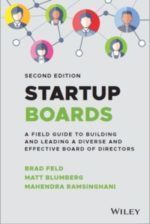
If the CEO doesn’t know how to do that, they should find a CEO mentor who can teach them, observe some well run boards in action through their network, or read Startup Boards: A Field Guide to Building and Leading an Effective Board of Directors, a book I just published along with co-authors and VCs Brad Feld and Mahendra Ramsinghani.
Here’s one tip on making Board prep more efficient: work your Operating System and your Board Book formats so you do one set of reporting for the company and management team that is 95% reusable without any changes for your board.
The format for Board meetings needs to evolve. Board meetings need to evolve in our world of hybrid work just as office work needs to evolve. The format that works for in-person can’t just “lift and shift” to Zoom as is, indefinitely.
Here’s how I’m steering my board:
- I insist on one or two “old school” meetings per year, meaning in-person attendance required, half a day long, and including a meal and even an activity. If I’m only going to see my directors together infrequently, I make it mandatory, but I also make it worthwhile and fun.
- Remote meetings that happen between the in-person meetings are becoming shorter and tighter. I still send out a lot reading material beforehand, but I make sure to keep the focus on a fixed number of major topics to keep the discussion engaging.
- We need a new set of expectations around Zoom meeting etiquette for long meetings. It’s okay to ask people to close their email, browser, and Slack before the meeting starts. If a meeting is more than two hours long, a 15 minute break in the middle is important. Use breakout rooms to mix up topic discussions and working sessions.
- I am trying a new meeting format to maximize director conversation and team development. I start every meeting with a director-only session for half an hour that’s not exactly an Executive Session but is more fun and social—usually including a nonwork discussion topic, as if we were sitting around the dinner table having a cocktail. That gets the conversational juices flowing. Then when my team and observers join the meeting, I ask those people to turn their video off, and I ask directors to adjust their Zoom setting to “hide participants not on video” to keep the number of Zoom squares down to the bare minimum. Any time a team member or observer wants to engage in a particular topic, they turn their video on. Then we follow the meeting with Executive Session and Closed Session and a single-director debrief with me. That is a lot of moving pieces to manage, I find that but doing so keeps the meeting fresh and well paced.
- Finally, I’m following Fred Wilson’s advice and running a very short survey post-meeting to ask directors basic questions so they can summarize their thinking for me and the team: What are we doing well? What do we need more work on? And did the meeting meet your expectations?
Companies need to Follow the Rule of 1s
The secret to engaged and diverse boards is to mix up their membership more than most companies do. Our Board Benchmark study at Bolster indicates that the vast majority of private company boards have no independent directors at all—only founders and investors—and every year, the vast majority of the “open independent seats” specified in those companies’ charters go unfilled.
It’s hard work hiring a new independent board member, and it rarely rises to the top of the CEO’s priority list. But the more independent the board is, and the more diverse the board is in every way (in terms of demographics as well as experience and background), the more robust the conversations around the table become, and the more valuable the board is to the CEO.
My Rule of 1s for building highly effective boards is simple:
- Add independent directors to your board on Day 1
- Try to limit your Board to 1 founder/team member
- Then, for every 1 investor on your board,
- Add 1 independent director
A great board is one of a company’s greatest assets. A weak board can kill a company. A mediocre board is just a waste of time. There’s no question that running an effective board, or serving as an effective director, takes serious time and energy and diligence. But that’s not a reason not to try.
(This post first ran on TechCrunch+ and is also running on the Bolster blog)
Sometimes a Good Loss is Better than a Bad Win
I just said this to a fellow little league coach, and it’s certainly true for baseball. I’ve coached games with sloppy and/or blowout wins in the past. You take the W and move on, but it’s hard to say “good game” at the end of it and feel like you played a good game. And I’ve coached games where we played our hearts out and made amazing plays on offense and defense…and just came up short by a run. You are sad about the L, but at least you left it all out on the field.
Is that statement true in business?
What’s an example of a “bad” win? Let’s say you close a piece of business with a new client…but you did it by telling the client some things that aren’t true about your competition. Your win might not be sustainable, and you’ve put your reputation at risk. Or what about a case where you release a new feature, but you know you’ve taken some shortcuts to launch it on time that will cause downstream support problems? Or you negotiate the highest possible valuation from a new lead investor, only to discover that new lead investor, now on your Board, expects you to triple it in four years and is way out of alignment with the rest of your cap table.
On the other side, what’s an example of a “good” loss? We’ve lost accounts before where the loss was painful, but it taught us something absolutely critical that we needed to fix about our product or service model. Or same goes for getting a “pass” from a desirable investor in a financing round but at least understanding why and getting a key to fixing something problematic about your business model or management team.
What it comes down to is that both examples – little league and business – have humans at the center. And while most humans do value winning and success, they are also intrinsically motivated by other things like happiness, growth, and truth. So yes, even in business, sometimes a good loss is better than a bad win.
Debunking the Myth of Hiring for Domain Expertise vs. Functional Expertise
Debunking the Myth of Hiring for Domain Expertise vs. Functional Expertise
As a CEO scaling your business, you’ll invariably want to hire in new senior people from the outside. Even if you promote aggressively from within, if you’re growing quickly enough, you’ll just need more bodies. And if you’re growing really fast, you will be missing experience from your employee base that you’ll need to augment.
For years, I’ve thought and heard that there’s a basic tradeoff in hiring senior people — you can hire someone with great domain expertise, or you can hire someone with great functional expertise, but it’s almost impossible to find both in the same person, so you need to figure out which is more important to you. Would I rather hire someone who knows the X business, or someone who is a great Head of X? Over the course of the last year, I’ve added four new senior executives to the team at Return Path, and to some extent, I’ve hired people with deep functional expertise but limited domain expertise. Part of that has been driven by the fact that we are now one of the larger companies in the email space, so finding people who have “been there, done that” in email is challenging.
But the amount of senior hiring I’ve done recently has mostly shown me that the “domain vs. functional” framework, while probably accurate, is misleading if you think of it as the most important thing you have to consider when hiring in senior people from the outside.
What’s more important is finding people who have experience working at multiple growth stages in their prior jobs, ideally the scaling stage that you’re at as a business. It makes sense if you stop and think about it. If your challenge is SCALING YOUR BUSINESS, then find someone who has DONE THAT before, or at least find someone who has worked at both small companies and larger companies before. I suppose that means you care more about functional expertise than domain expertise, but it’s an important distinction.
Looking for a new industrial-strength CFO for your suddenly large business? Sure, you can hire someone from a Fortune 500 company. But if that person has never worked in a startup or growth stage company, you may get someone fluent in Greek when you speak Latin. He or she will show up on the first day expecting certain processes to be in place, certain spreadsheets to be perfect, certain roles to be filled. And some of them won’t be. The big company executive may freeze like a deer caught in the headlights, whereas the stage-versatile executive will invariably roll up his or her sleeves and fix the spreadsheet, rewrite the process, hire the new person. That’s what scaling needs to feel like.
Blog Blacklists: A New View of Internet Vigilantes
I always thought that spam blacklists were well intentioned but problematic for the email ecosystem, since they are vigilantes in action and have no accountability and trackability. Periodically, I’ve even pondered whether or not they violate someone’s first amendment rights. It’s maddening to know you’re a good guy in the email world, you can get put on a blacklist because some anti-spam zealot decides he or she doesn’t like you on a whim, you can’t complain or get off of the list, you may not even know you’re on the list, then you’re downloaded thousands of times by naively trusting or equally zealous sysadmins, and boom — your emails aren’t getting through any more.
Then yesterday, I was looking at what’s probably the first blacklist for blog comment spam, dubbed by Brad Feld as BLAM. I immediately found myself using it myself to prevent my blog from getting overrun by the newest Internet evil. (Of course, I should be so lucky…my fledgling blog has all of one comment on it, but I’m sure there are scores of people ready to comment at a moment’s notice.)
So here we are at the dawn of a new era: the beginning of the blacklist for blam. I’m an early adopter of Jeff Nolan’s pioneering list and proud of it, which made me rethink my view of email blacklists for about five minutes. It didn’t ultimately change that view — email blacklists still have all the problems I mentioned above and have run amok — but it does make me hope that there’s a better long-term solution for stopping blam than the one the world of email has ended up with. Fred Wilson has some good thoughts on better tools for this as well.
Necessity, as always, is the mother of invention, but hopefully the blam blacklist situation won’t get out of control before someone tries to fix it, which may be too late. What I think we need now to solve the blacklist problem is a blacklist of blacklists, but that’s another story for another posting.
Lessons from the Gipper
There’s been much coverage in the news of Saturday’s passing of President Ronald Reagan, but I will add a new wrinkle by trying to distill down what I know and remember of The Great Communicator’s leadership style into a few simple lessons of note for CEOs.
Lesson 1: Sunny optimism motivates the people you lead, but only when it’s balanced with hard-headed realism. Reagan’s message that tomorrow can be a better day than today was powerful and timely for the American psyche, but he didn’t just assume that because he said it, it would be true. He backed up his message with (a) an understanding that the American economy itself was in the doldrums in the late ’70s, and (b) policies designed to fix the economy. Whether you agree with those policies or not, you have to respect the fact that Reagan as a leader wasn’t just talk — he combined the talk with reality-based action. That’s super important when communicating key messages to a company of any size.
Lesson 2: Simplicity of messaging beats out measured intellectualism in broad-based communications. Reagan’s view of the 40-year-old Cold War when he took office was “we will win, and they will lose.” Much easier to rally around than messages of detente and containment (this quote came from an editorial by former Reagan staffer Peter Robinson in today’s Wall St. Journal). Similarly, the bigger and more diverse the group you’re talking to inside your company or in a speech or in the press, the more important it is to boil your key message down to something people can easily take away with them and repeat at home later to their spouse or friends.
Lesson 3: Nobody’s perfect, and you don’t have to be perfect either. He may have been, electorally, the most popular president of our generation, but Reagan certainly had his many and sometimes glaring faults. History will acknowledge his faults but overall judge him on his performance. It was noted (also in today’s Journal, I think) that Reagan got a lot of little things wrong, but in the end, he will be remembered because he got a few big things very, very right. Perfection is something that most mortals can’t achieve, certainly not in a high profile position like President or CEO of anything, whether a 10-person startup or a nation.
Love him or hate him, the man was one of the most prominent leaders of our time. I’m sure there are more lessons from Reagan’s legacy than these three for CEOs, but this is a start, anyway.
Counter Cliche: No Conflict, No Interest
Counter Cliche: No Conflict, No Interest
The entrepreneur’s take on Fred’s VC cliche of the week — "No conflict, No interest" is that it applies equally but differently to management teams.
Our nation’s first president, George Washington, is often said to have brilliantly placed political enemies Thomas Jefferson and Alexander Hamilton on his first cabinet so he would have differing points of view from which to choose when deciding some of the complex and delicate issues that faced our nation in its infancy. And many of those early decisions of the Washington administration — things like how to pay down the debt from the Revolution, or whether and how to put down the Whiskey Rebellion — were critical in forming our nation and deciding how much power to invest in our government.
The tension between one executive and another on a management team is, though perhaps less historically important, no different. A management team that finds itself 100% in agreement, 100% of the time, is in trouble. A management team that can have disagreements and use that tension productively to drive decisions is much better off. Building such a team requires the CEO to seek out executives who view the world differently, who have the courage to speak their minds in the face of strong opposition, and who have the ability to see different points of view.
Turning Lemons into Lemonade
I’ve always thought that the ability to stare down adversity in business — or turning lemons into lemonade, as a former boss of mine used to say — is a critical part of being a mature professional. We had a prime example of this a couple weeks ago at Return Path.
We had scheduled a webinar on email deliverability, a critical topic for our market, and the moment of the webinar had come, with over 100 clients and prospects on the line for the audio and web conference. There was a major technical glitch with our provider, Webex (no link for you, Webex), and after 5 or 10 minutes, we had to cancel the webinar — telling all 100 members of our target audience that we were sorry, we’d have to reschedule. What a nightmare! Even worse, Webex displayed atrocious customer service to us, not apologizing for the problem, blaming it on us (as if somehow it was our fault that half the people on the line couldn’t hear anything), and not offering us any compensation for the situation.
As you can imagine, our marketing guru Jennifer Wilson was devastated. But instead of sulking, she turned the situation on its head. She rescheduled the event for three weeks out with a different provider who was technically competent and a pleasure to work with, Raindance, and sent every person who’d been on our aborted webinar a gift certificate to Starbucks so they could enjoy a snack on our dime during the rescheduled event. Not only did we have full attendance at the rescheduled event, but Jennifer received dozens of emails from clients sympathizing with her, commending her on her attitude, and of course thanking her for the free latte.
It’s hard to do, and you hate to have to do it, but successfully turning lemons into lemonade is one of the most satisfying feelings in business!
People rarely comment on this blog (or most non-political blogs, I’ve noticed), so feel free to share your best lemons-to-lemonade story with me in a comment, and I promise I’ll post the best couple of them pronto!
FTC on Email – Missing the Point
Today, the FTC very shrewdly punted on the issue of the proposed “Do Not Email” list implementation, saying that authentication systems need to be put in place before such a list can be considered. This buys the world more time to work on more effective, market-driven solutions to the spam and false positive problems.
I read a few interesting posts on this today, including one from Jeff Nolan which nicely captured Chuck Schumer’s elegant combination of demagoguery and idiocy about this issue; and one from Anne Mitchell pointing out that they’re about six months late with their conclusion. Feels about right for the federal government.
What’s interesting to me is that all of the comments by and about the FTC and the proposed “Do Not Email” list focus on the wrong thing: they say that the problem with the list is that spammers would abuse it by hacking into it and stealing all the email addresses. Ok, I’ll admit, that’s one theoretical problem, but it’s not THE problem.
The structural problem with a national “Do Not Email” list is that responsible emailers, non-spammers, don’t need to use it since they get appropriate permission from their customers before sending them email…and spammers won’t bother using it since they don’t give a hoot anyway and will find a way around the list as they do everything else. In the end, the creation of such a list would do nothing to stop spam, but it would certainly create a lot of confusion for legitimate marketers and their customers around opting in and opting out. It would also, notably unlike the fairly successful national “Do Not Call” list, not do anything to reduce the volume of spam, which will create disappointment and anger among consumers (and hello, Senator Schumer, backfire on its political sponsors).
Those aren’t bigger problems than spam to be sure, but why should we implement a solution to the problem that doesn’t work at all and that causes its own ancillary problems along the way?
You're Only a First Time CEO Once
And here I am. In the middle of that “once.” Fred Wilson wrote a great posting by that title on his blog, and it has stuck with me. When I decided to start a blog, it was the first thing that came to mind as a main theme for the blog, so there you go. Only Once it is.
I’m not entirely sure why I’m doing a blog. Part of it is fascination with the newest corner of the Internet and its related areas like RSS (clicking on that link will get you the RSS feed of this blog). Part of it is to try out the medium and see how it might work for the hundreds of marketers and publishers who are my company’s clients. I suppose part of it is to generate some interest in my company, Return Path, which in my extremely biased opinion is one of the most interesting companies in the email services business.
My one hesitation about starting a blog is that the other part of me feels like blogs are a bit narcissistic, and I can’t imagine who on earth would want to read whatever it is that pops into my head. But I’ll give it a try and promise not to go overboard on the extraneous postings.
So, I will probably post periodically about experiences of an entrepreneur, of the one time I’ll ever be a first-time CEO. But I may also post on other things periodically that match my interests: book reviews, travelogs, Princeton, great wines, maybe even the occasional political commentary to prove to my predominantly New York friends that (a) not all Republicans are bad, and (b) not all Jewish New Yorkers are Democrats.
So, here we go…enjoy!