Powerpointless
Powerpointless
We tried an experiment last week at a Return Path Board meeting — and not just a regular Board meeting, but our once-a-year, full-day (~9 hour) annual planning session attended in person by all Board members, observers, and executives. First, a little background.
We have been driving two important trends over the years at our Board meetings:
1. Focusing on the future, not the past. In the early years of the business, our Board meetings were probably 75% “looking backwards” and 25% “looking forwards.” They were reporting meetings — reports which were largely in the hands of Board members before the meetings anyway. They were dull as all get out. This past meeting was probably 10% “looking backwards” and 90% “looking forwards” and much more interesting as a result.
2. Focusing on creating a more engaging dialog during the meeting by separating out “background reading” vs. “presentation materials.” We used to do a huge Powerpoint deck as both a handout the week before the meeting and as the in-meeting deck. Then we separated the two things so people weren’t bored by the Powerpoint. Then we started making the decks more fun and engaging and “zen.” This meeting took the trend to its logical conclusion, which was that we sent out a great set of comprehensive reading materials and reports ahead of the meeting, and then…
…we didn’t have a single Powerpoint slide to run the meeting. We thought that the best way to foster two-way dialog in the meeting was to change the paradigm away from a presentation — the whole concept of “management presenting to the Board” was what we were trying to change, not just what was on the wall. The result was fantastic. We had a very long meeting, but one where everyone — management and Board alike — was highly engaged. No blackberries or iPhones. Not too many yawns or walkabouts. It was literally the best Board meeting we’ve had in almost 10 years of existence, out of probably 75 or 80 total.
I’m not sure this would work for all companies at all stages at all times, and we had a handful of graphics “ready to go” in case we wanted to shoot something up on the wall, as we likely will always have. But I can’t say enough about how this evolution in meeting setup and execution changed the dynamic.
The Good, The Board, and The Ugly, Part III
The Good, The Board, and The Ugly, Part III
To recap other postings in this series: my original, Brad Feld’s, Fred Wilson’s first, Fred’s second, Tom Evslin’s, and my lighter-note follow-up.
So speaking of lighter-note takes on this topic, Lary Lazard, Tom Evslin’s fictional CEO who ran Hackoff.com, now has his own tips for effective board management. You have to read them yourself here, but I think my favorite one is #3, which starts off:
Never number the pages of what you are presenting. Lots of time can be used constructively figuring out what page everybody is on.
Enjoy.
Book Short: Boards That Lead
Boards That Lead, by Ram Charan, Dennis Carey, and Michael Useem, was recommended to me by a CEO Coach in the Bolster network, Tim Porthouse, who said he’s been referring it to his clients alongside Startup Boards. I don’t exactly belong in the company of Ram Charan (Brad and Mahendra probably do!), so I was excited to read it. While it’s definitely the “big company” version to Startup Boards, there are some good lessons for startup CEOs and founder to take away from it.
The best part about the book as it relates to ALL boards is the framework of Partner, Take Charge, Stay out of the Way, and Monitor. You can probably lump all potential board activities into these four buckets. If you look at it that way…these are pretty logical:
- Monitor – what you’d expect any board to do
- Stay out of the Way – basic execution/operations
- Partner – strategy, goals, risk, budget, leadership talent development
- Take Charge – CEO hiring/firing, Exec compensation, Ethics, and Board Governance itself.
There was an interesting nugget in the book as well called the Central Idea that I hadn’t seen articulated quite this way before. It’s basically a statement of what the business is and how it’s going to win. It’s about a page long, 8-10 bullet points, and it includes things like mission, strategy, key goals, and key operating pillars that underlie the goals. It basically wraps up all of Lencioni’s key questions in one page with a little more meat on the bones. I like it and may adopt it. The authors put the creation of the Central Idea into the Take Charge bucket, but I’d put it squarely in the Partner bucket.
Other than that, the book is what you’d expect and does have a lot of overlap with the world of startups. Its criteria for director selection are very similar to what we use at Bolster, as is its director evaluation framework. The book has a ton of handy checklists as well, some of which are more applicable than others to startups, for example Dealing with Nonperforming Directors and Spotting a Failing CEO.
All in, a good read if you’re a student of Boards.
Book Short: Steve Jobs and Lessons for CEOs and Founders
Book Short: Steve Jobs and Lessons for CEOs and Founders
First, if you work in the internet, grew up during the rise of the PC, or are an avid consumer of Apple products, read the Walter Isaacson biography of Steve Jobs (book, kindle). It’s long but well worth it.
I know much has been written about the subject and the book, so I won’t be long or formal, but here are the things that struck me from my perspective as a founder and CEO, many taken from specific passages from the book:
- In the annals of innovation, new ideas are only part of the equation. Execution is just as important. Man is that ever true. I’ve come up with some ideas over the years at Return Path, but hardly a majority or even a plurality of them. But I think of myself as innovative because I’ve led the organization to execute them. I also think innovation has as much to do with how work gets done as it does what work gets done.
- There were some upsides to Jobs’s demanding and wounding behavior. People who were not crushed ended up being stronger. They did better work, out of both fear and an eagerness to please. I guess that’s an upside. But only in a dysfunctional sort of way.
- When one reporter asked him immediately afterward why the (NeXT) machine was going to be so late, Jobs replied, “It’s not late. It’s five years ahead of its time.” Amen to that. Sometimes product deadlines are artificial and silly. There’s another great related quote (I forget where it’s from) that goes something like “The future is here…it’s just not evenly distributed yet.” New releases can be about delivering the future for the first time…or about distributing it more broadly.
- People who know what they’re talking about don’t need PowerPoint.” Amen. See Powerpointless.
- The mark of an innovative company is not only that it comes up with new ideas first, but also that it knows how to leapfrog when it finds itself behind. This is critical. You can’t always be first in everything. But ultimately, if you’re a good company, you can figure out how to recover when you’re not first. Exhibit A: Microsoft.
- In order to institutionalize the lessons that he and his team were learning, Jobs started an in-house center called Apple University. He hired Joel Podolny, who was dean of the Yale School of Management, to compile a series of case studies analyzing important decisions the company had made, including the switch to the Intel microprocessor and the decision to open the Apple Stores. Top executives spent time teaching the cases to new employees, so that the Apple style of decision making would be embedded in the culture. This is one of the most emotionally intelligent things Jobs did, if you just read his actions in the book and know nothing else. Love the style or hate it – teaching it to the company reinforces a strong and consistent culture.
- Some people say, “Give the customers what they want.” But that’s not my approach. Our job is to figure out what they’re going to want before they do. I think Henry Ford once said, “If I’d asked customers what they wanted, they would have told me, ‘A faster horse!’” People don’t know what they want until you show it to them. That’s why I never rely on market research. Our task is to read things that are not yet on the page. There’s always a tension between listening TO customers and innovating FOR them. Great companies have to do both, and know when to do which.
- What drove me? I think most creative people want to express appreciation for being able to take advantage of the work that’s been done by others before us. I didn’t invent the language or mathematics I use. I make little of my own food, none of my own clothes. Everything I do depends on other members of our species and the shoulders that we stand on. And a lot of us want to contribute something back to our species and to add something to the flow. It’s about trying to express something in the only way that most of us know how—because we can’t write Bob Dylan songs or Tom Stoppard plays. We try to use the talents we do have to express our deep feelings, to show our appreciation of all the contributions that came before us, and to add something to that flow. That’s what has driven me. This is perhaps one of the best explanations I’ve ever heard of how creativity can be applied to non-creative (e.g., most business) jobs. I love this.
My board member Scott Weiss wrote a great post about the book as well and drew his own CEO lessons from it – also worth a read here.
Appropos of that, both Scott and I found out about Steve Jobs’ death at a Return Path Board dinner. Fred broke the news when he saw it on his phone, and we had a moment of silence. It was about as good a group as you can expect to be with upon hearing the news that an industry pioneer and icon has left us. Here’s to you, Steve. You may or may not have been a management role model, but your pursuit of perfection worked out well for your customers, and most important, you certainly had as much of an impact on society as just about anyone in business (or maybe all walks of life) that I can think of.
The Best Place to Work, Part 7: Create a Thankful Atmosphere
The Best Place to Work, Part 7: Create a Thankful Atmosphere
My final installment of this long series on Creating the best place to work (no hierarchy intended by the order) is about Creating a thankful atmosphere.
What does creating a thankful atmosphere get you? It gets you great work, in the form of people doing their all to get the job done. We humans – all of us, absolutely including CEOs – appreciate being recognized when they do good work. Honestly, I love what I do and would do it without any feedback, but nothing resonates with me more than a moment of thanks from someone on my exec team or my Board. Why should anyone else in the organization be any different?
This is not about giving everyone a nod in all-hands by doing shout-outs. That’s not sustainable as the company grows. And not everyone does great work every week or month! And it’s not about remembering to thank people in staff meetings, either, although that’s never bad and easier to contain and equalize.
It is about informal, regular pats on the back. To some extent inspired by the great Ken Blanchard book Whale Done, and as I’ve written about before here, it’s about enabling the organization to be thankful, and optimizing your own thankfulness.
Years ago we created a peer award system on our company Intranet/Wiki at Return Path. We enable Peer Recognition through this. As of late, with about 350 employees, we probably have 30-40 of these every week. They typically carry a $25 gift card award, although most employees tell me that they don’t care about the gift card as much as the public recognition. Anyone can nominate anyone for one of the following awards, which are unique to us and relevant to our culture:
- EE (Everyday Excellence) -is designed for us to recognize those who demonstrate excellence and pride in their daily work.
- ABCD (Above and Beyond the Call of Duty) -is designed for us to recognize the outstanding work of our colleagues who go Above and Beyond their duties and exemplify exactly what Return Path is about
- WOOT (Working Out Of Title) -is designed for us to recognize those who offer assistance that is not part of their job responsibilities.
- OTB (On The Business)-is about pulling ourselves out of day-to-day tasks and ensuring we are continually aligned with the long-term, strategic direction of the business. We make sure we’re not just optimizing our current tasks and processes but that we’re also thinking about whether or not we should even be doing those things. We stop to think outside of the “box” and about the interrelationship between what we are doing and everything else in the organization. In doing so, we connect the leaves, the branches, the trunk, the roots and soil of the tree to the hundreds of other trees in the forest. We step back to look at the big picture
- TLAO ( Think Like An Owner)-means that every one of us holds a piece of the Company’s future and is empowered to use good judgment and act on behalf of Return Path. In our day-to-day jobs we take personal responsibility for our products, services and interactions. We spend like it’s our own money and we think ahead. We are trusted to handle situations like we own the business because we are smart people who do the right thing. We notice the things happening around us that aren’t in our day-to-day and take action as needed even if we’re not directly responsible
- Blue Light Special is designed for us to recognize anyone who comes up with a clever way to save the company money)
- Coy Joy Award is in memory of Jen Coy who was positive, optimistic and able to persevere through the most difficult of circumstances. This award is designed to recognize individuals who exemplify the RP values and spread joy through the workplace. This can be by going above and beyond to welcome new employees, by showing a high degree of care and consideration for another person at RP, by being a positive and uplifting influence, and/or making another person laugh-out-loud.
- Human Firewall is awarded if you catch a colleague taking extra care around security or privacy in some way, maybe a suggestion in a meeting, a feature in a product, a suggestion around policy or practice in the office.
In the early days, we read these out each week at All-Hands meetings. Today at our scale, we announce these awards each week on the Wiki and via email. And I and other leaders of the business regularly read the awards list to see who is doing what good work and needs to be separately thanked on top of the peer award.
Beyond institutionalizing thanks…in terms of you as an individual person, there are lots of ways to give thanks that are meaningful. Some are about maximizing Moments of Truth. Another thing I do from time to time is write handwritten thank you notes to people and mail them to their homes, not to work. But there are lots of ways to spend the time and mental energy to appreciate individuals in your company in ways that are genuine and will be noticed and appreciated. To some extent, this paragraph (maybe this whole post) could be labeled “It’s the little things.”
That’s it for this series…again, the final roundup for the full series of Creating the Best Place to Work is here and individual posts are here:
- Surround yourself with the best and brightest
- Create an environment of trust
- Manage yourself very, very well
- Be the consummate host
- Be the ultimate enabler
- Let people be people
- Create a thankful atmosphere
Anyone have any other techniques I should write about for Creating the Best Place to Work?
StartupCEO.com: A New Name for OnlyOnce
Welcome to the new StartupCEO.com!
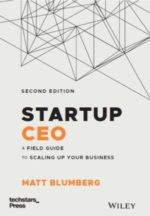
I started writing this blog in May of 2004 with an objective of writing about the experience of being a first-time entrepreneur — a startup CEO — inspired by a blog post written by my friend, long-time Board member and mentor Fred Wilson entitled “You’re only a first time CEO once.” The blog and the receptivity I got along the way from fellow startup CEOs encouraged me to write a book called Startup CEO: A Field Guide to Scaling Up Your Business, which was originally published in 2013 and then again as a second edition last year in 2020.
Today I am relaunching the blog as StartupCEO.com both to reflect that relevance of that brand as the book continues to get good traction in the startup ecosystem, and to reflect the fact that I’m now on my second startup as CEO, so “Only Once” doesn’t seem so fitting any more.
The web site has a very minimalist design – and I realize many of you read posts on either RSS or email — those will still operate the same as they have been (no new RSS feed).
As I approach the first anniversary of starting our new company, Bolster, where we help startup CEOs scale their teams, themselves, and their boards, I am recommitting to this blog and will try to post at least once a week. Because there is a lot of overlap between this blog and Bolster’s blog (which I’d encourage you to subscribe to here either by email or RSS), posts will occasionally show up on both blogs, or I’ll put digests of Bolster blog posts here.
But the Bolster blog will be broader and will also have many additional authors besides me, while this blog will remain distinct about some of the experiences I’m having as a startup CEO.
Advisory Boards
Advisory Boards
This is a topic that’s come up a fair amount lately here. Advisory Boards can be great sources of help for entrepreneurs. They can also be great things to participate in. Here are a handful of quick tips for both sides of the equation.
If you are building an advisory board:
– Figure out what kind of Advisory Board you want to build — is it one that functions as a group, or is it one that’s a collection of individual advisers, and a Board in name only?
– Clarify the mission, role, and expected time required from advisers on paper, both for yourself and for people you ask
– Be prepared to pay for people’s time somehow (see below)
– Figure out the types of people you want on your Advisory Board up front, as well as a couple candidates for each “slot.” For example, you may want one financial adviser, one industry adviser, one seasoned CEO to act as a mentor or coach, and one technical adviser
– Aim high. Ask the absolute best person you can get introduced to for each slot. People will be flattered to be asked. Many will say yes. The worst they will do is say no and refer you to others who might be similarly helpful (if you ask for it)
– Work your Advisory Board up to the expectation you set for them. Make sure you include them enough in company communications and documents so they are up to speed and can be helpful when you need them. Treat them as much like a Board of Directors as you can
If you are asked to serve on an advisory board:
– Make sure you are interested in the subject matter of the company, or
– That you have a good reason to want to spend time with the entrepreneur or the other Advisory Board members for other reasons, and
– Don’t be afraid to say no if these conditions aren’t met (it’s your time, no reason to be too altruistic)
– Clarify up front the time commitment
– Try to get some form of compensation for your effort, whether a modest option grant (size totally depends on the time commitment), or the ability to invest in the company
– Be sure to let your employer know. Ask for permission if the business you’re advising is at all related to your company, and get the permission in writing for your HR file
– Follow through on your commitment to the entrepreneur, and resign from the Advisory Board if you can’t
Those are some initial thoughts — any others out there?
Grow or Die
My cofounder Cathy wrote a great post on the Bolster blog back in January called Procrastinating Executive Development, in which she talks about the fact that even executives who appreciate the value of professional development usually don’t get to it because they’re too busy or don’t realize how important it is. I see this every day with CEOs and founders. Cathy had a well phrased but somewhat gentle ask at the end of her post:
My ask for all CEOs is this: give each of your executives the gift of feedback now, and hold each other accountable for continued growth and development to match the growth and development of your company.
Let me put it in starker terms:
Grow or Die.
Every executive, every professional, can scale further than they think is possible, and further than you think is possible. Most of us do have some ceiling somewhere…but it will take us years to find it (if we ever find it). The key to scaling is a growth mentality. You have to not just value development, you have to crave it, view it as essential, and prioritize it.
Startups are incredibly dynamic. You’re creating something out of nothing. Disrupting an industry. Revolutionizing something. Putting a dent in the universe. For a startup to succeed, it has to constantly put something in market, learn, calibrate, accelerate, maybe pivot, and most of all grow. How can a leader of a startup scale from one stage of life to the next without focusing on personal growth and development if the job changes from one quarter to the next?
I was lucky enough to have a great leadership team at my prior company, Return Path, over the course of 20 years. Within that long block of time with many executives, there was a particular period of time, roughly 2004-2012, that I jokingly refer to as the “golden age.” That’s when we grew the business from roughly $5mm in revenue to $50 or $60mm. The remarkable thing was that we executed that growth with the same group of 5-6 senior executives. A couple new people joined the team, and we struggled to get one executive role right, but by and large one core group took us from small to mid-sized. Why? We looked at each other — literally, in one meeting where we were talking about professional development — and said, “we have to commit to individual coaching, to team coaching, and to growth as leaders, or the company will outpace us and we’ll be roadkill.”
That set us on a path to focus on our own growth and development as leaders. We were constantly reading and sharing relevant articles, blog posts, and books. We engaged in a lot of coaching and development instruments like MBTI, TKI, and DISC. We learned the value of retrospectives, transparent 360s, and a steady diet of feedback. We challenged ourselves to do better. We worked at it. As one of the members of the Golden Age said of our work, “we went to the gym.”
The “Grow or Die” mantra is real. You can’t possibly be successful in today’s world if you’re not learning, if you don’t have a growth mentality. You are never the smartest person in the room. The minute you are convinced that you are…you’re screwed.
If you don’t believe me, look at the development of your business itself as a metaphor for your own development as a leader. What happens to your startup if it stops growing?
(You can find this post on the Bolster Blog here)
Taking Stock, Part II
Taking Stock, Part II
Last year, I wrote about the three questions I ask myself at the beginning of every year to make sure my career is still on track. [https://onlyonceblog.wpengine.com/2012/01/taking-stock] The questions are:
- Am I having fun at work?
- Am I learning and growing as a professional?
- Is my work financially rewarding enough, either in the short term or in the long term?
This year, I am adding a fourth suggestion following a great conversation I had a bunch of months back with Jerry Colonna, a great CEO coach, former VC, and all around great person. Question four is:
Am I having the impact I want to have on the world?
This last question was probably always implicit in my first two questions – but I like calling it out separately. All of us have purpose in our lives and impact on others, whether it’s family, friends, colleagues, clients, or some slice of broader humanity. Asking whether that impact is present and enough is just another check and balance on my own operating system to make sure that I’m still on track with my own goals and values.
Happy New Year!
Book Short – You’re in Charge – Now What?
Thanks to my friend and long-time former Board member Jeff Epstein, I recently downed a new book, You’re in Charge – Now What?, by Thomas Neff and James Citrin. I’m glad I read it. But it was one of those business books that probably should have just been a Harvard Business Review article. It’s best skimmed, with helpful short summaries at the end of every chapter that you could blow through quickly instead of hanging on every word.
The authors’ 8-step plan is laid out as:
- Prepare yourself during the countdown
- Align expectations
- Shape your management team
- Craft your strategic agenda
- Start transforming culture
- Manage your board/boss
- Communicate
- Avoid common pitfalls
Ok fine, those make sense on the surface. Here are three things that really stood out for me from the book:
First, “working” before you’re officially working – the countdown period. I tried hard NOT to do this when I was between things, but I’m glad I did the things I did, and now, I wish I had done more. The most poignant phrase in the book is “scarce time available during your first hundred days.” That is an understatement. As my “to read” pile grows and grows and grows with no end in sight…I wish I had done more pre-work.
Second, remember that in every interaction, you are being evaluated as much as you are evaluating. And note that for many people, they will be thinking very critically, things like “do I want to work with this person…is he/she showing signs that he/she wants to work with me?” Yes, we all know as leaders, we live in a fishbowl. But I think that may be even more true during the first couple months on the job.
Finally, this phrase stood out for me: “Acknowledging and in some cases embracing your predecessor can sustain a sense of continuity within the organization and instill a sense of connectivity with employees’ shared past.” There is frequently a temptation to focus on things that need change, which invariably there are…and which invariably you will hear from people who are happy to find a willing new ear to listen to them. But this posture of acknowledge/embrace is especially true in my case, where my predecessor is the founder and 25-year CEO who continues on as our active chairman.
I know there are a ton of books like this on the market, and while I’ve only read this one, I’d say that if you’re starting a new CEO or executive-level job, this is a good one to at least skim to get some ideas.
Bolster’s Founding Manifesto
(This post also appeared on Bolster.com and builds on last week’s post where I introduced my new startup, Bolster)
Welcome to Bolster, the on-demand executive talent marketplace. We are creating a platform that is the new way to scale an executive team and board.
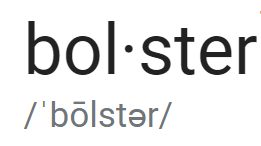
support, boost, strengthen, fortify, solidify, reinforce, augment, reinvigorate, enhance, improve, invigorate, energize, spur, expand, galvanize, underpin, deepen, complement
We believe that startups and scaleups are not average companies. Their rapid growth means their appetite for talent constantly outstrips their budget — and that they can’t spend months searching for it. Their dynamic industries dictate that they keep pace with bigger and better funded competitors. Their leadership teams — the people and the roles — are always changing. Their CEOs spend a ton of time hiring and coaching their leaders and shaping the complexion and direction of the team. They stress out about big expensive new executive hires when sometimes they just need to level-up an existing manager or “try before they buy.” Their Boards frequently jump in to help, but those efforts can be a little ad hoc and inefficient.
We believe that experienced executives working as consultants is the wave of the future. The number of career executives who work flexibly and on-demand for a living is skyrocketing in recent years. People are more often “between things” and are interested in plugging into shorter-term engagements while continuing to look for their next full-time role. People are retiring younger, yet wanting to keep contributing. And even fully-employed execs like to advise companies and serve on Boards. Whether these people are career consultants or are looking for a “side hustle” or just to pay something forward to a future generation of leaders, they all have two common problems: finding work is time consuming and they’re often not good at or don’t like doing it; and managing their back office, everything from insurance to legal to tax to marketing, is a drain on time that could otherwise be spent with clients or family.
We believe that a new kind of talent marketplace is needed to meet the unique and complex requirements of both audiences — the freelance, or flexible, seasoned executive, and the startup or scaleup CEO who thinks holistically about his or her leadership team and carefully tends them like a garden. We are building a platform to make instant, tailored, vetted matches between talent and companies without the randomness of a job board and without the theater, long lead times, and cost, of a full service agency
Service marketplaces like ours work best when they help their stakeholders solve other meaningful, related problems.In this case, we believe that the need for back office services will help executive consultants focus on more important things. And we believe that CEOs need lightweight and dynamic support in thinking through the composition and skills required of their executive teams both today and 6-18 months in the future.
That is the essence of the business we are building. A business to quickly match awesome companies with awesome freelance executives and to help both sides be better at what they do. We are here to make it easier for you to:
- Bolster your executive team. For our Clients, our pledge to you is that we will quickly and cost-effectively fill the gaps in your leadership ranks (whether interim, fractional, advisory, board, or project-based) with trusted, curated talent, and that we will give you a platform to evaluate your overall leadership team and help you think through your future needs as your company evolves. Think of us as a shortcut to scaling your leadership team.
- Bolster your board. The best boards are the ones with multiple independent directors who come from diverse backgrounds with diverse points of view. We also pledge to our Clients that we will find great matches to help fill out their boardrooms as their strategic advisory needs change over time.
- Bolster your work. For our Members, our pledge to you is that we will find you the right kind of interesting clients and help you manage your back office so you can focus on your work (and all the other important things in your life!).
- Bolster your portfolio. For our Portfolio Partners, VC and PE board members, our pledge to you is that we will make it easier for you and your firm to both drive successful on-demand executive placements for your portfolio company CEOs, and to manage and expand your firm’s network of flexible executive talent.
We are an experienced team of entrepreneurs and operators who have scaled multiple businesses throughout our careers. All of us worked together as part of the leadership team at Return Path, a leading email technology company that we scaled from 0 to $100mm in revenue and 500 employees in 12 locations around the world while winning numerous Employer of Choice awards. All of us have independent experience scaling other businesses, small and large, public and private. All of us have experience being on-demand executives as well — whether interim, fractional, advisory, project-based, or board roles, we know the landscape of both our members and our clients.
We’ve all dealt with the stress of having product-market fit and market opportunities but not being able to capitalize on those opportunities because we were missing key talent. And we’ve tried everything from executive search firms (expensive, time-consuming, and slow), to leveling up people (will they be able to grow into the role?), to leaning in to our board (hit or miss, inefficient). Heck, we’ve been desperate enough to follow up on the “my cousin’s boyfriend has an uncle, and he might know someone” lead.
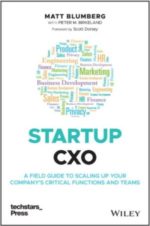
We believe there is a better way for startups and scaleups to find executive talent. Along the way, I published a book about scaling startups called Startup CEO: A Field Guide to Scaling Up Your Business that has sold over 40,000 copies to CEOs around the world. And our whole team is working on a new book called Startup CXO: A Field Guide to Scaling Up Your Teams, which is coming out in early 2021. Our team has a maniacal focus on helping startup teams scale and flourish and on helping leaders develop into the best version of themselves. That’s what we’re all about.
Plus, we have an amazing group of investors behind us who know how to grow businesses like ours and have incredible reach into the startup and scaleup world. More about that later. For now, we are excited to soft launch Bolster and begin unleashing the power of on-demand executive talent to our Clients. Thank you for being on this journey with us. If you’re interested in the somewhat unusual story of how the company was founded, it’s here.