

Right, That's MY Job
Right, That’s MY Job
I made a dumb comment at our recent Board meeting that got me thinking. We came into the meeting with, in addition to lots of the regular updating and reporting, one specific strategic topic we wanted guidance on from the Board about something that’s been nagging the management team for a while without an obvious solution.
We had a great conversation about the topic with the Board and got very clear guidance as to their perspective on what we should do. I agreed with most of it, albeit with a couple modifications, but more than anything else, I was happy for the note of clarity on an issue with which we’d been struggling as a management team.
So my comment in the meeting was "that’s pretty clear direction, we’ll go do that" (or something along those lines). Whereupon one of my Board members politely reminded me that actually it’s not the Board’s job to make things happen, only to give advice and counsel, and that I shouldn’t take their words as gospel and assume they’ll work. Right. Good point.
The Board is my boss (I am on the Board, but so are five other people), and while there are some items where the Board does have the final say, the overwhelming majority of my actions and the actions within the company are really up to us. We can seek guidance when we feel we need it, but that guidance doesn’t come with a guarantee that it will work operationally — nor does it give me the ability to absolve myself if things don’t work out in the end.
This is a point worth thinking about no matter what role you play in your organization. Most people, most of the time, have a lot of latitude in how they go about their job. Sometimes, the boss tells you what to do. But most of the time, you’re on your own, and while you can and should get advice from above when necessary, the most successful people in business are the ones that take the guidance and factor it into their own decision-making and initiative as opposed to blindly following.
Choose Voice, Part II
Choose Voice, Part II
One reader writes to me:
I am a vice president at a startup that isn’t in great shape. We have some customers and a product that is meeting some market needs, but we’re way off our plan and don’t show signs of changing our trajectory in a material way. I disagree with the direction our CEO is taking things, which is ok, but more important, our CEO refuses to listen to me when I try to discuss and debate strategy with her. One of our board members has asked me what I thought we should do. I don’t want to be disloyal to our CEO, and I want to seem like a team player who rallies behind the decision even if I don’t agree with it, but at the same time, I feel strongly that we’re going the wrong way and don’t want to be associated with a failed strategy or failed company. What do I do?
My response:
Honesty really and truly is the best policy. Always. It just depends how you go about expressing it.
I talked about this a little bit a few weeks back in my post on Exit, Voice, and Loyalty. Here are your options when you disagree with the system: quit your job in protest (exit), express your opinions (voice), or suck it up and follow (loyalty). I always say — choice voice.
If you and the CEO are at odds about the issues but she is being rational about it, you should try to encourage a broader, open debate with others. Maybe not the whole board, maybe not the whole senior management team, but a smaller group. Tell her that you are just concerned for the company’s future and feel like more rigorous conversation is required. Do it in such a way that it’s her idea to call the meeting and lay out the options. If the company is truly going sideways and she’s a rational being, she must be thinking about multiple options, even if she has an opinion about one of them.
Now, if the CEO isn’t being rational, you have a different challenge. If that’s the case, and if you think she’s wrong, and if the company is going sideways, I’d say the likelihood of you staying as a long-term employee of that company with that CEO is low anyway, so it’s worth taking a little more risk.
But I think you can do it in ways that mitigate your personal risk with the CEO. One thing you could do is go to one board member and express your concern confidentially, tell the board member that he should force the CEO to call the same kind of open forum I described above. Another thing you could do is to send an anonymous email to one or more board members expressing the same. Another is to see how like-minded other senior managers are — and if lots of people agree with you, gang up and either stage an intervention with the CEO, or go as a group to the board. And if the board just blindly backs the CEO without rigorous debate and laying out options, that should cause you to rethink where you work anyway.
UPDATED: one executive coach who reads my blog just wrote in his $0.02: The answer in my view is simple, which I should think you would prefer if it were your organization, you tell the CEO that you are going to the Board with your concerns and then if that does not trigger some more favorable process you do so, albeit, with the CEO’s knowledge.
Book Short: Culture is King
Book Short: Culture is King
Joy, Inc.: How We Built a Workplace People Love, by Richard Sheridan, CEO of Menlo Innovations, was a really good read. Like Remote which I reviewed a few weeks ago, Joy, Inc. is ostensibly a book about one thing — culture — but is also full of good general advice for CEOs and senior managers.
Also like Remote, the book was written by the founder and CEO of a relatively small firm that is predominately software engineers, so there are some limitations to its specific lessons unless you adapt them to your own environment. Unlike Remote, though, it’s neither preachy nor ranty, so it’s a more pleasant read. And I suppose fitting of its title, a more joyful read as well. (Interestingly on this comparison, Sheridan has a simple and elegant argument against working remotely in the middle of the book around innovation and collaboration.)
Some of the people-related practices at Sheridan’s company are fascinating and great to read about. In particular, the way the company interviews candidates for development roles is really interesting — more of an audition than an interview, with candidates actually writing code with a development partner, the way the company writes code. Different teams at Return Path interview in different ways, including me for both the exec team and the Board, but one thing I know is that when an interview includes something that is audition-like, the result is much stronger. There are half a dozen more rich examples in the book.
Some of the other quotable lines or concepts in the book include:
- the linkage between scalability with human sustainability (you can’t grow by brute force, you can only grow when people are rested and ready to bring their brain to work)
- “Showcasing your work is accountability in action” (for a million reasons, starting with pride and ending with pride)
- “Trust, accountability, and results — these get you to joy” (whether or not you are a Myers-Briggs J, people do get a bit of a rush out of a job well done)
- “…the fun and frivolity of our whimsically irreverent workplace…” (who doesn’t want to work for THAT company?)
- “When even your vendors want to align with your culture, you know you’re on the right path” (how you treat people is how you treat PEOPLE, not just clients, not just colleagues)
- “One of the key elements of a joyful culture is having team members who trust one another enough to argue” (if you and I agree on everything, one of us is not needed)
- “The reward is in the attempt” (do you encourage people to fail fast often enough?)
- “Good problems are good problems for the first five minutes. Then they just feel like regular problems until you solve them” (Amen, Brother Sheridan)
The benefits of a joyful culture (at Return Path, we call it a People-First culture) have long been clear to me. As Sheridan says, we try to “create a culture where people want to come to work every day.” Cultures like ours look soft and squishy from the outside, or to people who have grown up in tough, more traditional corporate environments. And to be fair, the challenge with a culture like ours is keeping the right balance of freedom and flexibility on one side and high performance and accountability on the other. But the reality is that most companies struggle with most of the same issues — the new hire that isn’t working out or the long-time employee who isn’t cutting it any more, the critical path project that doesn’t get done on time, the missed quarter or lost client. As Sheridan notes though, one key benefit of working at a joyful company is that problems get surfaced earlier when they are smaller…and they get solved collaboratively, which produces better results. Another key benefit, of course, is that if you’re going to have the same problems as everyone else, you might as well have fun while you’re dealing with them.
If you don’t love where you work and wish you did, read Joy, Inc. If you love where you work but see your company’s faults and want to improve them, read Joy, Inc. If you are not in either of the above camps, go find another job!
Why Executive Searches are So Slow, and What You Can Do About That as a Candidate
It’s been a big break between posts – as many of you probably know, I moved to Board Chair and left the CEO role at Bolster last summer (it’s now in the very capable hands of my friend and co-founder Cathy Hawley), and I’m now CEO of a super cool AI company called Acrolinx. So yes, that means I went through a job search – and I found my ultimate job as a result of an inbound cold email from a headhunter! The rich irony in that as someone who founded an executive search platform is not lost on me.
So when a good friend of mine who is also between CEO gigs and looking at several opportunities asked me the other day “why is this process so slow, and what can I do about it?” I riffed with him on the theme for a bit and thought I’d share my thinking here.
Why Executive Searches are Slow
My top three reasons on this are pretty varied – there’s no specific theme.
- Boards aren’t efficient hiring managers. When hiring a CEO, even the best intentioned boards can be slow to move. Frequently they operate with a search committee, and even if there’s a lead director on the search committee or even no actual search committee, by design they need to operate with a high degree of consensus. Organizing five calendars to meet with or debrief on a candidate can take weeks. And a single loud voice saying “no” or “not sure” can paralyze a board. All this is true for a CEO search but can also be true when a less experienced CEO is trying to hire a CXO and needs a lot of Board involvement in the process. At Bolster, we’ve worked on mitigating this by getting the key decision-makers aligned on search criteria at the beginning of the search, prepping interviewers, and creating a scorecard for each candidate that is visible to all decision-makers, but sometimes that doesn’t matter.
- Boards and CEOs often don’t know what they want. Whether a company is hiring a role for the first time or replacing an executive, they often get to a generic job spec but don’t actually know what they’re looking for. Not all CEOs are created equal. Not all CROs have the same core competencies. At Bolster, we developed a description of role archetypes for each C-suite or Head-or role that helps with this process (eg for a CFO, do you want an Accounting type, a Finance/Ops type, or a Deal type?). But even if a Board or hiring CEO has this level of detail down, it can still be a murky picture, trapped between the company’s past successes and failures on one side and its future needs on the other. Processes move slowly because it take a while for the picture to become less murky – circumstances around the company evolve, or people see how the company operates without this role as others pick up the slack, and therefore the needs of the role shift or come into focus. Sometimes meeting a series of candidates is the only thing that can help drive this focus, and per the first bullet above, this just takes time. If a company has a strong search partner, that may speed things up via quick presentation of calibration candidates.
- There’s no precipitating crisis. Most companies and departments, most of the time, are not in crisis. A lot of companies can operate without a given executive, even a CEO, for quite some time. Some things done (don’t) get done. Other people rise to the occasion and pick up the most important items. Or the company has hired an interim or fractional executive as a stop gap measure. Without a specific and clear sense of urgency, searches often don’t have a driving force. Sometimes there’s a precipitating crisis like a system outage or massive customer churn or the company running out of cash that can provide that driving force, but that is not the norm.
What Can You as a Candidate Do About It?
The answer is probably “not much.” But if my own search was any indicator, I’d give you the same advice I give people internally at my company when they ask me how to get a promotion. My answer is “start doing the job today, don’t wait to actually get the job.” Obviously a candidate for a CEO role or any other executive role can’t actually start doing the job as an existing employee could start taking on additional pieces of work. But there are a lot of things you can do to “act as it” and get the hiring Board or hiring CEO’s attention. For example:
- As a CEO candidate, be a management consultant. Work on designing a strategy for the company you want to work for. Do a tremendous amount of homework you can do from the outside – read analyst reports, get stealth demos, do market and customer interviews. You don’t have to explain what you’re up to in terms of identifying the company. You can say you’re interviewing for a CEO role in the sector. Or even that you’re doing market research. But proactively sending the hiring board a strategy deck and asking for the next meeting is a good way of differentiating yourself as a candidate and potentially accelerating a process.
- As a CRO candidate, go try to sell the company’s product. Do it to a couple “friendlies” (e.g, people who are friends of yours, not active customers or prospects of the company you’re interviewing with) so you don’t tread on the actual business. But create your own deck. Get meetings. Write up your experience. Sending the CEO or board an email that says “Hey, I have a prospect already in the final stage of the funnel for you, can we work together to close her?” is a sure way to differentiate yourself as a candidate and potentially accelerate a process.
There may be a macro answer here as well. The market is still choppy, and boards and CEOs are more conservative in most sectors and subsectors than they are in go-go times. So that may be slowing things down in general and may even make it harder to act as-if. But that doesn’t mean you can’t try.
Bolster’s Founding Manifesto
(This post also appeared on Bolster.com and builds on last week’s post where I introduced my new startup, Bolster)
Welcome to Bolster, the on-demand executive talent marketplace. We are creating a platform that is the new way to scale an executive team and board.
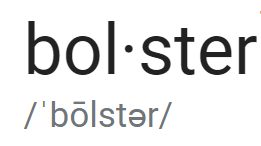
support, boost, strengthen, fortify, solidify, reinforce, augment, reinvigorate, enhance, improve, invigorate, energize, spur, expand, galvanize, underpin, deepen, complement
We believe that startups and scaleups are not average companies. Their rapid growth means their appetite for talent constantly outstrips their budget — and that they can’t spend months searching for it. Their dynamic industries dictate that they keep pace with bigger and better funded competitors. Their leadership teams — the people and the roles — are always changing. Their CEOs spend a ton of time hiring and coaching their leaders and shaping the complexion and direction of the team. They stress out about big expensive new executive hires when sometimes they just need to level-up an existing manager or “try before they buy.” Their Boards frequently jump in to help, but those efforts can be a little ad hoc and inefficient.
We believe that experienced executives working as consultants is the wave of the future. The number of career executives who work flexibly and on-demand for a living is skyrocketing in recent years. People are more often “between things” and are interested in plugging into shorter-term engagements while continuing to look for their next full-time role. People are retiring younger, yet wanting to keep contributing. And even fully-employed execs like to advise companies and serve on Boards. Whether these people are career consultants or are looking for a “side hustle” or just to pay something forward to a future generation of leaders, they all have two common problems: finding work is time consuming and they’re often not good at or don’t like doing it; and managing their back office, everything from insurance to legal to tax to marketing, is a drain on time that could otherwise be spent with clients or family.
We believe that a new kind of talent marketplace is needed to meet the unique and complex requirements of both audiences — the freelance, or flexible, seasoned executive, and the startup or scaleup CEO who thinks holistically about his or her leadership team and carefully tends them like a garden. We are building a platform to make instant, tailored, vetted matches between talent and companies without the randomness of a job board and without the theater, long lead times, and cost, of a full service agency
Service marketplaces like ours work best when they help their stakeholders solve other meaningful, related problems.In this case, we believe that the need for back office services will help executive consultants focus on more important things. And we believe that CEOs need lightweight and dynamic support in thinking through the composition and skills required of their executive teams both today and 6-18 months in the future.
That is the essence of the business we are building. A business to quickly match awesome companies with awesome freelance executives and to help both sides be better at what they do. We are here to make it easier for you to:
- Bolster your executive team. For our Clients, our pledge to you is that we will quickly and cost-effectively fill the gaps in your leadership ranks (whether interim, fractional, advisory, board, or project-based) with trusted, curated talent, and that we will give you a platform to evaluate your overall leadership team and help you think through your future needs as your company evolves. Think of us as a shortcut to scaling your leadership team.
- Bolster your board. The best boards are the ones with multiple independent directors who come from diverse backgrounds with diverse points of view. We also pledge to our Clients that we will find great matches to help fill out their boardrooms as their strategic advisory needs change over time.
- Bolster your work. For our Members, our pledge to you is that we will find you the right kind of interesting clients and help you manage your back office so you can focus on your work (and all the other important things in your life!).
- Bolster your portfolio. For our Portfolio Partners, VC and PE board members, our pledge to you is that we will make it easier for you and your firm to both drive successful on-demand executive placements for your portfolio company CEOs, and to manage and expand your firm’s network of flexible executive talent.
We are an experienced team of entrepreneurs and operators who have scaled multiple businesses throughout our careers. All of us worked together as part of the leadership team at Return Path, a leading email technology company that we scaled from 0 to $100mm in revenue and 500 employees in 12 locations around the world while winning numerous Employer of Choice awards. All of us have independent experience scaling other businesses, small and large, public and private. All of us have experience being on-demand executives as well — whether interim, fractional, advisory, project-based, or board roles, we know the landscape of both our members and our clients.
We’ve all dealt with the stress of having product-market fit and market opportunities but not being able to capitalize on those opportunities because we were missing key talent. And we’ve tried everything from executive search firms (expensive, time-consuming, and slow), to leveling up people (will they be able to grow into the role?), to leaning in to our board (hit or miss, inefficient). Heck, we’ve been desperate enough to follow up on the “my cousin’s boyfriend has an uncle, and he might know someone” lead.
We believe there is a better way for startups and scaleups to find executive talent. Along the way, I published a book about scaling startups called Startup CEO: A Field Guide to Scaling Up Your Business that has sold over 40,000 copies to CEOs around the world. And our whole team is working on a new book called Startup CXO: A Field Guide to Scaling Up Your Teams, which is coming out in early 2021. Our team has a maniacal focus on helping startup teams scale and flourish and on helping leaders develop into the best version of themselves. That’s what we’re all about.
Plus, we have an amazing group of investors behind us who know how to grow businesses like ours and have incredible reach into the startup and scaleup world. More about that later. For now, we are excited to soft launch Bolster and begin unleashing the power of on-demand executive talent to our Clients. Thank you for being on this journey with us. If you’re interested in the somewhat unusual story of how the company was founded, it’s here.
Style, or Substance?
Style, or Substance?
I had an interesting conversation the other day with a friend who sits on a couple of Boards, as do I (besides Return Path’s). We ended up in a conversation about some challenges one of his Boards is having with their CEO, and the question to some extent boiled down to this: a Board is responsible for hiring/firing the CEO and for being the guardians of shareholder value, but what does a Board do when it doesn’t like the CEO’s style?
There are lots of different kinds of CEOs and corporate cultures. Some are command-and-control, others are more open, flat, and transparent. I like to think I and Return Path are the latter, and of course my bias is that that kind of culture leads to a more successful company. But I’ve worked in environments that are the former, and, while less fun and more stressful, they can also produce very successful outcomes for shareholders and for employees as well.
So what do you do as a Board member if you don’t like the way a CEO operates, even if the company is doing well? I find myself very conflicted on the topic, and I’m glad I’ve never had to deal with it myself as an outside Board member. I certainly wouldn’t want to work in an organization again that had what I consider to be a negative, pace-setting environment, but is it the Board’s role to shape the culture of a company? Here are some specific questions, which probably fall on a spectrum:
Is it grounds for removal if you think the company could be doing better with a different style leader at the helm? Probably not.
Is it fair to expect a leader to change his or her style just because the Board doesn’t like it? Less certain, but also probably not.
Is it fair to give a warning or threaten removal if the CEO’s style begins to impact performance, say, by driving out key employees or stifling innovation? Probably.
Is it fair to give feedback and coaching? Absolutely.
This is one of those very situation-specific topics, but probably a good one for others to weigh in on. I do come back to the question of whether it is part of a Board’s role to shape the culture of a company. Is that just style…or is it substance?
The Good, The Board, and The Ugly, Part III
The Good, The Board, and The Ugly, Part III
To recap other postings in this series: my original, Brad Feld’s, Fred Wilson’s first, Fred’s second, Tom Evslin’s, and my lighter-note follow-up.
So speaking of lighter-note takes on this topic, Lary Lazard, Tom Evslin’s fictional CEO who ran Hackoff.com, now has his own tips for effective board management. You have to read them yourself here, but I think my favorite one is #3, which starts off:
Never number the pages of what you are presenting. Lots of time can be used constructively figuring out what page everybody is on.
Enjoy.
What a View, Part II
What a View, Part II
In Part I, I talked about how Return Path’s 360 reviews have become a central part of our company’s human capital strategy over the past five years. While most staff members’ reviews have been done for weeks or months now, I just finished up the final portion of my own review, which I think is worth sharing.
I always include my Board in my own 360. My process is as follows:
1. I send the Board all the raw (and summarized) data from the staff reviews of me, both quantitative and qualitative.
2. I send the Board a list of questions to think about in terms of their view of my performance (see below).
3. I have a third party moderator, in my case a great OD consultant/executive coach that I work with, Marc Maltz from Triad Consulting, meet with the Board (without me present) for 1-2 hours to moderate a discussion of these questions.
4. The moderator summarizes the conversation and helps me marry the feedback from the Board with the feedback from my team.
The questions I ask them to consider are different from the question my staff answers about me, because the relationship and perspective are different. For each question, I also summarize what their collective response was the prior year to refresh their memory.
1. Staff management/leadership: How effective am I at building and maintaining a strong, focused, cohesive team? Do I have the right people in the right roles at the senior staff level?
2. Resource allocation: Do I do a good enough job balancing among competing priorities internally? Are costs adequately managed?
3. Strategy: Did you feel like last year’s strategy session was thorough enough? Do you think we’re on target with what we’re doing? Am I doing a good enough job managing to it while being nimble enough to respond to the market?
4. Execution: How do I and the team execute vs. plan? What do you think I could be doing to make sure the organization executes better?
5. Board management/investor relations: Do you think our board is effective and engaged? Have I played enough of a role in leading the group? Do you as a director feel like you’re contributing all you can contribute? Do I strike the right balance between asking and telling? Are communications clear enough and regular enough?
6. Please comment on how I have handled some of the major issues in the past 12 months (with a listing of critical incidents).
The feedback I got is incredibly valuable, and once I marry it with the feedback I got from my staff, I will have my own killer development plan for the next 12-24 months.
State of Colorado COVID-19 Innovation Response Team, Part IV – Replacing Myself, Days 7-9
(This is the fourth post in a series documenting the work I did in Colorado on the Governor’s COVID-19 Innovation Response Team – IRT. Other posts in order are 1, 2, and 3.)
Monday, March 23, Day 7
- Wellness screening – put hot cup of coffee against my temples – now finally the thermometer works (although I can’t say that it gives me a high degree of comfort that I have figured out a workaround!)
- Furious execution and still backlog is growing no matter how much I do – thank goodness team is growing. Never seen this before – work coming in faster than I can process it, and I am a fast processer. Inbox clean when I go to bed, up to 75 when I wake up, never slows down
- Private sector explosion – this guy can print 3D swabs – but are they compliant? This guy has an idea for cleansing PPE, this guy can do 3D printing of Ventilator replacement parts, etc. How to corral?
- Corporate Volunteer form is up – 225 entries in the first 12 hours – WOW
- Congressmen and Senators – people contact them, so they want to help, they want to make news, not coordinated enough with state efforts
- Jay Want – early diagnosis losing sense of smell – low tech way to New Normal
- Coordination continues to be key – multiple cabinet level agencies doing their own thing while multiple private sector groups are doing their own thing (e.g. App – “everyone thinks they’re the only people who have this idea”)
- Mayor of Denver just announced lockdown, I guess that trumps the state solution in town, maybe it’s ok since that just leaves rural areas a bit fuzzier
- Need to revise OS – team is about to go from 3 to 9, private sector spinning up
- Brad OS and State employee OS are different – Slack/Trello/Zoom are not tools state employees are familiar with or can even access. Now what?
- Kacey insists the team works remotely other than leaders and critical meetings so we can role model social distancing. GOOD CALL
- One of our private sector guys goes rogue on PR, total bummer – this part (comms) about what we are doing could be more coordinated for sure, but not a priority
- Lots of texts/call with Jared, such a smart and thoughtful guy, really interesting
Tuesday, March 24, Day 8
- Been a week, feels like a month
- Fluid changes to both OS for team and OS for private sector group
- Zoom licenses – state will take a couple weeks to procure them, gotta work around it with Brad
- Slack app won’t get through the firewall. Maybe IT’s supervisor can do us a favor?
- Comp – interesting expedited process – normally takes 65 days to get approval for temps, today we got it done in an hour! Comp levels seem incredibly low. But we got done what we needed to get done
- Some minor territorial conflicts with state tech team and our private sector tech team. Will have to resolve. Surprising how few of these there have been so far given that our team is new and shiny and breaking rules
- Big new Team meeting for first time with Sarah in lead, Red/Yellow/Green check-in (I like that – may have to borrow it!)
- Starting to feel obsolete – love that! Sarah crushing it, totally feels like the right leader, need to make sure she has enough support (might need an admin?)
- Also…maybe I’m not feeling well? A little worried I am getting sick. Hope that’s not true, or if it is, hope it’s not the BAD kind of sick. Going to go work from hotel rest of afternoon
- Call with Jared – concern about managing state’s psychology – testing and isolation services
- Prep for press conference tomorrow
Wednesday, March 25, Day 9
- Woke up feeling awesome – phew – hopefully that was just fatigue or stress induced
- Sarah drowning a bit, feels like me on my 3rd day so makes sense
- Reigning in and organizing private sector seems like a full time job. We are going to recruit my friend Michelle (ex-RP) to come work with Brad on volunteer management. HALLELUJAH!
- Whiteboard meeting with Kacey holding up her laptop so they can see it on Zoom – hilarious – technology not really working, but we are making the best of it
- State role – facilitate alt supply chain to hospitals since normal chain is broken…also maintain emergency state cache – complex but makes more sense now
- More territorial things starting to pop up with state government…processing volunteers
- Comms overload – here comes the text to alert you to the email to alert you to the phone call
- This team/project is clearly a case of finite resources meets infinite scope and infinite volunteer hand-raising
- Gov press conference – issues Stay at Home order through April 11 (interesting, that wasn’t in the version of the talking points I saw several hours before)
- Meeting some of our new team members. I can’t even keep up with them, I think we’re up to 15+ now. Kacey and Kyle are recruiting machines and all these people’s managers are just loaning to us immediately. Love that.
- Amazingly talented and dedicated state employees – seem young, probably not paid well, but superior to private sector comprables in some ways
- Talk with Kacey and Sarah about staff/not drowning
- Kacey feels like Sarah is doing a great job, so she cleared me to go home (wouldn’t have gone without her saying ok, she understands how this whole thing is working way better than I do – I guess that’s what a good chief of staff does!)
Stay tuned for more tomorrow…
Stamina
Stamina
A couple years ago I had breakfast with Nick Mehta, my friend who runs the incredibly exciting Gainsight. I think at the time I had been running Return Path for 15 years, and he was probably 5 years into his journey. He said he wanted to run his company forever, and he asked me how I had developed the stamina to keep running Return Path as long as I had. My off the cuff answer had three points, although writing them down afterwards yielded a couple more. For entrepreneurs who love what they do, love running and building companies for the long haul, this is an important topic. CEOs have to change their thinking as their businesses scale, or they will self implode! What are five things you need to get comfortable with as your business scales in order to be in it for the long haul?
Get more comfortable with not every employee being a rock star. When you have 5, 10, or even 100 employees, you need everyone to be firing on all cylinders at all times. More than that, you want to hire “rock stars,” people you can see growing rapidly with their jobs. As organizations get larger, though, not only is it impossible to staff them that way, it’s not desirable either. One of the most influential books I’ve read on hiring over the years, Topgrading (review, buy), talks about only hiring A players, but hiring three kinds of A players: people who are excellent at the job you’re hiring them for and may never grow into a new role; people who are excellent at the job you’re hiring them for and who are likely promotable over time; and people who are excellent at the job you’re hiring them for and are executive material. Startup CEOs tend to focus on the third kind of hire for everyone. Scaling CEOs recognize that you need a balance of all three once you stop growing 100% year over year, or even 50%.
Get more comfortable with people quitting. This has been a tough one for me over the years, although I developed it out of necessity first (there’s only so much you can take personally!), with a philosophy to follow. I used to take every single employee departure personally. You are leaving MY company? What’s wrong with you? What’s wrong with me or the company? Can I make a diving catch to save you from leaving? The reality here about why people leave companies may be 10% about how competitive the war for talent has gotten in technology. But it’s also 40% from each of two other factors. First, it’s 40% that, as your organization grows and scales, it may not be the right environment for any given employee any more. Our first employee resigned because we had “gotten too big” when we had about 25 employees. That happens a bit more these days! But different people find a sweet spot in different sizes of company. Second, it’s 40% that sometimes the right next step for someone to take in their career isn’t on offer at your company. You may not have the right job for the person’s career trajectory if it’s already filled, with the incumbent unlikely to leave. You may not have the right job for the person’s career trajectory at all if it’s highly specialized. Or for employees earlier in their careers, it may just be valuable for them to work at another company so they can see the differences between two different types of workplace.
Get more comfortable with a whole bunch of entry level, younger employees who may be great people but won’t necessarily be your friends. I started Return Path in my late 20s, and I was right at our average age. It felt like everyone in the company was a peer in that sense, and that I could be friends with all of them. Now I’m in my (still) mid-40s and am well beyond our average age, despite my high level of energy and of course my youthful appearance. There was a time several years ago where I’d say things to myself or to someone on my team like “how come no one wants to hang out with me after work any more,” or “wow do I feel out of place at this happy hour – it’s really loud here.” That’s all ok and normal. Participate in office social events whenever you want to and as much as you can, but don’t expect to be the last man or woman standing at the end of the evening, and don’t expect that everyone in the room will want to have a drink with you. No matter how approachable and informal you are, you’re still the CEO, and that office and title are bound to intimidate some people.
Get more comfortable with shifts in culture and differentiate them in your mind from shifts in values. I wrote a lot about this a couple years ago in The Difference Between Culture and Values . To paraphrase from that post, an organization’s values shouldn’t change over time, but its culture – the expression of those values – necessarily changes with the passage of time and the growth of the company. The most clear example I can come up with is about the value of transparency and the use case of firing someone. When you have 10 employees, you can probably just explain to everyone why you fired Joe. When you have 100 employees, it’s not a great idea to tell everyone why you fired Joe, although you might be ok if everyone finds out. When you have 1,000 employees, telling everyone why you fired Joe invites a lawsuit from Joe and an expensive settlement on your part, although it’s probably ok and important if Joe’s team or key stakeholders comes to understand what happened. Does that evolution mean you aren’t being true to your value of transparency? No. It just means that WHERE and HOW you are transparent needs to evolve as the company evolves.
- Get more comfortable with process. This doesn’t mean you have to turn your nimble startup into a bureaucracy. But a certain amount of process (more over time as the company scales) is a critical enabler of larger groups of people not only getting things done but getting the right things done, and it’s a critical enabler of the company’s financial health. At some point, you and your CFO can’t go into a room for a day and do the annual budget by yourselves any more. But you also can’t let each executive set a budget and just add them together. At some point, you can’t approve every hire yourself. But you also can’t let people hire whoever they want, and you can’t let some other single person approve all new hires either, since no one really has the cross-company view that you and maybe a couple of other senior executives has. At some point, the expense policy of “use your best judgment and spend the company’s money as if it was your own” has to fit inside department T&E budgets, or it’s possible that everyone’s individual best judgments won’t be globally optimal and will cause you to miss your numbers. Allow process to develop organically. Be appropriately skeptical of things that smell like bureaucracy and challenge them, but don’t disallow them categorically. Hire people who understand more sophisticated business process, but don’t let them run amok and make sure they are thoughtful about how and where they introduce process to the organization.
I bet there are 50 things that should be on this list, not 5. Any others out there to share?
Startup CEO (OnlyOnce- the book!), Part II – Crowdsourcing the Outline
Startup CEO (OnlyOnce- the book!), Part II – Crowdsourcing the Outline
As I mentioned a few weeks ago here, I’m excited to be writing a book called Startup CEO: A Field Guide to Building and Running Your Company, to be published by Wiley & Sons next summer. Since many readers of OnlyOnce are my target audience for the book, I thought I’d post my current outline and ask for input and feedback on it. So here it is, still a bit of a work in progress. Please comment away and let me know what you think, what’s missing, what’s not interesting!
1 Part One: Vision and Strategy (Defining the Company)
1.1 Setting the Company’s Agenda
1.2 NIHITO! (or, “Nothing Interesting Happens in the Office”)
1.3 Setting the Business Direction
1.4 Strategic Planning, Part I: Turning Concepts Into Strategy
1.5 Strategic Planning, Part II: Creating the Plan
1.6 Defining Mission, Vision and Values
1.7 Communicating Vision and Strategy
1.8 The Role of M&A
1.9 The Art of the Pivot
1.10 How Vision and Strategy Change over Time
2 Part Two: Talent (Building the Company’s Human Capital)
2.1 Building a Team
2.2 Scaling the Team
2.3 Culture
2.4 Interviewing
2.5 Recruiting
2.6 Onboarding
2.7 Setting Goals
2.8 Feedback
2.9 Development
2.10 Compensation
2.11 Promoting
2.12 Rewarding
2.13 Managing Remote Offices and Employees
2.14 Firing: When It’s Not Working
2.15 How Talent Changes over Time3 Part Three: Execution (Aligning Resources with Strategy)
3.1 Making Sure There’s Enough Money in the Bank
3.2 Types of Financing
3.3 Fundraising Basics
3.4 Negotiating Deals
3.5 Pros and Cons of Outside Financing
3.6 Forecasting and Budgeting
3.7 Creating a Company Operating System
3.8 Meeting Routines
3.9 Driving Alignment
3.10 A Metrics-Driven Approach to Running a Business
3.11 Learning
3.12 Post-Mortems
3.13 Thinking About Exits
3.14 How Execution Changes over Time
3.14.1 Finance
3.14.2 Execution4 Part Four: Management And Leadership (The How of Being a CEO)
4.1 Leading an Executive Team
4.2 Critical Personal Traits
4.3 Being Collaborative
4.4 Being Decisive: Balancing Authority and Consensus
4.5 The Value of Symbolism
4.6 Getting the Most out of People
4.7 Diving Deep without Being Disruptive
4.8 Articulating Purpose
4.9 Collecting Data from the Organization
4.10 Managing in an Economic Downturn
4.11 Managing in Good Times vs. Bad Times
4.12 Communication
4.12.1 Macro (to Your Company and Customers)
4.12.2 Micro (One-on-One)
4.13 How Management and Leadership Change over Time5 Part Five: Boards (A Unique Aspect of the CEO’s Job)
5.1 Building Your Board
5.2 Meeting Materials
5.3 Meetings
5.4 Between Meetings
5.5 Making Decisions and Maximizing Effectiveness
5.6 The Social Aspects of Running a Board
5.7 Working with the Board on Compensation
5.8 Evaluating the Board
5.9 Serving on Other Boards
5.10 How Boards Change over Time6 Part Six: Managing Yourself So You Can Manage Others
6.1 Creating a Personal Operating System
6.2 Working with an Executive Assistant
6.3 Working with a Coach
6.4 Finding Your Voice
6.5 The Importance of Peer Groups
6.6 Your Family
6.7 Taking Stock
6.8 Staying Fresh
6.9 Staying Healthy
6.10 Traveling