Book Short: The Joys of Slinging Hash
Book Short: The Joys of Slinging Hash
Patrick Lencioni’s The Three Signs of a Miserable Job is a good read, as were his last two books, The Five Temptations of a CEO (post, link), and The Four Obsessions of an Extraordinary Executive (post, link). They’re all super short, easy reads (four express train rides on Metro North got the job done), with a single simple message and great examples. This one is probably my second favorite so far.
This book, which has a downright dreary title, is great. It points to and proposes a solution to a problem I’ve thought about for a long time, which is how do you create meaning for people in their day to day work when they’re not doing something intrinsically meaningful like curing a disease or feeding the homeless. His recipe for success is simple:
– Get people to articulate the relevance in their jobs…the meaning they derive out of their work…an understanding of the people whose lives are made better, even in small ways, by what they do every day
– Get people to measure what they do (duh, management 101), IN RELATION TO THE RELEVANCE learnings from the last point (ahh, that’s an interesting twist)
– Get to know your people as people
All of these are things you’d generally read in good books on management, but this book ties them together artfully, simply, and in a good story about a roadside pizza restaurant. It also stands in stark contrast to the book I reviewed and panned a few days ago by Jerry Porras in that it is nothing but examples from non-celebrities, non-success stories — ordinary people doing ordinary jobs.
Brad has blogged glowingly about Death by Meeting, so I’ll probably make that my next Lencioni read next month, with two more to go after that.
Book Short: There is No Blueprint to $1B
Book Short: There is No Blueprint to $1B
Blueprint to a Billion: 7 Essentials to Achieve Exponential Growth, by David Thomson (book, Kindle) sounds more formulaic than it is. It’s not a bad book, but you have to dig a little bit for the non-obvious nuggets (yes, I get that growing your company to $1B in sales requires having a great value proposition in a high growth market!). The author looked for commonalities among the 387 American companies that have gone public since 1980 with less than $1B in revenues when they went public and had more than $1B in revenue (and were still in existence) at the time of the book’s writing in 2005.
Thompson classifies the blueprint into “7 Essentials,” which blueprint companies do well on across the board. The 7 Essentials are:
– Create and sustain a breakthrough value proposition
– Exploit a high growth market segment
– Marquee/lighthouse customers shape the revenue powerhouse
– Leverage big brother alliances for breaking into new markets
– Become the masters of exponential returns
– The management team: inside-outside leadership
– The Board: comprised of essentials experts
As I said above, there were some nuggets within this framework that made the entire read worthwhile. For example, crafting a Board that isn’t just management and investors but also includes industry experts like customers or alliance partners is critical. That matches our experience at Return Path over the years (not that we’re exactly closing in on $1B in revenues – yet) with having outside industry CEOs sit on our Board. Our Board has always been an extension of our management and strategy team, but we have specifically gotten some of our most valuable contributions and thought-provoking dialog from the non-management and non-investor directors.
Another critical item that I thought was interesting was this concept of not just marquee customers (yes, everyone wants big brand names as clients), but that they also need to be lighthouse customers. They need to help you attract other large customers to your solution – either actively by helping you evangelize your business, or at least passively by lending their name and case study to your cause.
The book is more of a retrospective analysis than a playbook, and some of its examples are a bit dated (marveling at Yahoo’s success seems a bit awkward today), and the author notes as well that many of the “blueprint” companies faltered after hitting the $1B mark. But it was a good read all-in. What I’d like to see next is a more microscopic view of the Milestones to $100 Million!
Book Short: Sequel Not Worth It
Book Short: Sequel Not Worth It
Mastering the 7 Essentials of High Growth Companies, by David Thomson, was a poor sequel to the solid Blueprint to a Billion [review] [buy]– and not worth reading if you’ve read the original. It was very short for its price and contained mildly interesting examples of “blueprint companies” that augmented the original book but didn’t uncover any new material or add any thinking to the mix. Basically, it was like another couple chapters that should have been part of Blueprint.
It is not a bad buy in lieu of the original if you haven’t read either one yet, as Blueprint is a bit longer than necessary, but otherwise, you can skip this one.
On a side note – the author’s interactive scorecard is a decent diagnostic tool (though also, I am sure, a lead gen tool for his consulting business).
Book Not-So-Short: Not Just for Women
Book Not-So-Short: Not Just for Women
At the request of the women in our Professional Services team, I recently read Sheryl Sandberg’s Lean In: Women, Work, and the Will to Lead, and while it may seem like dancing the meringue in a minefield for a male CEO to blog about it, I think it’s an important enough topic to give it a shot. So here goes.
First, given the minefield potential, let me issue a few caveats up front. These are deep, ages old, complex, societal issues and behaviors we’re talking about here. There is no quick answer to anything. There is no universal answer to anything. Men don’t have the same perspective as women and can come across as observers (which in some respects, they are). Working moms don’t have the same perspective as stay-at-home moms, or as single women. We try to be good about all these issues at Return Path, but I’m sure we’ve only scratched the surface. </caveats>
Perhaps most important, my overall take on the book is that it’s a very good business book that everyone should read – not just women. I have a strong reaction to the reactions I’ve read and heard about the book – mostly from women dismissing the book because Sandberg has immense financial resources, so how could she possibly know the plight of the ordinary mom, and how could she understand what it is like to be a stay-at-home mom? That reaction is to dismiss the dismissals! I found the book to be very broadly applicable. Of course things about life with a two-working parent family are easier if you have more money. But that’s completely not the point of the book. And Sandberg doesn’t once criticize stay-at-home moms for that choice – in fact, she acknowledges feelings of guilt and inferiority around them and admiration for the work they do that benefits all families and kids, not just their own.
Here are a few of the biggest areas of thinking, AHA, or questioning, that the book gave me:
- One of Sandberg’s underlying points is that the world would be a better place with more women in leadership positions, so that’s an important goal. It’s interesting that few enough of our leaders are women, that it’s hard for me to draw that same conclusion, but it makes sense to me on the surface, and there’s some research about management teams and boards to back it up. As far as I can tell, the world has yet to see a brutal female dictator. Or a fair share of political or corporate scandals caused by women. There are definitely some horror stories of “tough boss” women, but probably no more than “tough boss” men. It’s interesting to note that in our society, leadership roles seem to be prized for their power and monetary reward, so even if the world wouldn’t be a better place with more female leaders, it would certainly be a more fair place along those two dimensions
- I felt that a bunch of Sandberg’s points about women were more generalizations about certain personality types which can be inherent in men and women. Maybe they’re more prevalent in women, even much more, but some are issues for some men as well. For example, her general point about women not speaking up even if they have something to say. I have seen this trait in women as well as more introverted men. As a leader, I work hard to draw comments out of people who look like they have something to say in a meeting but aren’t speaking up. This is something that leaders need to pay close attention to across the board so that they hear all the voices around their tables. Same goes for some of the fears she enumerates. Many male leaders I know, myself included at times, have the “fear of being found out as a fraud” thought. Same goes for the “desire to be liked by everyone” holding people back – that’s not gender specific, either. All that said, if these traits are much more prevalent in women, and they are traits that drive attainment of leadership roles, well, you get the point
- The fact that women earn 77 cents on the dollar in equivalent jobs for men is appalling. I’ve asked our People Team to do a study of this by level, factoring in experience and tenure, to make sure we don’t have that bias at Return Path. I know for sure we don’t at the leadership level. And I sure as heck hope we don’t anywhere in the organization. We are also about to launch an Unconscious Bias training program, which should be interesting
- Sandberg made a really interesting point that most of the women who don’t work are either on the low end or high end of the income spectrum. Her point about the low end really resonated with me – that women who don’t earn a lot stop working if their salaries only barely cover childcare costs. However, she argues that that’s a very short term view, and that staying in the workforce means your salary will escalate over time, while childcare costs stay relatively flat. This is compounded by the fact that women who lean back early in their careers simply because they are anticipating someday having children are earning less than they should be earning when they do finally have children.
- The other end of the income spectrum also made sense once I parsed through it – why do women whose husbands make a lot of money (most of whom make a lot of money as well) decide to off-ramp? Sandberg’s point about the “Leadership ambition gap” is interesting, and her example of running a marathon with the spectators screaming “you know you don’t have to do this” as opposed to “you’ve got this” is really vivid. See two bullets down for more on this one. But it might not be straight-up Leadership Ambition Gap so much as a recognition that some of the high-earning jobs out there are so demanding that having two of them in the household would be a nightmare (noting that Dave and Sheryl seem to have figured some of that out), or that moms don’t want to miss out on that much of their children’s lives. They want to be there…and they can afford to. Another related topic that I wish Sandberg had covered in more depth is the path of moms who off-ramp, then re-on-ramp once their youngest children are in school, whether into the career they left or a different one. That would be an interesting topic on many fronts
- Societal influences must matter. The facts that, in 2011 – Gymboree manufactured onesies that say “smart like Daddy” and “pretty like Mommy,” and that JC Penney teenage girl t-shirts say “I’m too pretty to do homework so my brother has to do it for me” are more than a little troublesome on the surface (unless Gymboree also produces “handsome like Daddy” and “wicked smart like Mommy,” which somehow I doubt). The fact that women do worse on math and science tests when they have to identify their gender at the top of the test is surprising and shocking
- I am really fortunate that Mariquita only works part time, and it’s unclear to me how our lives would work if we both worked full time, especially given my extremely heavy travel schedule, though I am sure we’d figure it out. And there’s no way that I carry 50% of the burden of household responsibilities. Maybe 20-25% at best. But I was struck by Sandberg’s comments (I am sure true) that in two-working-parent families, women still carry the preponderance of household responsibilities on their shoulders. I totally don’t get this. If you both work, how can you not be equal partners at home? A quick mental survey of a couple of the two-working-parent families we know would indicate that the parents split household responsibilities somewhat evenly, though you can never know this from the outside. This should be a no brainer. Sandberg’s point that men need to “lean into their families” is spot on in these cases for sure
- On a related note, Sandberg’s comment that “as women must be more empowered at work, men must be more empowered at home…moms can be controlling and critical…if he’s forced to do things her way, pretty soon she’ll be doing them herself” made me smile. I have definitely seen this “learned helplessness” on the home front with dads quite a bit over the years
- One really good point Sandberg makes is that younger employees who don’t have kids should be allowed to have a life outside of work just as much as women who do have kids. And that she pays people for the quality and quantity of their output, not their hours. These are principles that match our values and philosophy at Return Path 100%
- Probably the most startling moment in the book for me – and I suspect many other men – was Sandberg’s vignette about the young woman at Facebook who was starting to “lean back” because she might someday have a family – before she was even dating anyone! This really gave me a lot of pause. If widespread (and I assume it is), there are clearly societal forces at work that we need to do more to help women early in their careers overcome, if they want to overcome them
- Sandberg’s point that a rich and fulfilling career “is a Jungle Gym, not a Ladder” is spot on, but this is true for men as well as women. It matches our philosophy of Scaling Horizontally perfectly
- Another very poignant moment in the book was when Sandberg talked about how she herself had shown bias against women in terms of who she called on in meetings or lectures during Q&A. Again, lots of pause for me. If female leaders have the same societal bias against women, that’s a sign that we all have real work in front of us to help level the playing field around giving women air time. Similarly, her example of the Heidi/Howard study was fascinating around how women with the same characteristics are perceived differently by both male and female co-workers gives me pause (for the record, I know the Heidi in question, and I like her!). Likewise, the fact that female leaders are often given unflattering nicknames like “The Iron Lady” – you’d never see something like that for a man in the same position. At least Thatcher wore the name as a badge of honor
I hope this post doesn’t end up as a no-win piece of writing where all I do is touch a few nerves and inspire no ongoing dialog. “Let’s start talking about it,” the ending theme of the book, is a great way to end this post as well. As with all tough issues, articulating the problem is the first step toward solving it. Women need to allow men (as long as the men are open-minded, of course!) to think what they think, say what they think in a safe space, and blunder through their own learnings without feeling threatened. And men need to be comfortable having conversations about topics like these if the paradigmatic relationship between women and leadership is going to continue to shift instead of avoiding the topic or just calling in HR.
Hopefully this blog post is one step towards that at my company. Return Path colleagues – feel free to comment on the blog or via email and share stories of how we’ve either helped you or held you back! But overall, I’m glad I read this book, and I’d encourage anyone and everyone to read it.
The Gift of Feedback, Part IV
The Gift of Feedback, Part IV
I wrote a few weeks ago about my live 360 – the first time I’ve ever been in the room for my own review discussion. I now have a development plan drafted coming out of the session, and having cycled it through the contributors to the review, I’m ready to go with it. As I did in 2008, 2009, and 2011, I’m posting it here publicly. This time around, there are three development items:
- Continue to spend enough time in-market. In particular, look for opportunities to spend more time with direct clients. There was a lot of discussion about this at my review. One director suggested I should spend at least 20% of my time in-market, thinking I was spending less than that. We track my time to the minute each quarter, and I spend roughly 1/3 of my time in-market. The problem is the definition of in-market. We have a lot of large partners (ESPs, ISPs, etc.) with whom I spend a lot of time at senior levels. Where I spend very little time is with direct clients, either as prospects or as existing clients. Even though, given our ASP, there isn’t as much leverage in any individual client relationship, I will work harder to engage with both our sales team and a couple of larger accounts to more deeply understand our individual client experience.
- Strengthen the Executive Committee as a team as well as using the EC as the primary platform for driving accountability throughout the organization. On the surface, this sounds like “duh,” isn’t that the CEO’s job in the first place? But there are some important tactical items underneath this, especially given that we’ve changed over half of our executive team in the last 12 months. I need to keep my foot on the accelerator in a few specific ways: using our new goals and metrics process and our system of record (7Geese) rigorously with each team member every week or two; being more authoritative about the goals that end up in the system in the first place to make sure my top priorities for the organization are being met; finishing our new team development plan, which will have an emphasis on organizational accountability; and finding the next opportiunity for our EC to go through a management training program as a team.
- Help stakeholders connect with the inherent complexity of the business. This is an interesting one. It started out as “make the business less complex,” until I realized that much of the competitive advantage and inherent value from our business comes fom the fact that we’ve built a series of overlapping, complex, data machines that drive unique insights for clients. So reducing complexity may not make sense. But helping everyone in and around the business connect with, and understand the complexity, is key. To execute this item, there are specifics for each major stakeholder. For the Board, I am going to experiment with a radically simpler format of our Board Book. For Investors, Customers, and Partners, we are hard at work revising our corporate positioning and messaging. Internally, there are few things to work on — speaking at more team/department meetings, looking for other opportunities to streamline the organization, and contemplating a single theme or priority for 2015 instead of our usual 3-5 major priorities.
Again, I want to thank everyone who participated in my 360 this year – my board, my team, a few “lucky” skip-levels, and my coach Marc Maltz. The feedback was rich, the experience of observing the conversation was very powerful, and I hope you like where the development plan came out!
Book Short: Tales of Two Cities
Book Short: Tales of Two Cities
Return Path is basically dual-headquartered in New York City and Broomfield, Colorado, so two recently published books which provide history and insights into the tech industry in those two cities were both of interest to me.
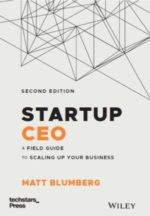
Startup Communities: Building an Entrepreneurial Ecosystem in Your City, by Brad Feld (book, kindle) came out a few months ago and is part of Brad’s Startup Revolution series which will also include my upcoming book Startup CEO, to be published this fall. In the book, Brad uses the example of the Boulder/Denver area and a few different sectors to demonstrate a blueprint to creating an entrepreneurial ecosystem – the kind that are popping up all over the world of late.
Tech and the City: The Making of New York’s Startup Community, by Alessandro Piol (kindle only) hits on many of the same themes and topics as they relate to New York City, although the book is more of a history of the New York tech scene than a framework with examples. The book draws heavily on quotes from Fred Wilson, like Brad, a long time friend and Board member. One of the things the book left me thinking about was what the New York tech scene will look like in 30 years after the new Cornell-Technion campus is up and running. That plus the current momentum of the tech industry in New York, plus the sheer commercial scale of the city, could really produce an interesting environment down the road that actually starts to rival Silicon Valley, though rival probably isn’t the right word.
All in, these two books do a good job of chronicling the industry I work in, in the two cities where I work, but they also abstract nicely to broader principles about public-private collaboration as well as sector development.
Book Short: the Garage Workbench of the Future
Book Short: the Garage Workbench of the Future
Makers: The New Industrial Revolution, by Wired Magazine’s Chris Anderson, author of The Long Tail (review, buy) and Free (review, buy) is just as mind expanding as his prior two books were at the time they were published. I had the pleasure of talking with Chris for a few minutes after he finished his keynote address at DMA2012 in Las Vegas this week, and I was inspired to read the book, which I did on the flight home.
The short of it is that Anderson paints a very vivid picture of the future world where the Long Tail not only applies to digital goods but to physical goods as well. The seeds of this future world are well planted already in 3D printing, which I have been increasingly hearing about and will most likely be experimenting with come the holiday season (family – please take note!).
As someone who, like Anderson, tinkered with various forms of building as a kid in Shop at school and in the garage with my dad, it’s fascinating to think about a world where you can dream a physical product up, or download a design of it, or 3D scan it and modify it, and press a “make” button like you press a “print” button today on your computer, and have the product show up in your living room within minutes for almost nothing. This will change the world when the technology matures and gets cheaper and more ubiquitous. And this book is the blueprint for that change.
While we may look back on this book in 5 or 10 years, and say “DUH,” which is what many people would say now about The Long Tail or Free, for right now, this gets a WOW.
Understanding the Drivers of Success
Understanding the Drivers of Success
Although generally business is great at Return Path and by almost any standard in the world has been consistently strong over the years, as everyone internally knows, the second part of 2012 and most of 2013 were not our finest years/quarters. We had a number of challenges scaling our business, many of which have since been addressed and improved significantly.
When I step back and reflect on “what went wrong” in the quarters where we came up short of our own expectations, I can come up with lots of specific answers around finer points of execution, and even a few abstracted ones around our industry, solutions, team, and processes. But one interesting answer I came up with recently was that the reason we faltered a bit was that we didn’t clearly understand the drivers of success in our business in the 1-2 years prior to things getting tough. And when I reflect back on our entire 14+ year history, I think that pattern has repeated itself a few times, so I’m going to conclude there’s something to it.
What does that mean? Well, a rising tide — success in your company — papers over a lot of challenges in the business, things that probably aren’t working well that you ignore because the general trend, numbers, and success are there. Similarly, a falling tide — when the going gets a little tough for you — quickly reveals the cracks in the foundation.
In our case, I think that while some of our success in 2010 and 2011 was due to our product, service, team, etc. — there were two other key drivers. One was the massive growth in social media and daily deal sites (huge users of email), which led to more rapid customer acquisition and more rapid customer expansion coupled with less customer churn. The second was the fact that the email filtering environment was undergoing a change, especially at Gmail and Yahoo, which caused more problems and disruption for our clients’ email programs than usual — the sweet spot of our solution.
While of course you always want to make hay while the sun shines, in both of these cases, a more careful analysis, even WHILE WE WERE MAKING HAY, would have led us to the conclusion that both of those trends were not only potentially short-term, but that the end of the trend could be a double negative — both the end of a specific positive (lots of new customers, lots more market need), and the beginning of a BROADER negative (more customer churn, reduced market need).
What are we going to do about this? I am going to more consistently apply one of our learning principles, the Post-Mortem –THE ART OF THE POST-MORTEM, to more general business performance issues instead of specific activities or incidents. But more important, I am going to make sure we do that when things are going well…not just when the going gets tough.
What are the drivers of success in your business? What would happen if they shifted tomorrow?
Book Short: The Little Engine that Could
Book Short: The Little Engine that Could
Authors Steven Woods and Alex Shootman would make Watty Piper proud. Instead of bringing toys to the children on the other side of the mountain, though, this engine brings revenue into your company. If you run a SaaS business, or really if you run any B2B business, Revenue Engine: Why Revenue Performance Management is the Next Frontier of Competitive Advantage, will change the way you think about Sales and Marketing. The authors, who were CTO and CRO of Eloqua (the largest SaaS player in the demand management software space that recently got acquired by Oracle), are thought leaders in the field, and the wisdom of the book reflects that.
The book chronicles the contemporary corporate buying process and shows that it has become increasingly like the consumer buying process in recent years. The Consumer Decision Journey, first published by McKinsey in 2009, chronicles this process and talks about how the traditional funnel has been transformed by the availability of information and social media on the Internet. Revenue Engine moves this concept to a B2B setting and examines how Marketing and Sales are no longer two separate departments, but stewards of a combined process that requires holistic analysis, investment decisions, and management attention.
In particular, the book does a good job of highlighting new stages in the buying process and the imperatives and metrics associated with getting this “new funnel” right. One that resonated particularly strongly with me was the importance of consistent and clean data, which is hard but critical! As my colleague Matt Spielman pointed out when we were discussing the book, the one area of the consumer journey that Revenue Engine leaves is out is Advocacy, which is essential for influencing the purchase process in a B2B environment as well.
One thing I didn’t love about the book is that it’s a little more theoretical than practical. There aren’t nearly enough detailed examples. In fact, the book itself says it’s “a framework, not an answer.” So you’ll be left wanting a bit more and needing to do a bit more work on your own to translate the wisdom to your reality, but you’ll have a great jumping off point.
Book short: Life Isn’t Just a Wiki
Book short: Life Isn’t Just a Wiki
One of the best things I can say about Remote: Office Not Required, by Jason Fried and David Heinemeier Hansson, is that it was short. That sounds a little harsh – part of what I mean is that business books are usually WAY TOO LONG to make their point, and this one was blessedly short. But the book was also a little bit of an angry rant against bad management wrapped inside some otherwise good points about remote management.
The book was a particularly interesting read juxtaposed against Simon Sinek’s Leaders Eat Last which I just finished recently and blogged about here, which stressed the importance of face-to-face and in-person contact in order for leaders to most effectively do their jobs and stay in touch with the needs of their organizations.
The authors of Remote, who run a relatively small (and really good) engineering-oriented company, have a bit of an extreme point of view that has worked really well for their company but which, at best, needs to be adapted for companies of other sizes, other employee types, and other cultures. That said, the flip side of their views, which is the “everyone must be at their cubicle from 9 to 5 each day,” is even dumber for most businesses these days. As usual with these things, the right answer is probably somewhere in between the extremes, and I was reminded of the African proverb, “If you want to go fast, go alone. If you want to go farm go together” when I read it. Different target outcomes, different paths.
I totally agree with the authors around their comments about trusting employees and “the work is what matters.” And we have a ton of flexibility in our work at Return Path. With 400 people in the company, I personally spend six weeks over the summer working largely remote, and I value that time quite a bit. But I couldn’t do it all the time. We humans learn from each other better and treat each other better when we look at each other face to face. That’s why, with the amount of remote work we do, we strongly encourage the use of any form of video conferencing at all times. The importance of what the authors dismiss as “the last 1 or 2% of high fidelity” quality to the conversation is critical. Being in person is not just about firing and hiring and occasional sync up, it’s about managing performance and building relationships.
Remote might have been better if the authors had stressed the value that they get out of their approach more than ranting against the approaches of others. While there are serious benefits of remote work in terms of cost and individual productivity (particularly in maker roles), there are serious penalties to too much of it as well in terms of travel, communication burden, misunderstandings, and isolation. It’s not for everyone.
Thanks to my colleague Hoon Park for recommending this to me. When I asked Hoon what his main takeaway from the book was, he replied:
The importance of open communication that is archived (thus searchable), accessible (transparent and open to others) and asynchronous (doesn’t require people to be in the same place or even the same “timespace”). I love the asynchronous communication that the teams in Austin have tried: chatrooms, email lists (that anyone can subscribe to or read the archives of), SaaS project management tools. Others I would love to try or take more advantage of include internal blogs (specifically the P2 and upcoming O2 WordPress themes; http://ma.tt/2009/05/how-p2-changed-automattic/), GitHub pull requests (even for non-code) and a simple wiki.
These are great points, and good examples of the kinds of systems and processes you need to have in place to facilitate high quality, high volume remote work.
Book Short: Alignment Well Defined
The Advantage: Why Organizational Health Trumps Everything Else In Business is Patrick Lencioni’s newest book. Unlike most or all of his other books (see the end of this post for the listing), this one is not a fable, although his writing style remains very quick and accessible.
I liked this book a lot. First, the beginning section is a bit of a recap of his Five Dysfunctions of a Team which I think was his best book. And the ending section is a recap of his Death by Meeting, another really good one. The middle sections of the book are just a great reminder of the basic building blocks of creating and communicating strategy and values – about driving alignment.
But the premise, as the subtitle indicates, is that maintaining organizational health is the most important thing you can do as a leader. I tell our team at Return Path all the time that our culture is a competitive advantage in many ways, some quantifiable, and others a little less tangible.
A telling point in the book is when Lencioni is relaying a conversation he had with the CEO of a client company who does run a healthy organization – he asked, “Why in the world don’t your competitors do any of this?” And the client responded, “You know, I honestly believe they think it’s beneath them.” Lencioni goes on to say, “In spite of its undeniable power, so many leaders struggle to embrace organizational health because they quietly believe they are too sophisticated, too busy, or too analytical to bother with it.” And there you have it. More examples of why “the soft stuff” is mission critical.
Lencioni’s “Recipe for Organizational Health” (the outline of the book):
– Build a Cohesive Leadership Team
– Create Clarity
– Overcommunicate Clarity
– Reinforce Clarity
And his recipe for creating a tight set of “mission/vision/values” (the middle of the book):
1. Why do we exist?
2. How do we behave?
3. What do we do?
4. How will we succeed?
5. What is most important, right now?
6. Who must do what?
While there are lots of other good frameworks for doing all of this, Lencioni’s models and books are great, simple reminders of one of the CEO’s most important leadership functions. We’re recrafting our own mission and values statements at the moment at Return Path, and we’re doing it using this 6-Question framework instead of the classic “Mission/Vision/Values” framework popularized a few years back by Harvard Business Review.
The full book series roundup as far as OnlyOnce has gotten so far is:
- The Three Signs of a Miserable Job (post, book)
- The Five Temptations of a CEO (post, book)
- The Four Obsessions of an Extraordinary Executive (post, book)
- Death by Meeting (post, book)
- The Five Dysfunctions of a Team (post, book, Field Guide)
- Silos, Politics and Turf Wars (post, book)
- Getting Naked (post, book)
- The Advantage (book)