Back in Business
If you’ve been reading this blog for a long time (amazingly, it is over 16 years old now!), you know that my company and main professional life’s work up to this point, Return Path, was a 1999 vintage email technology company that we sold last year. I then had a couple other interim leadership roles, first as interim CEO of another tech company in New York, then in March as the founder and interim leader of Colorado’s COVID-19 Innovation Response Team, which I wrote a series of blog posts about (this is the final post in the series, which links to the whole series).
I’ve generally been quiet on OnlyOnce since last year, but I will be picking up the pace of writing in the weeks ahead for a couple of reasons.
First, I’ve teamed up with a few former Return Path colleagues and some amazing investors and partners to start a new company. We’re still in quasi-stealth mode, so I’m sorry I can’t talk about it much yet, but I will as soon as we publicly launch sometime after Labor Day. It’s a cool business in a totally different space from Return Path and plays to our team’s interests and skills around people, values, culture, leadership development, and team scalability. I won’t rename this blog OnlyTwice, but there’s definitely a lot to be said for being a second-time founder.
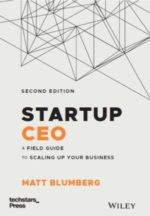
Related to that, I have also been working on a Second Edition to my book from 2013, Startup CEO: A Field Guide to Scaling Up Your Business, which is coming out in a week or two from Wiley & Sons, and which is available for pre-order now. I will write a series of posts in the coming weeks that talk about the new material in the second edition. Our team at the new company is also working on a sequel to that book – more to come on that as well.
For now, I am doing great, enjoying life as a brand new Startup CEO once again, and feeling quite privileged and a little guilty for it by being in this weird bubble of my nice home and yard and feeling safely isolated from the pandemic, from economic dislocation, from social protests, and from having to lead a scaled organization through all of that turmoil.
Learn Word of Mouth Marketing
Learn Word of Mouth Marketing
Our friend, former RP colleague, and WOM guru Andy Sernovitz is hosting a small-group word of mouth marketing seminar. Usually he only does private training for companies at a very large price, so this is a rare chance for 50 people to get the best introduction to word of mouth that there is. I blogged about his book a while back here.
We’ve arranged for a $250 discount for our clients. Use code “welovereturnpath” when you register (kind of catchy code, isn’t it?).
This is a very practical, hands-on course. In one intense day, you will:
- Master the five steps of word of mouth marketing
- Construct an action plan that your company can start using the very next day
- Get the same training that big corporations (Microsoft, TiVo, eBay) have received — for a fraction of what they paid
- Know how to translate word of mouth marketing into real ROI
- Participate in an active, intense day of practical brainstorming (not boring theory)
- Learn from Andy Sernovitz, the guy who literally wrote the book on word of mouth marketing
Andy promises you will learn a repeatable, proven marketing framework that is easy to execute, affordable, and provides measurable results within 60 days.
More information: http://events.gaspedal.com
Chicago: July 30 and September 4
Pass it on: http://events.gaspedal.com/banners
Bolster’s Founding Manifesto
(This post also appeared on Bolster.com and builds on last week’s post where I introduced my new startup, Bolster)
Welcome to Bolster, the on-demand executive talent marketplace. We are creating a platform that is the new way to scale an executive team and board.
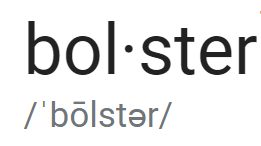
support, boost, strengthen, fortify, solidify, reinforce, augment, reinvigorate, enhance, improve, invigorate, energize, spur, expand, galvanize, underpin, deepen, complement
We believe that startups and scaleups are not average companies. Their rapid growth means their appetite for talent constantly outstrips their budget — and that they can’t spend months searching for it. Their dynamic industries dictate that they keep pace with bigger and better funded competitors. Their leadership teams — the people and the roles — are always changing. Their CEOs spend a ton of time hiring and coaching their leaders and shaping the complexion and direction of the team. They stress out about big expensive new executive hires when sometimes they just need to level-up an existing manager or “try before they buy.” Their Boards frequently jump in to help, but those efforts can be a little ad hoc and inefficient.
We believe that experienced executives working as consultants is the wave of the future. The number of career executives who work flexibly and on-demand for a living is skyrocketing in recent years. People are more often “between things” and are interested in plugging into shorter-term engagements while continuing to look for their next full-time role. People are retiring younger, yet wanting to keep contributing. And even fully-employed execs like to advise companies and serve on Boards. Whether these people are career consultants or are looking for a “side hustle” or just to pay something forward to a future generation of leaders, they all have two common problems: finding work is time consuming and they’re often not good at or don’t like doing it; and managing their back office, everything from insurance to legal to tax to marketing, is a drain on time that could otherwise be spent with clients or family.
We believe that a new kind of talent marketplace is needed to meet the unique and complex requirements of both audiences — the freelance, or flexible, seasoned executive, and the startup or scaleup CEO who thinks holistically about his or her leadership team and carefully tends them like a garden. We are building a platform to make instant, tailored, vetted matches between talent and companies without the randomness of a job board and without the theater, long lead times, and cost, of a full service agency
Service marketplaces like ours work best when they help their stakeholders solve other meaningful, related problems.In this case, we believe that the need for back office services will help executive consultants focus on more important things. And we believe that CEOs need lightweight and dynamic support in thinking through the composition and skills required of their executive teams both today and 6-18 months in the future.
That is the essence of the business we are building. A business to quickly match awesome companies with awesome freelance executives and to help both sides be better at what they do. We are here to make it easier for you to:
- Bolster your executive team. For our Clients, our pledge to you is that we will quickly and cost-effectively fill the gaps in your leadership ranks (whether interim, fractional, advisory, board, or project-based) with trusted, curated talent, and that we will give you a platform to evaluate your overall leadership team and help you think through your future needs as your company evolves. Think of us as a shortcut to scaling your leadership team.
- Bolster your board. The best boards are the ones with multiple independent directors who come from diverse backgrounds with diverse points of view. We also pledge to our Clients that we will find great matches to help fill out their boardrooms as their strategic advisory needs change over time.
- Bolster your work. For our Members, our pledge to you is that we will find you the right kind of interesting clients and help you manage your back office so you can focus on your work (and all the other important things in your life!).
- Bolster your portfolio. For our Portfolio Partners, VC and PE board members, our pledge to you is that we will make it easier for you and your firm to both drive successful on-demand executive placements for your portfolio company CEOs, and to manage and expand your firm’s network of flexible executive talent.
We are an experienced team of entrepreneurs and operators who have scaled multiple businesses throughout our careers. All of us worked together as part of the leadership team at Return Path, a leading email technology company that we scaled from 0 to $100mm in revenue and 500 employees in 12 locations around the world while winning numerous Employer of Choice awards. All of us have independent experience scaling other businesses, small and large, public and private. All of us have experience being on-demand executives as well — whether interim, fractional, advisory, project-based, or board roles, we know the landscape of both our members and our clients.
We’ve all dealt with the stress of having product-market fit and market opportunities but not being able to capitalize on those opportunities because we were missing key talent. And we’ve tried everything from executive search firms (expensive, time-consuming, and slow), to leveling up people (will they be able to grow into the role?), to leaning in to our board (hit or miss, inefficient). Heck, we’ve been desperate enough to follow up on the “my cousin’s boyfriend has an uncle, and he might know someone” lead.
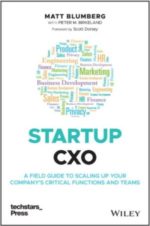
We believe there is a better way for startups and scaleups to find executive talent. Along the way, I published a book about scaling startups called Startup CEO: A Field Guide to Scaling Up Your Business that has sold over 40,000 copies to CEOs around the world. And our whole team is working on a new book called Startup CXO: A Field Guide to Scaling Up Your Teams, which is coming out in early 2021. Our team has a maniacal focus on helping startup teams scale and flourish and on helping leaders develop into the best version of themselves. That’s what we’re all about.
Plus, we have an amazing group of investors behind us who know how to grow businesses like ours and have incredible reach into the startup and scaleup world. More about that later. For now, we are excited to soft launch Bolster and begin unleashing the power of on-demand executive talent to our Clients. Thank you for being on this journey with us. If you’re interested in the somewhat unusual story of how the company was founded, it’s here.
Bring People Along for The Ride, Part II of II
Last week, I wrote about Bringing People Along for The Ride by involving people in the process of ideating and creating change in your organization. That’s the most important thing you can do to make it easy for people to handle change.
But what about the people you don’t or can’t bring along for the ride in that way? If you organization has more than 10 people in it, there will inevitably be people where you’re IMPOSING CHANGE ON THEM. And honestly, even people who are involved in designing change still have to live through its impact.
Today’s post is about managing the actual impact.
The best thing you can do as a leader in helping your organization navigate change is to be empathetic to the fact that, even if you involve people in designing the solution, you are, in fact, making changes to their day to day lives. One of the best books I’ve ever read on this is Transitions: Making Sense of Life’s Changes, by William Bridges. And while there’s a lot more to the book than this one point, I’ll share two graphics from the book and its offshoots that say a lot.
Bridges’ basic concept is to think about changes as having three phases. The end of the old thing, the beginning of the new thing, and the time between the two – when the new thing has been announced, but the it hasn’t taken effect yet. Here’s a look at one powerful graphic on this front, where the point is that productivity (the red line) tanks briefly during the time of uncertainty with the overlay of human emotions at each phase.

Next let’s look at Bridges’ model for how to think about these three phases. This part is critical. They are not discrete phases, where everyone finished “ending” and moves onto “neutral” and then moves on to “new.” From the moment a change is in the offing, until after the change is implemented, people are simultaneously operating in all three zones at the same time, in different proportions.

That means when change starts, you’re already helping them understand that there will be a period of confusion followed by a bright new future. And it means that even when the bright new future has arrived, you’re still mindful of the confusion as well as the things that were special about the past.
I wrote about this a little bit in the second edition of Startup CEO and in this blog post on transitions and integration. The paragraph I’ll call out is:
For ourselves as leaders and me as CEO, knowing most of us would leave almost immediately post-deal, I wanted to have as elegant an exit as possible after 20 years. Fortunately, I had a good partner in this dialog in Mark Briggs, the acquiring CEO. Mark and I worked out rules of engagement and expenses associated with “the baton pass,” as we called it, that let our execs have the opportunity to say a proper goodbye and thank you to our teams, with a series of in-person events and a final RP gift pack. This was a really important way we all got closure on this chapter in our lives
The Baton Pass is a helpful analogy to think about this process. In a relay race, the two runners run alongside each other for a little while until they are at the same pace and proper spot, THEN one hands the other the baton. It’s the time when the past and the future collide, in a neutral zone. When you mark the great things and painful learnings that came before and launch into the bright new future.
The best thing you can do as a leader who is driving change through an organization is to Bring People Along for the Ride. Part of that is involving people in the creation of the new world. But it’s also recognizing that humans have to process change, and that takes time.
About
My name is Matt Blumberg. I am a technology entrepreneur and business builder based in New York City. I am CEO of Markup AI, the leading provider of Content Guardian Agents to companies of all sizes looking to scale their use of AI to generate content smartly and safely. We are defining a new category in the Generative AI space and crushing it.
Before that, I started a company called Bolster, which was an on-demand executive talent marketplace. We created a new way to scale executive teams and boards aimed at early and mid-stage tech companies. The business sort of worked and sort of didn’t work. We wound it down in 2025 and decided to focus on helping the portfolio companies we invested in via Bolster Ventures and help our friends with talent referrals on a more informal basis.
My longest career stint was Return Path, a company I started in 1999, which we sold in 2019. We created a business that was the global market leader in email intelligence, analyzing more data about email than anyone else in the world and producing applications that solve real business problems for end users, commercial senders, and mailbox providers. In the end, we served over 4,000 clients with about 450 employees and 12 offices in 7 countries. We also built a wonderful company with a signature People First Culture that won a number of awards over the years, including Fortune Magazine’s #2 best mid-sized place to work in 2012.
Early in my career, I ran marketing and online services for MovieFone/777-FILM (www.moviefone.com), now a division of AOL. Before that — I was in venture capital at General Atlantic Partners (www.gapartners.com), and before that, a consultant at Mercer Management Consulting (www.mercermc.com). And I went to Princeton before that.
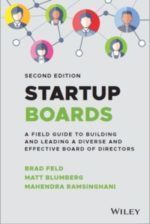
Based on this blog, I wrote a book called Startup CEO: A Field Guide to Scaling Up Your Business, which was published by Wiley in 2013 and updated in 2020. I followed that by co-authoring a book with a number of my fellow executives from Retutrn Path and Bolster called Startup CXO: A Field Guide to Scaling Up Your Company’s Critical Functions and Teams; as well as the second edition of Startup Boards: A Field Guide to Building and Leading an Effective Board of Directors along with Brad Feld and Mahendra Ramsinghani. I hosted a podcast called The Daily Bolster, with over 200 micro-episodes (mostly 5-6 minutes long) where I interview other CEOs to share their stories and hacks.
I have been married for over 25 years to Mariquita, who is, as I tell her all the time, one of the all-time great wives. We have three great kids now in their late teens, Casey, Wilson, and Elyse.
I have lots of other hobbies and interests, like coaching my kids’ baseball and softball teams; traveling and seeing different corners of the world; reading all sorts of books, particularly about business, American Presidential history, art & architecture, natural sciences (for laymen!), and anything funny; cooking and wishing I lived in a place where I could grill and eat outdoors year-round; playing golf; lumbering my way through the very occasional marathon, eating cheap Mexican food; introducing my kids to classic movies; and playing around with new technology. I hosted a limited edition podcast series called Country Over Self which explored the topic of virtue in the Oval Office along with a dozen prominent presidential historians.
IF YOU WANT TO UNDERSTAND WHAT THIS BLOG IS ALL ABOUT, read my first two postings: You’re Only a First Time CEO Once, and Oh, and About That Picture, as well as my updated post when I relaunched the blog with its new name, StartupCEO.com.
StartupCEO.com: A New Name for OnlyOnce
Welcome to the new StartupCEO.com!
I started writing this blog in May of 2004 with an objective of writing about the experience of being a first-time entrepreneur — a startup CEO — inspired by a blog post written by my friend, long-time Board member and mentor Fred Wilson entitled “You’re only a first time CEO once.” The blog and the receptivity I got along the way from fellow startup CEOs encouraged me to write a book called Startup CEO: A Field Guide to Scaling Up Your Business, which was originally published in 2013 and then again as a second edition last year in 2020.
Today I am relaunching the blog as StartupCEO.com both to reflect that relevance of that brand as the book continues to get good traction in the startup ecosystem, and to reflect the fact that I’m now on my second startup as CEO, so “Only Once” doesn’t seem so fitting any more.
The web site has a very minimalist design – and I realize many of you read posts on either RSS or email — those will still operate the same as they have been (no new RSS feed).
As I approach the first anniversary of starting our new company, Bolster, where we help startup CEOs scale their teams, themselves, and their boards, I am recommitting to this blog and will try to post at least once a week. Because there is a lot of overlap between this blog and Bolster’s blog (which I’d encourage you to subscribe to here either by email or RSS), posts will occasionally show up on both blogs, or I’ll put digests of Bolster blog posts here.
But the Bolster blog will be broader and will also have many additional authors besides me, while this blog will remain distinct about some of the experiences I’m having as a startup CEO.
Complex Collaborations
Complex Collaborations
I just read a new book entitled Business Without Boundaries: An Action Framework for Collaborating Across Time, Distance, Organization, and Culture. I happen to know one of the authors, Don Mankin, who was on our trip to Antarctica last year. The book is a good, quick read for anyone running an organization that requires any degree of complex collaboration, whether in the form of multiple offices with a single company, close relationships with suppliers or customers or channel partners, or even a joint venture.
Mankin and his co-author Susan Cohen present three case studies: John Deere, Radica, and Solectron. They then tie their learnings together into a solid framework that’s almost a how-to checklist for organization leaders to follow. While the writers take an academic approach, the learnings and framework steps presented are anything but academic — they place a huge premium, for example, on relationship building and communication patterns. These are all things we’ve worked through over the years at Return Path, whether managing employees across multiple offices or in working with some of our reseller partners or clients.
All in, it’s a good read — and not just because I hung out with this guy in an igloo for two weeks!

OnlyOnce, Part XX
I realize I haven’t posted much lately. As you may know, the title of this blog, OnlyOnce, comes from a blog post written by my friend and board member Fred Wilson from Union Square Ventures entitled You Are Only a First-Time CEO Once, which he wrote back in 2003 or 2004. That inspired me to create a blog for entrepreneurs and leaders. I’ve written close to 1,000 posts over the years, and the book became the impetus for a book that another friend and board member Brad Feld from Foundry Group encouraged me to write and helped me get published called Startup CEO: A Field Guide to Scaling Up Your Business back in 2013.
Today is a special day in my entrepreneurial journey and in the life of the company that I started back in 1999 (last century!), Return Path, as we announce that Return Path has entered into a definitive agreement to be acquired by an exciting new company called Validity. Press release is here.
Over almost 20 years, we’ve built Return Path into one of the largest and (I think) most respected companies in the email industry. We’ve had a culture of innovation that has led to some groundbreaking products for our customers and partners to help make email marketing work better for consumers as well as marketers, and to help keep inboxes safe and clean for mailbox providers and security companies.
But the company is unusual in many respects. One of those is longevity. I’m not sure how many Internet companies started in 1999 are still private, backed and led by the same team the whole time, and generally in the same business they started in. Another is our values-driven “People First” culture. From Day 1, we have believed that if we attract and retain and develop and invest in the best people, we will make our customers successful with great products and service, and that if we do right by our customers, we will do right long term by our shareholders. While I know that not every employee who ever walked through our doors had a great experience, I know most did and hope that all of them realize we tried our best. Finally, I’m proud that our company gave birth to a non-profit affiliate Path Forward a few years back at the hands of executives Andy Sautins, Cathy Hawley, and Tami Forman. Path Forward helps parents get back to work after a career break and helps companies improve their gender diversity and hiring biases and has already been a game changer for dozens of companies and hundreds of women.
Today, Return Path serves almost 4,000 customers in almost every country on the globe, with $100 million in revenue, profitable, and excited about the next leg of our brands’ and our products’ lives in the care of Validity. If you haven’t heard of Validity before today, watch out – you will hear a LOT about them in the weeks and months ahead. They are an incredibly exciting new company with a vision to help tens of thousands of companies across the globe improve their data quality but also help them use data to improve business results. That vision, inspired by a new friend, CEO Mark Briggs, is a wonderful fit for Return Path’s products and services and people.
To finish this post where I started, Fred’s exact words in that post which got this blog going were:
What does this mean for entrepreneurs and managers? It means that the first time you run a business, you should admit what you are up against. Don’t let ego get in the way. Ask for help from your board and get coaching and mentoring. And recognize that you may fail at some level. And don’t let the fear of failure get in the way. Because failure isn’t fatal. It may well be a required rite of passage.
All of that is true and has been great advice for me over the years. But Fred left out one important piece, which is that entrepreneurs need to constantly thank the people around them who either work their butts off as colleagues in the business or who give them helpful advice and coaching. Return Path’s journey has been a long one, longer than most, and the full list of people to thank is too long for a blog post.
I’ve noted Fred and Brad in this post already and I want to thank them and also thank Greg Sands from Costanoa Ventures, the third member of our “dream team” investor syndicate, for their friendship and unwavering support and good counsel for me and Return Path for almost two decades, as well as many other board members we’ve had over the years including long-time independent directors Jeff Epstein, Scott Petry, and Scott Weiss.
I want to thank my co-founders Jack Sinclair and George Bilbrey, and anyone who has ever been on my executive team, including long-time execs Ken Takahashi, Shawn Nussbaum, Cathy Hawley, Dave Wilby, Anita Absey, Angela Baldonero, Andy Sautins, Louis Bucciarelli, Mark Frein, and David Sieh. There’s nothing quite like being in the proverbial foxhole with someone during a battle or two or ten to forge a tight bond. I want to thank Andrea Ponchione, my extraordinary assistant for 14 years, who keeps me running, sane, and smiling every day. I want to thank my executive coach Marc Maltz and the members of my CEO Forum for allowing me to be unplugged and for their friendship and advice. I want to thank all of Return Path’s 430 employees today and over 1,300 ever for their hard work in building our company and culture together and for our 4,000 customers and partners for putting their faith in us to help them solve some of their biggest challenges with email.
Finally, no thank you list for this journey would be complete without saying a special thank you to my wonderful wife Mariquita and kids Casey, Wilson, and Elyse. They deserve some kind of special honor for being inspirational cabin-mates on the entrepreneurial roller coaster without ever being asked if they were up for it.
This event may inspire me to begin writing more regularly again on OnlyOnce. Stay tuned!
The Phoenix Project
The Phoenix Project: a novel about IT, DevOps, and Helping Your Business Win, by Gene Kim, Kevin Behr, and George Spafford is a logical intellectual successor and regularly quotes Eli Goldratt’s seminal work The Goal and its good but less known sequel It’s Not Luck.
The more business books I read, the more I appreciate the novel or fable format. Most business books are a bit boring and way too long to make a single point. The Phoenix Project is a novel, though unlike Goldratt’s books (and even Lencioni’s), it takes it easy on the cheesy and personal side stories. It just uses storytelling techniques to make its points and give color and examples for more memorable learning.
If your organization still does software development through a waterfall process or has separate and distinct development, QA, and IT/Operations teams, I’d say you should run, not walk, to get this book. But even if you are agile, lean, and practice continuous deployment, it’s still a good read as it provides reminders of what the world used to be like and what the manufacturing-rooted theories are behind these “new” techniques in software development.
I am so glad our technology team at Return Path, led by my colleagues Andy Sautins and David Sieh, had the wisdom to be early adopters of agile and lean processes, continuous deployment many years ago, and now dockers. Our DevOps process is pretty well grooved, and while I’m sure there are always things to be done to improve it…it’s almost never a source of panic or friction internally the way more traditional shops function (like the one in the book). I can’t imagine operating a business any other way.
Thanks to my long time friend and Board member Greg Sands of Costanoa Venture Capital for suggesting this excellent read.
Fig Wasp #879
Fig Wasp #879
I have 7 categories of books in my somewhat regular reading rotation: Business (the only one I usually blog about), American History with a focus on the founding period, Humor, Fiction with a focus on trash, Classics I’ve Missed, Architecture and Urban Planning (my major), and Evolutionary Biology. I’m sure that statement says a lot about me, though I am happy to not figure it out until later in life. Anyway, I just finished another fascinating Richard Dawkins book about evolution, and while I usually don’t blog about non-business books, this one had an incredibly rich metaphor with several business lessons stemming from it, plus, evolution is running rampant in our household this week, so I figured, what the heck?
The Dawkins books I’ve read are The Selfish Gene (the shortest, most succinct, and best one to start with), The Blind Watchmaker (more detail than the first), Climbing Mount Improbable (more detail than the second, including a fascinating explanation of how the eye evolved “in an evolutionary instant”), The Ancestor’s Tale (very different style – and a great journey back in time to see each fork in the evolutionary road on the journey from bacteria to humanity), and The God Delusion (a very different book expounding on Dawkins’ theory of atheism). All are great and fairly easy to read, given the topic. I’d start with either The Selfish Gene or maybe The Ancestor’s Tale if you’re interested in taking him for a spin.
So on to the tale of Fig Wasp #879, from this week’s read, Climbing Mount Improbable. Here’s the thing. There are over 900 kinds of fig trees in the world. Who knew? I was dimly aware there was such a thing as a fig tree, although quite frankly I’m most familiar with the fig in its Newton format. Some species reproduce wildly inefficiently — like wild grasses, whose pollen get spread through the air, and with a lot of luck, 1 in 1 billion (with a “b”) land in the right place at the right time to propagate. At the opposite end of the spectrum stands the fig tree. Not only do fig trees reproduce by relying on the collaboration of fig wasps to transport their pollen from one to the next, but it turns out that not only are there over 900 different kinds of fig trees on earth, there are over 900 different kinds of fig wasps — one per tree species. The two have evolved together over thousands of millenia, and while we humans might take the callous and uninformed view that a fig tree is a fig tree, clearly the fig wasps have figured out how to swiftly and instinctively differentiate one speices from another.
So what the heck does this have to do with business? Three quick lessons come mind. I’m sure there are scores more.
1. Collboration only works when each party benefits selfishly from it. Fig wasps don’t cross-pollenate fig trees bcause the fig trees ask nicely or will fire them if they don’t. They do their job because their job is independently fulfilling. If they don’t — they probably die of starvation. They’re just programmed with a very specific type of fig pollen as their primary input and output. We should all think about collaboration this way at work. I wrote a series of posts a couple years back on the topic of Collboration Being Hard, and while all the points I make in those posts are valid, I think this one trumps all. Quite frankly, it calls on the core principle from the Harvard Project on Negotiation, which is that collaboration requires a rethinking of the pie, so that you can expand the pie. That’s what the fig trees and fig wasps have done, unwittingly. Each one gets what it needs far more so than if it had ever consulted directly with the other. The lesson: Be selfish, but do it in a way that benefits your company.
2. Incredibly similar companies can have incredibly distinct cultures. 900+ types of fig tree, each one attracting one and only one type of fig wasp. Could there be anything less obvious to the untrained human eye? I assume that not only would most of us not be able to discern one tree or wasp type from another, but that we wouldn’t be able to disdcern discern any of the 900+ types of trees or wasps from thousands or hundreds of thousands or millions (in the case or urbanites) types of trees or bugs in general! But here’s the thing. I know hundreds of internet companies. Heck, I know dozens of email companies. And I can tell you within 5 minutes of walking around the place or meeting an executive which ones I’d be able to work for, and which ones I wouldn’t. And the older/bigger the company, the more distinct and deeply rooted its culture becomes. The lessons: don’t go to work for a company where you’d even remotely uncomfortable in the interview environment; cultivate your company’s culture with same level of care and attention to detail that you would your family — regardless of your role or level in the company!
3. Leadership is irrelevant when the operating system is tight. You think fig wasps have a CEO? Or a division president who reports into the CEO that oversees both fig wasps and fig trees, making sure they all cross-pollenate before the end of the quarter? Bah. While as a CEO, you may be the most important person in the organization sometimes, or in some ways, I can easily construct the argument that you’re the least important person in the shop as well. If you do your job and create an organization where everyone knows the mission, the agenda, the goal, the values, the BHAG, whatever you want to call it — withoutit needing to be spelled out every day — you’ve done your job, because you’ve made a company where people rock ‘n’ roll all night and every day without you needing to be in the middle of what they’re doing.
I’m sure there are other business lessons from evolutionary biology…send them along if you have good thoughts to share!
What Does Great Look Like in a Chief People Officer?
This is the second post in the series…. the first one When to hire your first Chief People Officer is here).
While all CXOs are important to a company, the Chief People Officer is the one role you don’t want to get wrong because People Ops impacts every facet of a company. If you hire the wrong people—even one wrong person—you’ll regret it, and so will everyone else in your company. If you short-change the onboarding process you’ll create tons of work for others in the company to answer questions, teach people the systems, and help them get up to speed quickly—not to mention the frustration of the new hire. And of course, if you or your employees do anything illegal, discriminatory, or harassing, you’ll end up in legal trouble and you’ll lose—big time. So, it’s not enough, if you’re expanding rapidly, to “just get a Chief People Officer,” you need to hire a great Chief People Officer and I have found that great Chief People Officers do three things particularly well:
The most important characteristic or attribute of a great Chief People Officer is that they believe their function is strategic. In Startup CXO Chief People Officer Cathy Hawtrey wrote about the ways in which HR/People can be a strategic function and not just a tactical corporate function. It’s true of most functions, but for whatever reason, (likely past experience), HR leaders frequently don’t view themselves or their functions as strategic, which is not only a huge missed opportunity but maybe says something more important about the confidence level of the Chief People Officer. If that’s their frame of reference, then they will likely be tactical managers, they’ll keep the trains running on time, but you won’t be able to anticipate the changing talent landscape, much less be strategic about it. If they believe they can move the needle on the business by improving engagement and productivity and efficiency, if they believe they can make the executive team more effective by helping you with team facilitation and coaching…they can do anything.
A second important characteristic of the Chief People Officer is courage—they have the courage to call you (you, the CEO) out on things directly and firmly when they see you doing or saying anything that is a bit off. It could be around language, inclusion, values, authenticity, or anything else, but they don’t let it slide or ignore it. The CPO, along with you, are the principal stewards of the company’s values and culture. Even the best CEOs benefit from having a watchdog from time to time.
A third critical trait of a great Chief People Officer is that they think about investment in People in terms of ROI. It’s one thing to run a killer recruiting function and fill seats efficiently, with high quality, as asked. It’s an entirely different thing to start the recruiting process by asking if the role is needed, at that level and compensation band, or whether there are other people, fractional people, contractors, or shifts in lower value activities that could be put to work instead. Only heads of People with deep understandings of the business can transform the function from a gatekeeper/”no” role into a business accelerator.
A great Chief People Officer is all of these things—strategic, courageous, and financially astute. Above all, great Chief people Officers know that they are the role model within a company and that their behavior, their language, their inclusiveness is setting the tone and providing a template for others to follow.
(You can find this post on the Bolster Blog here)