

Why I joined the DMA Board, and what you can expect of me in that role
Why I joined the DMA Board, and what you can expect of me in that role
I don’t normally think of myself as a rebel. But one outcome of the DMA’s recent proxy fight with Board member Gerry Pike is that I’ve been appointed to the DMA’s Board and its Executive Committee and have been labeled “part of the reform movement” in the trade press. While I wasn’t actively leading the charge on DMA reform with Gerry, I am very enthusiastic about taking up my new role.
I gave Gerry my proxy and support for a number of reasons, and those reasons will form the basis of my agenda as a DMA Board member. As a DMA member, and one who used to be fairly active, I have grown increasingly frustrated with the DMA over the past few years.
1. The DMA could be stronger in fighting for consumers’ interests. Why? Because what’s good for consumers is great for direct marketers. Marketing is not what it used to be, the lines between good and bad actors have been blurred, and the consumer is now in charge. The DMA needs to more emphatically embrace that and lead change among its membership to do the same. The DMA’s ethics operation seems to work well, but the DMA can’t and shouldn’t become a police state and catch every violation of every member company. Its best practices and guidelines take too long to produce and usually end up too watered down to be meaningful in a world where the organization is promoting industry self-regulation. By aggressively fighting for consumers, the DMA can show the world that a real direct marketer is an honest marketer that consumers want to hear from and buy from.
2. Despite a number of very good ideas, the DMA’s execution around interactive marketing has been lacking. The DMA needs to accept that interactive marketing IS direct marketing – not a subset, not a weird little niche. It’s the heart and soul of the direct marketing industry. It’s our future. The acquisition of the EEC has been one bright spot, but the DMA could do much more to make the EEC more impactful, grow its membership, and replicate it to extend the DMA’s reach into other areas of interactive marketing, from search to display advertising to lead generation. The DMA’s staff still has extremely limited experience in interactive marketing, they haven’t had a thought leader around interactive on staff for several years, and their own interactive marketing efforts are far from best practice. Finally, the DMA’s government affairs group, perhaps its greatest strength, still seems disproportionately focused on direct mail issues. The DMA should maintain its staunch support of traditional direct marketers while investing in the future, making interactive marketing an equal or larger priority than traditional direct marketing. We have to invest in the future.
3. Finally, I think the DMA suffers from a lack of transparency that doesn’t serve it well in the hyper-connected world we live in here in 2009 – that’s a nice way of saying the organization has a big PR problem. The organization does a lot of great work that never gets adequately publicized. This whole proxy fight episode is another example, both in the weak response from the DMA and also in a lot of the complaints Gerry lodged against the organization, many of which the organization says are untrue or misleading. Senior DMA execs or Board members should be blogging. They should be active thought leaders in the community. They should be much more engaged with their members to both understand member needs and requirements and more aggressively promote their agenda.
In short, I will be an independent voice who advocates for progress and change in the areas that I consider to be most important, and I will be transparent and open about expressing my views. I’ve already been clear with the existing DMA Board and management that I do have this agenda, and that I hope the organization will embrace it. If they do, even if only in part, I think it will be to the DMA’s benefit as well as the benefit of its members. If they reject it wholesale, my interest in long-term involvement will be fairly low.
That’s the story. As I said up front, I am taking up this new role with enthusiasm and with the belief that the DMA is open to change and progress. We’ll see how it goes, and I will blog about it as often as I can.
Do you have thoughts on the future of the DMA? I’d love to hear from you. You can leave a comment below or email me directly at matt at returnpath dot net.
Email Intelligence and the new Return Path
Welcome to the new Return Path.
For a tech company to grow and thrive in the 21st century it must be in a state of constant adaptation. We have been the global market leaders in email deliverability since my co-founder George Bilbrey coined that term back in 2002. In fact, back in 2008 we announced a major corporate reorganization, divesting ourselves of some legacy businesses in order to focus on deliverability as our core business.
Since then Return Path has grown tremendously thanks to that focus, but we have grown to the point where it’s time for us to redefine ourselves once again. Now we’re launching a new chapter in the company’s history to meet evolving needs in our marketplace. We’re establishing ourselves as the global market leaders in email intelligence. Read on and I’ll explain what that means and why it’s important.
What Return Path Released Today
We launched three new products today to improve inbox placement rate (the new Inbox Monitor, now including subscriber-level data), identify phishing attacks (Email Brand Monitor), and make it easier to understand subscriber engagement and benchmark your program against your competition (Inbox Insight, a groundbreaking new solution). We’ve also released an important research study conducted by David Daniels at The Relevancy Group.
The report’s findings parallel what we’ve been hearing more and more recently. Email marketers are struggling with two core problems that complicate their decision making: They have access to so much data, they can’t possibly analyze it fast enough or thoroughly enough to benefit from it; and too often they don’t have access to the data they really need.
Meanwhile they face new challenges in addition to the ones email marketers have been battling for years. It’s still hard to get to the inbox, and even to monitor how much mail isn’t getting there. It’s still hard to protect brands and their customers from phishing and spoofing, and even to see when mail streams are under attack. And it’s still hard to see engagement measurements, even as they become more important to marketing performance.
Email Intelligence is the Answer
Our solution to these problems is Email Intelligence. Email intelligence is the combination of data from across the email ecosystem, analytics that make it accessible and manageable, and insight that makes it actionable. Marketers need all of these to understand their email performance beyond deliverability. They need it to benchmark themselves against competitors, to gain a complete understanding of their subscribers’ experience, and to accurately track and report the full impact of their email programs. In fact, we have redefined our company’s mission statement to align with our shift from being the global leader in Email Deliverability to being the global leader in Email Intelligence:
We analyze email data and build solutions that generate insights for senders, mailbox providers, and users to ensure that inboxes contain only messages that users want
The products we are launching today, in combination with the rest of our Email Intelligence Solution for Marketers that’s been serving clients for a decade, will help meet these market needs, but we continue to look ahead to find solutions to bigger problems. I see our evolution into an Email Intelligence company as an opportunity to change the entire ecosystem, to make email better, more welcome, more effective, and more secure.
David’s researchoffers a unique view of marketers’ place in the ecosystem, where they want to get to, how much progress they’ve made, and how big a lead the top competitors have opened up against the rest. (It can also give you a sense of where your efforts stack up vs. the rest of the industry.) There are definitely some surprises, but for me the biggest takeaway was no surprise at all: The factors that separate the leaders are essentially the core components of what we define as Email Intelligence.
It's Copyright Time
It’s Copyright Time
Brad must be off his game this year, so…time to update all those copyrights to say 2008. Or as Brad gently suggested last year, make that field variable so you never have to worry about it again! (Thanks to our CTO Andy Sautins for the reminder here.)
The Gift of Feedback, Part II
The Gift of Feedback, Part II
I’ve written a few times over the years about our 360 feedback process at Return Path. In Part I of this series in early 2008, I spelled out my development plan coming out of that year’s 360 live review process. I have my new plan now after this year’s process, and I thought I’d share it once again. This year I have four items to work on:
- Continue to develop the executive team. Manage the team more aggressively and intentionally. Upgrade existing people, push hard on next-level team development, and critically evaluate the organization every 3-6 months to see if the execs are scaling well enough or if they need to replaced or augmented
- Formalize junior staff interaction. Create more intentional feedback loops before/after meetings, including with the staff member if needed, and cultivate acceptance of transparency; get managers to do the same. Be extra skeptical about the feedback I’m getting, realizing that I may not get an accurate or complete picture
- Foster deeper engagement across the entire organization. Simplify/streamline company mission and balanced scorecard through a combination of deeper level maps/scorecards, maybe a higher level scorecard, and constant reinforcing communication. Drive multi-year planning process to be fun, touching the entire company, and culminating in a renewed enthusiasm
- Disrupt early and often, the right way. Introduce an element of productive disruption/creative destruction into the way I lead, noting item 2 around feedback loops
Thanks to everyone internally who contributed to this review. I appreciate your time and input. Onward!
Please, Keep Not Calling (Thank You!)
Please, Keep Not Calling (Thank You!)
It’s been three years since the federal government passed one of its better pieces of legislation in recent memory, creating the Do Not Call Registry which is a free way of dramatically reducing junk phone solicitations. At the time, registrations were set to expire every three years. When I signed up my phone number, I stuck a note in my calendar for today (three years later) to renew my registration. I was planning on blogging about it to remind the rest of the world, too.
To my great surprise, when I went to the site today, I saw this note:
Your registration will not expire. Telephone numbers placed on the National Do Not Call Registry will remain on it permanently due to the Do-Not-Call Improvement Act of 2007, which became law in February 2008.
That’s two great pieces of legislation. What will they think of next?
Deals are not done until they are done
We were excited to close the sale of our Consumer Insights business last week to Edison, as I blogged about last week on the Return Path blog. But it brought back to mind the great Yogi Berra quote that “it ain’t over ’til it’s over.”
We’ve done lots of deals over our 18 year existence. Something like 12 or 13 acquisitions and 5 spin-offs or divestitures. And a very large number of equity and debt financings.
We’ve also had four deals that didn’t get done. One was an acquisition we were going to make that we pulled away from during due diligence because we found some things in due diligence that proved our acquisition thesis incorrect. We pulled the plug on that one relatively early. I’m sure it was painful for the target company, but the timing was mid-process, and that is what due diligence is for. One was a financing that we had pretty much ready to go right around the time the markets melted down in late 2008.
But the other two were deals that fell apart when they were literally at the goal line – all legal work done, Boards either approved or lined up to approve, press releases written. One was an acquisition we were planning to make, and the other was a divestiture. Both were horrible experiences. No one likes being left at the altar. The feeling in the moment is terrible, but the clean-up afterwards is tough, too. As one of my board members said at the time of one of these two incidents – “what do you do with all the guests and the food?”
What I learned from these two experiences, and they were very different from each other and also a while back now, is a few things:
- If you’re pulling out of a deal, give the bad news as early as possible, but absolutely give the news. We actually had one of the “fall apart at the goal line” deals where the other party literally didn’t show up for the closing and never returned a phone call after that. Amateur hour at its worst
- When you’re giving the bad news, do it as directly as possible – and offer as much constructive feedback as possible. Life is long, and there’s no reason to completely burn a relationship if you don’t have to
- Use the due diligence and documentation period to regularly pull up and ask if things are still on track. It’s easy in the heat and rapid pace of a deal to lose sight of the original thesis, economic justification, or some internal commitments. The time to remember those is not at the finish line
- Sellers should consider asking for a breakup fee in some situations. This is tough and of course cuts both ways – I wouldn’t want to agree to one as a buyer. But if you get into a process that’s likely to cause damage to your company if it doesn’t go through by virtue of the process itself, it’s a reasonable ask
But mostly, my general rule now is to be skeptical right up until the very last minute.
Because deals are not done until they are done.
More Good Inc.
More Good Inc.
Last year I was pleased and proud to write about our debut on the Inc. 500 list of America’s fastest growing companies. At that time I wrote that “Now our challenge, of course, is STAYING on the list, and hopefully upping our ranking next year!” Well, I am again please and proud to announce that we, in fact, stayed on the list. (You can read all the Inc. coverage here and see our press release about the ranking here.)
Unfortunately, we didn’t make the second part of our goal to up our rank. But, we did up our growth – our three-year revenue growth rate was 18% higher than last year. This is a testament to the hard work of our team (now 150 strong!) and wouldn’t be possible without the support of our many great clients (now 1,500 strong!). Most importantly, we see no end in sight. In fact, 2008 promises to be an even bigger year for us as we poise for continued growth. By the way, would you like to be part of a team that has now ranked as one of America’s fastest growing companies two years in a row? Check out our Careers page and join the team that is advancing email marketing, one company at a time.
Startup CEO, Second Edition
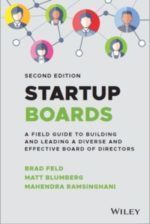
I haven’t taken a poll to figure out the overlap between people who read this blog and people that bought the first edition of Startup CEO, but I’m guessing there’s a high degree of it. If you are familiar with the book, I don’t want to bore you with a recap of what I wrote, but I thought I would devote the next several blogs to new ideas in the second edition. First, the new cover art from the publisher is kind of cool:

The first question you might have is, “Why a second edition? Didn’t you say everything you needed to say the first time?” The answer to that is, yes, I did say everything I had to say at the time, and the first edition is pretty comprehensive as a field guide. But that was about a dozen years into what turned out to be a 20-year journey, and after we sold Return Path in 2019, I had time to reflect on all that happened. I learned a lot of new lessons between the first and second editions, we had a lot of first-time experiences, we scaled the company significantly, and we sold it. None of those things are, in and of themselves, worthy of a second edition, but collectively they help tell the story of startup to exit and tell it from a perspective of creating a sustainable business over nearly two decades.
But there are other reasons, too, besides new lessons learned. Eight years is a lifetime in terms of changes to micro-trends, language, business in general, and the world around us. I wanted to update the book to make it contemporary so that it can speak to a new generation of CEOs. The second edition is more than a new cover and obvious updates on the number of employees or revenues. I added topics that reflect heightened responsibilities of CEOs around moral and ethical leadership in an increasingly transparent and socially conscious world. How do you navigate a politically charged and divisive society? For example, the State of Indiana passed a law intended to not force people to do things that contravened their religious beliefs but it had the side effect of legal descrimination against LGBT citizens. It was contentious, with rallying cries in business and society for one side or the other, and those same sentiments were found within our employee population.
How should CEOs handle a situation that conflicts with their core values? There are no easy answers, but avoiding them doesn’t make the problem go away.
Whether it’s the #metoo movement, high-profile failures of leadership like airline employees dragging customers off of planes, or something as simple as unconscious bias in the workplace, the best CEOs now need to approach their jobs differently. I didn’t write about that in the first edition, but the second edition has an entire chapter devoted to “Authentic Leadership” and provides guidelines and advice to help CEOs. The book went to press early in the COVID-19 pandemic and prior to all the protests around racial injustice surrounding the George Floyd killing, so nothing in it specifically addresses any of those issues. In some ways, though, that may be better at the moment since the book is more about frameworks and principles than about specific responses to current events.
I also added a new section with several chapters on the ins and outs of selling a business. Startup exits are the important culmination of the startup experience and something that the first edition only briefly touched on. Obviously, I was still CEO of a growing company and although we had an opportunity or two to sell within those first years, we never pulled the trigger. The first edition talks about that process at a surface level, but the second edition has far more content and detail since we had completed a sale transaction.
The first edition of the book has sold close to 40,000 copies as of the writing of the second edition, which blew me away when I tallied it all up. I’ve received many notes of thanks from readers all over the world for the book, and I’m glad that the content has proved useful to so many people, noting from some of the more critical reviews on Amazon that it certainly doesn’t scratch everyone’s itch. I hope the changes in the new edition add even more value to the lives of entrepreneurs and startup management teams. That’s really who the book is written for.
Here are some places to go to pre-order the book:
- Directly from the publisher, Wiley
- From Amazon
- From Books-a-Million
- From Indie Bound
- From BN.com
I have a limited number of free copies of the book that I can send out, and oddly, they are only print copies since the book publishing ecosystem hasn’t figured out an efficient way for authors to distribute free Kindle copies of books yet. As a bonus incentive for reading all the way to the end of this post, I will be happy to send a free copy to the first 5 people who comment on this post on the blog and ask for one.
From Blog to Book – Beyond Bullets
From Blog to Book – Beyond Bullets
Hats off to fellow blogger Cliff Atkinson, who has just published a book called Beyond Bullet Points. Cliff and his company, Sociable Media, consult on PowerPoint and presentations and have a great theory about how to do great presentations.
They follow the “clear, simple, and please God not so boring” guidelines espoused by a number of us in the business world, including Brad and of course Seth. (BTW, if you haven’t read Seth’s e-book/treatise on Really Bad PowerPoint, you should do that as well, although I can’t find a link to it at the moment.)
One of the coolest parts of the book is that it really started out as Cliff’s blog, Beyond Bullets, then got Microsoft’s attention, then became a book. What a great demonstration of old and new media reinforcing each other!
Use Cases to Bolster Your Team: How to Leverage On-Demand Talent in Your Business
(This post was written by my colleague Bethany Crystal and originally published on the Bolster blog yesterday. While I am still trying to figure out what posts to put on this blog vs. Bolster’s blog since the blogs are pretty similar, I will occasionally run something in both places.)
At Bolster, we believe that 2021 will mark the rise of the on-demand economy for executives. More than ever before, executives are seeking out roles that distinctly aren’t full-time for a variety of reasons – they’re in between full-time roles and want to stay engaged and meet a wide range of potential employers; they’re retired or semi-retired/post-exit and want to keep working, just not full-time; they’re fully employed but are looking for advisory opportunities to help others; or they are committed to the more flexible lifestyle that being an on-demand affords. As business leaders, you might be wondering how to take advantage of this trend and incorporate on-demand talent onto your existing team. Don’t worry – we’ve got you covered.
Let’s start with a quick primer on the distinct types of on-demand talent. Here are the four most common themes we see among our member network at Bolster:
The Four Types of On-Demand Talent
- Interim: Someone who is partially or fully dedicated to working with your company, but only temporarily (you can think of them as “filling a gap”)
- Fractional: Someone who works part-time (or “fractionally”) with your company on an ongoing basis (they “own” the function on a long-term, part-time basis)
- Advisor or Coach: Someone who supports your existing team by offering external advising, coaching, or mentorship as needed (this might be on a temporary or long-term basis)
- Project-Based: Someone who is brought on to complete a specific project or a fixed span of work (this is the closest to typical consulting work)
Depending on your business needs, the capacity of your existing team, and your resourcing, you might find it useful to have one or more on-demand executives in the mix at any given time. We’ve also found this can be a great way to keep things fresh at the leadership level and make sure new ideas are circulated with some regularity.
Business Opportunities for On-Demand Talent
While every company’s on-demand talent needs will vary, we’ve already seen a few patterns emerge from the 2,000 executives in our member network. Here are a few times to think about bringing on-demand work to your business.
Choose interim work if you need…
- A temporarily placeholder at the exec level
Whether unexpected or planned, transitions at the executive level can come with a high cost: Any week that goes by with an unfilled seat adds more work to the team, contributes to business lag, or both. While full executive searches can take six months (or more!) to get right, many CEOs find it helpful to bring on interim help as a “stopgap” in the meantime. The most obvious benefit of interim on-demand work is to prevent your business from falling behind in areas where you may not have a deep bench below the executive level. And you might also consider that bringing in a seasoned professional as you conduct your full-time search will give your team a proxy to compare against, making that placement process a bit easier. Last – while it’s not a guarantee, there’s always the chance that your interim hire is a great fit for you and wants to stick around for the long term! You then benefit from an on-the-job “interview” or audition. - Surge capacity staffing
Imagine a situation where your business doesn’t need an executive in a particular function. You’re small, scrappy, and you’re getting along perfectly well with the team you have in place – and you can fill in the bits of executive leadership required for that function yourself from time to time. But then something pops up where you need to be the CEO and can’t afford to ALSO be the CXO. An interim CXO could be the right solution. For example, the 3-5 months run-up to a Series A or B financing could be a good time to bring on an experienced CFO if your only relevant team members are handling AP, AR, and Payroll. Or you could be working on your company’s public launch with a less experienced marketing team and an agency – and an interim CMO could make all the difference between success and sideways. - Parental leave coverage
With a growing business trend of increased parental leave coverage, CEOs are starting to use interim executives to fill holes that might temporarily exist on the leadership team. Interim work is particularly useful if there isn’t an obvious “second in command” role on that team who might take on a stretch project in their absence. Implemented correctly, bringing on an interim exec can also help to squash any fears of “getting replaced” while someone is away on leave. As an added bonus, bringing in a new face (if only temporarily) can give the remaining team a chance to “try out” a new leadership style and share feedback about what worked and didn’t work during the interim period.
Choose fractional work if you need…
- A seasoned professional’s experience and skillset (but not all the time)
Before every full-time leadership hire, there is the sticky “in between” period of need. That’s the period when some work starts piling up, but not quite enough to fill an entire work week for one person at the executive level – or the period when you know you need a more seasoned leader in a function but just can’t afford one full-time. If you don’t have an experienced executive in the role, you miss opportunities for effectively setting up scalable practices and processes. Often, a lack of senior focus in a functional area means that you miss strategic opportunities, and sometimes it also means that you expose yourself to risk that could be avoided with the right person having ownership of the function. This is the perfect time to introduce fractional work to your business. The most classic example of fractional executive talent is the CFO who oversees the bookkeeping and accounting for several companies at once. But you can find a fractional executive for just about anything. You might consider this type of on-demand executive if you don’t yet have anyone in that functional area, if you have a team of less experienced specialists or even a more junior generalist leader in that functional area, if you want a taste of what it’d be like to dedicate more resources there, or if you need just a few things done right, without having to think about them yourself.
Choose advisory or coaching work if you need…
- Mentorship for your current executives
Sometimes it’s helpful to see what “great” looks like in order to achieve greatness yourself. If you’re looking for a way to give a current leader an added boost to their development plan, consider bringing on someone who can serve as a mentor or advisor on a temporary or long-term basis. Someone who has been in your shoes before and can give advice and guidance based on their experience. This on-demand exec role has two big benefits: The first being that it demonstrates to your executive team that you’re committed to their ongoing success and growth, which boosts morale (and hopefully performance). The second is that you’ll be able to equip your current team with the tools they each need to scale instead of having to bring on a new wave of executives for each business stage. The advisor or coach usually works a few hours per month, once they’ve set up a strong coaching relationship. - Access to top talent without the full-time price tag
Just as remote work unlocked the potential to find “the best of the best” without geographic constraints, on-demand work does the same at the executive level. More and more, we’re seeing CEOs incorporate advisors to their business as a way to gain exposure to best in class talent (at a fraction of the cost). This can be a great way to introduce subject matter or functional expertise into your organization without committing to a full-time salary.
Choose project work if you need…
- A fixed-scope expert engagement at the executive level
Just as tools like Task Rabbit made it possible to find experts to accomplish tasks on a personal level (such as moving furniture or painting a bedroom), on-demand talent makes it possible to find seasoned executives to complete one-off projects at an expert level. That’s why, on Bolster, we ask each each member to indicate what roles they can take on, and also what projects they can be hired to do. As a CEO, you might consider outsourcing some of the crunchy stuff at the exec level that might take a lot of time, or in cases where you need a quick turnaround to get to an MVP. Common projects we’ve seen to date include building sales commission plan structures, designing a go-to-market launch plan for a new product, running due diligence on an acquisition, overhauling pricing and packaging, working on a strategic plan, TAM analysis, budgeting process, or creating a diversity & inclusion strategy for the company. - An experimental project that won’t distract the current team
One final area where you might consider on-demand work is for a project that feels more like an addendum to your current business, or an early experiment. At Bolster, we brought on an on-demand executive to help us think through and roll out a brand new product that we’re in the early days of testing right now. We’ve seen other CEOs use project-based work at the exec level for things like evaluating market expansion possibilities or speccing out the MVP of a potential new product.
This is just a short list of some of the possibilities where on-demand talent might support you in your business today. One of our favorite parts about this type of work is just that – the flexibility it offers to you and your team. Whether your business is just getting started or if you’re operating on all cylinders, don’t forget to consider on-demand work as part of your CEO toolkit for this year and beyond.
– Bethany Crystal, February 2, 2021
Two Great Lines (and One Worrisome One) About the Current Macroeconomic Situation
I was trading emails a few weeks ago Elliot Noss from Tucows about the current state of the economy after being on a panel together about it, and he wrote:
The market is fascinating right now. Heated competition AND layoffs and hiring freezes. It feel like an old European hotel where there are two faucets, one is too hot and the other too cold.
While a quick rant about European hotel bathrooms could be fun…we’ll just stick to the sink analogy. As anyone who has ever tried to use one of these sinks that Elliot describes knows, they’re hard to use and illogical. Sure, sometimes you want freezing water and sometimes you want scalding water (I guess), but often, you want something in between. And the only way to achieve that is to turn on both freezing and scalding at the same time? That’s weird.
Then I was on another email thread recently with a group of CEOs, when John Henry from Ride With Loop said this:
Whatever the climate, we all surely agree there is no bad time to build a good business.
How true that is!
But here’s the worrisome part. It’s impossible to predict what’s going to happen next. We are in uncharted territory here with a land war in Europe, a partial global oil embargo of a top tier oil producer, a pandemic, supply chain problems, etc. etc. There are days and circumstances where everything feels normal. Plenty of businesses, especially in the tech sector, are kicking ass. And yet there are days and circumstances that feel like 2001 or 2009. It’s tough to navigate as a startup CEO. Yes, it’s obvious you should try to have a couple years of cash on hand, and that you should be smart about investments and not get too far ahead of revenue if you’re in certain sectors (presumably if you’re in an R&D intensive field and weren’t planning to have revenue for years on end, life isn’t all that different?). But beyond that, there’s no clear playbook.
And that’s where the worrisome line comes in. I saw Larry Summers on Meet the Press last weekend, who predicted that
a recession would come in late 2023.
Wait, what? Aren’t things messed up now? Yes, inflation is high, the stock market is down, and interest rates are creeping up. But the economy is still GROWING. Unemployment is still LOW. Summers’ point is a reminder that contraction is likely, but it may still be a ways off, it depends how the Fed handles interest rate hikes (and about a zillion other things), and it’s impossible to predict. That was more worrisome to me. If we’re navigating choppy waters now, it may not just be for a couple of quarters. It may be that 4-6 quarters from now, we are in for 2-3 quarters of contraction. That is a more than most companies are able to plan for from a cash perspective.
Frothy macro environments lead to bad businesses getting created, too many lookalike businesses popping up, or weak teams getting funded. When the tide goes out, as they say, you can see who is swimming naked. But if you’re building a good business, one that has staying power and a clear value proposition, with real people or clients paying real money for a real product or service, and if you’re serious about building a good company, keep on keeping on. Be smart about key decisions, especially investment decisions, but don’t despair or give up.
We’ll all get through this.