Book Short: Intentionality in Life
I haven’t done short book summaries in a LONG time, but I’ll try to start adding that back into the mix as I read interesting and relevant books. Here’s one to add to your list: One Life to Lead, by Russell Benaroya. I was recently connected to Russell by a mutual friend, TA McCann at Pioneer Square Labs. TA had a sense Russell and I would hit it off, and we did. Russell is a multi-time founder/CEO, a Coach, and an author, so we have a lot in common.
One Life to Lead is an excellent book. First, it is short and easy to get through. Unlike a lot of business books, it doesn’t go on too long or contain anything extraneous. It’s to the point!
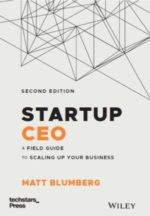
Second, the book is a business book that’s not really about business. It’s about life and what Russell calls Life Design, which is a great framing of how to be intentional about leading your life. While I have become less and less of a life planner as I’ve gotten older under the headline of “man plans, God laughs,” I am a huge believer in being intentional about everything, which I talk about in Startup CEO quite a bit in the nuts and bolts context of building your business.
Finally, Russell’s framework is easy to understand and full of concrete exercises you can to. Here are his five steps, but you’ll have to read the book to get the details:
- Ground stories with facts. This reminds me a lot of the principles we have taught team members over the years in our Action/Design (and related) trainings. First, start with absolute concrete facts that everyone will agree are facts.
- Establish your principles. This is brilliant. Your company has documented values or operating principles. Why don’t you?
- Harness energy from the environment. Figuring out what makes you tick, and what drains your energy, is so important.
- Get in and stay in your genius zone. Shouldn’t we all focus our time on the things we do best and love the most?
- Take action. How to put it together and make it all happen.
If you don’t get out in front of life, it will happen to you, and Russell’s framework is about how to make sure you are in the driver’s seat of your own life. Here’s to that.
The Dowry
Here’s one to keep in mind – we did this a few times at Return Path, and I was just reminded of it when I was coaching another founder who is doing the same thing right now.
Sometimes when you’re doing a strategic acquisition and it’s an all-stock deal, you can insist as a term of the acquisition that the target company’s investors invest more capital into your company.
That’s right, not only do you not have to put cash OUT for the deal, you’re getting additional cash IN. Think of it as a contemporary corporate version of the dowry.
Why would the cap table of the target company agree to this? Here are a few reasons:
- you’re in a strong enough negotiating position – best home for the business, best chance of the target company investors getting a return
- the target company investors have more dry powder and want to double down – they love your vision for the combined company
- you’re only offering the target company investors common stock in the deal, and they are pushing hard to get preferred
The Dowry is not something you can get to with every deal, and you might not need it. But think of it as a tool in the M&A/financing tool belt.
Agile Marketing
Agile Marketing
As I wrote about last week, Return Path has been using the Agile Development methodology and Rally Software as our product development framework for about a year now. It’s worked so well for us, that the concepts, and even the tools, have started to spread virally to other parts of our business.
About two months ago, I took over our marketing department as interim CMO. Our marketing efforts have become increasingly complex in the last year or so as we’ve grown and added multiple new product lines, and as a result, the demands on our relatively small department were becoming unmanageable. As I wrote about a couple years ago, Marketing is like French Fries — you can always consume just a little bit more of it — and we were really feeling the strain on our marketing team.
As I thought about the challenges that faced our marketing efforts, they reminded me a lot of the challenges that faced our product development efforts before we implemented Agile/Rally for those teams. Multiple external and internal stakeholders with competing priorities. Poor communication. Needing to be nimble and agile in a process that has some inherent long lead-time items.
So we tried an experiment — we tried implementing Agile Marketing. We have learned a lot in the past couple of months and have adapted the processes a little bit to the needs of marketing, but our marketing planning, execution, and feedback cycles now look an awful lot like our engineering ones. After one week struggling with an Excel spreadsheet, macros, and conditional formatting, we even decided to try using Rally to run our process, even though some if its terms and functionality are really designed for software development.
We now plan marketing in six-week “releases,” each of which has 1-2 core themes and a planning session up front with our head of sales and business GMs. Each release has two, three-week “iterations” where we do mid-course corrections and track our marketing team members’ utilization on projects very deliberately in Rally. Stakeholders can always go into Rally at any time and enter a “feature request” for a new marketing project, which we will schedule in at the next iteration. The marketing team has a daily stand-up to review progress and identify roadblocks. And we still have enough slack in the system that we can handle a couple of last-minute opportunistic items (love those French Fries) which invariably come up.
So far, so good. Our marketing team has a much more solid plan of attack for its work, and we have been able to regain control of our marketing agenda, getting input and feedback from stakeholders to help shape it along the way. Cross-group communication and transparency are way up, productivity is up, noise and friction are down.
It’s not perfect, but it’s a pretty good system, and we’ll continue to refine it along the way. But it’s catching on…last time I checked, a third group at Return Path was about to dive in and try it as well — Agile Sales Operations and Business Analytics, here we come!
My Favorite Interview Question
I hosted a CEO roundtable dinner the other night, and someone in the group asked me what my favorite question was to ask in interviews. I kept thinking about something I read years ago, that the late legendary Zappos founder Tony Hsieh used to ask, “do you consider yourself a lucky person,” about which he said, “Lucky people approach the world with an open and optimistic mind that enables them to see unexpected opportunity more readily.“
That’s a good thing to find in a future team member of course, but the question is a little too indirect for me.
My favorite question (ok, it’s a compound question) is to ask someone “What are you great at? What do you absolutely love doing, what gets you out of bed in the morning? And what’s the intersection of those two things?”
In terms of an interview question, it’s one that’s hard to game and also one that gets someone talking authentically about themselves in a way that you can use to evaluate both their cultural fit and their role fit.
This also happens to be the approach I take when I’m giving someone career advice. Think through those three things, and you should start narrowing down the kind of job you want to go after.
The myth of the “playbook” in executive hiring, and how to work around it
I help mentor CEOs on executive hiring all the time. One common refrain I hear when we’re talking about requirements for the job is about something I like to call The Mythical Playbook. If I only had the exec with the right playbook, thinks the hiring CEO, all my problems in that executive’s area would be magically solved.
I once hired a senior executive with that same mentality. They had the pedigree. They had taken a similar SaaS company in an adjacent space from $50mm to $250mm in revenue in a sub-group within their functional area. They had killer references who said they were ready to graduate to the C-level job. They had The Playbook!
Suffice to say, things did not go as planned. I ignored an early sign of trouble, at my own peril. The exec came to me with a new org chart for the department, one with 45 people on it instead of the 20-25 who were currently there. I believed the department was understaffed but was surprised to see the magnitude of the ask. When I pushed back in general, the response I got was “I plan to overspend and overdeliver.” Hmm, ok. I don’t mind that, although a more detailed plan might be useful.
Then I pushed back on a specific hire, pointing to a box in the org chart with a title that didn’t make sense to me. The response I got was “Yeah, I’m not entirely sure what that person does either, but I know I need that, trust me.” Yikes.
There are two reasons why The Playbook is mythical.
The first reason there’s no such thing as a Playbook for executives is that every situation is different. No two companies are identical in terms of offering or culture or structure. Even within the same industry, no two competitive landscapes are the same at different points in time. If life as a senior executive were as simple as following a Playbook, people would make a zillion dollars off publishing Playbooks, and senior executive jobs would be easier to do, and no one would get fired from them.
Now, I’m not saying there isn’t value in analogous experience. There is! But when hiring an executive, you’re not solely looking for someone who claims to know all the answers based on previous experience. That is a recipe for blindly following a pattern that might or might not exist. The value in the analogous experience is in knowing what things worked, sure, but more importantly in knowing when they worked, why they worked, under what conditions they worked, what alternatives were considered, and what things fell apart on the road to success. A Playbook is only useful if it can be applied thoughtfully and flexibly to new situations.
The second reason there’s no such thing as a Playbook when it comes to hiring executives is that the person who might have written the Playbook is actually not available for your job. Most CEOs start a search by saying, “I want to hire the person who took XYZ Famous Company from where I am today to 10x where I am today.” The problem with that is simple. That person is no longer available to you. They have made a ton of money, and they have moved beyond your job in their career progression. What you want is the person who worked for that person, or even one more layer down…or the person who that person WAS before they took the job at XYZ Famous Company. Those people are much harder to find. And when you find them, they don’t have the Playbook. They may have seen a couple chapters of it, but that’s about all.
In the end, the department I referenced above was more successful, but not because of adherence to the new exec’s entire Playbook. The Playbook got the department out over its skis – we overspent, but we did not overdeliver. The new exec ended up leaving the company before they could implement a lot, and that person’s successor ended up refocusing and rightsizing the department. That said, the best thing the department got out of the exec with the Playbook was their successor, which was huge — one element of a strong exec’s Playbook is how to build a machine as opposed to just playing whack-a-mole and solving problems haphazardly.
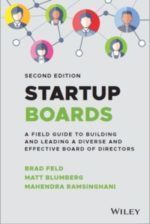
(Note – I am using the singular they in this and in other posts now, as Brad. Mahendra, and I chose to do in Startup Boards. I don’t love it, but it seems to be becoming the standard for gender neutral writing, plus it helps mask identities as well when I write posts like this.)
The Impact of a Good Coach
I’m pretty close to the executive coaching world. My wife Mariquita is an extraordinary CEO coach. I’ve worked for decades with Marc Maltz from Hoola Hoop, who helped me transform everything about how I lead organizations. I’ve been friends with Jerry Colonna of Reboot fame for years (I did a fun podcast with Jerry last year called “Everyone is Scalable). I’m pretty good friends with Chad Dickerson. Bolster’s marketplace helps place CEO coaches and even has a programmatic approach to coaching and mentoring called Bolster Prime. The list goes on.

My friend Mitch, a fellow baseball coach, gave me a fun book a couple years ago that is a page-a-day called Coach: 365 Days of Inspiration for Coaches and Players, by Matthew Kelly. It’s a compilation of quotes. Some are better than others. But I just love this one from a couple weeks ago. While obviously it is in the sports context, the sentiments are the same around executive coaching.
Marc and I had one senior executive who we worked with years ago. They had significant personality and style issues that weren’t working well in our culture. They were abrupt, needlessly angry, and cultivated relationships based on fear, not based on trust. Marc and I were tearing our hair out trying to give this person feedback and coaching. Nothing was working. Then I delivered a 2×4 between his eyes. They argued with me and Marc and said that the problem was us…not them. That we were soft.
Two days went by. Then we met with them again. They came into the meeting visibly upset, shaking their head and a bit choked up. They opened the meeting by saying, “I went home and complained to my spouse about your feedback. And my spouse told me that, actually, you are right, and that I should ask my kids. My whole family feels the same way you do. More than my job is at risk — my marriage and family are at risk, too.”
Months and years later, with a ton of coaching and feedback and support from Marc and me and the rest of our executive team, this person had really turned it around. They were doing better at work. They were doing better at home. The work was long and painful and not without its bumps and backtracks. But the person made changes that were meaningful and permanent to all their relationships, not just something in the moment at work. It’s a clear case of this quote — coaching changed his life.
As I’ve said before, People are People. It doesn’t matter if you’re at home or at work. It doesn’t matter if you’re a B2C person or a B2B person. While there are some prominent examples of individuals throughout history who have very different work and home personae (John D. Rockefeller is one that comes to mind, but I’m sure there are other famous ruthless businesspeople who were empathetic and loving spouses and parents), most of us are simply humans, works in progress. We learn something in Context A, and it’s part of us when we are also in Context B.
The impact of a good coach goes way beyond how you lead your organization.
Sweet Sixteen (Sixteen Candles?)
Today marks Return Path’s 16th anniversary. I am incredibly proud of so many things we have accomplished here and am brimming with optimism about the road ahead. While we are still a bit of an awkward teenager as a company continuing to scale, 16 is much less of an awkward teen year than 13, both metaphorically and actually. Hey – we are going to head off for college in two short years!
In honor of 16 Candles, one of my favorite movies that came out when I was a teenager, I thought I’d mark this occasion by drawing the more obvious comparisons between us and some of the main characters from the movie. My apologies to those who may have missed this movie along the way.
Why we are like Samantha (Molly Ringwald): No, no one borrowed our underpants. But we can’t believe that people forgot our birthday either.
Why we are like Farmer Ted / The Geek (Anthony Michael Hall): Meet my co-founder, George Bilbrey. I mean that with love.
Why we are like Jake (Michael Schoeffling): Meet my other co-founder, Jack Sinclair. The shy, good looking one.
Why we are like Long Duk Dong (Gedde Watanabe): We have only been in our newest business, Consumer Insight, for five minutes, but we already have a whole bunch of dates.
Why we are like Grandpa Fred (Max Showalter): We’ve been around long enough to know the ways of the world, not to mention all the good wisecracks in the book.
There you have it. Year 17, here we come!
Book Short: Scrum ptious
Book Short: Scrum ptious
I just finished reading Scrum: The Art of Doing Twice the Work in Half the Time, by Jeff Sutherland and JJ Sutherland. This reading was in anticipation of an Agile Facilitation training my executive team and I are going through next week, as part of Return Path’s Agile Everywhere initiative. But it’s a book I should’ve read along time ago, and a book that I enjoyed.
Sutherland gets credit for creating the agile framework and bringing the concept scrum to software development over 20 years ago. The book very clearly lays out not just the color behind the creation of the framework, and the central tenets of practice again, but also clear and simple illustrations of its value and benefits. And any book that employs the Fibonacci series and includes Theodore Roosevelt’s “Man in the Arena” quote — my all-time favorite — is off to a good start by me.
I’ve always appreciated a lot of the underlying philosophy of Agile, such as regularly checking on projects, course correcting in response to feedback from customers or other stakeholders, and working hard to remove any impediments to progress in real time.
One of the author’s most poignant points is that “multitasking makes you stupid.” I hadn’t focused in the past how agile allows you to clear away context shifts to focus on one task at a time, but that’s another great take away from the book.
Our Agile Everywhere initiative, which is designed to improve productivity across the organization, as well as increase accountability through transparency, is even more critical in my view after having read this book.
The thing that I am left struggling with, which is still very much a work in progress for us, and hopefully something that we will address more head on in our training next week, is the application of the agile framework to teams that are not involved in the production of a tangible work product, such as executive or other leadership teams. That is something that our Agile Everywhere deployment team has developed a theory about, but it still hasn’t entirely sunk in for me.
I can’t wait for next week’s training session! If you have any experience applying the agile framework to different types of teams in your company I’d love to hear more about it in the Comments.
Sources of Urgency
Sources of Urgency
Sometimes I wish we were in the hardware business. Why? It’s not the margins, that’s for sure. It’s because hardware businesses usually have externally-imposed deadlines that create urgency in an organization around deliverables.
If you are making a chip that Dell is putting in all of its boxes, and your contract with Dell stipulates that the chip will be ready for testing on X Date and for shipping on Y Date, you darn well better hit the deadline. If you are making software that gets installed or pre-loaded on all Samsung TVs, same thing. Maybe it’s not the hardware business per se, but you certainly don’t see this kind of mentality in SaaS businesses very often, either because of the lack of true OEM and ship dates, or because of the now fluid nature of agile software development.
Without that kind of externally-imposed deadline, instilling true urgency gets a lot harder for a leader. Sure, you can stick an arbitrary deadline out there and rally people to work towards it, but it’s much harder to define the consequences of missing the deadline. Since there are in many cases no tangible and immediate business consequences, it feels a little more hollow for a leader to say “Why? Because I said so.” Yes, you have firing as the ultimate accountability tool in your toolkit, but again, it’s hard to feel good about using that tool when the deadline is arbitrary.
Probably the default method most companies like ours have settled on over the years is around quarterly goals. That kind of cadence removes the arbitrary part of the problem, but it doesn’t remove the tangible business consequences part of the problem – and often, it doesn’t align with actual project deadlines. Public companies probably can use quarterly financial results as something more tangible, but those often don’t align with deliverables quarter for quarter. Customer conferences or marketing events can be other deadlines as well, which are less arbitrary.
I realize my blog is usually more about sharing stories than asking questions, but in this case, I’d love to hear from any reader who has a good answer to this very important management challenge. If I get a great response, I will reblog it!
Chewy and Delicious
It’s good that my friend Brad Feld‘s new book (co-authored by Dave Jilk, who I’ve also known on and off over the years), is divided into 52 chapters and is designed as a bit of a devotional, to be read one chapter per week.
Each chapter of The Entrepreneur’s Weekly Nietzsche: A Book for Disruptors is, as the authors write in the Introduction, worth “chewing on a while.” The structure of the book is laid out as:
The book contains fifty-two individual chapters (one for each week) and is divided into five major sections (Strategy, Culture, Free Spirits, Leadership, and Tactics). Each chapter begins with a quote from one of Nietzsche’s works, using a public domain translation, followed by our own adaptation of the quote to 21st-century English. Next is a brief essay applying the quote to entrepreneurship. About two-thirds of the chapters include a narrative by or about an entrepreneur we know (or know of), telling a concrete story from their personal experience as it applies to the quote, the essay, or both.
That structure is perfect for me. I did ok in Philosophy classes, but I wouldn’t say it was my preferred subject. So the fact that Brad and Dave turned every Nietzsche quote into plain English before applying it to entrepreneurship and disruption was a welcome tactic to make the book as accessible as possible.
I wrote one of the essays in the book on creating a Company Operating System, which is in the chapter called “Doing is not Leading.” It’s an honor to be included as a contributor alongside a number of awesome CEOs, including Reid Hoffman, Ingrid Alongi, Daniel Benhammou, Sal Carcia, Ben Casnocha, Ralph Clark, David Cohen, Mat Ellis, Tim Enwall, Nicole Glaros, Will Herman, Mike Kail, Luke Kanies, Walter Knapp, Gary LaFever, Tracy Lawrence, Jenny Lawton, Seth Levine, Bart Lorang, David Mandell, Jason Mendelson, Tim Miller, Matt Munson, Ted Myerson, Bre Pettis, Laura Rich, Jacqueline Ros, and Jud Valeski.
In his Foreword, Reid Hoffman connects the dots perfectly:
Returning to Nietzsche, let’s examine why he in particular is such an apt patron philosopher for entrepreneurs. Nietzsche was rebelling against a stultifying philosophical practice that exalted the past—specifically the ideals and images of former thinkers and former leaders. He wanted to refocus on the now, on what humanity was and what it could become. As part of his rebellion, Nietzsche philosophized with a hammer: he wanted to destroy the old mindsets that locked people into the past, and thus better equip them to embrace the possibility of the new. Nietzsche’s desire to shift mindsets is also why he emphasized new styles of argument. Whereas most philosophers would typically open an argument in a classical form or by reviewing a historical great, Nietzsche would lead with an arresting aphorism or a completely new mythological narrative. He was, above all else, a disruptor of pieties and convention, always in search of new and original ways to be contrarian and right, never satisfied with the status quo. This is exactly the kind of mindset entrepreneurs should adopt. This is why a daily practice of philosophy can be the way that an entrepreneur moves from good to great. And, why a daily practice of Nietzsche is a great practice of philosophy for entrepreneurs.
What I love about the book is that you can read any given chapter at any time without having to read it front to back, and the combination of Nietzsche and entrepreneur essays makes the topics come to list. Pick one — they are organized into five sections, Strategy, Culture, Free Spirits, Leadership, and Tactics — and you’re sure to get both something chewy (e.g, thoughtful) and delicious (e.g., practical).
Reboot – Back to Basics
As I mentioned in last week’s post, I’m rebooting my work self this year, and this quarter in particular. One of the things I am doing is getting back to basics on a few fronts.
Over the holiday break, as I was contemplating a reboot, I emailed a handful of people with whom I’ve worked closely over the years, but for the most part people with whom I no longer work day in day out, to ask them a few questions. The questions were fairly backward looking:
1. When I was at my best, what were my personal habits or routines that stand out in your mind?
2. When I was at my best, what were my work behaviors or routines that stand out in your mind?
3. When our EC was at its best, what were the team dynamics that caused it to function so well?
I got some wonderful responses, including one which productively challenged the premise of asking backward-looking questions as I was trying to reboot for the future. (The answer is that this was one of several things I was doing as part of Rebooting, not the only thing, and historical perspective is one of many useful tools.)
Although the question clearly led itself to this, the common theme across all the answers was “back to basics.” Part of evolving myself as a CEO as the company has grown over the years has been stopping doing particular things and starting others intentionally. I try to do that at least once a year. But what this particular exercise taught me is that, like the proverbial boiled frog, there were a slew of small and medium-sized things that I’ve stopped doing over the years unintentionally that are positive and productive habits that I miss. I have a long list of these items, and I probably won’t want or need to get to all of them. But there are a few that I think are critical to my success for various reasons. Some of the more noteworthy ones are:
- Blogging, which I mentioned in last week’s post as an important way for me to reflect and crystallize my thinking on specific topics
- Ensuring that I have enough open time on my calendar to breathe, think, keep current with things. When every minute of every day is scheduled, I am working harder, but not smarter
- Be more engaged with people at the office. This relates to having open time on the calendar. Yesterday I sat in our kitchen area and had a quick lunch with a handful of colleagues who I don’t normally interact with. It was such a nice break from my routine of “sit at desk, order food in” or “important business lunch,” I got to clear my head a little bit, and I got to know a couple things about a couple people in the office that I didn’t previously know
- Get closer to the front lines internally. Although I’ve maintained good external contacts as the company has grown with key clients and partners, our multi-business-unit structure has had me too disconnected from Sales and Engineering/Product in particular. This one may take a couple months to enact, but I need to get closer to the action internally to truly understand what’s going on in the business
- Get back to a rigorous use of a single Operating System. I’ve written a lot about this over the years, but having a David-Allen style, single place where I track all critical to do’s for me and for my team has always been bedrock for me. I’ve been experimenting with some different ways of doing this over the last couple years, which has led to a breakdown in Allen’s main principle of “put it all in one place” – so I am going to work on fixing that
- Reading – while I have been consistently and systematically working my way through American history and Presidential biographies books over the years, I’ve almost entirely stopped reading other books for lack of time. A well-balanced reading diet is critical for me. So I’m working in some other books now from the other genres I love – humor (Martini Wonderland is awesome), architecture (see last week’s post on The Fountainhead), current events (I’m in the middle of Michael Lewis’ The Undoing Project and next up is Tom Friedman’s Thank You For Being Late), and business books (about to start Kotter’s A Sense of Urgency)
- Like reading, doing something creative and unrelated to work has always been an important part of keeping my brain fresh. Coaching little league has helped a lot. But I need to add something that’s more purely creative. I am still deciding between taking guitar lessons (I halfway know how to play) and sculpting lessons (I don’t know a thing about it)
That’s it for now. There are other basics that I never let lapse (for example, exercise). But the common theme of the above, I realize now that I am writing it all out, isn’t only “back to basics.” It’s about creating time and space for me to be fresh and exercise different muscles instead of grinding it out all day, every day. And that’s well worth the few minutes it took me and my friends to work up this list!
Hopefully I’ll have more to say on the general topic of rebooting in another week or two as January craziness sets in with our annual kickoff meetings around the world.