Understanding the Drivers of Success
Understanding the Drivers of Success
Although generally business is great at Return Path and by almost any standard in the world has been consistently strong over the years, as everyone internally knows, the second part of 2012 and most of 2013 were not our finest years/quarters. We had a number of challenges scaling our business, many of which have since been addressed and improved significantly.
When I step back and reflect on “what went wrong” in the quarters where we came up short of our own expectations, I can come up with lots of specific answers around finer points of execution, and even a few abstracted ones around our industry, solutions, team, and processes. But one interesting answer I came up with recently was that the reason we faltered a bit was that we didn’t clearly understand the drivers of success in our business in the 1-2 years prior to things getting tough. And when I reflect back on our entire 14+ year history, I think that pattern has repeated itself a few times, so I’m going to conclude there’s something to it.
What does that mean? Well, a rising tide — success in your company — papers over a lot of challenges in the business, things that probably aren’t working well that you ignore because the general trend, numbers, and success are there. Similarly, a falling tide — when the going gets a little tough for you — quickly reveals the cracks in the foundation.
In our case, I think that while some of our success in 2010 and 2011 was due to our product, service, team, etc. — there were two other key drivers. One was the massive growth in social media and daily deal sites (huge users of email), which led to more rapid customer acquisition and more rapid customer expansion coupled with less customer churn. The second was the fact that the email filtering environment was undergoing a change, especially at Gmail and Yahoo, which caused more problems and disruption for our clients’ email programs than usual — the sweet spot of our solution.
While of course you always want to make hay while the sun shines, in both of these cases, a more careful analysis, even WHILE WE WERE MAKING HAY, would have led us to the conclusion that both of those trends were not only potentially short-term, but that the end of the trend could be a double negative — both the end of a specific positive (lots of new customers, lots more market need), and the beginning of a BROADER negative (more customer churn, reduced market need).
What are we going to do about this? I am going to more consistently apply one of our learning principles, the Post-Mortem –THE ART OF THE POST-MORTEM, to more general business performance issues instead of specific activities or incidents. But more important, I am going to make sure we do that when things are going well…not just when the going gets tough.
What are the drivers of success in your business? What would happen if they shifted tomorrow?
The Beginnings of a Roadmap to Fix America’s Badly Broken Political System, part II
I wrote part I of this post in 2011, and I feel even more strongly about it today. I generally keep this blog away from politics (don’t we have enough of that running around?), but periodically, I find some common sense, centrist piece of information worth sharing. In this case, I just read a great and very short book, Six Amendments: How and Why We Should Change the Constitution, by former Supreme Court Justice John Paul Stevens, that, if you care about the polarization and fractiousness going on in our country now, you’d appreciate.
If nothing else, the shattered norms and customs of the last several years should point people to the fact that our Constitution needs some revision. Not a massive structural overhaul, but some changes on the margin to keep it fresh, as we approach its 250th anniversary in the next couple decades.
Please, Keep Not Calling (Thank You!)
Please, Keep Not Calling (Thank You!)
It’s been three years since the federal government passed one of its better pieces of legislation in recent memory, creating the Do Not Call Registry which is a free way of dramatically reducing junk phone solicitations. At the time, registrations were set to expire every three years. When I signed up my phone number, I stuck a note in my calendar for today (three years later) to renew my registration. I was planning on blogging about it to remind the rest of the world, too.
To my great surprise, when I went to the site today, I saw this note:
Your registration will not expire. Telephone numbers placed on the National Do Not Call Registry will remain on it permanently due to the Do-Not-Call Improvement Act of 2007, which became law in February 2008.
That’s two great pieces of legislation. What will they think of next?
Blogiversary, Part II
Blogiversary, Part II
So it’s now been two years since I launched OnlyOnce. Last year at this time, I gave a bunch of stats of how my blog was going.
The interesting thing about this year, is that a lot of these stats seem to have leveled off. I have almost the same number of subscribers (email and RSS) and unique visits as last year. The number’s not bad — it’s in the thousands — and I’m still happy to be writing the blog for all the reasons I expressed here back in June 2004, but it’s interesting that new subs seem to be harder to come by these days. I assume that’s a general trend that lots of bloggers are seeing as the world of user-generated content gets more and more crowded.
Not that I’m competitive with my board members, but I believe that Brad and Fred have both continued to see massive subscriber increases in their blogs. They attribute it to two things — (1) they have lots of money they give to entrepreneurs, and (2) they write a lot more than I do, usually multiple postings per day, as compared to a couple postings per week.
I don’t see either of those aspects of my blog changing any time soon, so if those are the root causes, then I’ll look forward to continuing this for my existing readers (and a few more here and there) into 2007!
Book Short: Fixing America
Book Short: Fixing America
I usually only blog about business books, but since I occasionally comment on politics, I thought I would also post on That Used to be Us: How America Fell Behind in the World It Invented and How We Can Come Back, by Tom Friedman and Michael Mandelbaum (book, Kindle), which I just finished.
There is much that is good about America. And yet, there is much that is broken and in need of serious repair. I wrote about some thought on fixing our political system last year in The Beginnings of a Roadmap to Fix America’s Badly Broken Political System?, but fixing our political system can only do so much. Tom Friedman, with whom I usually agree a lot, but only in part, nailed it in his latest book. Instead of blaming one party or the other (he points the finger at both!), he blames our overall system, and our will as a people, for the country’s current problems.
The authors talk about the four challenges facing America today – globalization, the IT revolution, deficits and debt, and rising energy demand and climate change, and about how the interplay of those four challenges are more long term and less obvious than challenges we’ve faced as a country in the past, like World Wars or The Great Depression, or even The Great Recession. The reason, according to the authors, that we have lost our way a bit in the last 20-40 years, is that we have strayed from the five-point formula that has made us successful for the bulk of our history:
- Providing excellent public education for more and more Americans
- Building and continually modernizing our infrastructure
- Keeping America’s doors to immigration open
- Government support for basic research and development
- Implementation of necessary regulations on private economic activity
It’s hard not to be in violent agreement with the book as a normal person with common sense. Even the last point of the five-point formula, which can rankle those on the right, makes sense when you read the specifics. And the authors rail against excessive regulation enough in the book to give them credibility on this point.
The authors’ description of the labor market of the future and how we as a country can be competitive in it is quite well thought through. And they have some other great arguments to make – for example, about how the prior decade of wars was, for the first time in American history, not accompanied by tax increases and non-essential program cuts; or about how we can’t let ourselves be held hostage to AARP and have “funding old age” trump “funding youth” at every turn.
The one thing I disagree with a bit is the authors’ assertion that “we cannot simply cut our way to fiscal sanity.” I saw a table in the Wall Street Journal the same day I was reading this book that noted the federal budget has grown from $2.6T in 2007 to $3.6T today – 40% in four years! Sure sounds to me like mostly a spending program, though I do support closing loopholes, eliminating subsidies, and potentially some kind of energy tax for other reasons.
I’ll save their solution for those who read the book. It’s not as good as the meat of the book itself, but it’s solid, and it actually mirrors something my dad has been talking about for a while now. If you care about where we are as a country and how we can do better, read this book!
Announcing the launch of the Startup CXO mini-books for CFOs, CROs, CMOs, CTOs, and CPOs
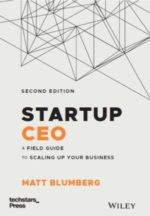
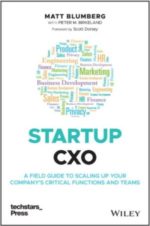
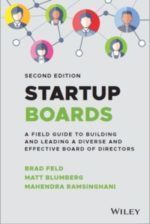
I’m thrilled to announce that we created mini-books (about 80 pages long and only $9-10 on Amazon) out of five of the major functional areas covered in Startup CXO: A Field Guide to Scaling Up Your Company’s Critical Functions and Teams, part of our series along with Startup CEO: A Field Guide to Scaling Up Your Business and Startup Boards: A Field Guide to Building and Leading an Effective Board of Directors.
I’ve always said that while I love all three books, in some ways Startup CXO is the best because it’s a “book of books.” While I’d still encourage all CEOs and senior executives (CXOs) to read the full manuscript, my friends and co-authors and I are happy to present these five books, now available on Amazon, for functional specialists:
- Startup CFO: A Field Guide to Scaling Up Your Company’s Finance Function
- Startup CRO: A Field Guide to Scaling Up Your Company’s Sales Function
- Startup CMO: A Field Guide to Scaling up Your Company’s Marketing Function
- Startup CPO: A Field Guide to Scaling Up Your Company’s HR/People Function
- Startup CTO: A Field Guide to Scaling Up Your Company’s Technology/Product Function
Each book has several topics in common – chapters on the nature of an executive’s role, how a fractional person works in that role, how the role works with the leadership team, how to hire that role, how the role works in the beginning of a startup’s life, how the role scales over time, and CEO:CEO advice about managing the role.
In Startup CFO, the role-specific topics Jack Sinclair talks about are Laying the CFO Foundation, Fundraising, Size of Opportunity, Financial Plan, Unit Economics and KPIs, Investor Ecosystem Research, Pricing and Valuation, Due Diligence and Corporate Documentation, Using External Counsel, Operational Accounting, Treasury and Cash Management, Building an In-House Accounting Team, International Operations, Strategic Finance, High Impact Areas for the Startup CFO as Partner, Board and Shareholder Management, Equity, and M&A.
In Startup CRO, the role-specific topics Anita Absey talks about are Hiring the Right People, Profile of Successful Sales People, Compensation, Pipeline, Scaling the Sales Organization, Sales Culture, Sales Process and Methodology, Sales Operating System, Marketing Alignment, Market Assessment & Alignment, Channels, Geographic Expansion, and Packaging & Pricing.
In Startup CMO, the role-specific topics Nick Badgett and Holly Enneking talk about are Generating Demand for Sales, Supporting the Company’s Culture, Breaking Down Marketing’s Functions, Events, Content & Communication, Product Marketing, Marketing Operations, Sales Development, and Building a Marketing Machine.
In Startup CPO (HR/People), the role-specific topics Cathy Hawley talks about are Values and Culture, Diversity Equity and Inclusion, Building Your Team, Organizational Design and Operating Systems, Team Development, Leadership Development, Talent and Performance Management, Career Pathing, Role Specific Learning and Development, Employee Engagement, Rewards and Recognition, Reductions in Force, Recruiting, Onboarding, Compensation, People Operations, and Systems.
In Startup CTO (Technology and Product), the role-specific topics Shawn Nussbaum talks about are The Product Development Leaders, Product Development Culture, Technical Strategy, Proportional Engineering Investment and Managing Technical Debt, Shifting to a New Development Culture, Starting Things, Hiring Product Development Team Members, Increasing the Funnel and Building Diverse Teams, Retaining and Career Pathing People, Hiring and Growing Leaders, Organizing Collaborating with and Motivating Effective Teams, Due Diligence and Lessons Learned from a Sale Process, Selling Your Company, Preparation, and Selling Your Company/Telling the Story.
Each of these executives is a true subject matter expert, not to mention a great friend and someone who is a lot of fun to hang out with on an executive team. I’m proud of these books and hope they’re a useful addition to the startup canon.
The Gift of Feedback, Part III
The Gift of Feedback, Part III
I’ve written about our 360 Review process at Return Path a few times in the past:
- overall process
- process for my review in particular
- update on a process change and unintended consequences of that process change)
- learnings from this year’s process about my staff
And the last two times around, I’ve also posted the output of my own review publicly here in the form of my development plan:
So here we are again. I have my new development plan all spruced up and ready to go. Many thanks to my team and Board for this valuable input, and to Angela Baldonero (my fantastic SVP People and in-house coach), and Marc Maltz of Triad Consulting for helping me interpret the data and draft this plan. Here at a high level is what I’m going to be working on for the next 1-2 years:
- Institutionalize impatience and lessen the dependency dynamic on me. What does this mean? Basically it means that I want to make others in the organization and on my team in particular as impatient as I am for progress, success, reinvention, streamlining and overcoming/minimizing operational realities. I’ll talk more about something I’ve taken to calling “productive disruption” in a future blog post
- Focus on making every staff interaction at all levels a coaching session. Despite some efforts over the years, I still feel like I talk too much when I interact with people in the organization on a 1:1 or small group basis. I should be asking many more questions and teaching people to fish, not fishing for them
- Continue to foster deep and sustained engagement at all levels. We’ve done a lot of this, really well, over the years. But at nearly 250 people now and growing rapidly, it’s getting harder and harder. I want to focus some real time and energy in the months to come on making sure we keep this critical element of our culture vibrant at our new size and stage
- I have some other more tactical goals as well like improving at public speaking and getting more involved with leadership recruiting and management training, but the above items are more or less the nub of it
One thing I know I’ll have to do with some of these items and some of the tactical ones in particular is engage in some form of deliberate practice, as defined by Geoffrey Colvin in his book Talent is Overrated (blog post on the book here). That will be interesting to figure out.
But that’s the story. Everyone at Return Path and on my Board – please help me meet these important goals for my development over the next couple of years!
New People Electrify the Organization
New People Electrify the Organization
We had a good year in 2009, but it was tough. Whose wasn’t? Sales were harder to come by, more existing customers left or asked for price relief than usual, and bills were hard to collect. Worse than that, internally a lot of people were in a funk all year. Someone on our team started calling it “corporate ennui.” Even though our business was strong overall and we didn’t do any layoffs or salary cuts, I think people had a hard time looking around them, seeing friends and relatives losing their jobs en masse, and feeling happy and secure. And as a company, we were doing well and growing the top line, but we froze a lot of new projects and were in a bit of a defensive posture all year.
What a difference a year makes. This year, still not perfect, is going much better for us. Business conditions are loosening up, and many of our clients have turned the corner. Financially, we’re stronger than ever. And most important, the mood in the company is great. I think there are a bunch of reasons for that – we’re investing more, we’re doing a ton of new innovation, people have travel budgets again, and people see our clients and their own friends in better financial positions.
But by far, I think the most impactful change to the organizational mood we’re seeing is a direct result of one thing: hiring. We are adding a lot of new people this year – probably 60 over the course of the year on top of the 150 we had at the beginning of the year. And my observation, no matter which office of ours I visit, is that the new people are electrifying the organization. Part of that is that new people come in fresh and excited (perhaps particularly excited to have a new job in this environment). Part of it is that new people are often pleasantly surprised by our culture and working environment. Part of it is that new people come in and add capacity to the team, which enables everyone to work on more new things. And part of it is that every new person that comes in needs mentoring by the old timers, which gives the existing staff reminders and extra reason to be psyched about what they’re doing, and what the company’s all about.
Whether it’s one of these things or all of them, I’m not sure I care. I’m just happy the last 18 months are over. The world is a brighter place, and so is Return Path. And to all of our new people (recent and future), welcome…thanks for reinvigorating the organization!
A Perfect Ten
Return Path turns 10 years old today. We are in the midst of a fun week of internal celebrations, combined with our holiday parties in each office as well as year-end all-hands meetings. I thought I would share some of my reflections on being 10 in the blog as I’ve shared them with our team. What being 10 means to me – and what’s enabled us to make it this long:
- It means we’ve beaten the odds. Two major global economic meltdowns. The fact that 90% of new small businesses fail before they get to this point. Probably a higher percentage of venture backed startups fail before they get to 10 as well
- We’ve gotten here because we’ve been nimble and flexible. Over our 10 years, we’ve seen lots of companies come and go, clinging to a model that doesn’t work. We may have taken a while and a few iterations to get to this point, but as one of my Board members says, “we’re an overnight success, ten years in the making!”
- We’ve also made it this long because we have had an amazing track record with our three core constituencies – employees, clients, and investors – including navigating the sometimes difficult boundaries or conflicts between the three
What I’m most proud of from our first decade:
- We’ve built a great culture. Yes, it’s still a job. But for most of our team members most of the time, they like work, they like their colleagues, and they have a fun and engaging time at work. That’s worth its weight in gold to me
- We’ve built a great brand and have been hawkish about protecting our reputation in the marketplace. That’s also the kind of thing that can’t be bought
- We haven’t sacrificed our core principles. We’ve always, going back to our founding and the ECOA business, had a consumer-first philosophy that runs deep. This core principle continues to serve us well in deliverability (a non-consumer-facing business) and is clearly the right thing to do in the email ecosystem
What I most regret or would do differently if given the chance:
- We have not raised capital as efficiently as possible – mostly because our company has shifted business models a couple of times. Investors who participated in multiple rounds of financing will do very well with their investments. First or second round angel investors who didn’t or couldn’t invest in later rounds will lose money in the end
- I wish we were in one location, not five. We are embracing our geographic diversity and using it to our advantage in the marketplace, but we pay a penalty for that in terms of travel and communication overhead
- We have at times spread ourselves a little too thin in pursuit of a fairly complex agenda out of a relatively small company. I think we’re doing a good job of reigning that in now (or growing into it), but our eyes have historically been bigger than our stomachs
Thanks to all our investors and Board members, especially Greg Sands from Sutter Hill Ventures, Fred Wilson from Flatiron Partners and Union Square Ventures, Brad Feld from Mobius Venture Capital, and Scott Weiss for their unwavering support and for constantly challenging us to do better all these years. Thanks to our many customers and partners for making our business work and for driving us to innovate and solve their problems. Thanks to our many alumni for their past efforts, often with nothing more to show for it than a line item on their resume. And most of all, thanks to our hardworking and loyal team of nearly 200 for a great 2009 and many more exciting years ahead!
People First
People First
I do not think it’s telling that my fourth post in this series of posts on Return Path’s core values (kickoff post, tag cloud) is something called People First. Ok, it probably should have been the first post in the series. To be fair, it is the first value on our list, but for whatever reason, the value about Ownership was top of mind when I decided to create this series.
Anyway, at Return Path,
We believe that people come first
And we aren’t shy about saying it publicly, either. This came up in a lengthy interview I did with Inc. Magazine last year when we were profiled for winning an award as one of the top 20 small- and mid-sized businesses to work for in America. After re-reading that article, I went back and tried to find the slide from our investor presentations that I referred to. I have a few versions of this slide from different points in time, including one that’s simpler (it only has employees, clients, and shareholder on it) but here’s a sample of it:

That pretty much says it all. We believe that if we have the best and most engaged workforce, we will do the best job at solving our clients’ problems, and if we do that well, our shareholders will win, too.
How does this “people first” mentality influence my/our day-to-day activities? Here are a few examples:
- We treat all employees well, regardless of level or department. All employees are important to us achieving our mission – otherwise, they wouldn’t be here. So we don’t do a lot of things that other companies do like send our top performing sales reps on a boondogle together while the engineers and accountants slave away in the office as second-class citizens. That would be something you might see in a “sales first” or “customer first” culture
- We fiercely defend the human capital of our organization. There are two examples I can think of around this point. First, we do not tolerate abusive clients. Fortunately, they are rare, but more than once over the years either I or a member of my senior team has had to get on the phone with a client and reprimand them, or even terminate their contract with us, for treating one of our employees poorly and unprofessionally. And along the same lines, when all economic hell broke loose in the fall of 2008, we immediately told employees that while we’d be in for a rough ride, our three top priorities were to keep everyone’s job, keep everyone’s compensation, and keep everyone’s health benefits. Fortunately, our business withstood the financial challenges and we were able to get through the financial crisis with those three things intact.
- We walk the walk with regard to employee feedback. Everyone does employee satisfaction surveys, but we are very rigorous about understanding what areas are making people relatively unhappy (for us, even our poor ratings are pretty good, but they’re poor relative to other ratings), and where in the employee population (office, department, level) those issues lie. We highlight them in an all-hands meeting or communication, we develop specific action plans around them, and we measure those same questions and responses the next time we do a survey to see how we’ve improved
- We invest in our people. We pay them fairly well, but that’s not what I’m talking about. We invest in their learning and growth, which is the lifeblood of knowledge workers. We do an enormous amount of internal training. We encourage, support, and pay for outside training and education. We are very generous with the things that allow our employees to be happy and healthy, from food to fitness to insurance to time off to a flexible environment to allowing them to work from another office, or even remotely, if their lives require them to move somewhere else
- I spend as little time as I possibly can managing my shareholders and as much time as I can with employees and prospective employees. That doesn’t mean I don’t interact with my Board members – I do that quite a bit. But it does mean that when I do interact with them, it’s more about what they can do for Return Path and less about reporting information to them. I do send them a lot of information, but the information flow works well for them and simultaneously minimizes my time commitment to the process: (1) reporting comes in a very consistent format so that investors know WHAT to expect and what they’re looking at, (2) reporting comes out with a consistently long lead time prior to a meeting so investors know WHEN to expect the information, (3) the format of the information is co-developed with investors so they are getting the material they WANT, and (4) we automate as much of the information production as possible and delegate it out across the organization as much as possible so there’s not a heavy burden on any one employee to produce it
- When we do spend time with customers (which is hopefully a lot as well), we try to spread that time out across a broad base of employees, not just salespeople and account managers, so that as many of our employees can develop a deep enough understanding of what our customers’ lives are like and how we impact them
There are plenty of companies out there who have a “shareholder first” or “customer first” philosophy. I’m not saying those are necessarily wrong – but at least in our industry, I’ll bet companies like that end up with significantly higher recruiting costs (we source almost half our new hires from existing employee referrals), higher employee churn, and therefore lower revenue and profit per employee metrics at a minimum. Those things must lead to less happy customers, especially in this day and age of transparency. And all of those things probably degrade shareholder value, at least over the long haul.
HR/People Lessons from Netflix
It feels as if almost everyone in our industry has read the famous Netflix culture deck on Slideshare, and with over 5mm views, that may not be too far off. If you haven’t looked at it before, and if you care about your organization’s culture and how productive and happy employees are the best kind of employees, then take the time to flip through it.
As part of a benchmarking exercise we did on employers with unique and best HR/People practices a few years ago, a few of us did either site visits or at least live interviews with leaders at four companies, all of whom are pretty well known for progressive People practices that are also in-line with our company’s culture: Morningstar, Gore, Nucor, and Netflix. As part of this, we met in person with Patty McCord, Netflix’s long-time head of People. It was a really informative meeting.
Now Patty has written a longform article in Harvard Business Review that shares a lot of what we learned from her in her office that day. It’s absolutely worth a read. Netflix does have a pretty distinct culture and gets positive but mixed reviews on Glassdoor, so as with everything, I’m not advocating adopting everything they do lock, stock, and barrel. But I can guarantee that some of the lessons that Patty shares are valuable no matter what your company is like.