
Decisions
Happy Leap Day!
One of the better books I’ve read in the last 6 months is James Clear’s Atomic Habits: An Easy & Proven Way to Build Good Habits & Break Bad Ones, which provides a great framework around habits. It’s worth a read, whether you’re talking about business habits/routines or personal ones. This isn’t a book review, but quickly while I have you – here’s a summary of his “laws”:
HOW TO CREATE A GOOD HABIT
The 1st Law: Make It Obvious
The 2nd Law:Make It Attractive
The 3rd Law: Make It Easy
The 4th Law: Make It Satisfying
HOW TO BREAK A BAD HABIT
Inversion of the 1st Law: Make It Invisible
Inversion of the 2nd Law: Make It Unattractive
Inversion of the 3rd Law: Make It Difficult
4th Law: Make It Unsatisfying
Add to that my other key takeaway, which is that you have to tie habits not just to outcomes but to identities, and…great book! Anyway, my story today is about decisions, and I’m going to quote James Clear’s email newsletter here, at the end of which he credits Tim Ferriss for sparking his thinking. So this is, what, third hand thinking. But it’s a great way to think about decisions, something I’ve written about a lot, including here.
I think about decisions in three ways: hats, haircuts, and tattoos.
Most decisions are like hats. Try one and if you don’t like it, put it back and try another. The cost of a mistake is low, so move quickly and try a bunch of hats.
Some decisions are like haircuts. You can fix a bad one, but it won’t be quick and you might feel foolish for awhile. That said, don’t be scared of a bad haircut. Trying something new is usually a risk worth taking. If it doesn’t work out, by this time next year you will have moved on and so will everyone else.
A few decisions are like tattoos. Once you make them, you have to live with them. Some mistakes are irreversible. Maybe you’ll move on for a moment, but then you’ll glance in the mirror and be reminded of that choice all over again. Even years later, the decision leaves a mark. When you’re dealing with an irreversible choice, move slowly and think carefully.
As someone who loves hats, has had (and seen) his fair share of bad haircuts, and has a tattoo, I can totally relate!
About
My name is Matt Blumberg. I am a technology entrepreneur and business builder based in New York City. I am CEO of Markup AI, the leading provider of Content Guardian Agents to companies of all sizes looking to scale their use of AI to generate content smartly and safely. We are defining a new category in the Generative AI space and crushing it.
Before that, I started a company called Bolster, which was an on-demand executive talent marketplace. We created a new way to scale executive teams and boards aimed at early and mid-stage tech companies. The business sort of worked and sort of didn’t work. We wound it down in 2025 and decided to focus on helping the portfolio companies we invested in via Bolster Ventures and help our friends with talent referrals on a more informal basis.
My longest career stint was Return Path, a company I started in 1999, which we sold in 2019. We created a business that was the global market leader in email intelligence, analyzing more data about email than anyone else in the world and producing applications that solve real business problems for end users, commercial senders, and mailbox providers. In the end, we served over 4,000 clients with about 450 employees and 12 offices in 7 countries. We also built a wonderful company with a signature People First Culture that won a number of awards over the years, including Fortune Magazine’s #2 best mid-sized place to work in 2012.
Early in my career, I ran marketing and online services for MovieFone/777-FILM (www.moviefone.com), now a division of AOL. Before that — I was in venture capital at General Atlantic Partners (www.gapartners.com), and before that, a consultant at Mercer Management Consulting (www.mercermc.com). And I went to Princeton before that.
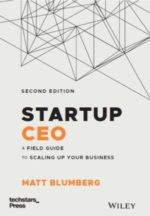
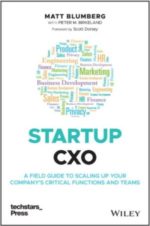
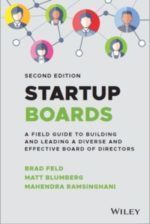
Based on this blog, I wrote a book called Startup CEO: A Field Guide to Scaling Up Your Business, which was published by Wiley in 2013 and updated in 2020. I followed that by co-authoring a book with a number of my fellow executives from Retutrn Path and Bolster called Startup CXO: A Field Guide to Scaling Up Your Company’s Critical Functions and Teams; as well as the second edition of Startup Boards: A Field Guide to Building and Leading an Effective Board of Directors along with Brad Feld and Mahendra Ramsinghani. I hosted a podcast called The Daily Bolster, with over 200 micro-episodes (mostly 5-6 minutes long) where I interview other CEOs to share their stories and hacks.
I have been married for over 25 years to Mariquita, who is, as I tell her all the time, one of the all-time great wives. We have three great kids now in their late teens, Casey, Wilson, and Elyse.
I have lots of other hobbies and interests, like coaching my kids’ baseball and softball teams; traveling and seeing different corners of the world; reading all sorts of books, particularly about business, American Presidential history, art & architecture, natural sciences (for laymen!), and anything funny; cooking and wishing I lived in a place where I could grill and eat outdoors year-round; playing golf; lumbering my way through the very occasional marathon, eating cheap Mexican food; introducing my kids to classic movies; and playing around with new technology. I hosted a limited edition podcast series called Country Over Self which explored the topic of virtue in the Oval Office along with a dozen prominent presidential historians.
IF YOU WANT TO UNDERSTAND WHAT THIS BLOG IS ALL ABOUT, read my first two postings: You’re Only a First Time CEO Once, and Oh, and About That Picture, as well as my updated post when I relaunched the blog with its new name, StartupCEO.com.
Bring People Along for The Ride, Part II of II
Last week, I wrote about Bringing People Along for The Ride by involving people in the process of ideating and creating change in your organization. That’s the most important thing you can do to make it easy for people to handle change.
But what about the people you don’t or can’t bring along for the ride in that way? If you organization has more than 10 people in it, there will inevitably be people where you’re IMPOSING CHANGE ON THEM. And honestly, even people who are involved in designing change still have to live through its impact.
Today’s post is about managing the actual impact.
The best thing you can do as a leader in helping your organization navigate change is to be empathetic to the fact that, even if you involve people in designing the solution, you are, in fact, making changes to their day to day lives. One of the best books I’ve ever read on this is Transitions: Making Sense of Life’s Changes, by William Bridges. And while there’s a lot more to the book than this one point, I’ll share two graphics from the book and its offshoots that say a lot.
Bridges’ basic concept is to think about changes as having three phases. The end of the old thing, the beginning of the new thing, and the time between the two – when the new thing has been announced, but the it hasn’t taken effect yet. Here’s a look at one powerful graphic on this front, where the point is that productivity (the red line) tanks briefly during the time of uncertainty with the overlay of human emotions at each phase.

Next let’s look at Bridges’ model for how to think about these three phases. This part is critical. They are not discrete phases, where everyone finished “ending” and moves onto “neutral” and then moves on to “new.” From the moment a change is in the offing, until after the change is implemented, people are simultaneously operating in all three zones at the same time, in different proportions.

That means when change starts, you’re already helping them understand that there will be a period of confusion followed by a bright new future. And it means that even when the bright new future has arrived, you’re still mindful of the confusion as well as the things that were special about the past.
I wrote about this a little bit in the second edition of Startup CEO and in this blog post on transitions and integration. The paragraph I’ll call out is:
For ourselves as leaders and me as CEO, knowing most of us would leave almost immediately post-deal, I wanted to have as elegant an exit as possible after 20 years. Fortunately, I had a good partner in this dialog in Mark Briggs, the acquiring CEO. Mark and I worked out rules of engagement and expenses associated with “the baton pass,” as we called it, that let our execs have the opportunity to say a proper goodbye and thank you to our teams, with a series of in-person events and a final RP gift pack. This was a really important way we all got closure on this chapter in our lives
The Baton Pass is a helpful analogy to think about this process. In a relay race, the two runners run alongside each other for a little while until they are at the same pace and proper spot, THEN one hands the other the baton. It’s the time when the past and the future collide, in a neutral zone. When you mark the great things and painful learnings that came before and launch into the bright new future.
The best thing you can do as a leader who is driving change through an organization is to Bring People Along for the Ride. Part of that is involving people in the creation of the new world. But it’s also recognizing that humans have to process change, and that takes time.
RSS Advertising
RSS Advertising
This is two-day-old news by now, but in case you missed it, we just announced than we – Return Path – are partnering with Feedburner to take RSS advertising to the next level (coverage here, here, and here).
As you probably know if you receive my feed or other ones, Feedburner has been doing some experimenting with ad units at the bottom of feeds for months now, first using Amazon and more recently Google AdSense to serve up ads. And as you may know if you look at ads closely, neither of those services has done a great job making the ads truly relevant. I can’t tell you, for example, the number of times I write a posting about a book, and the ad has absolutely nothing to do with books, let alone the book or author I’m writing about. My favorite one was a posting Fred wrote called “Why a Conservative Turns Liberal,” with an ad called “Meet Conservative Singles” — probably not Fred’s intent, although it certainly brought a smile to my face.
Anyway, what we’re doing with Feedburner is very simple. Our Customer Acquisition Solutions group sells lead generation products to hundreds of advertisers each month in the form of either email list rental or web-based lead gen based on categories of interest expressed by consumers who sign up with our Postmaster Direct service. Feedburner has categorized a number of the 100,000+ feeds they publish as “Consumer Electronics” or “Computing and Technology,” which are two of the strongest categories we have, both in terms of consumers and in terms of advertisers.
So our salesforce is going to add “RSS” as an option for our advertisers in those categories, and we will work with Feedburner to insert demo-targeted ads into select feeds. We and Feedburner both acknowledge this is an experiment, but we’re very optimistic about the results: the demographics should line up perfectly and provide our advertisers with a new channel as part of their existing campaigns. I’m sure Dick or someone else at Feedburner will blog about it as well at some point, and if we learn anything truly interesting after the first few months, we’ll let the world know!
Agile Reading
Agile Reading
While not exactly a laugh a minute, Lean Software Development: An Agile Toolkit, by Mary and Tom Poppendieck, is a good read for anyone who is a practitioner of agile development — or anything agile. (Note: if you want a laugh a minute, read Who Moved My Blackberry?, which as Brad says, is hilarious — kind of like The Office in book form).
As I wrote about here and here, Return Path now does both agile development and agile marketing. The book draws many interesting comparisons between manufacturing and engineering, which I found quite interesting, and not just because I’m a former management consultant — there’s something that’s just easier to visualize about how an assembly line works than about how code is written. The foundation of the book is writings and sidebar anecdotes about 22 Tools, all of which are helpful to understand the principles which underly and power a successful agile process.
Concepts such as seeing and eliminating waste, empowering a team while still managing to lead it, and why small-batch work and application of the theory of constraints makes sense across the board are made easy to understand and easy to apply by the authors.
Thanks to my colleague Ed Taussig for this book.
Startup CEO: The Online Course
As most of you know by now, I wrote a book that was published last fall called Startup CEO: A Field Guide to Scaling Up Your Business. I’m excited to announce that, starting on January 20th, the book has now been turned into Kauffman Fellows Academy (KFA) online course called Startup CEO. Similarly, Brad Feld and Jason Mendelson’s highly successful Venture Deals is also going to launch as Venture Deals KFA online course on February 24th. Both will be offered initially on the NovoEd platform.
The parties involved in getting it off the ground (besides me) were the team at Kauffman Fellows Academy and NovoEd. Clint Korver, a serial entrepreneur and Stanford adjunct professor, spearheaded the project, and between filming the course and now, he switched jobs from KFA to be the COO at NovoEd, so he has been on all sides of this. NovoEd is a very unique online educational platform that gives students the ability internationally to work together in teams and collaborate on assignments and peer review one another’s work. So far over 1,300 people have signed up for Startup CEO from countries as far-flung as the China, Brasil, Iran, the U.K., Australia and, of course, Silicon valley.. This is an exciting extension of the book for me to watch unfold.
The class itself is a very unique format, a bit of “the entrepreneur’s studio” model. For each chapter of the book (there are 48), I filmed a 5-10 minute Q&A with Clint in front of a live audience of a dozen startup CEOs in New York. This was a serious production – much more than I expected – with a three-person former CNN production team of Kevin Rockwell, Chuck Afflerbach, and led by former Emmy Award winning CNN Correspondent Rusty Dornin. Preparing for the class this way was fun and gave me a good opportunity to further crystallize the main point or theme of each chapter. Having a live audience was super helpful to see what worked and what didn’t work.
Startup CEO: The Online Course Part II
Startup CEO: The Online Course Part II
Startup CEO the online course offered by the Kauffman Fellows Academy is back this fall starting September 15! As many of you know, the course is based on my book Startup CEO: A Field Guide to Scaling Your Business.
When the course first ran earlier this year, I wasn’t sure what to expect. Hundreds of students from six continents signed up, all eager to learn as much as they could about entrepreneurship and how to develop their startups. The students worked together in teams to develop their startup ideas on the unique online educational platform NovoEd. I was amazed at the enthusiasm of students who dove into lectures and the book and then exchanged ideas in the forums. It was very powerful to see cohorts of students from all over the world sharing their experiences together, almost like the CEO peer group that I write about in the book.
The real power of it really hit me when I was in Brazil this last spring at a dinner and one of the attendees approached me and told me he was one of the Startup CEO students and how much he was enjoying the course.
To bring the class to life, we began holding Google hangouts moderated by KFA VP and former CNN correspondent Rusty Dornin. The students could write in questions live during the hangout or watch the recorded version later. The hangouts were not only informative but fun.
Here are a few comments from students in the winter course:
“The lectures and the hangouts were incredibly insightful. I’m sure I’ll avoid a good number of mistakes I would have surely made without taking this class!
“I enjoyed the high quality of the lecturers and their very practical experience and guidance. This included the excellent visiting lecturers and whilst I was unable to join the hangouts in real time (I’m in Australia) I was able to watch the recordings”
In addition, Brad Feld and Jason Mendelson’s course Venture Deals based on their popular book Venture Deals: Be Smarter than Your Lawyer and Venture Capitalist will begin September 29th. Brad Feld and other celebrated investors will also be featured in hangouts for the course and Brad loves to dive into the forums.
I am looking forward to this next round and our global discussion of how to create and manage successful startups.
New Media Deal, Part II – the We Media Deal
New Media Deal, Part II – the We Media Deal
My original New Medial Deal posting from August, 2004, is my favorite posting of all 220 or so that I’ve done to date. It has the most clicks of any posting I’ve done. People mention it to me all the time. I even used it as the foundation for the preface to our book at Return Path, Sign Me Up!
The general thesis (although the original posting is short and worth reading) is simple. Old Media was one-way communication – they produce it, you consume it, and Old Media had a deal with us: they give us free or cheap content, we tolerate their advertising. Think about your favorite radio station or an episode of The Office on TV. The New Media deal is an Internet derivative of that, that is founded on some degree of two-way communication: they give us free services and more targeted advertising in exchange for some of our personal data — just like the Old Media deal, we are willing make a small sacrifice, in this case, some pieces of our anonymity, in a heartbeat if the value exchange is there. This is true of everything from personalized stock quotes on My Yahoo! to the New York Times on the Web. The New Media Deal doesn’t replace the Old Media Deal, it just adapts it to the new environment.
But what about the new generation of services that have popped up on the web around peer production? The ones that aren’t one-way communication or two-way communication, but community-oriented communciation. (Note I am resisting hard calling them Web 2.0, but you know it’s there somewhere.) Does the New Media Deal still apply, or are we on to something else? I think the rules are morphing once again, and now there’s a new deal — let’s call it the We Media Deal — that builds on the “data as part of the value exchange” moniker of the New Media Deal. Like its predecessor deals, the We Media Deal doesn’t replace the New Media Deal or the Old Media Deal, it just adapts it for new types of services.
The We Media Deal has two components to it: (1) the value of the service to you increases in lock-step as you contribute more data to it, and (2) the more transparent the value exchange, the more willing you are to share your data.
Ok – that sounds very academic – what do I mean in plain English? Let’s break it down.
1. The value to you increases in lock-step as you contribute more data. This is something that probably wasn’t obvious with the original New Media Deal, since it wasn’t clear that if you gave My Yahoo! incrementally more data (one more stock quote, for example), you’d get more relevant ads or services. It’s a pretty static value exchange. But think about the new generation of web services around peer production.
– The more you use Delicious to bookmark web pages, the more relevant it becomes to you, and the more dependent you become on it as your own “Internet within an Internet.”
– The more you wite a blog or post photos to Flickr, the more engrained the act of blogging becomes in your daily existence — you start looking at the world, ever so slightly, through the lens of “that would make an interesting posting” (trust me).
– The more you use Wikipedia (or wikis in general), the more committed you become to Wikipedia as your first go-to source for information, and the more you get infected with the desire to contribute to it.
The bottom line with the first part of the We Media Deal is that the more you give to the system, the more you want and need out of the system. A big part of peer production is that most people fundamentally, if quietly, want to belong to any bit of community they can find. All these new web services of late have transformed the mass Internet from a read platform to a read/write platform, so now everyone can have a say in things. The same reason eBay is cooler and bigger than the New York Times on the Web will drive this new generation of services, and new spins on old services, forward.
2. Next up — the more transparent the value exchange, the more willing you are to share your data. Transparecy rules. When you contribute to the web, you’re exposed, so why is trasparency a help and not a hindrance? Let’s look at the same 3 examples.
– Delicious let’s you delete your account and all your personal data. They’re blatant about it during the sign-up process. The result? It increases your trust in the network since you can easily exit at any time.
– Blogging and Flickr couldn’t be more transparent. They’re personal printing presses. If you’re good at it, you really have to think before you write. It’s you – you’re really hanging out there transparent for all the world to see – therefore you’re even more invested in what you write and derive even more value from the activity.
– Similarly, Wikipedia tracks who changes what, and if you make an error, the community will correct it in an astonishingly short time frame, keeping you honest.
The good news is that, while the We Media Deal is coming of age, our New Media Deal is alive and well and growing stronger as the web evolves as well. Free services and more targeted advertising in exchange for some of your personal data makes a ton of sense when the right balance of service and data is there. Transparency and control make the We Media Deal an even stronger stronger bond between company and individual, mostly because the bond is between company and community — the deal gets more solid the more we as individuals invest in it.
A Culture of Appreciation
A Culture of Appreciation
As I mentioned in my last post in the Collaboration is Hard series, we’ve tried to create a culture of appreciation at Return Path that lowers barriers to collaboration and rewards mutual successes. We developed a system that’s modeled somewhat after a couple of those short Ken Blanchard books, Whale Done and Gung Ho! It may seem a little hokey, and it doesn’t work 100% of the time, but in general, it’s a great way to make it easy for people to say a public “thanks” to a colleague for a job well done.
The idea is simple. We have an “award request” form on our company Intranet that any employee can use to request one of five awards for one or more of their colleagues, and the list evolves over time. The awards are:
ABCD – for going Above and Beyond the Call of Duty
Double E – for “everyday excellence”
Crowbar – for helping someone in sales “pry our way in” to a new customer
Damn, I Wish I’d Thought of That – for coming up with a great insight for the business (credit for the name of course goes to our former colleague Andy Sernovitz)
WOOT – for Working Out Of Title and helping a colleague
Our HR coordinator Lisa does a quick review of award submissions to make sure they are true to their definitions and make sure that people aren’t abusing the system, and the awards are announced and posted on the home page of the Intranet every week and via RSS feed in near-real time.
Each award carries a token monetary value of $25-$200 paid with American Express gift checks, which are basically like cash. We send out the checks with mini-statements to employees every quarter.
It’s not a perfect system. The biggest shortcoming is that it’s not used evenly by different people or different groups. But it’s the best thing we’ve come up with so far to allow everyone in the company to give a colleague a virtual pat on the back, which encourages great teamwork!
Corporate Sniglets
Corporate Sniglets
This might be showing my age, but those who may have watched Not Necessarily the News in the 80s might remember the Sniglets segment that Rich Hall pioneered which spawned a series of short, fun books. Sniglets are words which are not in the dictionary, but which should be. I can remember a couple of examples from years ago that make the point — aquadexterity is the ability to operate bathtub dials with one’s feet; cheedle is the orange residue left on one’s fingers after eating a bag of Cheetos.
As is the case with many companies, we have made up some of our own words over the years at Return Path – think of them as Corporate Sniglets. I’m sure we have more than these, but here are a few that we use internally:
- Underlap is the opposite of Overlap. My colleague Tom Bartel coined this gem years ago when he was leading the integration work on an acquisition we did, as in “let’s look for areas of Overlap as well as areas of Underlap (things that neither companies does, but which we should as a combined company).”
- Pre-Mortem or Mid-Mortem are the timing opposites of Post-Mortem. We do Post-Mortems religiously, but sometimes you want to do one ahead of a project to think about what COULD go wrong and how to head those things off at the pass, or in the middle of a project to course-correct on it. I believe my colleague George Bilbrey gets credit for the Pre-Mortem, and I think I might have come up with Mid-Mortem.
- Frontfill is the opposite of Backfill. While you Backfill a position after an employee leaves, you can Frontfill it if you know someone is going to leave to get ahead of the curve and make sure you don’t have a big gap without a role being filled. Credit to Mike Mills for this one
RPers, are there others I’m missing? Anyone else have any other gems from other companies?
What Does a CEO Do, Anyway?
What Does a CEO Do, Anyway?
Fred has a great post up last week in his MBA Mondays series caled “What a CEO Does.” His three things (worth reading his whole post anyway) are set vision/strategy and communicate broadly, recruit/hire/retain top talent, and make sure there’s enough cash in the bank.
It’s great advice. These three are core job responsibilities of any CEO, probably of any company, any size. I’d like to build on that premise by adding two other dimensions to the list. Fred was kind enough to offer me a “guest blogger” spot, so this post also appears today on his blog as well.
First, three corollaries – one for each of the three responsibilities Fred outlines.
- Setting vision and strategy are key…but in order to do that, the CEO must remember the principle of NIHITO (Nothing Interesting Happens in the Office) and must spend time in-market. Get to know competitors well. Spend time with customers and channel partners. Actively work industry associations. Walk the floor at conferences. Understand what the substitute products are (not just direct competition).
- Recruiting and retaining top talent are pay-to-play…but you have to go well beyond the standards and basics here. You have to be personally involved in as much of the process as you can – it’s not about delegating it to HR. I find that fostering all-hands engagement is a CEO-led initiative. Regularly conduct random roundtables of 6-10 employees. Send your Board reports to ALL (redact what you must) and make your all-hands meetings Q&A instead of status updates. Hold a CEO Council every time you have a tough decision to make and want a cross-section of opinions.
- Making sure there’s enough cash in the bank keeps the lights on…but managing a handful of financial metrics on concert with each other is what really makes the engine hum. A lot of cash with a lot of debt is a poor position to be in. Looking at recognized revenue when you really need to focus on bookings is shortsighted. Managing operating losses as your burn/runway proxy when you have huge looming CapEx needs is a problem.
Second, three behaviors a CEO has to embody in order to be successful – this goes beyond the job description into key competencies.
- Don’t be a bottleneck. You don’t have to be an Inbox-Zero nut, but you do need to make sure you don’t have people in the company chronically waiting on you before they can take their next actions on projects. Otherwise, you lose all the leverage you have in hiring a team.
- Run great meetings. Meetings are a company’s most expensive endeavors. 10 people around a table for an hour is a lot of salary expense! Make sure your meetings are as short as possible, as actionable as possible, and as interesting as possible. Don’t hold a meeting when an email or 5-minute recorded message will suffice. Don’t hold a weekly standing meeting when it can be biweekly. Vary the tempo of your meetings to match their purpose – the same staff group can have a weekly with one agenda, a monthly with a different agenda, and a quarterly with a different agenda.
- Keep yourself fresh…Join a CEO peer group. Work with an executive coach. Read business literature (blogs, books, magazines) like mad and apply your learnings. Exercise regularly. Don’t neglect your family or your hobbies. Keep the bulk of your weekends, and at least one two-week vacation each year, sacrosanct and unplugged.
There are a million other things to do, or that you need to do well…but this is a good starting point for success.