
Startup Boards eBook: How to Succeed in Your First Board Role
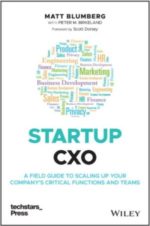
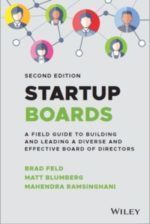
In addition to our work on helping CEOs understand board-building best practices, which I posted about last week, I’ve spent the past several months publishing a second series of blog posts to help current and aspiring directors (really, any senior executive!) understand the behind-the-scenes details of private company board service. This second series is also now an eBook and its content will also feature in the upcoming second edition of Startup Boards that I’m collaborating on with Brad Feld and Mahendra Ramsinghani.
When Bolster published the findings of our Board Benchmarking study, we revealed that 4 out of 5 seats on private company boards today are held by individuals who are white, and 86% of director seats are held by men.
And we also learned that 2 out of 3 CEOs are open to bringing on first-time directors to their boards, largely to help add some much-needed diversity to the most senior ranks of corporate service. To assist current and aspiring board directors out there, we decided to aggregate our team’s collective brainpower to shed light on how to get recruited for a board role, what to expect once you’re there, and how to make an impact.
You can see the full list of blog posts here:
- Introduction to Startup Boards
- How to Prepare Yourself to Get on Your First Board
- Should You Serve on an Advisory Board?
- Interviewing for a Board Role
- What You Need to Know About Board Compensation
- Preparing for Your First Board Meeting
- Corporate Governance as a Board Member
- How to Be a Great Board Member
- When Things Aren’t Black and White: How to Deal with Murky Areas
- Giving Difficult Feedback and Making Your Voice Heard
- How to Know if You’re Doing a Good Job as a Board Member
You can download all of these in an eBook, How to Succeed in Your First Board Role, from the Bolster web site.
We hope this book helps inspire and empower you on your own journey as a board director. And if you’d like to get access to more exclusive content like this and be considered for a board role in the future, you can sign up as a Bolster member here.
Why I joined the DMA Board, and what you can expect of me in that role
Why I joined the DMA Board, and what you can expect of me in that role
I don’t normally think of myself as a rebel. But one outcome of the DMA’s recent proxy fight with Board member Gerry Pike is that I’ve been appointed to the DMA’s Board and its Executive Committee and have been labeled “part of the reform movement” in the trade press. While I wasn’t actively leading the charge on DMA reform with Gerry, I am very enthusiastic about taking up my new role.
I gave Gerry my proxy and support for a number of reasons, and those reasons will form the basis of my agenda as a DMA Board member. As a DMA member, and one who used to be fairly active, I have grown increasingly frustrated with the DMA over the past few years.
1. The DMA could be stronger in fighting for consumers’ interests. Why? Because what’s good for consumers is great for direct marketers. Marketing is not what it used to be, the lines between good and bad actors have been blurred, and the consumer is now in charge. The DMA needs to more emphatically embrace that and lead change among its membership to do the same. The DMA’s ethics operation seems to work well, but the DMA can’t and shouldn’t become a police state and catch every violation of every member company. Its best practices and guidelines take too long to produce and usually end up too watered down to be meaningful in a world where the organization is promoting industry self-regulation. By aggressively fighting for consumers, the DMA can show the world that a real direct marketer is an honest marketer that consumers want to hear from and buy from.
2. Despite a number of very good ideas, the DMA’s execution around interactive marketing has been lacking. The DMA needs to accept that interactive marketing IS direct marketing – not a subset, not a weird little niche. It’s the heart and soul of the direct marketing industry. It’s our future. The acquisition of the EEC has been one bright spot, but the DMA could do much more to make the EEC more impactful, grow its membership, and replicate it to extend the DMA’s reach into other areas of interactive marketing, from search to display advertising to lead generation. The DMA’s staff still has extremely limited experience in interactive marketing, they haven’t had a thought leader around interactive on staff for several years, and their own interactive marketing efforts are far from best practice. Finally, the DMA’s government affairs group, perhaps its greatest strength, still seems disproportionately focused on direct mail issues. The DMA should maintain its staunch support of traditional direct marketers while investing in the future, making interactive marketing an equal or larger priority than traditional direct marketing. We have to invest in the future.
3. Finally, I think the DMA suffers from a lack of transparency that doesn’t serve it well in the hyper-connected world we live in here in 2009 – that’s a nice way of saying the organization has a big PR problem. The organization does a lot of great work that never gets adequately publicized. This whole proxy fight episode is another example, both in the weak response from the DMA and also in a lot of the complaints Gerry lodged against the organization, many of which the organization says are untrue or misleading. Senior DMA execs or Board members should be blogging. They should be active thought leaders in the community. They should be much more engaged with their members to both understand member needs and requirements and more aggressively promote their agenda.
In short, I will be an independent voice who advocates for progress and change in the areas that I consider to be most important, and I will be transparent and open about expressing my views. I’ve already been clear with the existing DMA Board and management that I do have this agenda, and that I hope the organization will embrace it. If they do, even if only in part, I think it will be to the DMA’s benefit as well as the benefit of its members. If they reject it wholesale, my interest in long-term involvement will be fairly low.
That’s the story. As I said up front, I am taking up this new role with enthusiasm and with the belief that the DMA is open to change and progress. We’ll see how it goes, and I will blog about it as often as I can.
Do you have thoughts on the future of the DMA? I’d love to hear from you. You can leave a comment below or email me directly at matt at returnpath dot net.
The Good, The Board, and The Ugly
Fred, Brad, and Jerry have done a bunch of postings recently, and threaten to do more, sharing the VC perspective on many aspects of startups and entrepreneurship. I thought it might be interesting to share the entrepreneur’s perspective on the same subjects. I’ll try to cross-post and keep pace, but I’m already a couple behind, and I can’t crank out postings as fast as these guys can! (For reference, Fred and Brad are on my board, and Jerry as Fred’s partner is an advisor to my company, Return Path.)
Topic 1: Boards of Directors. All three have many good points. Brad says that boards come in three flavors (working, reporting, and lame duck), and that small companies need working boards which include other entrepreneurs in the industry as well as management and investors. He also advises to take good care of directors and not let them get bored. Fred calls the good ones engaged boards (interactive, candid, engaged, passionate, and involved) and says that while you can have a good company without an engaged board and even with a bored bored on occasion, to have a great business you need an engaged board. Finally, Jerry says that you should pick your board carefully and build it with some diversity like you would a management team and to avoid people who will yes you.
I basically agree with all of these points, and would add the following four thoughts for entrepreneurs:
1. Building a board can be one of a CEO’s greatest trump cards. Without being even a little bit disingenuous, you can use the “I’m the CEO and would like to talk to you about a potential board seat with my company” as an entree to meet face to face with some of the most interesting, senior, brand-name people in your industry (turns out, flattery will occasionally get you somewhere). Use this card wisely and sparingly, and always be prepared to follow up on your meetings, but take full advantage of it as a way to network. You never know what opportunities you’ll uncover along the way.
2. Don’t think of managing your Board as a burden. Communicate early and often to your Board members and make sure all big conversations and debates are pre-wired in one-to-one conversations before Board meetings, and that debates are framed and researched properly in advance of meetings. Nail the basics (reporting, financial reviews, well-crafted and easy-to-read materials sent out several days before the meeting), so you can focus the valuable meeting time on strategy, not on the minutiae.
3. Figure out how to work differently with investor directors and outside directors. VCs who sit on your board have very different interests, time availability, and things to contribute than outside directors, especially non-retired industry executives. Not all directors are created equally, and you don’t have to behave as if they are.
4. Sit on a board yourself. There’s nothing like a real-live counterpoint to make you take a step back and think about how to build and run an effective board. Find something — another startup, a nonprofit, your high school or college alumni association — to join as a board member. Watch and learn.
All that said, the most important thing I’ve found in running a board is following Brad, Jerry, and Fred’s collective wisdom about fostering an engaged/working board. Definitely don’t let them get bored on you!
How to Get Laid Off
How to Get Laid Off – an Employee’s Perspective
One of my colleagues at Return Path saw my post about How to Quit Your Job about 5 years ago and was inspired to share this story with me. Don’t read anything into this post, team! There is no other meaning behind my posting it at this time, or any time, other than thinking it’s a very good way of approaching a very difficult situation, especially coming from an employee.
In 2009 I was working at a software security start up in the Silicon Valley. Times were exceedingly tough, there were several rounds of layoffs that year, and in May I was finally on the list. I was informed on a Tuesday that my last day was that Friday. It was a horrible time to be without a job (and benefits), there was almost no hiring at all that year, one of the worst economic down turns on record. While it was a hard message, I knew that it was not personal, I was just caught up on a bad math problem.
After calling home to share the bad news, I went back to my desk and kept working. I had never been laid off and was not sure what to do, but I was pretty sure I would have plenty of free time in the short term, so I set about figuring out how to wrap things up there. Later that day the founder of the company came by, asked why I had not gone home, and I replied that I would be fine with working till the end of the week if he was okay with it. He thanked me.
Later that week, in a meeting where we reviewed and prioritized the projects I was working on, we discussed who would take on the top three that were quite important to the future of the company. A few names were mentioned of who could keep them alive, but they were people who I knew would not focus on them at all. So I suggested they have me continue to work on them, that got an funny look but when he thought about it , it made sense, they could 1099 me one day a week. The next day we set it up. I made more money than I could of on unemployment, but even better I kept my laptop and work email, so I looked employed which paid off later.
That one day later became two days and then three, however, I eventually found other full time work in 2010. Layoffs are hard, but it is not a time to burn bridges. In fact one of the execs of that company is a reference and has offered me other opportunities for employment.
Why I Love My Board
Why I Love My Board
Fred may be the only one of my directors who has done something this dorky, this publicly, but quite frankly, I could see any of us in the same position. Guys, next meeting, we’re having nerd olympics.
Why I Love My Board, Part III
Why I Love My Board, Part III
My prophesy is starting to come true. In Part I of this series four years ago, I asserted that
Fred may be the only one of my directors who has done something this dorky, this publicly, but quite frankly, I could see any of us in the same position.
Now, Brad Feld is no shrinking violet. As far as I’m concerned, he made his film debut in the memorable “Munch on Your Bones” video (short, worth a watch if you’re a Feld groupie) something like 6 or 7 years ago for an all-hands meeting I ran. But his newest short feature film, “I’m a VC,” made with his three partners, Jason, Ryan, and Seth, is a must-see for anyone in the entrepreneur-VC set and puts him up there with Fred in the pantheon of “this dorky, this publicly.”
I’m Having a Blast at Bolster — Here’s Why
Someone asked me the other day how things are going at Bolster, the new company I started along with a bunch of long-time colleagues from Return Path last year. My visceral answer was “I’m having a blast!” I thought about it more after and came up with five reasons why.
First, I am working with a hand-picked group of people. My co-founders, I’ve worked with for an average of 15 years – we know and trust each other tremendously. And for the most part, the same is true about our cap table. Almost everyone else at the company is also someone multiple of us have known or worked with for years. That may not last forever, but it makes things so much easier and almost friction-free out of the gate here.
Second, this is the “second lap around the track” for a few of us on the founding team in terms of starting something from scratch, and even those at the company who haven’t done a raw startup before are super experienced professionals and many have worked in and around early stage businesses a lot. All this combines to cut down our error rate, reduce anxiety, and speed up the pace of work. More friction-free or at least low-friction work.
Third, after a 20-year run at Return Path, it’s great to start with a clean slate. No mountains of tech debt and legacy code bases. No installed base of customers with contracts or pricing we no longer like or offer. No institutional debt like a messy cap table, legacy people issues, leases for offices we don’t want or need any more. This also points to low friction as part of what’s going on…and while that’s a theme, the next two areas are different.
The fourth reason I’m having a blast at Bolster is that I love — and really live in — the problem space we are working in. When we started Return Path, I was deeply familiar with email marketing and the challenges faced by our client set and had a good vision for the early product. But as the years went on, the product got geekier and nicher — and even when it wasn’t, I was never a USER of the product since I’m not an email marketer. In fact, at our peak of 500 people, the company employed one email marketer and therefore had one user of our own product. At Bolster, we have three user personas — Member, Client, and Partner. And I’m all three of them. I’m constantly in the product, multiple times a day. I’m deeply familiar with all angles of the executive search and board building process. It’s MUCH better to be this close to the product, and the same is true for many of our team members.
Finally, the thing I was really worried about with starting another company from scratch — moving from a leadership role into an individual contributor role — has been nothing short of fantastic. I love working with clients. I love talking to members. I love advising and coaching CEOs. I love being a pretend product manager. I love writing marketing copy. It’s just great to be on the front lines. (I still love working on strategy and leading the board and engaging with people internally — but those are things that never stopped being part of my day to day.)
I was trying to think if there’s some priority to this list. Almost all of these items are or can be made to be true in your second+ startup. But while four of the five can theoretically be true in your first startup as well, I don’t think it’s quite the same. So I’d have to weight “second lap around the track” a bit higher and also note that during your second lap around the track, hand-picking your team and cap table, appreciating a clean slate, and appreciating individual contributor work are that much easier and things you can appreciate a lot more as a repeat entrepreneur.
The Social Aspects of Running a Board
The Social Aspects of Running a Board
I’ve posted about the the topic of Boards of Directors a couple of times before, here and here. We had one of our quarterly in-person Board meetings yesterday, which I always enjoy, and one of my directors pointed out that I never posted about the social aspects of running a Board. Since this is a critical component of the job, it is certainly worth mentioning.
A high functioning Board isn’t materially different from any other high functioning team. The group needs to have a clear charter or set of responsibilities, clear lines of communication, and open dialog. And as with any team, making sure that the people on a Board know how to connect with each other as individuals as critical to building good relationships and having good communication, both inside and outside of Board meetings.
We’ve always done a dinner either before or after every in-person Board meeting to drive this behavior. They take different forms: sometimes they are Board only, sometimes Board and senior management; sometimes just dinner, sometimes an event as well as dinner, like bowling (the lowest common denominator of sporting activities) or a cooking class, as we did last night. But whatever form the “social time” takes, and it doesn’t have to be expensive at all, I’ve found it to be an incredibly valuable part of team-building for the Board over the years.
You’d never go a whole year without having a team lunch or dinner or outing…treat your Board the same way!
Getting the Most out of Your Investors
Getting the Most out of Your Investors
Fred Wilson has been a venture investor and director in Return Path since 2000, first with Flatiron Partners and then with Union Square Ventures. We’ve been through a lot of wars together. In a couple of weeks, he and I are team-teaching a class in Entrepreneurship at Princeton, and the professor gave us the assignment of writing two pairs of blog posts to tee up discussion with the class. The first two posts were mine on selecting investors and Fred’s on selecting investments. This is my second one…and Fred’s post on the other side of the topic is here.
Once you’ve done a venture financing and the smoke clears, you have to transition the relationship you have with your new investor from the courting phase to building a CEO-Director relationship for the long haul. Here are a few thoughts on how best to do optimize the relationship once it’s established.
- Take onboarding seriously. I always say that the hiring process for new employees doesn’t end when the employee starts…it ends 90 days later after some deliberate onboarding and a two-way review to check in and see how things are going. Adding a new Board member is the same. Onboard him or her with some of the same rigor and materials with which you’d onboard a new executive. Touch base a lot early on. Schedule an in-person 1:1 check-in after a few months to see how things are going
- Give news early and often. CEOs who wait until Board meetings to share all news are missing out on the point of a good director relationship, as well as missing the point of how communications work in the 2010s. This is especially true with bad news. No one likes to get it, but the earlier people hear it, the more they can thoughtfully process it and provide help
- Ask for and give feedback early and often. Though there are certainly some exceptions, venture investors are notoriously bad about giving and receiving feedback. If you set the tone by asking for feedback regularly – then being sure to internalize and act on it and check back in to see if improvements are obvious – you can get even the most reticent director to speak up. And there’s no reason you shouldn’t be providing feedback in near-real time as well. Just because a director is your boss doesn’t mean he or she is meeting your expectations, and it’s a partnership, not a true hierarchical relationship
- Ask for help and give assignments. As a friend of mine says to her kids all the time, You don’t A-S-K, you don’t G-E-T. If Board members don’t have specific things to work on, they either do nothing, or they do things you don’t need help on. Drive the work like you would with any team member
- Foster independent relationships with your team and other directors. The hourglass model – where the CEO sits in between the Board and the management team and filters all dialog and data from one group to the other – is outdated. A director will be much more able to add value to you and to the organization if he or she has an independent point of view as to what’s going on with your team and what other directors are thinking
- Encourage directors to speak their minds. As awful as company politics are, Board politics are worse. Try to create an environment where directors aren’t shy about saying what’s really on their mind. You don’t want to get through a Board meeting and then have someone pull you aside and say “what I really think is…” This means you need to ask them direct questions, not be defensive in your verbal or body-language reaction, and make sure you allow for Executive Sessions at Board meetings
- Hold directors accountable. If you give a Board member an assignment, make sure it gets done on time and the way you asked for it. If you have a director who is sitting in your Board meetings doing email the whole time, politely (and maybe privately, at least the first time) call him out on it. If you don’t hold directors accountable, then just like your staff, they will learn that you don’t really mean what you say
- Use their time wisely. No one likes to waste time – certainly not professional investors who sit on a dozen boards. Get Board materials out early, run productive Board meetings, and while you include some social element like a dinner or outing, make sure even that has the right group and is at the right kind of venue
- Augment the Board with independent directors. Venture directors can be amazingly helpful resources for you and your company. But they typically have limitations as to their range of operating experience. If you want to build a great Board and add some counterweights to your VCs, add one or more independent directors who are experienced business operators with experience serving on Boards as well
Year ago when we both first started blogging, Fred and I wrote a whole series of Venture Cliché and Counter-Cliché posts. Writing these two makes me realize how much fun that was! I’m looking forward to the class at Princeton next week and to seeing the kinds of questions these four posts inspire.
Why I Love Our New Product
Why I Love Our New Product
Return Path officially announced a new product today called Domain Assurance, which I blogged a little bit about here. It’s a very exciting product that will help reduce and ultimately eliminate phishing emails – spam’s even more evil cousin that leads to identity theft, malware, further propagation of spam through botnets, and all sorts of other goodies. The product is in beta now with a bunch of top ISPs and brands.
Those are a lot of reasons to love our new product. But for me, there’s more.
For starters, this is the first new product (entirely new product, not just a feature or extension) that we’ve launched in years. While we’ve made some acquisitions and done a ton of product development, they’ve always been right in our strike zone of deliverability. This is a nice, deeply interrelated adjacency. It’s fun to branch out a little bit and do something new.
Second, this product is a great example of operating leverage. Many of the necessary ingredients for it were already in house – most notably customers and partners, but also a lot of data. That’s what adjacencies should be about. Building it, while a significant effort (and one that’s not completely done yet) was significantly easier than building, say, the original deliverability tool set or reputation database. Let’s hear it for scale!
Finally, the product showcases Return Path’s commitment to open standards, which is fundamental to the Internet’s success. We hope our new Domain Assurance product encourages more and more mailers to authenticate all of their outbound mail, and we hope the product also encourages the use of ADSP and ultimately some productive enhancements to both ADSP and DKIM. Authentication does not equal reputation, but we’ve said for years it’s the fundamental underpinning of it.
Startup Boards eBook: How to Build Your Board
Over the past several months, I’ve published two series of posts on the Bolster blog about Boards. The first series is designed to help CEOs better understand how to build, diversify, and scale their boards of directors. I’ll write about the second one next week. Both series of posts will feature in the second edition of Startup Boards, a book originally published in 2014 by Brad Feld and Mahendra Ramsinghani. The second edition, which is also co-authored by me, will be out late this year or early next year.
As I’ve gone about building our business at Bolster, including leading several dozen board searches for companies of all sizes and stages from pre-revenue to public, I’ve noticed that there are still a lot of questions among company leaders about board-building best practices. Without a lot of documentation and analysis about private company boards, most startup CEOs learn about building and managing boards through trial and error. As a result, this critical component of corporate governance is often under-utilized. Directors’ skills and networks are under-leveraged, term lengths are rarely re-negotiated, and board diversity becomes an afterthought.
This is why I set out to publish a comprehensive look at building boards, written from one CEO to another. You can read the full series here:
- The New Way to Scale A Board of Directors
- The Purpose of a Board
- Size and Composition of Boards
- Board Evolution and Turnover
- Diversity in the Boardroom and The Importance of Appointing First-time Directors
- What to Look for in a Director
- How to Recruit and Interview Directors
- How to Onboard Directors, Especially First-time Directors
- How to Compensate Independent Directors
- How to Build a Director Bench or Advisory Board
- How to Evaluate Your Board
The team at Bolster also compiled all of these posts into an eBook you can download by clicking on this link, entitled How to Build Your Board. No matter where you are in your journey as a CEO or company leader, I hope this is a resource and reference for you to look back on over time.
By the way – if you’d like to get access to more content like this or start a search for an independent director for your own board, you can sign up as a Bolster client here.