
OnlyOnce, Part XX
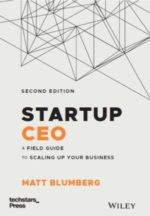
I realize I haven’t posted much lately. As you may know, the title of this blog, OnlyOnce, comes from a blog post written by my friend and board member Fred Wilson from Union Square Ventures entitled You Are Only a First-Time CEO Once, which he wrote back in 2003 or 2004. That inspired me to create a blog for entrepreneurs and leaders. I’ve written close to 1,000 posts over the years, and the book became the impetus for a book that another friend and board member Brad Feld from Foundry Group encouraged me to write and helped me get published called Startup CEO: A Field Guide to Scaling Up Your Business back in 2013.
Today is a special day in my entrepreneurial journey and in the life of the company that I started back in 1999 (last century!), Return Path, as we announce that Return Path has entered into a definitive agreement to be acquired by an exciting new company called Validity. Press release is here.
Over almost 20 years, we’ve built Return Path into one of the largest and (I think) most respected companies in the email industry. We’ve had a culture of innovation that has led to some groundbreaking products for our customers and partners to help make email marketing work better for consumers as well as marketers, and to help keep inboxes safe and clean for mailbox providers and security companies.
But the company is unusual in many respects. One of those is longevity. I’m not sure how many Internet companies started in 1999 are still private, backed and led by the same team the whole time, and generally in the same business they started in. Another is our values-driven “People First” culture. From Day 1, we have believed that if we attract and retain and develop and invest in the best people, we will make our customers successful with great products and service, and that if we do right by our customers, we will do right long term by our shareholders. While I know that not every employee who ever walked through our doors had a great experience, I know most did and hope that all of them realize we tried our best. Finally, I’m proud that our company gave birth to a non-profit affiliate Path Forward a few years back at the hands of executives Andy Sautins, Cathy Hawley, and Tami Forman. Path Forward helps parents get back to work after a career break and helps companies improve their gender diversity and hiring biases and has already been a game changer for dozens of companies and hundreds of women.
Today, Return Path serves almost 4,000 customers in almost every country on the globe, with $100 million in revenue, profitable, and excited about the next leg of our brands’ and our products’ lives in the care of Validity. If you haven’t heard of Validity before today, watch out – you will hear a LOT about them in the weeks and months ahead. They are an incredibly exciting new company with a vision to help tens of thousands of companies across the globe improve their data quality but also help them use data to improve business results. That vision, inspired by a new friend, CEO Mark Briggs, is a wonderful fit for Return Path’s products and services and people.
To finish this post where I started, Fred’s exact words in that post which got this blog going were:
What does this mean for entrepreneurs and managers? It means that the first time you run a business, you should admit what you are up against. Don’t let ego get in the way. Ask for help from your board and get coaching and mentoring. And recognize that you may fail at some level. And don’t let the fear of failure get in the way. Because failure isn’t fatal. It may well be a required rite of passage.
All of that is true and has been great advice for me over the years. But Fred left out one important piece, which is that entrepreneurs need to constantly thank the people around them who either work their butts off as colleagues in the business or who give them helpful advice and coaching. Return Path’s journey has been a long one, longer than most, and the full list of people to thank is too long for a blog post.
I’ve noted Fred and Brad in this post already and I want to thank them and also thank Greg Sands from Costanoa Ventures, the third member of our “dream team” investor syndicate, for their friendship and unwavering support and good counsel for me and Return Path for almost two decades, as well as many other board members we’ve had over the years including long-time independent directors Jeff Epstein, Scott Petry, and Scott Weiss.
I want to thank my co-founders Jack Sinclair and George Bilbrey, and anyone who has ever been on my executive team, including long-time execs Ken Takahashi, Shawn Nussbaum, Cathy Hawley, Dave Wilby, Anita Absey, Angela Baldonero, Andy Sautins, Louis Bucciarelli, Mark Frein, and David Sieh. There’s nothing quite like being in the proverbial foxhole with someone during a battle or two or ten to forge a tight bond. I want to thank Andrea Ponchione, my extraordinary assistant for 14 years, who keeps me running, sane, and smiling every day. I want to thank my executive coach Marc Maltz and the members of my CEO Forum for allowing me to be unplugged and for their friendship and advice. I want to thank all of Return Path’s 430 employees today and over 1,300 ever for their hard work in building our company and culture together and for our 4,000 customers and partners for putting their faith in us to help them solve some of their biggest challenges with email.
Finally, no thank you list for this journey would be complete without saying a special thank you to my wonderful wife Mariquita and kids Casey, Wilson, and Elyse. They deserve some kind of special honor for being inspirational cabin-mates on the entrepreneurial roller coaster without ever being asked if they were up for it.
This event may inspire me to begin writing more regularly again on OnlyOnce. Stay tuned!
Response to the Journal
(This post is running concurrently on the Return Path blog.)
It is now widely understood that the Internet runs on data. I first blogged about this in 2004—14 years ago!— here. People have come to expect a robust—and free!—online experience. Whether it’s a shopping app or a social media platform like Instagram, these free experiences provide a valuable service. And like most businesses, the companies that provide these experiences need to make money somehow. Consumers are coming to understand and appreciate that the real cost of a “free” internet lies in advertising and data collection.
Today, the Wall Street Journal ran an article exploring the data privacy practices of Google and some of the third party developers who utilize their G Suite ecosystem. Return Path was among the companies mentioned in this article. We worked closely with the journalist on this piece and shared a great deal of information about the inner workings of Return Path, because we feel it’s important to be completely transparent when it comes to matters of privacy. Unfortunately, the reporter was extremely and somewhat carelessly selective in terms of what information he chose to use from us — as well as listing a number of vague sources who claimed to be “in the know” about the inner workings of Return Path. We know that he reached out to dozens of former employees via LinkedIn, for example, many of whom haven’t worked here in years.
While the article does not uncover any wrongdoings on our part (in fact, it does mention that we have first-party relationships with and consent from our consumers), it does raise a larger privacy and security concern against Google for allowing developer access to Gmail’s API to create email apps. The article goes on to explain that computers scan this data, and in some rare cases, the data is reviewed by actual people. The article mentions a specific incident at Return Path where approximately 8,000 emails were manually reviewed for classification. As anyone who knows anything about software knows, humans program software – artificial intelligence comes directly from human intelligence. Any time our engineers or data scientists personally review emails in our panel (which again, is completely consistent with our policies), we take great care to limit who has access to the data, supervise all access to the data, deploying a Virtual Safety Room, where data cannot leave this VSR and all data is destroyed after the work is completed.
I want to reaffirm that Return Path is absolutely committed to data security and consumer data privacy. Since our founding in 1999, we’ve kept consumer choice, permission, and transparency at the center of our business. To this end, we go above and beyond what’s legally required and take abundant care to make sure that:
- Our privacy policy is prominently displayed and written in plain English;
- The user must actively agree to its terms (no pre-checked boxes); and
- A summary of its main points is shown to every user at signup without the need to click a link
While a privacy expert quoted in the article (and someone we’ve known and respected for years) says that he believes consumers would want to know that humans, not only computers, might have access to data, we understand that unfortunately, most consumers don’t pay attention to privacy policies and statements, which is precisely why we developed succinct and plain-English “just-in-time” policies years before GDPR required them. When filling out a form people may not think about the impact that providing the information will have at a later date. Just-in-time notices work by appearing on the individual’s screen at the point where they input personal data, providing a brief message explaining how the information they are about to provide will be used, for example:

It’s disappointing to say the least that the reporter called this a “dirty secret.” It looks pretty much the opposite of a secret to me.
In addition to our own policies and practices, Return Path is deeply involved in ongoing industry work related to privacy. We lead many of these efforts, and maintain long-term trusted relationships with numerous privacy associations. Our business runs on data, and keeping that data secure is our top priority.
Further, I want to address the scare tactics employed by this journalist, and many others, in addressing the topics of data collection, data security, and who has access to data. It’s common these days to see articles that highlight the dangers that can accompany everyday online activities like downloading an app or browsing a retail website. And while consumers certainly have a responsibility to protect themselves through education, it’s also important to understand the importance of data sharing, open ecosystems, and third party developers. And more than that, it’s important to draw distinctions between companies who have direct relationships with and consent from consumers and ones who do not.
While they may not be top of mind, open ecosystems that allow for third-party innovation are an essential part of how the internet functions. Big players like Facebook and Google provide core platforms, but without APIs and independent developers, innovation and usability would be limited to big companies with significant market power and budgets—to the detriment of consumers. Think about it—would Facebook have become as wildly popular without the in-app phenomenon that was Farmville? Probably, but you get the point: third party applications add a new level of value and usefulness that a platform alone can’t provide.
Consumers often fall into the trap of believing that the solution to all of their online worries is to deny access to their data. But the reality is that, if they take steps like opting out of online tracking, the quality of their online experience will deteriorate dramatically. Rather than being served relevant ads and content that relates to their browsing behaviors and online preferences, they’ll see random ads from the highest bidder. Unfortunately some companies take personalization to an extreme, but an online experience devoid of personalization would feel oddly generic to the average consumer.
There’s been a lot of attention in the media lately—and rightfully so—about privacy policies and data privacy practices, specifically as they relate to data collection and access by third parties. The new GDPR regulations in the EU have driven much of this discussion, as has the potential misuse of private information about millions of Facebook users.
One of Return Path’s core values is transparency, including how we collect, access and use data. Our situation and relationship with consumers is different from those of other companies. If anyone has additional questions, please reach out.
Firsts, Still
Firsts, Still
After more than 13 years in the job, I run into “firsts” less and less often these days. But in the past week, I’ve had three of them. They’re incredibly different, and it’s awkward to write about them in the same post, but the “firsts” theme holds them together.
One was incredibly tragic — one of our colleagues at Return Path died suddenly and unexpectedly. Even though we’ve lost two other employees in the last 18 months to cancer, there was something different about this one. While there’s no good way to die, the suddenness of Joel’s passing was a real shock to me and to the organization, and of course more importantly, to his wife.
The second was that I came face to face with a judge in the state of Delaware for the first time around some litigation we’re in the middle of now. While I can’t comment on this for obvious reasons, you never think when you decide to incorporate in Delaware that a trip to a courthouse in Wilmington is in your future.
The third, which can only be described as bittersweet, is that we had our first long-time employee retire! Now THAT’S something you never think about when you run a startup. But Sophie Miller Audette, one of our first 20 employees going back to 2000 and the sixth longest tenured person at the company today, has decided to retire and move on to other adventures in her already rich life. A quick search on my blog reveals that I’ve blogged about Sophie three times since I started OnlyOnce 9 years ago (as of next week). The first time was in 2004 when I quoted her memorable line, “In my next life, I want to come back as a client.” The second and third times were in 2005 and were about the company’s commitment to helping to find a cure for Multiple Sclerosis, which Sophie was diagnosed with almost 10 years ago now. Sophie has been an inspiration to many of us for a long time, and while we’ll miss her day-to-day, she’ll always be part of the Return Path family. Picture of her, me, and Anita at her “retirement dinner” earlier this week below.

I always say that one of the best parts about being in this job for this long is that there are always new challenges and new opportunities to learn and grow. The last couple weeks, full of firsts, proved the point!
Startup CEO (OnlyOnce- the book!)
Startup CEO (OnlyOnce – the book!)
One of the things I’ve often thought over the years since starting Return Path in 1999 is that there’s no instruction manual anywhere for how to be a CEO. While big company CEOs are usually groomed for the job for years, startup CEOs aren’t…and they’re often young and relatively inexperienced in business in general. That became one of the driving forces behind the creation of my blog, OnlyOnce (because “you’re only a first time CEO once”) back in 2004.
Now, over 700 blog posts later, I’m excited to announce that I’m writing a book based on this blog called Startup CEO: A Field Guide to Building and Running Your Company. The book is going to be published by Wiley & Sons and is due out next summer. The book won’t just be a compendium of blog posts, but it will build on a number of the themes and topics I’ve written about over the years and also fill in lots of other topics where I haven’t.
The catalyst for writing this book was Brad Feld. Brad has been a friend, mentor, investor, and Board member for over a decade. We’ve had many great times, meals, and conversations together over the years, not the least of which was staggering across the finish line together at the New York City Marathon in 2005. Brad started writing books a few years ago, and I’ve been peripherally involved with them, first with Do More Faster: TechStars Lessons to Accelerate Your Startup (I contributed one of the chapters) and then with Venture Deals: Be Smarter Than Your Lawyer and Venture Capitalist (I wrote all the “Entrepreneur Perspective” sidebars).
Those are great books, and they’ve been incredibly well received by the global entrepreneurial community. But then Brad got the bug, and now he’s in the middle of writing FOUR new books with Wiley that will all come out over the next year. They are:
- Startup Communities: Building an Entrepreneurial Ecosystem in Your City
- Startup Life: Surviving and Thriving in a Relationship with an Entrepreneur
- Startup Metrics: Making Sense of the Numbers in Your Startup
- Startup Boards: Reinventing the Board of Directors to Better Support the Entrepreneur
These four books, plus the two earlier ones, plus Startup CEO, are all part of the Startup Revolution series. While I’ll continue to do most of my blogging and posting here on OnlyOnce, I’d also encourage you to check out the Startup Revolution site and sign up to be a member of that community. I’ll be doing some things on that site as well in connection with Startup CEO, and it’s a more concentrated place to post and comment on all things Startup. In addition, we’ll be putting a bunch of add-ons to the book on that site closer to publication time.
I hope Startup CEO becomes a standard for all new CEOs. I don’t think I have all the answers, but at least others can benefit by learning from my 13 years of successes and mistakes! Now all I have to do is go write the darned thing.
Transparency Rules
Transparency Rules
I think each and every one of our 13 core values at Return Path is important to our culture and to our success. And I generally don’t rank them. But if I did, People First is a leading contender to be at the top of the list. The other leading contender would be this last one in the series:
We believe in being transparent and direct
The big Inc. Magazine story about us last year talked a lot about our commitment to transparency and some of the challenges that come with being transparent and direct with people. I’d like to highlight here some of the benefits of being transparent, and the benefits of being direct (sometimes those two things are the same, sometimes they are different).
Transparency’s benefits are so numerous that it’s hard to pick just one or two themes to write about, but my favorite benefit is empowerment. Especially in a world where information is increasingly available and free, hoarding it comes at a high cost.
- If everyone in the company knows that you’re short of plan and disappointed about that, the majority of people will exercise hawkish judgment about expenses. The opposite is true as well. If people know you’re running ahead of plan, they will be more willing to take risks and make investments. Without transparency of financials, people are just more in the dark and looking for all answers and judgment to come from above
- If everyone on your staff understands the process you went through to make a tough call about an element of your strategy, they are not only more likely to understand and support the decision, but they learn from you how to make decisions in the first place
- If your Board knows you’re having a tough quarter from the get go, they’re not surprised at the quarterly meeting and don’t force you to spend painful and precious minutes in the meeting On the firing line reporting on the details. Instead, they can spend time leading up to the meeting thinking about the details of the problems and how they can help or what insights they can bring to bear
Transparency does have some limits, even today. There are three main limits we run into. One is compensation — still too touchy and wrapped up in people’s self esteem to post on the wall (though I have heard about a couple companies that do that, believe it or not). Another is terminations. Although you might want to tell the company that you fired Sally because she wasn’t carrying her weight, the long term value you derive from dignity and kindness trump any short term value you might derive from such a statement (plus, people know when Sally isn’t carrying her weight, anyway). The third limit to transparency is around half-baked ideas. Although you might sometimes want to try ideas on for size publicly, you have to be careful not to send people scurrying off in the wrong direction just because you blurted something out in a meeting.
The second half of this value statement is about being direct. Being direct mostly has benefits in terms of efficiency. You can be direct and still be polite and kind. But being direct means not beating around the bush, being political, or being conflict avoidant. It means nipping problems in the bud and saving yourself time or money in the long run.
- If you are direct with an employee who is not performing well with data to back it up, the employee has a much better shot at improving than if you delegate the feedback to HR, wait for the next annual performance review, or go passive and skip the feedback entirely
- If you are direct with a boss who you think is treating you unfairly, your odds of fixing the situation go way up
- If there’s bad news to deliver, be direct about it — look the other person in the eye, deliver the news crisply and succinctly, and as quickly as you can after finding it out or deciding on it yourself
Avoid euphemisms at all cost. Telling someone you “might have to rethink things” is not the same as saying “I will have to fire you if xyz don’t happen in the next 30 days.” Saying “xyz would be good for you to do” is not the same as saying “the way for you to get promoted is to consistently do xyz.”
Being transparent and direct are increasingly table stakes for successful companies full of knowledge workers who want to be empowered and clear on where they stand.
I’ve really enjoyed writing all of these values out in living color. I will do a wrap up post shortly.
Calling for the Boss’s Head
Calling for the Boss’s Head
Maybe it’s just a heightened sense of awareness on my part, but I feel like our culture has really turned up the time-to-fire-the-boss-o-meter to a new level of late. What is going on that has caused the media and vocal people among us feel this thirst for public lynchings over a single incident? The list isn’t small — just in recent weeks or months, you have Rumsfeld, Dunn (HP), Gonzales, Imus, Wolfowitz, and even last week, Snyder (Vonage). And I’m sure there are a dozen others, both corporate and political, that I’m not dredging up mentally here on a Sunday night.
Now I’m all for accountability, believe me, but sometimes it doesn’t help an organization for someone to resign at the top over a single incident. Jarvis says it best when he says that he would have fired Imus a long time ago because he’s boring and because he’s always been a racist, not because of a few choice words last week. Should chronic poor performers be dismissed regardless of level? Absolutely. Should a leader be forced to step down just to make a point? I’m much less certain. In some ways, to carry Jarvis’s theme forward, that kind of dismissal is just a sign to me of lackadaisical oversight along the way, finally coming to a head.
I’m no psychologist, but my guess is that in many cases, a flash dismissal of another otherwise competent leader can pretty bad and traumatic for the underlying organization (be it a company or country). Consider the alternative — an honest apology, some kind of retribution, and a clear and conspicuous post-mortem — that leaves the ship with its captain and sends the message to the troops that honest mistakes are tolerated as long as they’re not repeated and amends are made.
This in no way is meant to defend the actions of any specifics of the above list. For many of them, their actions may have prompted an unrecoverable crisis of confidence. But for my part, I’d rather see regular accountability and transparency, not just at the peaks and troughs.
An Execution Problem
An Execution Problem
My biggest takeaway from the TED Conference this week is that we — that is to say, all of us in the world — have an execution problem. This is a common phrase in business, right? You’ve done the work of market research, positioning, and strategy and feel good about it. Perhaps as a bigger company you splurge and hire McKinsey or the like to validate your assumptions or develop some new ones. And now all you have to do is execute — make it happen. And yet so many businesses can’t make the right things happen so that it all comes together. I’d guess, completely unscientifically, that far, far more businesses have execution problems than strategic ones. Turns out, it’s tough to get things to happen as planned BUT with enough flexibility to change course as needed. Getting things done is hard.
So what do I mean when I say that humanity has an execution problem? If nothing else, the intellectual potpourri that is TED showed me this week that we know a lot about the world’s problems, and we don’t lack for vision and data on how to solve them. A few of the things we heard about this week are the knowledge — and in many cases, even real experiences — about how to:
– Steer the evolution of deadly disease-causing bacteria to make them more benign within a decade
– Build world class urban transportation systems and growth plans to improve urban living and control pollution
– Drive down the cost of critical pharmaceuticals to developing nations by 95%
– Dramatically curb CO2 emissions
We have the knowledge, and yet the problems remain unsolved. Why is that? Unlike the organized and controlled and confined boundaries of a company, these kinds of problems are thornier to solve, even if the majority of humans agree they need to be solved. Whether the roadblock is political, financial, social — or (d) all of the above — we seem to be stuck in a series of execution problems.
The bright spot out of all of this (at least from this week’s discussions) is that, perhaps more than ever before in the history of mankind, many of our most talented leaders AND our wealthiest citizens are taking more of a personal stake in not just defining the problems and solutions, but making them happen. They’re giving more money, buiding more organizations, and spending more time personally influencing society and telling and showing the stories. It will take years to see if these efforts can solve our execution problems, but in the meantime, the extraordinary efforts are things we can all be proud of.
Naked Talking
Naked Talking
Naked Conversations: How Blogs Are Changing The Way Businesses Talk with Consumers, by Robert Scoble and Shel Israel, would have been mildly interesting had I never read, let alone written, a blog. So chances are if you’re reading this blog regularly, it’s not a great use of your time or money, but if you just ran across this post while trying to learn more about blogging – or really about any form of post-2002 Internet marketing – it’s probably worthwhile as a primer. But if you’re knee-deep in internet marketing or blogging, it may be a bit of a snoozer.
I find it entertaining that leading bloggers like Scoble and Israel, who are part of the ultra-small group of hardcore bloggers, as they describe, that “posts 50 times a day, mostly at 4 a.m.,” think blogs are really conversations. Don’t get me wrong, I believe that blogs are revolutionary in that they allow anyone to run his or her own printing press. I also think it’s critical for companies to have corporate blogs (Return Path had one of the first), for CEOs and other executives to blog (obviously I do), for companies to allow their employees to blog relatively unencumbered by corporate policy, and, perhaps most important, for companies to track and listen to what others who blog are saying about them and their products.
But let’s not get too caught up in our own euphoria as bloggers to think that what’s happening is actually a conversation the way we humans think of conversations. Blogging allows more people to have their voices heard, and it certainly allows for transparency and authenticity, as the authors say, but there’s almost never dialog. Many popular blogs don’t have comments at all. Those who do allow comments have few if any posted. And those who have comments posted rarely have any other readers who actually see the comments, since the blog is a publishing forum and RSS is a publishing format, neither is a truly interactive medium like chat.
I’m sure there are some blogs that have active commenters, particularly political ones, and hopefully someone, somewhere, reads and internalizes those comments when they’re relevant. And certainly, high circ bloggers who read and know each other participate in a dialog by talking AT each other via their blog postings, not via comments (meaning that for the “dialog” to make sense to the greater world, the greater world must read all blogs participating in a “conversation.”). But, please, let’s not pretend there is really a 20-million-way conversation happening.
Book Short: Underdog Victorious
Book Short: Underdog Victorious
The Underdog Advantage, by David Morey and Scott Miller, was a worthwhile read, though not a great book. It was a little shallow, and although I enjoyed its case studies (who doesn’t love hearing about Ben & Jerry’s, Southwest, JetBlue, Starbucks?), I didn’t feel like the authors did enough to tie the details of the success of the case study companies back to the points they made in the book.
That said, the book had some great reminders in it for companies of all sizes and stages. The main point was that successful companies always think of themselves as the underdog, the insurgent, and never get complacent. They run themselves like a political campaign, needing to win an election every single day. A lot of the tactics suggested are timeless and good to remember…things like never declare victory, always play offense, always respond to attacks, remember to communicate from the inside out, and remember to sell employees on a mision and purpose in order to make them your main ambassadors. The laundry list of tactics is the book’s greatest strength.
Counter Cliche: No Conflict, No Interest
Counter Cliche: No Conflict, No Interest
The entrepreneur’s take on Fred’s VC cliche of the week — "No conflict, No interest" is that it applies equally but differently to management teams.
Our nation’s first president, George Washington, is often said to have brilliantly placed political enemies Thomas Jefferson and Alexander Hamilton on his first cabinet so he would have differing points of view from which to choose when deciding some of the complex and delicate issues that faced our nation in its infancy. And many of those early decisions of the Washington administration — things like how to pay down the debt from the Revolution, or whether and how to put down the Whiskey Rebellion — were critical in forming our nation and deciding how much power to invest in our government.
The tension between one executive and another on a management team is, though perhaps less historically important, no different. A management team that finds itself 100% in agreement, 100% of the time, is in trouble. A management team that can have disagreements and use that tension productively to drive decisions is much better off. Building such a team requires the CEO to seek out executives who view the world differently, who have the courage to speak their minds in the face of strong opposition, and who have the ability to see different points of view.
Turning Lemons into Lemonade
I’ve always thought that the ability to stare down adversity in business — or turning lemons into lemonade, as a former boss of mine used to say — is a critical part of being a mature professional. We had a prime example of this a couple weeks ago at Return Path.
We had scheduled a webinar on email deliverability, a critical topic for our market, and the moment of the webinar had come, with over 100 clients and prospects on the line for the audio and web conference. There was a major technical glitch with our provider, Webex (no link for you, Webex), and after 5 or 10 minutes, we had to cancel the webinar — telling all 100 members of our target audience that we were sorry, we’d have to reschedule. What a nightmare! Even worse, Webex displayed atrocious customer service to us, not apologizing for the problem, blaming it on us (as if somehow it was our fault that half the people on the line couldn’t hear anything), and not offering us any compensation for the situation.
As you can imagine, our marketing guru Jennifer Wilson was devastated. But instead of sulking, she turned the situation on its head. She rescheduled the event for three weeks out with a different provider who was technically competent and a pleasure to work with, Raindance, and sent every person who’d been on our aborted webinar a gift certificate to Starbucks so they could enjoy a snack on our dime during the rescheduled event. Not only did we have full attendance at the rescheduled event, but Jennifer received dozens of emails from clients sympathizing with her, commending her on her attitude, and of course thanking her for the free latte.
It’s hard to do, and you hate to have to do it, but successfully turning lemons into lemonade is one of the most satisfying feelings in business!
People rarely comment on this blog (or most non-political blogs, I’ve noticed), so feel free to share your best lemons-to-lemonade story with me in a comment, and I promise I’ll post the best couple of them pronto!