Book Short: Stick Figures That Matter
Book Short: Stick Figures That Matter
I have read a bunch of books lately to try to improve my presentation skills. The latest one, The Back of the Napkin: Solving Problems and Selling Ideas with Pictures, by Dan Roam, was good, and quite different from some of the others I’ve read recently like Presentation Zen and Beyond Bullet Points, both of which are much more focused on effective use of Powerpoint.
The Back of the Napkin takes a different approach. The focus is much more on creating compelling visuals. It’s not about Powerpoint so much as it is about teaching how to crystallize concepts into tight and compelling schematics. Roam creates two pretty good frameworks for thinking about this: one that breaks down the message of a given slide into its most simple element — are you describing a who (use a portrait), what (chart), when (timeline), where (map), why (plot), or how (flowchart)? And a second that takes that element and asks five questions about the best way to convey the information — simple vs. elaborate, quality vs. quantity, vision vs. execution, individual vs. comparison, or change state vs. as-is.
Both frameworks are good, and if you’re already doing really good presentations, this will help improve them. In short, I’d say The Back of the Napkin is a good read if you’re obsessed with creating compelling visuals, but it’s more of a deeper drill than the two books I noted above. I’d read and master the material from Presentation Zen for 101, then dive into this topic for the 201 course.
Book Short: Another 8 Habits
Book Short: Another 8 Habits
Besides having a fantastic title, Richard St. John’s Stupid, Ugly, Unlucky, and Rich is a fun and quick read. It’s a completely different style than Stephen Covey’s “habits” books (The 7, The 8th). It’s a little cartoony and list-oriented, and it’s a much quicker read — and also easier to put down and pick up without feeling like you’re losing your place.
The book’s foundation is interviews, mostly by the author, of successful people who span many different careers, from artists to actors and models to athletes to politicians to business leaders. The organization is very solid, and the content is highly motivating. It’s a good guide to success in any field, and in particular many of the examples are spot-on for entrepreneurship.
At a minimum, I’m buying it for my senior staff…and for every new entry-level employee as good career foundation reading material.
Startup CEO (OnlyOnce- the book!), Part IV – Book Launches Today!
Startup CEO (OnlyOnce- the book!), Part IV – Book Launches Today!
My book is officially on sale on Amazon and iTunes today. The full detailed outline is here if you’re interested, and the link to buy it is here.
This is very exciting. I had been saying for a while that I had no idea whether 50 people would buy it or 5,000, but the publisher (Wiley) tells me we had over 2,000 pre-orders, so that’s a great start, at least.
So thanks to those 2,000 brave souls, and anyone else who buys it as well. I hope you enjoy it and look forward to your feedback directly, via OnlyOnce, via the #StartupCEO hashtag, via a rating/review on Amazon, or via the Startup Revolution web site.
I hope to get back to more regular blogging soon. As you hay have noted, I’ve been more quiet than usual the last six months while writing the book. But I have lots of great posts stored up…
I Don’t Want to Be Your Friend (Today)
I Don’t Want to Be Your Friend (Today)
The biggest problem with all the social networks, as far as I can tell, is that there’s no easy and obvious way for me to differentiate the people to whom I am connected either by type of person or by how closely connected we are.
I have about 400 on Facebook and 600 on LinkedIn. And I’m still adding ones as new people get on the two networks for the first time. While it seems to people in the industry here that “everyone is on Facebook,” it’s not true yet. Facebook is making its way slowly (in Geoffrey Moore terms) through Main Street. Main Street is a big place.
But not all friends are created equal. There are some where I’m happy to read their status updates or get invited to their events. There are some where I’m happy if they see pictures of me. But there are others where neither of these is the case. Why can’t I let only those friends who I tag as “summer camp” see pictures of me that are tagged as being from summer camp? Why can’t I only get event invitations from “close friends”? Wouldn’t LinkedIn be better if it only allowed second and third degree connections to come from “strong” connections instead of “weak” ones?
It’s also hard to not accept a connection from someone you know. Here’s a great example. A guy to whom I have a very tenuous business connection (but a real one) friends me on Facebook. I ignore him. He does it again. I ignore him again. And a third time. Finally, he emails me with some quasi-legitimate business purpose and asks why I’m ignoring him — he sees that I’m active on Facebook, so I *must* be ignoring him. Sigh. I make up some feeble excuse and go accept his connection. Next thing I know, I’m getting an invitation from this guy for “International Hug a Jew Day,” followed by an onslaught of messages from everyone else in his address book in some kind of reply-to-all functionality. Now, I’m a Jew, and I don’t mind a hug now and then, but this crap, I could do without.
I mentioned this problem to a friend the other day who told me the problem was me. “You just have too many friends. I reject everyone who connects to me unless they’re a really, super close friend.” Ok, fine, I am a connector, but I don’t need a web site to help me stay connected to the 13 people I talk to on the phone or see in person. The beauty of social networks is to enable some level of communication with a much broader universe — including on some occasions people I don’t know at all. That communication, and the occasional serendipity that accompanies it, goes away if I keep my circle of friends narrow. In fact, I do discriminate at some level in terms of who I accept connections from. I don’t accept them from people I truly don’t know, which isn’t a small number. It’s amazing how many people try to connect to me who I have never met or maybe who picked up my business card somewhere.
The tools to handle this today are crude and only around the edges. I can ignore people or block them, but that means I never get to see what they’re up to (and vice versa). That eliminates the serendipity factor as well. Facebook has some functionality to let me “see more from some people and less from others” — but it’s hard to find, it’s unclear how it works, and it’s incredibly difficult to use. Sure, I can “never accept event invitations from this person,” or hide someone’s updates on home page, but those tools are clunky and reactive.
When are the folks at LinkedIn and Facebook going to solve this? Feels like tagging, basic behavioral analysis, and checkboxes at point of “friending” aren’t exactly bleeding edge technologies any more.
Book Short: It’s All About Creative Destruction
I was excited to read Launchpad Republic: America’s Entrepreneurial Edge and Why It Matters, by Howard Wolk and John Landry the minute Brad sent it to me. I love American history, I love entrepreneurship, and I’m deeply concerned about the health of our country right now. I have to say…on all fronts, the book did not disappoint!
The authors make several points, but the one that sets the tone for the book is that like our country’s origins and culture in general, entrepreneurship is itself rebellious. It’s about upstarts challenging the status quo in some way or other with a better way to do something, or with a new thing. The balance between protecting private property rights and allowing for entrepreneurs to fail and to disrupt incumbent leaders is what makes America unique, especially compared to the way European business culture has traditionally operated (consensus-oriented) and the way China operates (authoritarian).
I loved how the authors wove a number of business history vignettes together with relevant thru lines. Business in Colonial times and how Alexander Hamilton thought about national finances may seem dusty and distant, but not when you see the direct connection to John D. Rockefeller, IBM, GE, Microsoft, or Wendy Kopp.
The book was also a good reminder that some of the principles that have made America great and exceptional also underly our successful business culture, things like limited government, checks and balances within government and between government and the private sector, and decentralized finance.
Without being overly political, the authors also get into how our political and entrepreneurial system can and hopefully will tackle some of today’s more complex issues, from climate change to income inequality to stakeholder capitalism.
At the heart of all of it is the notion that entrepreneurs’ creativity drive America forward and are a leading force for making our country and our economy durable and resilient. As a career entrepreneur, and one who is now in the business of helping other entrepreneurs be more successful, this resonated. If you’re a student of American history…or a student of entrepreneurship, this is a great read. If you’re both, it’s a must read.
Scaling the Team
Scaling the Team
(This post was requested by my long-time Board member Fred Wilson and is also running concurrently on his blog today. I’ll be back with the third and fourth installments of “The Best Laid Plans” next Thursday and the following Thursday)
When Return Path reached 100 employees a few years back, I had a dinner with my Board one night at which they basically told me, “Management teams never scale intact as you grow the business. Someone always breaks.” I’m sure they were right based on their own experience; I, of course, took this as a challenge. And ever since then, my senior management team and I have become obsessed with scaling ourselves as managers. So far, so good. We are over 300 employees now and rapidly headed to 400 in the coming year, and the core senior management team is still in place and doing well. Below are five reasons why that’s the case.
- We appreciate the criticality of excellent management and recognize that it is a completely different skill set from everything else we have learned in our careers. This is like Step 1 in a typical “12-step program.” First, admit you have a problem. If you put together (a) management is important, (b) management is a different skill set, and (c) you might not be great at it, with the standard (d) you are an overachiever who likes to excel in everything, then you are setting the stage for yourself to learn and work hard at improving at management as a practice, which is the next item on the list.
- We consistently work at improving our management skills. We have a strong culture of 360 feedback, development plans, coaching, and post mortems on major incidents, both as individuals and as a senior team. Most of us have engaged on and off over the years with an executive coach, for the most part Marc Maltz from Triad Consulting. In fact, the team holds each other accountable for individual performance against our development plans at our quarterly offsites. But learning on the inside is only part of the process.
- We learn from the successes and failures of others whenever possible. My team regularly engages as individuals in rigorous external benchmarking to understand how peers at other companies – preferably ones either like us or larger – operate. We methodically pick benchmarking candidates. We ask for their time and get on their calendars. We share knowledge and best practices back with them. We pay this forward to smaller companies when they ask us for help. And we incorporate the relevant learnings back into our own day to day work.
- We build the strongest possible second-level management bench we can to make sure we have a broad base of leadership and management in the company that complements our own skills. A while back I wrote about the Peter Principle, Applied to Management that it’s quite easy to accumulate mediocre managers over the years because you feel like you have to promote your top performers into roles that are viewed as higher profile, are probably higher comp – and for which they may be completely unprepared and unsuited. Angela Baldonero, my SVP People, and I have done a lot here to ensure that we are preparing people for management and leadership roles, and pushing them as much as we push ourselves. We have developed and executed comprehensive Management Training and Leadership Development programs in conjunction with Mark Frein at Refinery Leadership Partners. Make no mistake about it – this is a huge investment of time and money. But it’s well worth it. Training someone who knows your business well and knows his job well how to be a great manager is worth 100x the expense of the training relative to having an employee blow up and needing to replace them from the outside.
- We are hawkish about hiring in from the outside. Sometimes you have to bolster your team, or your second-level team. Expanding companies require more executives and managers, even if everyone on the team is scaling well. But there are significant perils with hiring in from the outside, which I’ve written about twice with the same metaphor (sometimes I forget what I have posted in the past) – Like an Organ Transplant and Rejected by the Body. You get the idea. Your culture is important. Your people are important. New managers at any level instantly become stewards of both. If they are failing as managers, then they need to leave. Now.
I’m sure there are other things we do to scale ourselves as a management team – and more than that, I’m sure there are many things we could and should be doing but aren’t. But so far, these things have been the mainstays of happily (they would agree) proving our Board wrong and remaining intact as a team as the business grows.
5 Ways to Spot Trends That Will Make You (and Your Business) More Successful
5 Ways to Spot Trends That Will Make You (and Your Business) More Successful
I’ve recently started writing a column for The Magill Report, the new venture by Ken Magill, previously of Direct magazine and even more previously DMNews. Ken has been covering email for a long time and is one of the smartest journalists I know in this space. My column, which I share with my colleagues Jack Sinclair and George Bilbrey, covers how to approach the business of email marketing, thoughts on the future of email and other digital technologies, and more general articles on company-building in the online industry – all from the perspective of an entrepreneur. Below is a re-post of this week’s version, which I think my OnlyOnce readers will enjoy.
Last week I published my annual “Unpredictions” for 2011. This tradition grew out of the fact that I hate doing predictions and my marketing team loves them. So we compromise by predicting what won’t happen.
But the truth is that the annual prediction ritual – while trite – is really just trend-spotting. And trend-spotting is an important skill for entrepreneurs. Fortunately it’s a skill that can be acquired, at least it can with enough deliberate practice (another skill I talk about here).
Here are five habits you should consider cultivating if being a better trend spotter is in your career roadmap.
Read voraciously. I read about 50 books every year. About half of them are business books, and I also mix in a bit of fiction, humor, American history, architecture and urban planning, and evolutionary biology. I keep up with more than 50 blogs and I read all the trade publications that cover email. I also read the Wall Street Journal and The Economist regularly. What you read is a little less important than just reading a lot, and diversely.
Use social media (wisely). Julia Child once said that the key to success in life was having great parents. My advice to you is quite a bit simpler: make friends with smart people. Facebook, Twitter, LinkedIn and others have given us a window into the world unlike any other. Status updates, tweets, and – maybe most important of all – links shared by your network of friends and colleagues gives you a sense of what people are talking about, thinking about and working on. And you can’t just lurk. You actually have to be “in” to get something “out.”
Follow the money. Pay attention to where money gets invested and spent. This includes keeping an eye on venture capital, private equity, and the public markets, as well as where clients (mostly IT and marketing departments) are spending their dollars and what kinds of people they are hiring. Money flows toward ideas that people think will succeed. A pattern of investments in particular areas will give you clues to what might be the big ideas over the next five to 10 years.
Get out of the office: I think it’s hugely important for anyone in business, and especially entrepreneurs, to spend time in the world to get fresh perspectives. I’m not sure who coined the phrase, but our head of product management, Mike Mills, frequently refers to the NIHITO principle – Nothing Interesting Happens in the Office. Now that’s not entirely true – running a company means needing to spend a huge amount of time with people and on people issues, but last year I traveled nearly 160,000 miles around the world meeting with prospect, clients, partners and industry luminaries. You don’t have to be a road warrior to get this one right – you can attend events in your local area, develop a local network of people you can meet with regularly – but you do have to get out there.
Take a break. While you need information to understand trends, you can quickly get overloaded with too much data. Trend spotting is, in many ways, about pattern recognition. And that is often easier to do when your mind is relaxed. Ever notice that you have moments of true epiphany in the shower or while running? Give yourself time every week to unplug and let your mind recharge. As Steven Covey says, “sharpen that saw”!
OnlyOnce, Part XX
I realize I haven’t posted much lately. As you may know, the title of this blog, OnlyOnce, comes from a blog post written by my friend and board member Fred Wilson from Union Square Ventures entitled You Are Only a First-Time CEO Once, which he wrote back in 2003 or 2004. That inspired me to create a blog for entrepreneurs and leaders. I’ve written close to 1,000 posts over the years, and the book became the impetus for a book that another friend and board member Brad Feld from Foundry Group encouraged me to write and helped me get published called Startup CEO: A Field Guide to Scaling Up Your Business back in 2013.
Today is a special day in my entrepreneurial journey and in the life of the company that I started back in 1999 (last century!), Return Path, as we announce that Return Path has entered into a definitive agreement to be acquired by an exciting new company called Validity. Press release is here.
Over almost 20 years, we’ve built Return Path into one of the largest and (I think) most respected companies in the email industry. We’ve had a culture of innovation that has led to some groundbreaking products for our customers and partners to help make email marketing work better for consumers as well as marketers, and to help keep inboxes safe and clean for mailbox providers and security companies.
But the company is unusual in many respects. One of those is longevity. I’m not sure how many Internet companies started in 1999 are still private, backed and led by the same team the whole time, and generally in the same business they started in. Another is our values-driven “People First” culture. From Day 1, we have believed that if we attract and retain and develop and invest in the best people, we will make our customers successful with great products and service, and that if we do right by our customers, we will do right long term by our shareholders. While I know that not every employee who ever walked through our doors had a great experience, I know most did and hope that all of them realize we tried our best. Finally, I’m proud that our company gave birth to a non-profit affiliate Path Forward a few years back at the hands of executives Andy Sautins, Cathy Hawley, and Tami Forman. Path Forward helps parents get back to work after a career break and helps companies improve their gender diversity and hiring biases and has already been a game changer for dozens of companies and hundreds of women.
Today, Return Path serves almost 4,000 customers in almost every country on the globe, with $100 million in revenue, profitable, and excited about the next leg of our brands’ and our products’ lives in the care of Validity. If you haven’t heard of Validity before today, watch out – you will hear a LOT about them in the weeks and months ahead. They are an incredibly exciting new company with a vision to help tens of thousands of companies across the globe improve their data quality but also help them use data to improve business results. That vision, inspired by a new friend, CEO Mark Briggs, is a wonderful fit for Return Path’s products and services and people.
To finish this post where I started, Fred’s exact words in that post which got this blog going were:
What does this mean for entrepreneurs and managers? It means that the first time you run a business, you should admit what you are up against. Don’t let ego get in the way. Ask for help from your board and get coaching and mentoring. And recognize that you may fail at some level. And don’t let the fear of failure get in the way. Because failure isn’t fatal. It may well be a required rite of passage.
All of that is true and has been great advice for me over the years. But Fred left out one important piece, which is that entrepreneurs need to constantly thank the people around them who either work their butts off as colleagues in the business or who give them helpful advice and coaching. Return Path’s journey has been a long one, longer than most, and the full list of people to thank is too long for a blog post.
I’ve noted Fred and Brad in this post already and I want to thank them and also thank Greg Sands from Costanoa Ventures, the third member of our “dream team” investor syndicate, for their friendship and unwavering support and good counsel for me and Return Path for almost two decades, as well as many other board members we’ve had over the years including long-time independent directors Jeff Epstein, Scott Petry, and Scott Weiss.
I want to thank my co-founders Jack Sinclair and George Bilbrey, and anyone who has ever been on my executive team, including long-time execs Ken Takahashi, Shawn Nussbaum, Cathy Hawley, Dave Wilby, Anita Absey, Angela Baldonero, Andy Sautins, Louis Bucciarelli, Mark Frein, and David Sieh. There’s nothing quite like being in the proverbial foxhole with someone during a battle or two or ten to forge a tight bond. I want to thank Andrea Ponchione, my extraordinary assistant for 14 years, who keeps me running, sane, and smiling every day. I want to thank my executive coach Marc Maltz and the members of my CEO Forum for allowing me to be unplugged and for their friendship and advice. I want to thank all of Return Path’s 430 employees today and over 1,300 ever for their hard work in building our company and culture together and for our 4,000 customers and partners for putting their faith in us to help them solve some of their biggest challenges with email.
Finally, no thank you list for this journey would be complete without saying a special thank you to my wonderful wife Mariquita and kids Casey, Wilson, and Elyse. They deserve some kind of special honor for being inspirational cabin-mates on the entrepreneurial roller coaster without ever being asked if they were up for it.
This event may inspire me to begin writing more regularly again on OnlyOnce. Stay tuned!
StartupCEO.com: A New Name for OnlyOnce
Welcome to the new StartupCEO.com!
I started writing this blog in May of 2004 with an objective of writing about the experience of being a first-time entrepreneur — a startup CEO — inspired by a blog post written by my friend, long-time Board member and mentor Fred Wilson entitled “You’re only a first time CEO once.” The blog and the receptivity I got along the way from fellow startup CEOs encouraged me to write a book called Startup CEO: A Field Guide to Scaling Up Your Business, which was originally published in 2013 and then again as a second edition last year in 2020.
Today I am relaunching the blog as StartupCEO.com both to reflect that relevance of that brand as the book continues to get good traction in the startup ecosystem, and to reflect the fact that I’m now on my second startup as CEO, so “Only Once” doesn’t seem so fitting any more.
The web site has a very minimalist design – and I realize many of you read posts on either RSS or email — those will still operate the same as they have been (no new RSS feed).
As I approach the first anniversary of starting our new company, Bolster, where we help startup CEOs scale their teams, themselves, and their boards, I am recommitting to this blog and will try to post at least once a week. Because there is a lot of overlap between this blog and Bolster’s blog (which I’d encourage you to subscribe to here either by email or RSS), posts will occasionally show up on both blogs, or I’ll put digests of Bolster blog posts here.
But the Bolster blog will be broader and will also have many additional authors besides me, while this blog will remain distinct about some of the experiences I’m having as a startup CEO.
About
My name is Matt Blumberg. I am a technology entrepreneur and business builder based in New York City. I am CEO of Markup AI, the leading provider of Content Guardian Agents to companies of all sizes looking to scale their use of AI to generate content smartly and safely. We are defining a new category in the Generative AI space and crushing it.
Before that, I started a company called Bolster, which was an on-demand executive talent marketplace. We created a new way to scale executive teams and boards aimed at early and mid-stage tech companies. The business sort of worked and sort of didn’t work. We wound it down in 2025 and decided to focus on helping the portfolio companies we invested in via Bolster Ventures and help our friends with talent referrals on a more informal basis.
My longest career stint was Return Path, a company I started in 1999, which we sold in 2019. We created a business that was the global market leader in email intelligence, analyzing more data about email than anyone else in the world and producing applications that solve real business problems for end users, commercial senders, and mailbox providers. In the end, we served over 4,000 clients with about 450 employees and 12 offices in 7 countries. We also built a wonderful company with a signature People First Culture that won a number of awards over the years, including Fortune Magazine’s #2 best mid-sized place to work in 2012.
Early in my career, I ran marketing and online services for MovieFone/777-FILM (www.moviefone.com), now a division of AOL. Before that — I was in venture capital at General Atlantic Partners (www.gapartners.com), and before that, a consultant at Mercer Management Consulting (www.mercermc.com). And I went to Princeton before that.
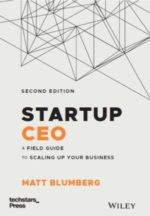
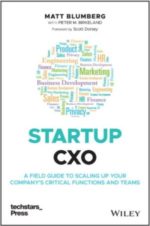
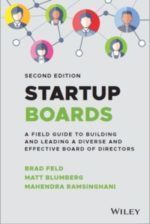
Based on this blog, I wrote a book called Startup CEO: A Field Guide to Scaling Up Your Business, which was published by Wiley in 2013 and updated in 2020. I followed that by co-authoring a book with a number of my fellow executives from Retutrn Path and Bolster called Startup CXO: A Field Guide to Scaling Up Your Company’s Critical Functions and Teams; as well as the second edition of Startup Boards: A Field Guide to Building and Leading an Effective Board of Directors along with Brad Feld and Mahendra Ramsinghani. I hosted a podcast called The Daily Bolster, with over 200 micro-episodes (mostly 5-6 minutes long) where I interview other CEOs to share their stories and hacks.
I have been married for over 25 years to Mariquita, who is, as I tell her all the time, one of the all-time great wives. We have three great kids now in their late teens, Casey, Wilson, and Elyse.
I have lots of other hobbies and interests, like coaching my kids’ baseball and softball teams; traveling and seeing different corners of the world; reading all sorts of books, particularly about business, American Presidential history, art & architecture, natural sciences (for laymen!), and anything funny; cooking and wishing I lived in a place where I could grill and eat outdoors year-round; playing golf; lumbering my way through the very occasional marathon, eating cheap Mexican food; introducing my kids to classic movies; and playing around with new technology. I hosted a limited edition podcast series called Country Over Self which explored the topic of virtue in the Oval Office along with a dozen prominent presidential historians.
IF YOU WANT TO UNDERSTAND WHAT THIS BLOG IS ALL ABOUT, read my first two postings: You’re Only a First Time CEO Once, and Oh, and About That Picture, as well as my updated post when I relaunched the blog with its new name, StartupCEO.com.
It All Starts With Self-Awareness
If I had to pick one human trait that is the single most impactful in one’s ability to have positive and successful interpersonal relationships, there’s a hands-down winner: Self-Awareness. This is true no matter what kind of relationships you’re talking about — parent, manager, executive, friend, partner or spouse.
Someone shared a framework with me years ago that helps explain why this is true, which I’ve been meaning to blog about for a long time. I found this image, which is close enough to the 2×2 that was once drawn for me on a whiteboard.

The framework is at once incredibly simple and incredibly complex.
Having true self-awareness and the ability to be reflective, to take in input and feedback, and the ability to accurately self-assess is where it all starts. “I am unhappy today,” “I am doing a bad job right now,” “I am not good at doing this task” are all pretty difficult things to say to yourself. And yet, without those, it’s impossible to progress through this framework.
I learned this framework where boxes II and III in what you see in this graphic are the other way around, but I’m not sure that matters as much as box I being first and box IV being last.
Once you have a solid level of self-awareness, you can exert some level of self-control. That’s not a guarantee — self-control is its own animal, but you can’t manage what you can’t understand. Empathy is similarly a follow-on to self-awareness, but also its own trait. How can you possibly understand what someone else is going through if you don’t understand what you’re going through?
The final box — Influence — is the result of building on all three of the prior traits. It’s impossible to influence others, to have deep and lasting relationships, and to be able to work productively together, without having a solid level of empathy and self-control.
You can be a leader without any of these traits if you’re an autocrat, whether a political one or a corporate one. If people MUST listen to you, then you can tell them what to do. But founders, especially ones who control their companies, shouldn’t be under the misapprehension that they are influencing others if what they’re really doing is ordering them around.
Can self-awareness be taught, or is it something you’re either born with or not? While most traits have a balance of nature and nurture, I am a big believer that self-awareness can largely be learned over time, so let’s call it a 10/90 on the nature/nurture scale. I’ve had a lot of influencers in my life who have, in their own ways helped me learn the practice of self-awareness, from my parents, to the professor in college who gave me my first 2×4, to my first couple of managers in my early jobs, Neal and Eleanor, to my coach, Marc who gave me my first 360, to my long-time colleagues along the way at Return Path and Bolster, to my wife, Mariquita, even to my kids. I’m sure I’m forgetting many others along the way. I’m thankful to all of them.
Want to improve your practice of management? Leadership? Collaboration and teamwork?
It all starts with self-awareness.