Getting Good Inc., Part II
Getting Good Inc., Part II
It was a nice honor to be noted as one of America’s fastest growing companies as an Inc. 500 company two years in a row in 2006 and 2007 (one of them here), but it is an even nicer honor to be noted as one of the Top 20 small/medium sized businesses to work for in America by Winning Workplaces and Inc. Magazine. In addition to the award, we were featured in this month’s issue of Inc. with a specific article about transparency, and important element of our corporate culture, on p72 and online here.
Why a nicer honor? Simply put, because we pride ourselves on being a great place to work — and we work hard at it. My colleague Angela Baldonero, our SVP People, talks about this in more depth here. Congratulations to all of our employees, past and present, for this award, and a special thanks to Angela and the rest of the exec team for being such awesome stewards of our culture!
About
My name is Matt Blumberg. I am a technology entrepreneur and business builder based in New York City. I am CEO of Markup AI, the leading provider of Content Guardian Agents to companies of all sizes looking to scale their use of AI to generate content smartly and safely. We are defining a new category in the Generative AI space and crushing it.
Before that, I started a company called Bolster, which was an on-demand executive talent marketplace. We created a new way to scale executive teams and boards aimed at early and mid-stage tech companies. The business sort of worked and sort of didn’t work. We wound it down in 2025 and decided to focus on helping the portfolio companies we invested in via Bolster Ventures and help our friends with talent referrals on a more informal basis.
My longest career stint was Return Path, a company I started in 1999, which we sold in 2019. We created a business that was the global market leader in email intelligence, analyzing more data about email than anyone else in the world and producing applications that solve real business problems for end users, commercial senders, and mailbox providers. In the end, we served over 4,000 clients with about 450 employees and 12 offices in 7 countries. We also built a wonderful company with a signature People First Culture that won a number of awards over the years, including Fortune Magazine’s #2 best mid-sized place to work in 2012.
Early in my career, I ran marketing and online services for MovieFone/777-FILM (www.moviefone.com), now a division of AOL. Before that — I was in venture capital at General Atlantic Partners (www.gapartners.com), and before that, a consultant at Mercer Management Consulting (www.mercermc.com). And I went to Princeton before that.
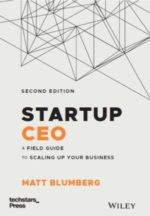
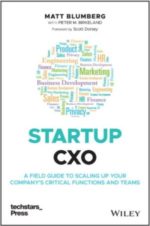
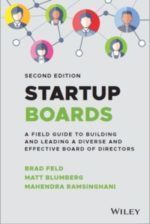
Based on this blog, I wrote a book called Startup CEO: A Field Guide to Scaling Up Your Business, which was published by Wiley in 2013 and updated in 2020. I followed that by co-authoring a book with a number of my fellow executives from Retutrn Path and Bolster called Startup CXO: A Field Guide to Scaling Up Your Company’s Critical Functions and Teams; as well as the second edition of Startup Boards: A Field Guide to Building and Leading an Effective Board of Directors along with Brad Feld and Mahendra Ramsinghani. I hosted a podcast called The Daily Bolster, with over 200 micro-episodes (mostly 5-6 minutes long) where I interview other CEOs to share their stories and hacks.
I have been married for over 25 years to Mariquita, who is, as I tell her all the time, one of the all-time great wives. We have three great kids now in their late teens, Casey, Wilson, and Elyse.
I have lots of other hobbies and interests, like coaching my kids’ baseball and softball teams; traveling and seeing different corners of the world; reading all sorts of books, particularly about business, American Presidential history, art & architecture, natural sciences (for laymen!), and anything funny; cooking and wishing I lived in a place where I could grill and eat outdoors year-round; playing golf; lumbering my way through the very occasional marathon, eating cheap Mexican food; introducing my kids to classic movies; and playing around with new technology. I hosted a limited edition podcast series called Country Over Self which explored the topic of virtue in the Oval Office along with a dozen prominent presidential historians.
IF YOU WANT TO UNDERSTAND WHAT THIS BLOG IS ALL ABOUT, read my first two postings: You’re Only a First Time CEO Once, and Oh, and About That Picture, as well as my updated post when I relaunched the blog with its new name, StartupCEO.com.
Why I joined the DMA Board, and what you can expect of me in that role
Why I joined the DMA Board, and what you can expect of me in that role
I don’t normally think of myself as a rebel. But one outcome of the DMA’s recent proxy fight with Board member Gerry Pike is that I’ve been appointed to the DMA’s Board and its Executive Committee and have been labeled “part of the reform movement” in the trade press. While I wasn’t actively leading the charge on DMA reform with Gerry, I am very enthusiastic about taking up my new role.
I gave Gerry my proxy and support for a number of reasons, and those reasons will form the basis of my agenda as a DMA Board member. As a DMA member, and one who used to be fairly active, I have grown increasingly frustrated with the DMA over the past few years.
1. The DMA could be stronger in fighting for consumers’ interests. Why? Because what’s good for consumers is great for direct marketers. Marketing is not what it used to be, the lines between good and bad actors have been blurred, and the consumer is now in charge. The DMA needs to more emphatically embrace that and lead change among its membership to do the same. The DMA’s ethics operation seems to work well, but the DMA can’t and shouldn’t become a police state and catch every violation of every member company. Its best practices and guidelines take too long to produce and usually end up too watered down to be meaningful in a world where the organization is promoting industry self-regulation. By aggressively fighting for consumers, the DMA can show the world that a real direct marketer is an honest marketer that consumers want to hear from and buy from.
2. Despite a number of very good ideas, the DMA’s execution around interactive marketing has been lacking. The DMA needs to accept that interactive marketing IS direct marketing – not a subset, not a weird little niche. It’s the heart and soul of the direct marketing industry. It’s our future. The acquisition of the EEC has been one bright spot, but the DMA could do much more to make the EEC more impactful, grow its membership, and replicate it to extend the DMA’s reach into other areas of interactive marketing, from search to display advertising to lead generation. The DMA’s staff still has extremely limited experience in interactive marketing, they haven’t had a thought leader around interactive on staff for several years, and their own interactive marketing efforts are far from best practice. Finally, the DMA’s government affairs group, perhaps its greatest strength, still seems disproportionately focused on direct mail issues. The DMA should maintain its staunch support of traditional direct marketers while investing in the future, making interactive marketing an equal or larger priority than traditional direct marketing. We have to invest in the future.
3. Finally, I think the DMA suffers from a lack of transparency that doesn’t serve it well in the hyper-connected world we live in here in 2009 – that’s a nice way of saying the organization has a big PR problem. The organization does a lot of great work that never gets adequately publicized. This whole proxy fight episode is another example, both in the weak response from the DMA and also in a lot of the complaints Gerry lodged against the organization, many of which the organization says are untrue or misleading. Senior DMA execs or Board members should be blogging. They should be active thought leaders in the community. They should be much more engaged with their members to both understand member needs and requirements and more aggressively promote their agenda.
In short, I will be an independent voice who advocates for progress and change in the areas that I consider to be most important, and I will be transparent and open about expressing my views. I’ve already been clear with the existing DMA Board and management that I do have this agenda, and that I hope the organization will embrace it. If they do, even if only in part, I think it will be to the DMA’s benefit as well as the benefit of its members. If they reject it wholesale, my interest in long-term involvement will be fairly low.
That’s the story. As I said up front, I am taking up this new role with enthusiasm and with the belief that the DMA is open to change and progress. We’ll see how it goes, and I will blog about it as often as I can.
Do you have thoughts on the future of the DMA? I’d love to hear from you. You can leave a comment below or email me directly at matt at returnpath dot net.
Book Short: The Little Engine that Could
Book Short: The Little Engine that Could
Authors Steven Woods and Alex Shootman would make Watty Piper proud. Instead of bringing toys to the children on the other side of the mountain, though, this engine brings revenue into your company. If you run a SaaS business, or really if you run any B2B business, Revenue Engine: Why Revenue Performance Management is the Next Frontier of Competitive Advantage, will change the way you think about Sales and Marketing. The authors, who were CTO and CRO of Eloqua (the largest SaaS player in the demand management software space that recently got acquired by Oracle), are thought leaders in the field, and the wisdom of the book reflects that.
The book chronicles the contemporary corporate buying process and shows that it has become increasingly like the consumer buying process in recent years. The Consumer Decision Journey, first published by McKinsey in 2009, chronicles this process and talks about how the traditional funnel has been transformed by the availability of information and social media on the Internet. Revenue Engine moves this concept to a B2B setting and examines how Marketing and Sales are no longer two separate departments, but stewards of a combined process that requires holistic analysis, investment decisions, and management attention.
In particular, the book does a good job of highlighting new stages in the buying process and the imperatives and metrics associated with getting this “new funnel” right. One that resonated particularly strongly with me was the importance of consistent and clean data, which is hard but critical! As my colleague Matt Spielman pointed out when we were discussing the book, the one area of the consumer journey that Revenue Engine leaves is out is Advocacy, which is essential for influencing the purchase process in a B2B environment as well.
One thing I didn’t love about the book is that it’s a little more theoretical than practical. There aren’t nearly enough detailed examples. In fact, the book itself says it’s “a framework, not an answer.” So you’ll be left wanting a bit more and needing to do a bit more work on your own to translate the wisdom to your reality, but you’ll have a great jumping off point.
Charting A New Path: Focus is Our Friend
Charting A New Path: Focus is Our Friend
When Return Path turned six years old a few years ago, I wrote a post on my personal blog (OnlyOnce) titled You Can’t Tell What the Living Room Looks Like from the Front Porch. The essence of the post is that flexibility is a key success factor in starting and growing a business, and sometimes the business turns out different than what you thought when you wrote that business plan. At the time, I was commenting on how different Return Path turned out – operating five businesses – than we did when we started the original ECOA business in 1999.
Today, the message rings more true than ever. On the heels of our recent announcement that we have acquired our largest competitor in the deliverability space, Habeas, we announced a series of moves internally that chart a very new path forward for the company. We are:
- selling our ECOA business to FreshAddress, Inc., our long-time esteemed competitor in the email list hygiene and updating business;
- spinning out our Authentic Response market research business and our Postmaster Direct lead generation, list rental, and online media brokerage business into a new company called Authentic Response; and
- combining our Strategic Solutions consulting business in with the consulting portion of our Sender Score deliverability and whitelisting business to form a new, powerful global professional services team inside of Return Path
The title of this post says it all. Focus is Our Friend. Return Path and Authentic Response will be able to concentrate on their respective businesses, with more focus and resources to get the job done in the high quality, innovative way each has become known for.
Look for each business to come out with more exciting announcements in the weeks and months ahead as they begin to execute more swiftly as independent, focused companies. We wish our new partner – FreshAddress – well with the ECOA businesses that they’ve acquired from us. It’s hard to let go of one’s original business. I will have to blog about that separately sometime soon. We want to thank our dedicated clients and employees for their once and future contributions as we chart this new path forward.
You never do know what the living room looks like from the front porch.
Onward!
Understanding the Drivers of Success
Understanding the Drivers of Success
Although generally business is great at Return Path and by almost any standard in the world has been consistently strong over the years, as everyone internally knows, the second part of 2012 and most of 2013 were not our finest years/quarters. We had a number of challenges scaling our business, many of which have since been addressed and improved significantly.
When I step back and reflect on “what went wrong” in the quarters where we came up short of our own expectations, I can come up with lots of specific answers around finer points of execution, and even a few abstracted ones around our industry, solutions, team, and processes. But one interesting answer I came up with recently was that the reason we faltered a bit was that we didn’t clearly understand the drivers of success in our business in the 1-2 years prior to things getting tough. And when I reflect back on our entire 14+ year history, I think that pattern has repeated itself a few times, so I’m going to conclude there’s something to it.
What does that mean? Well, a rising tide — success in your company — papers over a lot of challenges in the business, things that probably aren’t working well that you ignore because the general trend, numbers, and success are there. Similarly, a falling tide — when the going gets a little tough for you — quickly reveals the cracks in the foundation.
In our case, I think that while some of our success in 2010 and 2011 was due to our product, service, team, etc. — there were two other key drivers. One was the massive growth in social media and daily deal sites (huge users of email), which led to more rapid customer acquisition and more rapid customer expansion coupled with less customer churn. The second was the fact that the email filtering environment was undergoing a change, especially at Gmail and Yahoo, which caused more problems and disruption for our clients’ email programs than usual — the sweet spot of our solution.
While of course you always want to make hay while the sun shines, in both of these cases, a more careful analysis, even WHILE WE WERE MAKING HAY, would have led us to the conclusion that both of those trends were not only potentially short-term, but that the end of the trend could be a double negative — both the end of a specific positive (lots of new customers, lots more market need), and the beginning of a BROADER negative (more customer churn, reduced market need).
What are we going to do about this? I am going to more consistently apply one of our learning principles, the Post-Mortem –THE ART OF THE POST-MORTEM, to more general business performance issues instead of specific activities or incidents. But more important, I am going to make sure we do that when things are going well…not just when the going gets tough.
What are the drivers of success in your business? What would happen if they shifted tomorrow?
It All Starts With Self-Awareness
If I had to pick one human trait that is the single most impactful in one’s ability to have positive and successful interpersonal relationships, there’s a hands-down winner: Self-Awareness. This is true no matter what kind of relationships you’re talking about — parent, manager, executive, friend, partner or spouse.
Someone shared a framework with me years ago that helps explain why this is true, which I’ve been meaning to blog about for a long time. I found this image, which is close enough to the 2×2 that was once drawn for me on a whiteboard.

The framework is at once incredibly simple and incredibly complex.
Having true self-awareness and the ability to be reflective, to take in input and feedback, and the ability to accurately self-assess is where it all starts. “I am unhappy today,” “I am doing a bad job right now,” “I am not good at doing this task” are all pretty difficult things to say to yourself. And yet, without those, it’s impossible to progress through this framework.
I learned this framework where boxes II and III in what you see in this graphic are the other way around, but I’m not sure that matters as much as box I being first and box IV being last.
Once you have a solid level of self-awareness, you can exert some level of self-control. That’s not a guarantee — self-control is its own animal, but you can’t manage what you can’t understand. Empathy is similarly a follow-on to self-awareness, but also its own trait. How can you possibly understand what someone else is going through if you don’t understand what you’re going through?
The final box — Influence — is the result of building on all three of the prior traits. It’s impossible to influence others, to have deep and lasting relationships, and to be able to work productively together, without having a solid level of empathy and self-control.
You can be a leader without any of these traits if you’re an autocrat, whether a political one or a corporate one. If people MUST listen to you, then you can tell them what to do. But founders, especially ones who control their companies, shouldn’t be under the misapprehension that they are influencing others if what they’re really doing is ordering them around.
Can self-awareness be taught, or is it something you’re either born with or not? While most traits have a balance of nature and nurture, I am a big believer that self-awareness can largely be learned over time, so let’s call it a 10/90 on the nature/nurture scale. I’ve had a lot of influencers in my life who have, in their own ways helped me learn the practice of self-awareness, from my parents, to the professor in college who gave me my first 2×4, to my first couple of managers in my early jobs, Neal and Eleanor, to my coach, Marc who gave me my first 360, to my long-time colleagues along the way at Return Path and Bolster, to my wife, Mariquita, even to my kids. I’m sure I’m forgetting many others along the way. I’m thankful to all of them.
Want to improve your practice of management? Leadership? Collaboration and teamwork?
It all starts with self-awareness.
Reboot – Where do a company’s Values come from, and where do they go?
I’ve written a lot over the years about Return Path’s Core Values (summary post with lots of links to other posts here). And I’ve also written and believe strongly that there’s a big difference between values, which are pretty unchanging, and culture, which can evolve a lot over time. But I had a couple conversations recently that led me to think more philosophically about a company’s values.
The first conversation was at a recent dinner for a group of us working on fundraising for my upcoming 25th reunion from Princeton. Our guest speaker was a fellow alumnus who I’ve gotten to know and respect tremendously over the years as one of the school’s most senior and influential volunteer leaders. He was speaking about the touchstones in his life and in all people’s lives — things like their families, their faith, the causes they’re passionate about, and the institutions they’ve been a part of. I remember this speaker giving a similar set of remarks right after the financial crisis hit in early 2009. And it got me thinking about the origins of Return Path’s values, which I didn’t create on my own, but which I obviously had a tremendous amount of influence over as founder. Where did they come from? Certainly, some came from my parents and grandparents. Some came from my primary and secondary education and teachers. Some came from other influences like coaches, mentors, and favorite books. Although I’m not overly observant, some certainly came from Hebrew school and even more so from a deep reading of the Bible that I undertook about 15 years ago for fun (it was much more fun than I expected!). Some came from other professional experiences before I started Return Path. But many of them either came from, or were strongly reinforced by my experience at Princeton. Of the 15 values we currently articulate, I can directly tie at least seven to Princeton: helpful, thankful, data-driven, collaborative, results-oriented, people first, and equal in opportunity. I can also tie some other principles that aren’t stated values at Return Path, but which are clearly part of our culture, such as intellectually curious, appreciative of other people’s points of view, and valuing an interdisciplinary approach to work.
As part of my professional Reboot project, this was a good reminder of some of the values I know I’ve gotten from my college experience as a student and as an alumni, which was helpful both to reinforce their importance in my mind but also to remember some of the specifics around their origins – when and why they became important to me. I could make a similar list and trade and antecedents of all or at least most of our Company’s values back to one of those primary influences in my life. Part of Reboot will be thinking through all of these and renewing and refreshing their importance to me.
The second conversation was with a former employee who has gone on to lead another organization. It led me to the observation I’ve never really thought through before, that as a company, we ourselves have become one of those institutions that imprints its values into the minds of at least some of its employees…and that those values will continue to be perpetuated, incorporated, and improved upon over time in any organization that our employees go on to join, manage part of, or lead.
That’s a powerful construct to keep in mind if you’re a new CEO working on designing and articulating your company’s values for the first time. You’re not just creating a framework to guide your own organization. You’re creating the beginning of a legacy that could potentially influence hundreds or thousands of other organizations in the future.
StartupCEO.com: A New Name for OnlyOnce
Welcome to the new StartupCEO.com!
I started writing this blog in May of 2004 with an objective of writing about the experience of being a first-time entrepreneur — a startup CEO — inspired by a blog post written by my friend, long-time Board member and mentor Fred Wilson entitled “You’re only a first time CEO once.” The blog and the receptivity I got along the way from fellow startup CEOs encouraged me to write a book called Startup CEO: A Field Guide to Scaling Up Your Business, which was originally published in 2013 and then again as a second edition last year in 2020.
Today I am relaunching the blog as StartupCEO.com both to reflect that relevance of that brand as the book continues to get good traction in the startup ecosystem, and to reflect the fact that I’m now on my second startup as CEO, so “Only Once” doesn’t seem so fitting any more.
The web site has a very minimalist design – and I realize many of you read posts on either RSS or email — those will still operate the same as they have been (no new RSS feed).
As I approach the first anniversary of starting our new company, Bolster, where we help startup CEOs scale their teams, themselves, and their boards, I am recommitting to this blog and will try to post at least once a week. Because there is a lot of overlap between this blog and Bolster’s blog (which I’d encourage you to subscribe to here either by email or RSS), posts will occasionally show up on both blogs, or I’ll put digests of Bolster blog posts here.
But the Bolster blog will be broader and will also have many additional authors besides me, while this blog will remain distinct about some of the experiences I’m having as a startup CEO.
Context
I wrote a post in 2013 entitled Debunking the Myth of Hiring for Domain Expertise vs. Functional Expertise. In it, I talk about how in hiring senior executives, sometimes you can’t get both functional expertise (great Head of X) and great domain expertise (subject matter expert in X), but that in scaling businesses, there’s another important vector to consider, which is that if your principal business challenge is scaling, then a critical thing to look for in a potential executive is experience with scaling businesses, or at least experience working at businesses of different sizes/stages.
Today’s post is about a fourth vector beyond functional expertise, domain expertise, and scaling expertise: Context, an important vector to consider as well. When I first had this thought, I was having trouble distinguishing it from domain expertise. Now a few months later, I think I am clear on the distinction.
I worked for a while as an interim executive at a company that had giant companies for clients – very, very large companies. Tens and Hundreds of Thousands of employees. And the scope of services we provided was very internal to our clients, meaning our services touch 100% of employees. Early in my career, I worked as a management consultant and did spend the bulk of two years working in very large companies, frequently onsite for several months at a time. Most of my career, though, I have worked in startups/small companies, and while the clients I’ve worked with often included some very large companies, we’ve typically served very small, externally-oriented teams at large companies. So my personal context for this job is somewhat limited.
Why is that relevant? It’s different to work in a small, well lit, high energy, open plan, newly designed urban office than it is to work in a massive footprint office filled with high-wall cubicles and no windows in a suburban office park. It’s different to work in an environment where there are 5+ layers of management between someone and a department head. It’s different to work in a place where career paths are largely vertical (or involve switching business units) as opposed to what I’m used to, which is careers that can Scale Horizontally. And on and on. All these things are important Context for how our clients consume our services. And they’re all different from what I’m used to.
There is no substitute for actually working years on end in large companies, just as there is no substitute for working years in the startup context. Having said that, I think context can be learned about as quickly as subject matter, and about at the same depth.
Book Short: Steve Jobs and Lessons for CEOs and Founders
Book Short: Steve Jobs and Lessons for CEOs and Founders
First, if you work in the internet, grew up during the rise of the PC, or are an avid consumer of Apple products, read the Walter Isaacson biography of Steve Jobs (book, kindle). It’s long but well worth it.
I know much has been written about the subject and the book, so I won’t be long or formal, but here are the things that struck me from my perspective as a founder and CEO, many taken from specific passages from the book:
- In the annals of innovation, new ideas are only part of the equation. Execution is just as important. Man is that ever true. I’ve come up with some ideas over the years at Return Path, but hardly a majority or even a plurality of them. But I think of myself as innovative because I’ve led the organization to execute them. I also think innovation has as much to do with how work gets done as it does what work gets done.
- There were some upsides to Jobs’s demanding and wounding behavior. People who were not crushed ended up being stronger. They did better work, out of both fear and an eagerness to please. I guess that’s an upside. But only in a dysfunctional sort of way.
- When one reporter asked him immediately afterward why the (NeXT) machine was going to be so late, Jobs replied, “It’s not late. It’s five years ahead of its time.” Amen to that. Sometimes product deadlines are artificial and silly. There’s another great related quote (I forget where it’s from) that goes something like “The future is here…it’s just not evenly distributed yet.” New releases can be about delivering the future for the first time…or about distributing it more broadly.
- People who know what they’re talking about don’t need PowerPoint.” Amen. See Powerpointless.
- The mark of an innovative company is not only that it comes up with new ideas first, but also that it knows how to leapfrog when it finds itself behind. This is critical. You can’t always be first in everything. But ultimately, if you’re a good company, you can figure out how to recover when you’re not first. Exhibit A: Microsoft.
- In order to institutionalize the lessons that he and his team were learning, Jobs started an in-house center called Apple University. He hired Joel Podolny, who was dean of the Yale School of Management, to compile a series of case studies analyzing important decisions the company had made, including the switch to the Intel microprocessor and the decision to open the Apple Stores. Top executives spent time teaching the cases to new employees, so that the Apple style of decision making would be embedded in the culture. This is one of the most emotionally intelligent things Jobs did, if you just read his actions in the book and know nothing else. Love the style or hate it – teaching it to the company reinforces a strong and consistent culture.
- Some people say, “Give the customers what they want.” But that’s not my approach. Our job is to figure out what they’re going to want before they do. I think Henry Ford once said, “If I’d asked customers what they wanted, they would have told me, ‘A faster horse!’” People don’t know what they want until you show it to them. That’s why I never rely on market research. Our task is to read things that are not yet on the page. There’s always a tension between listening TO customers and innovating FOR them. Great companies have to do both, and know when to do which.
- What drove me? I think most creative people want to express appreciation for being able to take advantage of the work that’s been done by others before us. I didn’t invent the language or mathematics I use. I make little of my own food, none of my own clothes. Everything I do depends on other members of our species and the shoulders that we stand on. And a lot of us want to contribute something back to our species and to add something to the flow. It’s about trying to express something in the only way that most of us know how—because we can’t write Bob Dylan songs or Tom Stoppard plays. We try to use the talents we do have to express our deep feelings, to show our appreciation of all the contributions that came before us, and to add something to that flow. That’s what has driven me. This is perhaps one of the best explanations I’ve ever heard of how creativity can be applied to non-creative (e.g., most business) jobs. I love this.
My board member Scott Weiss wrote a great post about the book as well and drew his own CEO lessons from it – also worth a read here.
Appropos of that, both Scott and I found out about Steve Jobs’ death at a Return Path Board dinner. Fred broke the news when he saw it on his phone, and we had a moment of silence. It was about as good a group as you can expect to be with upon hearing the news that an industry pioneer and icon has left us. Here’s to you, Steve. You may or may not have been a management role model, but your pursuit of perfection worked out well for your customers, and most important, you certainly had as much of an impact on society as just about anyone in business (or maybe all walks of life) that I can think of.