Book Short: Bringing it on Home
Silos, Politics and Turf Wars: A Leadership Fable About Destroying the Barriers That Turn Colleagues Into Competitors wasn’t Patrick Lencion’s best book, but it wasn’t bad, either. I think all six of his books are well worth a read (list at the bottom of the post). And in fact, they really belong in two categories.
The Three Signs of a Miserable Job (post, link), The Five Temptations of a CEO (post, link ), and The Four Obsessions of an Extraordinary Executive (post, link) are all related around the topic of management.
Death by Meeting (post, link), The Five Dysfunctions of a Team (post, link), and Silos, Politics and Turf Wars, on the other hand, are all related around the topic of leading a team and healthy team dynamics. This latest book, which is the last of his six books for me, rounds out this topic nicely, in a fun “novel” format as is the case with his other books.
The book hammers home the theme of an executive team needing to first be a team and then second be a collection of group heads as a means of breaking down barriers that exist inside organizations. It also lays out a framework for creating high-level alignment inside a team. The framework may or may not be perfect — we are using a different one at Return Path (the Balanced Scorecard) that accomplishes most of the same things — but for those companies who don’t have one, it’s as good as any.
The most compelling point in the book, though is the point that teams often make the most progress, change the most, and do their best work when their backs are up against a wall. And the point Lencioni makes here is — “why wait for a crisis?”
At any rate, another good, quick book, and absolutely worth reading along with the others, particularly along with the other two closely related ones. I’m definitely sorry to be done with the series. We may try the “field guide” companion to The Five Dysfunctions and see how the practical exercises work out.
The full series roundup is:
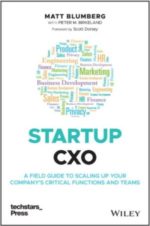
Lead Upwards: How Startup Joiners Can Impact New Ventures, Build Amazing Careers, and Inspire Great Teams, by Sarah E. Brown, is an amazing book – and one that fits really well with our Startup Revolution series, in particular our book Startup CXO.
I kept thinking as I was reading it that it was the other side of the proverbial coin…that Startup CXO was about the details of each executive job in a company…but Sarah’s book is about the things common to ALL executive jobs – how to get them, how to succeed at them, essentially how to BE an executive. I read it front to back in a single day one weekend and loved it.
Some of the most insightful moments in her book are:
- Why big company executives who join startups often struggle
- How to get promoted by proactively doing the next job – act “as if” – while still excelling at your current job
- The importance of managing to the CEO’s preferred work style (personally…I’d debate this – I think CEO’s should manage to their CXOs’ work styles or at least make it a two-way street, but her point is very valid!)
- Why executives shouldn’t just up and quit with “two weeks’ notice” but that executives also need to be mentally prepared to be shown the door when they resign
- The importance of getting your hands dirty and not being “above” doing the work of your team
- Mastering the art of data-driven storytelling
Sarah quotes a number of CEOs throughout the book who I know and respect, from Nick Mehta at Gainsight to Mindy Lauck at Broadly. It was fun to read the book and see a number of very familiar names in it along the way.
Sarah and I did an interesting format – sort of a “dueling fireside chat” about our respective books on a webinar last fall. We had a fantastic conversation that could have gone on for hours. If you’re an executive – or an aspiring executive – you should go read her book.
Please go put Decide and Conquer: 44 Decisions that will Make or Break All Leaders by David Siegel on your reading list, or buy it. David’s book is up there on my list with Ben Horowitz’s The Hard Thing About Hard Things. It’s a totally different kind of book than Startup CEO, and in some ways a much better one in that there’s a great through-line or storyline, as David shares his leadership framework in the context of his journey of getting hired to replace founder Scott Heiferman as Meetup’s CEO after its acquisition by WeWork, including some juicy interactions with Adam Neumann, through the trials and tribulations of WeWork as a parent company, through COVID and its impact on an in-person meeting facilitator like Meetup, through to the sale of Meetup OUT of WeWork.
It’s hard to do the book justice with a quick write up. It’s incredibly concise. It’s clear. It’s witty. Most of all, it’s very human, and David shares a very human, common sense approach to leadership. I particularly like a device he uses to reinforce his main points and principles by bolding the key phrases every time they show up in the book: be kind, be confident, be bold, expand your options, focus on the long-term picture, be pragmatic, be honest, be speedy, do what’s right for the business, work for your people and they’ll work for you, be surprised only about being surprised. These all resonate with me so much.
One of the interesting things about the book is that David is a CEO, but not a founder (although he was sort of a re-founder in this case). A lot of CEO books talk about how to run a company, or give stories from the trials and tribulations thereof, but few focus on the elements of interviewing for the CEO job, or taking over the reins of a company in the midst of a turbulent flight. So the book is about getting the job, starting the job, doing a turnaround, leading a company through growth, a buy-out, and managing a company inside of another company. And because Meetup is such an iconic brand and business, it’s easy to understand a lot of the backdrop to David’s story.
I just met David for the first time a few weeks ago. We knew a bunch of people in common from his DoubleClick days. We instantly hit it off and traded copies of our books, and then were reading them at the same time trading emails about the parts that clicked. I just can’t recommend the book enough to any CEO or founder. In my view, it joins a pretty elite canon.
Book Short: On Employee Engagement
The first time I ever heard the term “Employee Engagement” was from my colleague David Sieh, one of the better managers I’ve ever worked with. He said it was his objective for his engineering team. He explained how he tried to achieve it. I Quit, But forgot to Tell You, by Terri Kabachnick, is a whole book on this topic, a very short but very potent one (the best kind of business books, if you ask me).
It’s got all the short-form stuff you’d expect…a checklist of reasons for disengagement, an engagement quiz, the lifecycle of an employee that leads to disengagement, rules for dealing as a manager.
But beyond the practical, the book serves as a good reminder that employee engagement is the key to a successful organization, no matter what industry you’re in. All managers at Return Path — this is on the way to your desk soon!
Subtract: The Untapped Science of Less, by Leidy Klotz is a great read, and in concert with the philosophy of the book, this will be a short blog post.
The book’s basic premise is that less is more, addition by subtraction. The author’s examples range from the genius of the Strider Bike (bike without pedals) that allows 2-year olds to ride bikes to the Embarcadero in San Francisco. Many people don’t remember that that road used to be called the Embarcaro Freeway, a massive, ugly, two-tiered structure that blocked out the views and waterfront, and that the opportunity to tear down the whole thing following the massive 189 earthquake left San Francisco with a much simpler, beautiful, liveable waterfront by the Ferry Terminal.
There are many great takeaways in the book as well as an action plan for how to think about subtracting AND adding, not just adding, which is the normal reflex for humans, and I’d add ESPECIALLY for entrepreneurs!
We put these principles into action a couple weeks ago at Bolster. When we were crafting our 2024 plan, we worked methodically as a leadership team to reduce. We cut out words, but we also cut out topics and strategic initiatives. The end product was less than 50% the size (word for word) of the 2023 plan, and I think it’s much crisper, more memorable, and more actionable for our team than last year’s.
Hopefully over time, we will find more occasions to do less.
I’ll close with two of my favorite quotes, both of which were in the book. One is by Mark Twain, which is “I didn’t have time to write a short letter, so I wrote a long one instead.” The other is by Lao Tzu, which is “To attain knowledge, add things every day. To attain wisdom, subtract things every day.”
Sometimes less takes more time. But it’s almost always more valuable.
Book Short: Getting to MVP
Usually, when we hear the term MVP, we think Most Valuable Player. But in my line of work, that acronym has come to mean something entirely different: Minimum Viable Product. Running Lean: Iterate from Plan A to a Plan That Works, by Ash Maurya, is an incredibly useful, practical how-to guide for any entrepreneur with an idea from concept through to MVP, or the smallest bit of functionality that you can get customers to pay for. This is one of the best books I’ve read that encapsulates most of the contemporary thinking and writing about product development in the early stages of a startup’s life from thought leaders like Steven Gary Blank and Eric Ries.
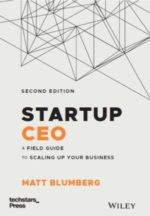
I read the book recently, as I was writing Startup CEO (original outline here), and I quoted liberally from it, including using his Lean Canvas graphic:

The basic principle behind the Lean Canvas is that the old way of doing a business plan was a ton of up front planning work, assuming you’re right, then building to spec. The new way of doing a business plan is a really short series of hypotheses on a single page, then the time is spent de-risking the plan by systematically testing each element of it out. The book includes several lists of checklists that walk you through how to test each box on the Lean Canvas. As I’ve written about before, checklists are a really powerful management tool.
This is an essential read for entrepreneurs just starting a business. But it’s also an excellent read for anyone running a growth company. We have adopted more and more agile/lean methodologies over time at Return Path, and all of our product teams use the Lean Canvas with any major new features and projects.
(Side note – I’m writing this post on Friday, May 10, which is the 9th anniversary of my publishing this blog – 760 posts and one draft book later, it’s still an integral part of my business life!)
Book Short: Plain Talk
An HR rock star I met with recently told me that “You can say anything you want to your people, as long as it’s true,” which of course is great advice. Plain Talk: Lessons from a Business Maverick (book, kindle), by Ken Iverson, the long-time CEO of Nucor, pretty much embodies that. If you’re not familiar with Nucor, it’s a steel company – right, steel – and the most successful one of the last 50-75 years, at that. You may think an industrial company like this offers no lessons for you. If so, you are wrong.
The reason Nucor has been so successful, if you believe their long time leader, is that they run the people side of their business differently than most companies like them. Reading this book from the perspective of a knowledge worker business CEO was particularly interesting, since I had to transform my frame of reference a bit (and do a little mental time travel as well) in order to understand just how revolutionary Nucor’s practices were at the time.
But then I realized – they’re still revolutionary today. How many companies – even the most progressive ones – don’t have performance reviews because they don’t need them in order to create a high performing environment? Companies that spend a good percentage of their time and energies thinking about how to get their employees to do their best work, as opposed to focusing only on the goals of the business, do better than those who don’t. It doesn’t matter what industry you’re in. As Patrick Lencioni would say, you can outbehave the competition.
Plain Talk is a really short book, and a good, authentic read if you’re a leader who cares about your people and wants to learn a few nuggets here and there from one of the 20th century masters of that discipline. Anyone that can link a high degree of delegation to authority has a story worth telling.
Book Short: Required Reading
The Leadership Pipeline, by Ram Charan, Stephen Drotter, and James Noel, should be required reading for any manager at any level in any organization, although it’s most critical for CEOs, heads of HR, and first-time managers. Just ask my Leaderhip Team at Return Path, all of whom just had to read the book and join in a discussion of it!
The book is easy to read, and it’s a great hands-on playbook for dealing with what the authors call the six leadersihp passages:
From Individual Contributor to Manager (shift from doing work to getting work done through others)
From Manager to Manager of Managers (shift to pure management, think beyond the function)
From Manager of Managers to Functional Manager (manage outside your own experience)
From Functional Manager to Business Manager (integrate functions, shift to profit and longer term views)
From Business Manager to Group Manager (holistic leadership, portfolio strategies, value success of others)
From Group Manager to Enterprise Manager (outward looking, handle external and multiple constituencies, balance strategic and visionary long-term thinking with the need to deliver short-term operating results)
All too often, especially in rapidly growing companies, we promote people and move them around without giving enough attention to the critical success factors involved in each new level of management. I’ve certainly been guilty of that at Return Path over the years as well. It’s just too easy to get trapped in the velocity of a startup someitmes to forget these steps and how different each one is. This book lays out the steps very neatly.
It’s also one of the few business books that at least makes an attempt — and a good one at that — at adapting its model to small companies. In this case, the authors note that the top three rungs of the pipeline are often combined in the role of CEO, and that Manager of Managers is often combined with Functional Managers.
Anyway, run, don’t walk, to buy this one!
Book Short: Gladwell Lite
What the Dog Saw, And Other Adventures (book, Kindle) is Malcolm Gladwell’s latest book. Unlike his three other books, which I quite enjoyed:
this was not a complete book, but rather a compendium of his New Yorker articles loosely grouped into three themes.
If you love Gladwell and don’t read The New Yorker, it’s not a bad read. He’s a fantastic writer, and his vignettes are interesting. There are many “hmmm” moments as we learn why ketchup always tastes the same but mustard doesn’t; why Ron Popeil is a great salesman of kitchen gadgets; or why the inventor of the birth control pill thought the Pope would endorse it. But it falls far short of his three books, which go deep into topics and leave a much more lasting impression/impact.
Book Short: Underdog Victorious
The Underdog Advantage, by David Morey and Scott Miller, was a worthwhile read, though not a great book. It was a little shallow, and although I enjoyed its case studies (who doesn’t love hearing about Ben & Jerry’s, Southwest, JetBlue, Starbucks?), I didn’t feel like the authors did enough to tie the details of the success of the case study companies back to the points they made in the book.
That said, the book had some great reminders in it for companies of all sizes and stages. The main point was that successful companies always think of themselves as the underdog, the insurgent, and never get complacent. They run themselves like a political campaign, needing to win an election every single day. A lot of the tactics suggested are timeless and good to remember…things like never declare victory, always play offense, always respond to attacks, remember to communicate from the inside out, and remember to sell employees on a mision and purpose in order to make them your main ambassadors. The laundry list of tactics is the book’s greatest strength.
Book Short – Blink part III – Undo?
I just finished reading Michael Lewis’s The Undoing Project: A Friendship That Changed Our Minds, and honestly, I wish I could hit Life’s Undo button and reclaim those hours. I love Michael Lewis, and he’s one of those authors where if he writes it, I will read it. But this one wasn’t really worth it for me.
Having said that, I think if you haven’t already read both Malcolm Gladwell’s Blink (review, buy) and Daniel Kahneman’s Thinking, Fast and Slow (review, buy), then it might be worth it. But having read those two books, The Undoing Project had too much overlap and not enough “underlap” (to quote my friend Tom Bartel) – that is, not enough new stuff of substance for me. The book mostly went into the personal relationship between two academic thinkers, Daniel Kahneman and Amos Tversky. It also touched on some of the highlights of their work, which, while coming out of the field of psychology, won them a Nobel prize in Economics for illuminating some of the underlying mechanics of how we make decisions.
The two most interesting pieces of their work to me, which are related in the book, are:
First, that human decision-making is incredibly nuanced and complex, and that at least 25% of the time, the transitive property doesn’t apply. For example, I may prefer coffee to tea, and I may prefer tea to hot chocolate, but that doesn’t necessarily mean I prefer coffee to hot chocolate.
From the book, “When faced with complex multidimensional alternatives, such as job offers, gambles or [political] candidates, it is extremely difficult to utilize properly all the available information.” It wasn’t that people actually preferred A to B and B to C and then turned around and preferred C to A. It was that it was sometimes very hard to understand the differences. Amos didn’t think that the real world was as likely to fool people into contradicting themselves as were the experiments he had designed. And the choice created its own context: Different features might assume greater prominence in the mind when the coffee was being compared to tea (caffeine) than when it was being compared to hot chocolate (sugar). And what was true of drinks might also be true of people, and ideas, and emotions. The idea was interesting: When people make decisions, they are also making judgments about similarity, between some object in the real world and what they ideally want. They make these judgments by, in effect, counting up the features they notice. And as the noticeability of features can be manipulated by the way they are highlighted, the sense of how similar two things are might also be manipulated.”
Second, what Kahneman and Tversky called Prospect Theory, which is basically that humans are more motivated by the fear of loss as opposed to the greed of gain. I’ve written about the “Fear/Greed Continuum” of my former boss from many years ago before. I’m not sure he knew about Kahneman and Tversky’s work when he came up with that construct, and I certainly didn’t know about it when I first blogged about it years ago. Do this experiment – ask someone both of these questions: Would you rather be handed $500 or have a 50% chance of winning $1,000 and a 50% of getting nothing? Then, Would you rather hand me $500 or have a 50% chance of owing me $1,000 and a 50% chance of owing me nothing? Most of the time, the answers are not the same.
For fun, I tried this out on my kids and re-proved Prospect Theory, just in case anyone was worried about it.
Anyway, bottom line on this book – read it if you haven’t ready those other two books, skip it if you have, maybe skim it if you’ve read one of them!